Sports — Aziz Abdul, the 25-year-old grandson of former Ugandan dictator Idi Amin, was disqualified from the men’s 90kg final at the African Boxing Championships in Nairobi on Friday, October 23, 2026, and stripped of his silver medal after swinging at Egypt’s Mohamed Hossen after the bell — his second disqualification from a major tournament in a matter of months.
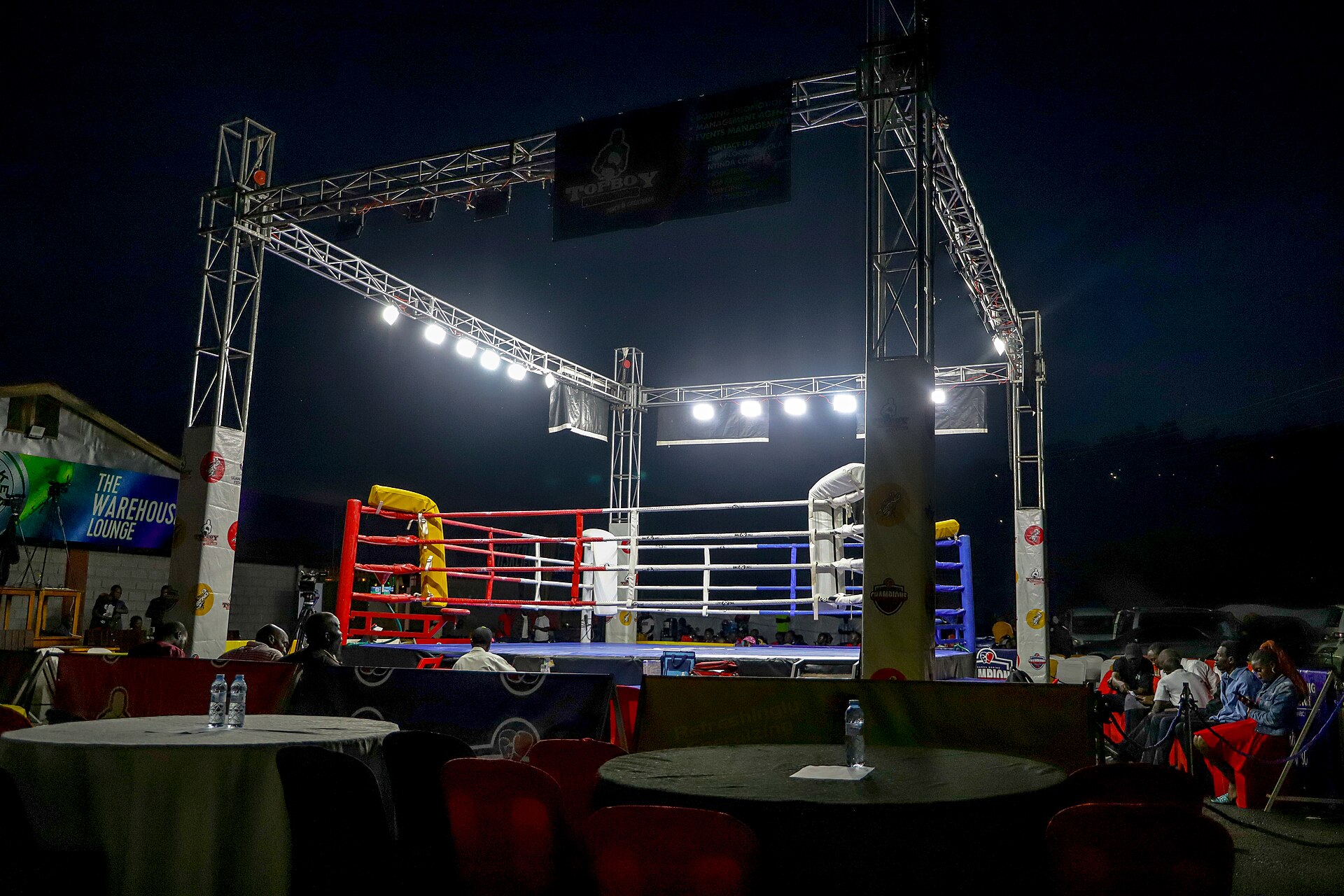
The Idi Amin grandson disqualified story broke for the second time this year on Friday in Nairobi, where Aziz Abdul swung at Egypt’s Mohamed Hossen in their men’s 90-kilogramme final at the African Boxing Championships and was immediately disqualified and stripped of his silver medal, Reuters reported. The blow struck Hossen on the back of the head after he had turned away from Abdul, Reuters said, adding that the Egyptian was uninjured. British reports of the same incident described a wilder scene: The Times reported that Abdul pulled out of a clinch in the corner, and after the bell sounded and his opponent’s back was turned, landed an illegal blow to the back of Hossen’s head, prompting anger from the Egyptian’s corner, whose members stormed into the ring; Abdul had already left the ring by the time Hossen’s arm was raised to declare him the winner. talkSPORT reported that Hossen was decked by the blow and remained on the canvas for a stretch, and that one member of Hossen’s team lunged at Abdul, who was sent to the red corner by the referee. The accounts agree on the essential facts — a punch after the bell, to the back of a turned opponent’s head, an immediate disqualification, and the loss of the silver medal Abdul would otherwise have taken from the final — and differ mainly on how badly Hossen was hurt, with Reuters reporting him uninjured.
What happened in the Nairobi final
The 90kg final was the closing act of Abdul’s championships, and by every account it ended not on the judges’ cards but on a single moment of lost discipline. As the bell sounded, Abdul came out of a clinch with Hossen in the corner and swung anyway. A punch thrown after the bell is among the most serious fouls in amateur boxing; one landed on the back of the head of an opponent who has already turned away is the kind of blow the rules exist specifically to prevent, because a fighter who believes the round or the bout is over has no reason to be defending himself. Officials disqualified Abdul on the spot, and the disqualification carried the further penalty that he was stripped of the silver medal he had been guaranteed simply by reaching the final, Reuters and The Times both reported. Hossen was declared the winner and takes the African title. For Uganda, the championships were otherwise a success: the team won 13 medals in Nairobi and finished third overall, behind Kenya and Algeria.
A second disqualification in a matter of months
What turned an ugly foul into an international story is that Nairobi was not the first time. Abdul, who fights under the name “Ringo,” was also disqualified from the Commonwealth Games in Glasgow earlier this year after he headbutted England’s Damar Thomas, Reuters reported. The Times and talkSPORT both placed that disqualification in the quarter-finals and reported that Abdul had already received two warnings before the headbutt brought the bout to a premature end; Reuters described the Thomas bout as an opening-round contest. After that disqualification, The Times reported, Abdul launched a rant in which he accused the organisers of anti-African racism and criticised the officiating and the media coverage of his grandfather. “There were a lot of fouls, holding, elbowing, a lot of bullshit,” he said that day. “The officials cannot judge them. When other countries do this they are disqualified. All I can say about this is the referee’s decision is not right and I am not happy. Next time, I will get him [Thomas]. Anytime in the future. Two years, five years, ten years. I will show him that Aziz Ringo is a real warrior. It’s so painful.” Two major tournaments, two disqualifications for deliberate fouls, and now a stripped medal: the pattern, rather than any single punch, is what Abdul’s career will have to answer for.
The grandfather he never met
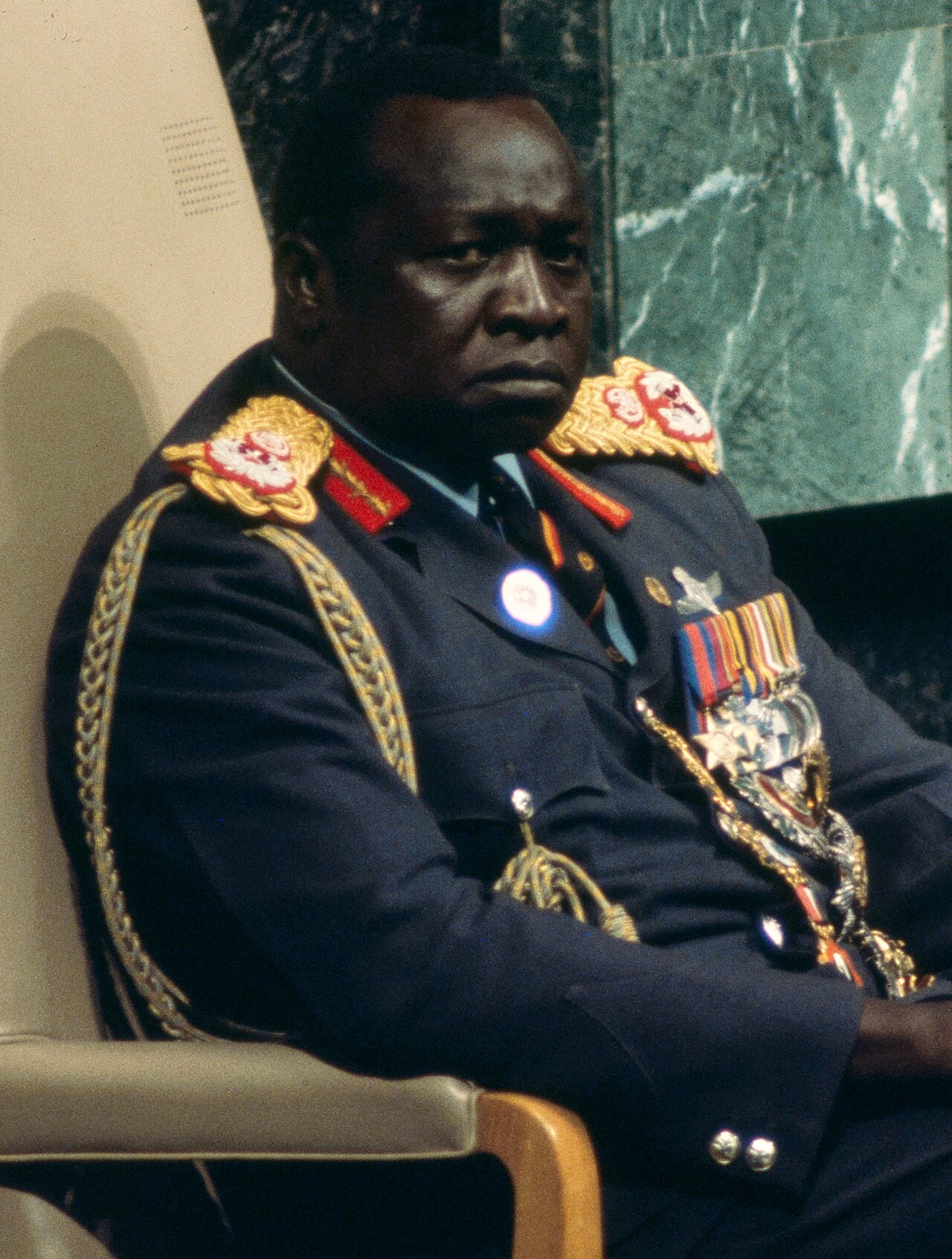
Abdul carries the most notorious surname in Ugandan history into every ring he enters. Idi Amin seized power in a military coup in 1971 and ruled Uganda for eight years, a reign in which he stood accused of killing hundreds of thousands of people; The Times put the estimate at at least 300,000 deaths. He is said to have fathered around 60 children, with the exact figure unknown, Reuters reported. Overthrown in 1979, he died in exile in 2003 — when Abdul, now 25, was a toddler, and the two never met. Abdul addressed the inheritance directly in a July interview with the BBC. “Sometimes people say positive (things) about him, but others say negative (things) about him,” he said. “That’s why I don’t want to talk more about him. It’s not good to say something negative about someone who is not there.” Before the Commonwealth Games he had leaned into the connection, professing that he would become the “new King of Scotland” — a reference, Reuters noted, to the film about his grandfather, The Last King of Scotland. There is a sporting inheritance as well as a political one: Amin himself boxed, holding the Ugandan light-heavyweight title for nine years during the 1950s, and Abdul has said his grandfather’s ring career inspired his own. “My grandfather’s achievements inspired me,” Abdul told The Guardian. “He was a heavyweight boxer like myself, and I am so proud of him. Lions give back to lions. A lion cannot give back to a dog or a camel. A lion must resemble a lion. It is what it is. I am a real warrior. I am the son of the son.”
Why this matters
A disqualification at an amateur championships would ordinarily be a results-page footnote. Three things lift this one out of the ordinary. The first is repetition: a headbutt disqualification in Glasgow and a punch-after-the-bell disqualification in Nairobi, inside a single season, describe a fighter whose problem is not technique but control, and amateur boxing’s authorities — the tournament officials who stripped his medal on Friday, and the federation structures above them — now have a documented pattern, not an isolated incident, in front of them. Whether any further sanction follows has not been announced in the reports published so far, and that unanswered question is the real competitive story: a 25-year-old heavyweight prospect can survive a reputation, but not indefinitely, and every future opponent, referee and sanctioning body will now judge his clinches with Friday’s punch in mind. The second is safety. The blow in Nairobi landed on the back of the head of a man who had turned away because the bell had told him the fighting was over; Reuters reported Hossen uninjured, and that outcome was luck as much as anything, because punches to the back of the head are prohibited precisely for the damage they can do to a defenceless fighter. The third is the name. Abdul did not choose his grandfather, never met him, and has asked, in his own words, not to be made to answer for a man who is not there. But he also arrived in Glasgow calling himself the new King of Scotland and told The Guardian he is proud of his grandfather’s achievements in the ring. Both things are true at once, and the tension between them is why a 90kg amateur final in Nairobi was wired around the world within hours: the footage travels because of the surname, and the surname is the one part of the story Abdul cannot leave in the dressing room.
What happens next
As of Friday’s reports, neither Abdul nor the Uganda Boxing Federation had issued a statement about the Nairobi disqualification, and no additional disciplinary process had been announced beyond the disqualification itself and the loss of the silver medal. The immediate consequences are already severe enough: a continental final lost without a decision, a medal surrendered, and a second entry in a disciplinary record that began in Glasgow. The longer question is what the sport does with a talented, marketable, chronically undisciplined heavyweight whose name guarantees attention every time he fights. Uganda’s team leaves Nairobi with 13 medals and a third-place finish to celebrate; its most famous fighter leaves with none, and with a reputation that is now the story. For readers following the heavyweight scene, Signal Post News’ coverage of the Fury–Joshua card set for Cardiff and of UFC 335’s BMF title fight follows the professional end of combat sports, where the fouls are rarer and the money is larger — but where, as Nairobi showed again, a single punch thrown a second too late can still define a career.
Sources: Reuters; The Times; talkSPORT; The Sun / The Scottish Sun; BBC interview with Aziz Abdul (July 2026, as reported by Reuters and talkSPORT).