World / Niger hostages freed — an Austrian woman and a Swiss woman, kidnapped separately in the desert city of Agadez in 2025 and held for more than a year and a half, have been released and have arrived in Benghazi, eastern Libya, two official sources told Reuters on Wednesday. Both governments have confirmed the release. What actually secured their freedom — and who was holding them — remains officially unanswered.
Track it live: Live war and conflict tracker
Niger hostages freed is, for once, the whole story in three words — and also only the beginning of it. An Austrian and a Swiss woman arrived in the eastern Libyan city of Benghazi after being freed from more than 18 months of abduction and detention in Niger, two official sources speaking on condition of anonymity told Reuters on Wednesday, October 21, 2026. The sources said the women would be handed over to authorities in their respective countries after the necessary procedures were completed. Austria's foreign ministry confirmed the release of its citizen — identified by Austrian authorities as Eva G, a woman in her seventies kidnapped in Agadez in January 2025 — after what it called a "long, complex, and highly sensitive diplomatic process." Switzerland's foreign minister, Ignazio Cassis, confirmed in a post on X that the Swiss woman had been freed and was on her way back to Switzerland.
What happened
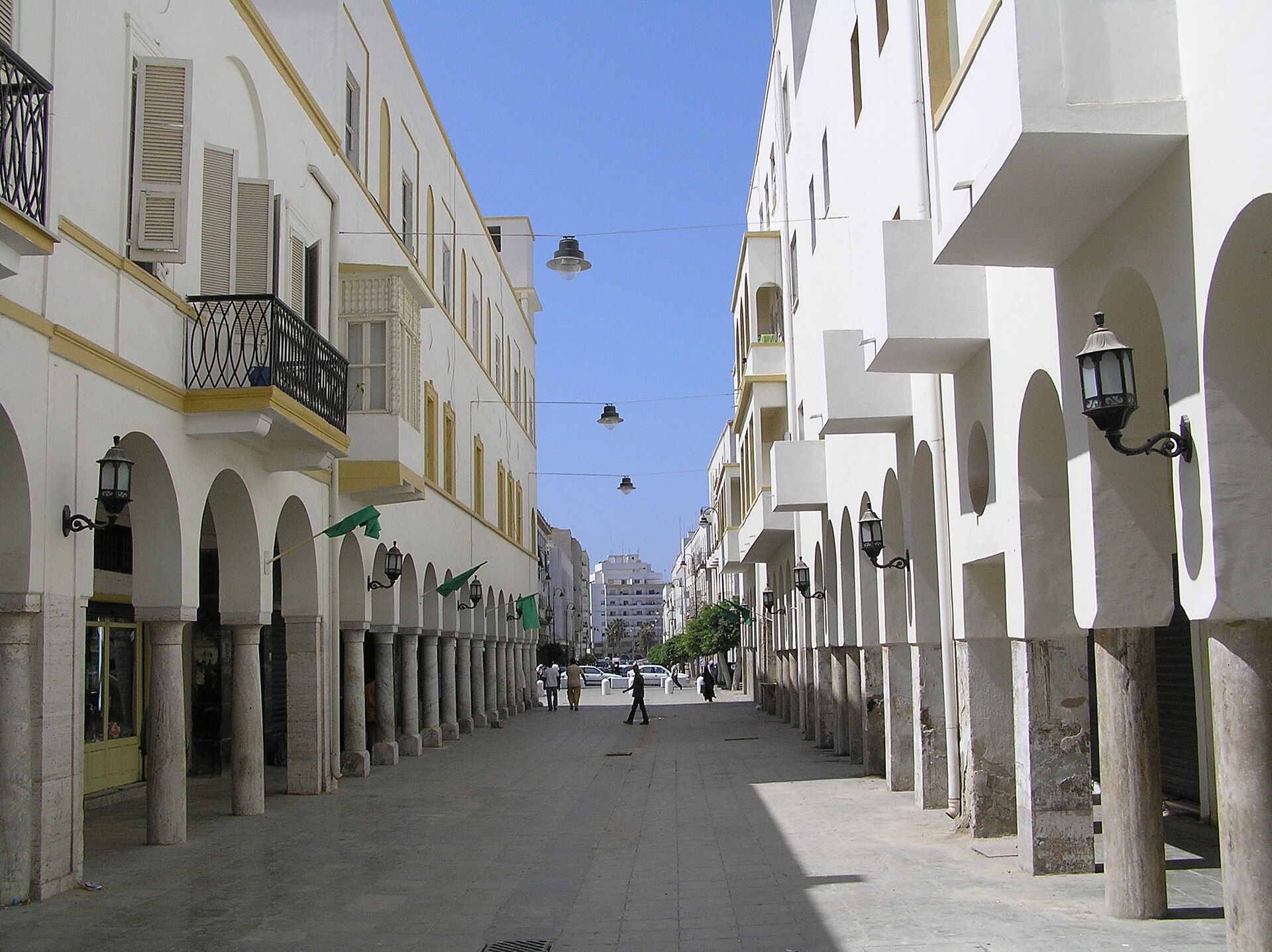
The Benghazi hostages released this week were not taken together, and they were not freed in Niger. They were taken in two separate seizures, three months apart, in the same city — Agadez, in central Niger — and they surfaced, together, more than a thousand miles away across the Sahara in Benghazi, the stronghold of eastern Libya's military authorities. Reuters reported that the operation was overseen by Saddam Haftar, deputy commander-in-chief of Libya's armed forces and a son of the eastern commander Khalifa Haftar. Neither Reuters' sources nor either government said where the women had been held immediately before their release, who physically handed them over, or what — if anything — was given in return.
Libyan television gave the story its human frame. Footage broadcast by al-Masar, a station based in eastern Libya, showed the two women being helped toward what appeared to be an ambulance, where a health worker attended to them, and recorded both women speaking in French to thank Khalifa Haftar and Saddam Haftar for their release. One of them said she had been held hostage for a year and nine months — a figure that matches the January 2025 seizure almost to the month. The privately owned Air Info Agadez outlet reported that a plane was expected to depart Benghazi on Thursday, stopping in Vienna on the way to Switzerland — a route that, if it holds, would put both women back on European soil within days of a release that neither capital had publicly predicted.
Two confirmations, carefully worded
The confirmations from Vienna and Bern are worth reading closely, because they are models of what governments say when a hostage file closes and what they refuse to say. The Austrian foreign ministry confirmed the release of Eva G — it used only that partial name — and described a "long, complex, and highly sensitive diplomatic process," a formulation that signals months of negotiation without describing any of it. Switzerland went further in one direction and less far in another: Foreign Minister Ignazio Cassis confirmed the Swiss woman's release personally, on X, and said she was already on her way back to Switzerland. His ministry said a government task force — including police and intelligence services — had been formed after her capture, and that Bern had stayed in regular contact with Austria throughout. It then closed the door: for reasons of privacy protection, it would provide no more details, and it had never publicly named its citizen at all.
Who the women are — and a warning about the names
What is established, from Reuters and the two ministries, is this. The Austrian, Eva G, is in her seventies. She was kidnapped in Agadez in January 2025 and had been living in Niger for years — by the accounts of those who knew her work there, a long-term resident and development worker in a city she had made her home, not a traveller passing through. The Swiss woman was taken hostage in April 2025, also in Agadez, where she too had spent years living and working in the community. Beyond that, this article follows the two governments: Austria has released only "Eva G," and Switzerland has released no name, so Signal Post News does not publish the Swiss woman's full name as fact.
Readers will encounter fuller names elsewhere, and honesty requires a short explanation. Reports carried from Libyan media name the two women as Eva Gretzmacher, 76, and Claudia Abbt, 69 — but the name-to-nationality pairings in those reports conflict with each other, and one widely shared version even routes the Vienna stop to the wrong woman. A pre-existing reference page on the abductions records the January victim as Gretzmacher, attacked at her home in Agadez's Fada district on the evening of January 11, 2025, and the April victim as Abbt, seized on April 13, 2025, in the Dagmanett 2 district — while differing from Reuters about which woman held which passport. Where reputable sources disagree about the basic identity details of two private citizens emerging from captivity, the careful course is the one taken here: report what the responsible governments and Reuters agree on, flag the disagreement plainly, and let the families' privacy outrank the internet's speed. The core facts of the release are not in dispute anywhere.

The road from Agadez: how the kidnappings unfolded
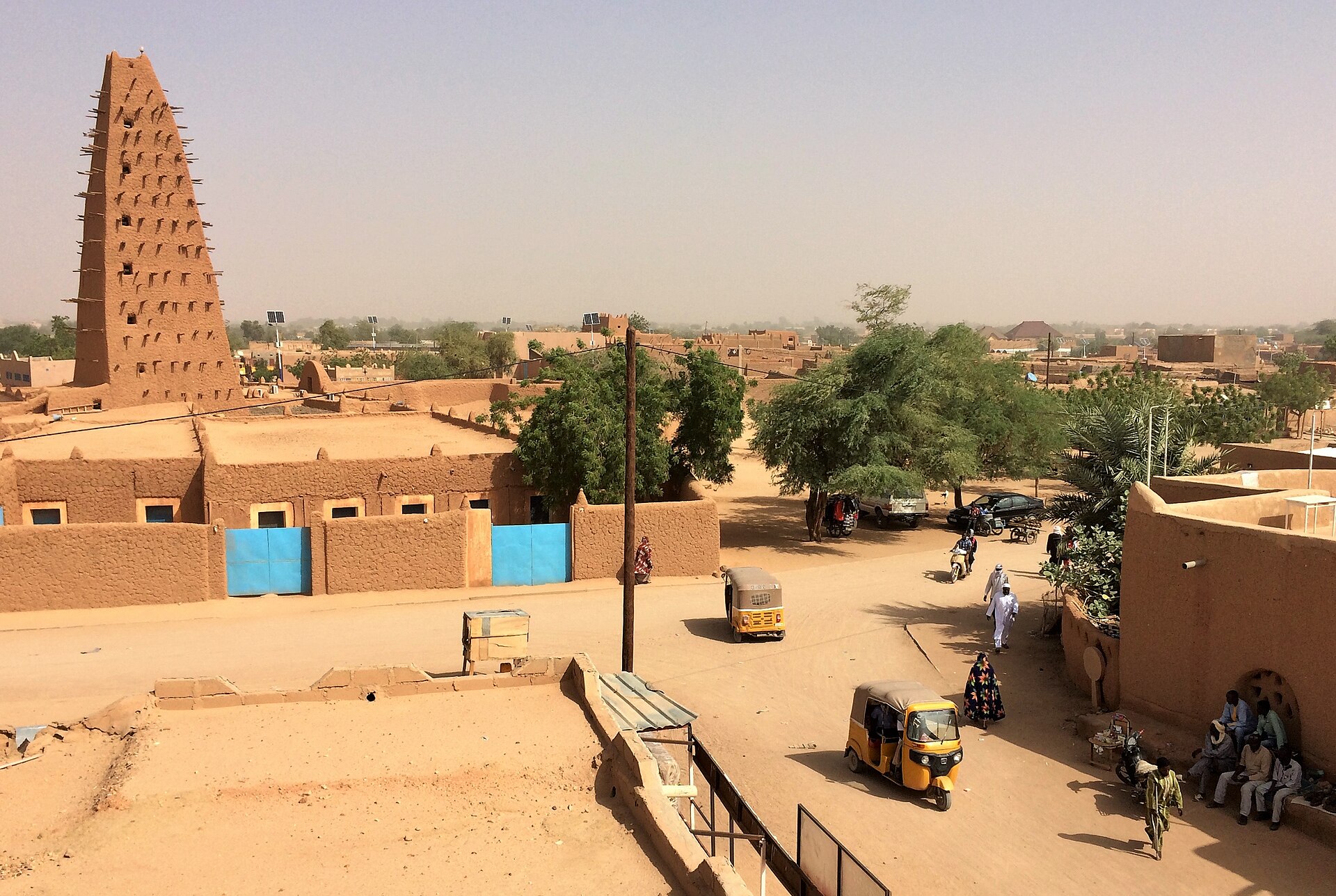
Agadez is one of the great crossroads of the Sahara — a mud-brick caravan city founded centuries ago on the routes between West Africa and the Mediterranean, its old town a UNESCO World Heritage site, its grand mosque's minaret the tallest mud-brick structure in the world. In the last two decades it has also been a hinge of other trades: a migration corridor toward Libya and Europe, a hub for foreign military operations against Sahel jihadists — France's Barkhane forces operated in Niger and the United States built its $110 million Air Base 201 outside the city — and, since Niger's 2023 coup, a place where Western presence has thinned almost to nothing. The French withdrew by the end of 2023; the last American personnel left Agadez in 2024. The two women were kidnapped into that vacuum.
Background accounts of the abductions — compiled from Nigerien and European reporting over the past two years, and treated here as background rather than as findings of this week's reporting — describe a pattern that investigators across the region recognise. Gunmen took the first woman from her home in January 2025 and the second from hers in April. Both were moved, the accounts say, across the border toward Mali's Gao region, around Ansongo, Ménaka and Adéramboukane — the tri-border country where jihadist factions, smugglers and their subcontractors overlap. Al Qaeda's regional organisation publicly denied involvement. The Islamic State's Sahel Province later claimed responsibility, publishing a photograph of one captive, and reporting on the case has long held that the group may not have seized the women itself but acquired them from subcontractors — the kidnapping economy's standard supply chain, in which the people who take a hostage are rarely the people who finally trade her. In May 2026, according to the same background record, a ransom demand was lowered as one captive's health deteriorated to a critical state. No government has confirmed any payment, and none of that is confirmed by this week's release reporting; it is included because it explains why, by October 2026, time itself had become one of the negotiators.
Why this matters
It would be easy to file this as a good-news brief — two elderly aid workers home safe — and it is genuinely good news. But the route of their freedom is a map of how power now works across the Sahara and the Sahel, and that is why this matters well beyond two families.
First, the venue. The women were not released in Niamey, Niger's capital, or handed over at a European embassy. They surfaced in Benghazi, under the authority of Libya's eastern military — a power centre that the United Nations does not recognise as Libya's government and that much of Europe officially keeps at arm's length. When a hostage release of two European citizens is brokered, staged and televised in Benghazi, with the captives thanking the Haftar family by name on camera, the message is deliberate: eastern Libya is presenting itself as a state that can deliver what recognised governments could not. That is a diplomatic asset, and it will be spent.
Second, the method. Both Vienna and Bern describe quiet, professional, years-long processes — task forces, intelligence services, inter-government contact — and both refuse to discuss terms. The Sahel's hostage economy runs on exactly this opacity: every release that cannot be explained teaches the market that European citizens in the region carry a price, while every refusal to explain denies the market a published rate. Both things are true at once, and European governments have never resolved the tension; they have only learned to hold their tongues in unison.
Third, the vacuum. These kidnappings happened in a Niger from which France and the United States had just withdrawn, under a junta that expelled Western forces and turned toward new security partners, in a region where the state's reach beyond its cities is contested mile by mile. Two long-term foreign residents were taken from their homes in a major city — not ambushed on a remote road — and held, apparently across an international border, for the better part of two years. Whatever else the release celebrates, the conditions that made the captivity possible have not changed this week.
Context: the Sahel's long emergency
Reuters' framing of the release situates it in the insurgency that has defined the central Sahel for over a decade: Niger, like its neighbours Mali and Burkina Faso, is battling a jihadist insurgency linked to al Qaeda and Islamic State that spun out of a Tuareg rebellion in northern Mali in 2012. The fighting has killed thousands and displaced millions across West Africa's central Sahel over the past decade — a scale that dwarfs any single hostage case and explains why kidnapping for ransom became one of the insurgency's most reliable industries. Kidnappings, Reuters noted, appeared to intensify in Niger last year — the year both women were taken.
Layered on top of the insurgency is the region's political unravelling. Niger has been under military rule since July 2023, when General Abdourahmane Tchiani led the overthrow of the elected president, Mohamed Bazoum; Mali and Burkina Faso had already fallen to coups, and the three juntas have since banded together, expelled French forces, and reordered their alliances. For foreign residents — aid workers, engineers, missionaries, miners — the practical change was stark: the Western military and intelligence presence that once made rescue or interdiction plausible in places like Agadez was gone, and the new authorities' priorities did not include public accountability for foreign captives. It is not a coincidence that the two governments that did stay on the case, Austria and Switzerland, are both neutral states with long traditions of quiet diplomacy and protecting-power work; nor is it a coincidence that the door finally opened in Libya, where a militarised authority with its own reasons to court Europe controlled the last mile.
Libya's own division is the other half of the context. Since the aftermath of the 2011 uprising that toppled Muammar Gaddafi, Libya has split between a UN-recognised administration in Tripoli, led by Prime Minister Abdulhamid Dbeibah, and rival eastern authorities backed by Khalifa Haftar's Libyan Arab Armed Forces. Benghazi is the east's capital in all but name. A hostage handover there is therefore never only humanitarian logistics; it is also a claim, made in pictures, about who governs eastern Libya and who foreign governments must deal with to get results there.
Who gains, who loses — and what critics will say
The clearest gainers are in Benghazi. For the Haftar family's eastern authorities, brokering the freedom of two European citizens — thanked on camera, by name, in French, for a European audience — is the kind of legitimacy money cannot usually buy, particularly for Saddam Haftar, the son and deputy now being positioned as a statesman in his own right. Expect eastern Libyan media to replay the ambulance footage for weeks, and expect European diplomats, whatever their public recognition policy, to remember who answered the phone.
Vienna and Bern gain quieter but real victories: two citizens home, a demonstrated competence in the least forgiving kind of diplomacy, and no public concession to defend in parliament. Niger's junta, by contrast, loses by absence — a two-year captivity of foreign residents on its territory was resolved without any visible Nigerien role, underlining the gap between the junta's sovereignty claims and its control of its own north. The kidnappers' network gains least visibly but most ambiguously: if anything of value changed hands, the market learns that elderly aid workers are worth holding for 21 months; if nothing did, it learns that pressure on a deteriorating captive eventually forces a negotiated exit anyway. Critics of quiet hostage diplomacy will make the first argument; its practitioners will answer that the alternative on offer was two women dying in the desert while governments made speeches about principle. Both arguments deserve to be heard, and neither government is likely to give the public the facts that would settle the argument — which is, itself, the system's design.
The numbers, in context
Strip the story to its arithmetic and its scale clarifies. Two women. Two seizures, on January 11 and April 13, 2025 — dates the background record gives precisely. One captivity of roughly 21 months — "a year and nine months," as the woman herself put it on Libyan television — and one of roughly 18 months; Reuters' headline figure, "more than 18 months," is the floor the two cases share. Behind them: an insurgency that has killed thousands and displaced millions across the central Sahel in a decade, in a country of some 27 million people whose northern half is larger than most European states and policed by almost no one. And behind that, the statistic that explains the families' two years of silence: in the Sahel's kidnapping economy, publicity is a cost and patience is the currency — cases that end well, like this one, are usually the ones the public hears about only at the airport.
What happens next
The immediate sequence is procedural: formal handover to Austrian and Swiss authorities, medical checks — the ambulance footage and the May reports of deteriorating health make clear that at least one of the women faces a real recovery — and the reported Thursday flight out of Benghazi, via Vienna, to Switzerland. Both governments will then do what both have already begun: thank their partners, credit their task forces, and decline, permanently in all likelihood, to describe the negotiation. Three questions will outlast the homecomings. Will eastern Libya convert this release into the European engagement it plainly seeks — meetings, recognition-adjacent courtesies, a seat at tables from which it has been excluded? Will Niger's junta face any reckoning, at home or abroad, for a captivity it neither prevented nor visibly helped to end? And how many other foreign captives remain in the Sahel's grey zones tonight, unnamed by their governments for the same privacy reasons Bern cited — people whose releases, if they come, will arrive exactly as this one did: suddenly, on someone else's television station, after a silence measured in years?
For now, the verified core is simple and worth ending on. Two women who were taken from their homes in Agadez in 2025 are free, are in Benghazi, and are going home. After 18 months in which almost nothing about their fate could be confirmed at all, that is not a small ending — it is the whole point of every quiet hour both governments spent on the case.
Sources
Reuters, October 21, 2026 — Austrian and Swiss women freed after 18 months in Niger reach Benghazi, sources say: reuters.com (release, identifications as given by Austrian authorities, Agadez seizures of January and April 2025, handover procedures, Saddam Haftar's oversight role, the Austrian foreign ministry's "long, complex, and highly sensitive diplomatic process" confirmation and the Swiss foreign ministry's task-force statement and Foreign Minister Ignazio Cassis's confirmation on X, as carried in the updated Reuters report, syndicated at devdiscourse.com). Background on the 2025 abductions (dates, districts, claims of responsibility, reported ransom reporting) is drawn from the reference record at en.wikipedia.org — Abductions of Eva Gretzmacher and Claudia Abbt and is labelled as background in the text wherever it is used; where that record and Reuters disagree on identity details, this article says so and follows Reuters and the two foreign ministries. Libyan al-Masar footage and the Air Info Agadez flight report are described as reported by those outlets.
Related
Niger's soldiers and the Islamic State Sahel attacks · Nigeria's airstrike on ISWAP fighters in Borno · Live war and conflict tracker