World · Australia · Fact Check
World / Fact check — The Australia stockpile emergency request is false: a viral post viewed about 214,000 times spliced a British government campaign, an Australian opinion piece and a Japanese minister’s planned announcement into a single invented Australian order — and the Australian Red Cross, the closest thing to an official voice in the story, says explicitly that Australians should not stockpile food.
The Australia stockpile emergency request is false. No Australian government — federal or state — has issued an emergency request urging citizens to stockpile food and water, and no Australian stockpile campaign exists. The claim rests on a single post on X, published late on Wednesday, October 28, and viewed about 214,000 times, which declared: “Australia issues emergency request urging citizens to stockpile food and water.” Every component of that post is real. None of them is an Australian government order, and two of the three are not about Australia at all.
The post is a splice of three unrelated items. Its headline screenshot comes from The Guardian’s reporting on Britain’s “Be Ready” preparedness campaign — with the wording altered. Its photograph of bottled water comes from an opinion piece in The Conversation restating standing Australian disaster advice. And its central phrase, “emergency request,” belongs to Japan, where a disaster minister is scheduled to issue exactly such a request on November 2. Signal Post News checked the claim against the ABC, Reuters, the Associated Press and The Sydney Morning Herald and found no Australian government request, announcement or campaign matching it. The Australian Red Cross, meanwhile, said on Thursday that it is “absolutely not encouraging Australians to run out and start stockpiling food.”
How the splice was built
The post, published at 10:34 p.m. Pacific Time on October 28, combines a headline screenshot, a photograph and a two-word phrase into a single assertion, and each element does specific work. The screenshot supplies the appearance of authority: a real newspaper, a real headline format. The photograph supplies urgency: pallets of bottled water are the visual language of emergency logistics. The phrase “emergency request” supplies officialdom: it sounds like the language of a government instruction. Taken one at a time, however, each element points to a different country, a different date and a different kind of document — and none of them points to an Australian order.
Part one: a British headline, altered
The screenshot reproduces Guardian coverage headlined “Every Briton should stockpile water and food supplies, government advises,” published by The Guardian in the United Kingdom on October 22, 2026. In the version carried by the viral post, the wording has been changed: “Australia” has been substituted for “UK,” and the reference to the “climate crisis” — one of the threats the British campaign explicitly names — has been dropped. The altered screenshot is the load-bearing element of the splice, because it is the only element that resembles a news report of a government announcement. Remove it, and the post has no headline. Restore its original wording, and the post has no Australia story either: it has a week-old story about Britain.
Part two: an opinion piece’s photograph
The photograph of bottled water, credited to Joel Carrett of AAP, comes from The Conversation of October 26, 2026. That article was not a news report of a government announcement; it was an opinion piece by two University of Wollongong academics, McKenzie and Whitelaw, restating standing Australian preparedness advice — the recommendation, issued by state-based emergency services, that households be ready to look after themselves for 72 hours after a natural disaster. An opinion piece announces nothing, orders nothing and changes nothing. What it provided the splice was an Australian image: a genuine photograph, taken in Australia, of the very commodity the invented order was said to concern. In the original, the photograph illustrates routine advice. In the splice, it is made to illustrate an emergency that its own article never mentions.
Part three: a Japanese phrase
The words “emergency request” are not Australian either. They belong to Japan, where Goshi Hosono, the minister in charge of disaster prevention, is to issue a disaster-preparedness emergency request on November 2 — a date that, at the time of writing, is still in the future, meaning the request has not yet been issued even in the country it belongs to. Signal Post News has covered that announcement separately in its report on Japan’s stockpile request. A phrase from a scheduled Japanese announcement, attached to an altered British headline and an Australian opinion piece’s photograph, produced a claim about a fourth thing: an Australian government order that does not exist.
What the Guardian actually reported
The Guardian’s October 22 report described the launch of “Be Ready,” a preparedness campaign run by the UK Cabinet Office and published at beready.campaign.gov.uk. The campaign has been fronted by ministers Streeting and Jarvis and promoted by Andy Burnham. It asks British households to hold 72 hours of supplies — three days — including three litres of water per person per day, which works out to nine litres per person across the three days. The threats the campaign names are the climate crisis, technological dependency and hostile states. It identifies no specific imminent threat, and its method is deliberately gradual: households are encouraged to build their supplies as part of ordinary shopping rather than in a single emergency purchase. Signal Post News covered the campaign at launch in Britain’s Be Ready campaign.
None of that is a secret, and none of it was misreported by The Guardian. The newspaper reported a British campaign, announced by the British government, addressed to British households, and it said so in its headline — the same headline the viral post then edited. The point matters because the splice depends on the Guardian’s credibility while reversing its content: a reader who trusts the screenshot is trusting a document that has been altered in exactly the two places — the country and one of the named threats — that determine what the story is about. What the Guardian actually reported is a real campaign, in a real country, under its real name. It is the first of the three ingredients, and on its own it supports none of the viral claim.
The Red Cross’s actual position
If any Australian institution spoke this week in terms that even resemble the viral claim’s subject matter, it was the Australian Red Cross — and what it said was the opposite of the claim. Nichola Krey of the Australian Red Cross on October 29 urged Australians to prepare gradually for the natural hazards the country actually faces: floods, fires, heat and cyclones. Her words were explicit: “We are absolutely not encouraging Australians to run out and start stockpiling food. No panic buying, please.”
That position — gradual, hazard-specific and explicitly anti-stockpiling — is the genuine Australian preparedness story of this week, and it is a much smaller story than the one the viral post told. The distance between “prepare gradually for the flood and fire season” and “the government has issued an emergency request to stockpile food and water” is the whole distance the splice had to travel, and it travelled it by importing a British headline and a Japanese phrase. It is also worth noting what the Red Cross did not say. It did not announce an emergency, did not set a deadline, did not name a threat beyond Australia’s ordinary seasonal hazards, and did not ask anyone to buy anything in a hurry. On the record available, the organisation whose name lends the subject its credibility is the strongest single witness against the claim.
Why this matters
The splice works because each of its ingredients is genuine. A fabricated screenshot can be exposed by showing that no such article exists; a misattributed one is harder to kill, because the checks a hurried reader is most likely to run all come back positive. The Guardian article exists. The photograph is real, and really was published alongside Australian preparedness advice. Japan really does have a minister preparing an emergency request. Every individual verification succeeds, and the claim is still false, because the falsehood is not in any of the parts — it is in the joins between them: the country swapped in an edited screenshot, the opinion piece promoted to a government announcement, the foreign minister’s phrase naturalised as an Australian one.
The practical costs of that kind of falsehood are not abstract. Panic buying is the one behaviour every genuine preparedness authority in this story — British, Japanese and Australian alike — is trying to prevent, because it empties shelves for the households that need supplies for real, local reasons: a flood that cuts a road, a fire that closes a town’s only supermarket, a cyclone that interrupts deliveries for days. A viral post that manufactures an emergency works directly against that advice. It also spends down trust. A household that acts on a fake emergency and discovers it was fooled has been given a reason to discount the next warning it hears — including a real one, issued in the middle of an actual disaster, when the cost of disbelief is highest.
There is a context that makes this information environment especially easy to exploit. Household preparedness is a genuinely international story this month: Britain has launched a campaign, Japan is preparing an announcement, and Australian authorities repeat their standing advice as the hazard season approaches. Real campaigns in several countries produce a steady supply of authentic screenshots, official phrases and striking photographs, all of it portable and all of it deniable. The defence available to readers is unglamorous but effective: before sharing a claim of this kind, check the country, the date and the issuing authority. In this case, those three checks — Britain, October 22; Australia, an opinion piece on October 26; Japan, November 2 — dissolve the claim completely.
What Australians are actually advised
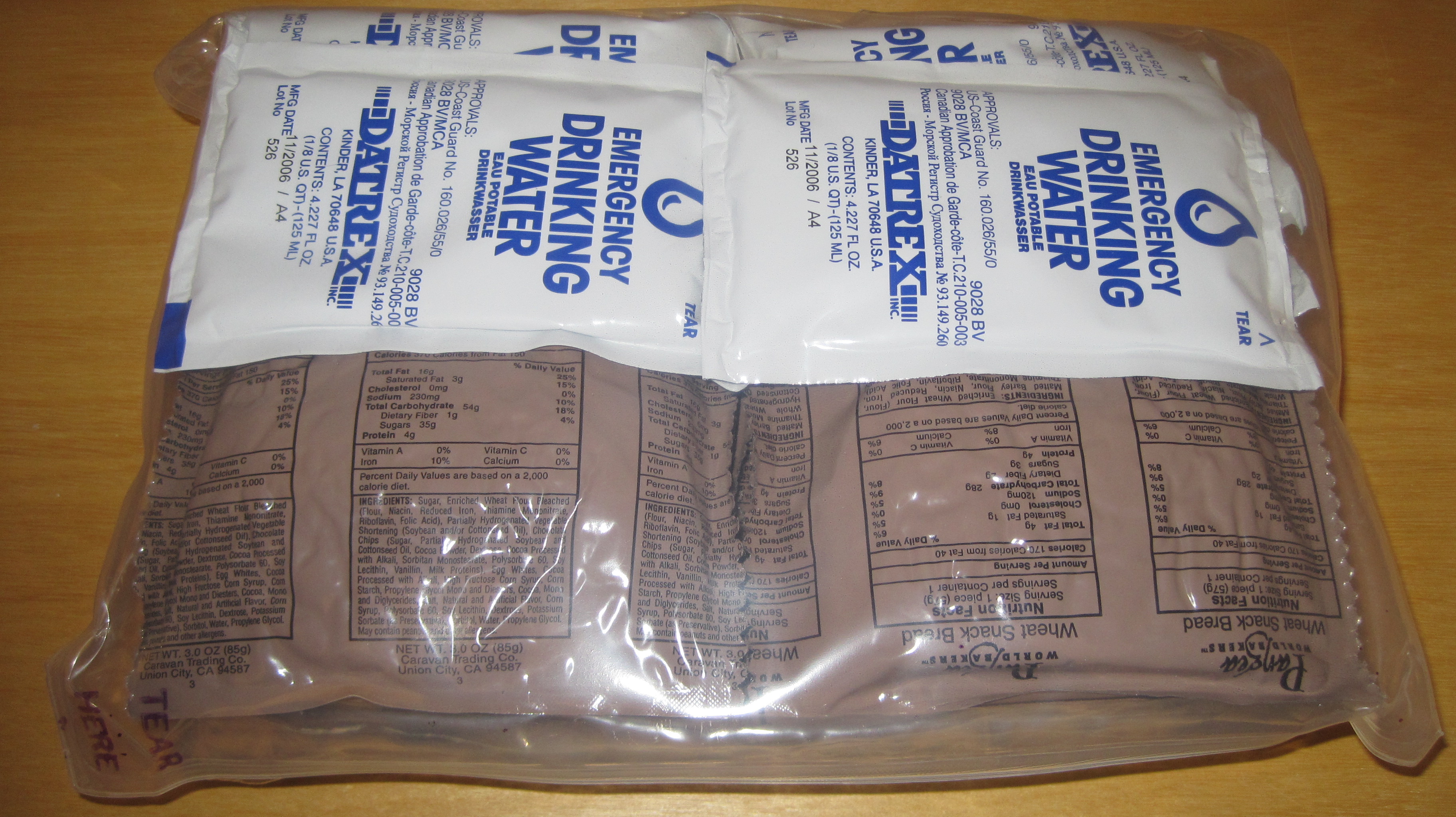
Australia’s preparedness advice is standing, state-based and built around natural disasters. Households are advised to be able to look after themselves for 72 hours — three days — after events such as floods, bushfires, severe storms and cyclones, when roads may be cut and power and water supplies interrupted. The guidance is routine, is repeated ahead of each hazard season, and predates this week’s viral post by years. The Conversation piece whose photograph the splice borrowed was restating that advice, not reporting any change to it. Nothing in the standing guidance involves an emergency request, a deadline or a national stockpiling drive, and no federal or state authority announced any change to it this week: checks of the ABC, Reuters, the Associated Press and The Sydney Morning Herald found no Australian government request or campaign of any kind.
The Red Cross position described above fits the same frame: prepare gradually, add items over time as part of normal shopping, and think about the hazards your own area actually faces. One larger figure circulated in this week’s discussion and deserves a precise label. RMIT academic Lunevich has suggested that households might hold around a month of supplies. That suggestion is a personal academic opinion, offered by one researcher. It is not government guidance, not Red Cross advice and not an instruction of any kind, and it should not be quoted as though it were an official Australian position.
The bottom line
As of publication, the position is simple enough to state in four sentences. Britain has a preparedness campaign, launched on October 22 and run by its Cabinet Office. Japan has an emergency request, scheduled for November 2 and not yet issued. Australia has standing 72-hour disaster advice, and a Red Cross plea against panic buying. It does not have — and this week it never had — an emergency stockpile order. When Japan’s request is issued on November 2, it will generate genuine headlines of its own; any version of those headlines that attributes the request to Australia, or to any country other than Japan, should be treated the way this week’s post deserved to be treated: as a splice, until the original source says otherwise.
Related coverage: UK Be Ready Campaign: Britain Told to Keep Three Days of Supplies · Japan Stockpile Food and Water Request: Hosono to Urge Every Citizen to Prepare on November 2
Sources
- The Guardian, “Every Briton should stockpile water and food supplies, government advises” (October 22, 2026) — the report on the UK Cabinet Office “Be Ready” campaign whose screenshot the viral post altered, substituting “Australia” for “UK” and dropping “climate crisis.”
- UK Cabinet Office, “Be Ready” campaign (beready.campaign.gov.uk) — the campaign’s own guidance: 72-hour household supplies, including three litres of water per person per day; threats named are the climate crisis, technological dependency and hostile states.
- The Conversation (October 26, 2026) — opinion piece by McKenzie and Whitelaw, University of Wollongong, restating standing Australian state-based 72-hour natural-disaster preparedness advice; photograph by Joel Carrett/AAP.
- Australian Red Cross (October 29, 2026) — Nichola Krey urging gradual preparedness for floods, fires, heat and cyclones, and stating: “We are absolutely not encouraging Australians to run out and start stockpiling food. No panic buying, please.”
- Signal Post News checks of the ABC, Reuters, the Associated Press and The Sydney Morning Herald (October 29, 2026) — no Australian government stockpile request, announcement or campaign found.