For an hour in Brisbane, the Australia vs Fiji rugby league scoreline was heading somewhere no one in the 41,108 crowd at Suncorp Stadium thought possible. Fiji, who had lost all seven previous Tests against Australia, led the reigning champions 16-12 in the second half and had a try disallowed that would have stretched the lead further. Then, in the space of about sixty seconds, the match turned: Solomone Saukuru's try was called back for obstruction, Australia marched downfield, and Tom Trbojevic scored the first of three tries in fifteen minutes. The Kangaroos escaped 36-22, top of Pool A and into the Rugby League World Cup semi-finals — but nobody inside the ground, least of all coach Kevin Walters, will pretend this was comfortable.
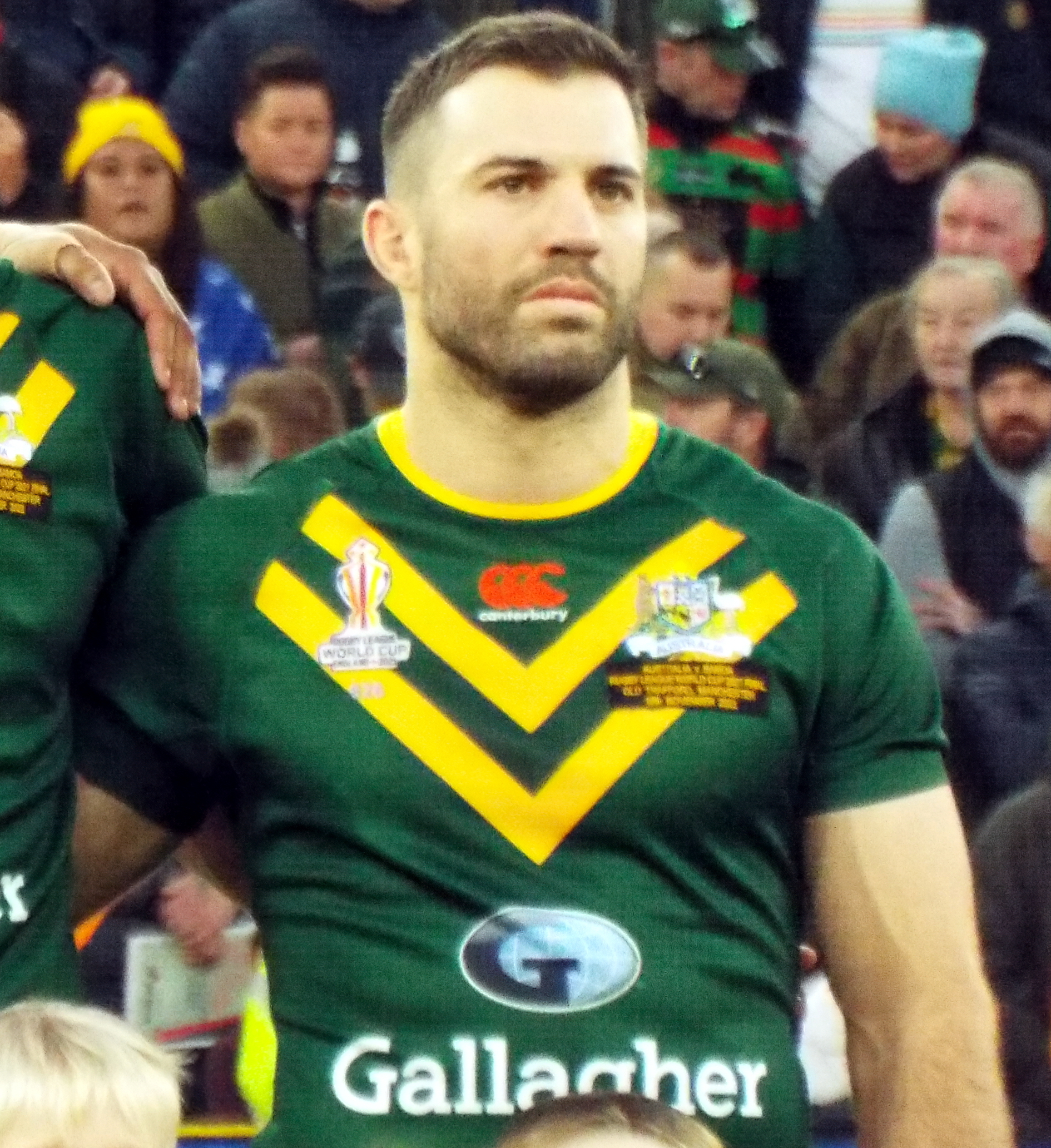
How Fiji took the game to the champions
Fiji announced themselves in their very first set, fullback Bayleigh Bentley-Hape breaking through to set the tone for a side that refused to play the role written for it. Australia struck first, in the seventh minute, when Tedesco stepped into first receiver and put centre Kotoni Staggs through a hole for a try on Staggs' home ground. But an error from Trbojevic in his own half handed Fiji the field position they needed, and the Bati made it count twice. In the 17th minute, five-eighth Kurt Donoghoe threw a stunning long cut-out pass that sent winger Semi Valemei over. Eight minutes later, Brandon Wakeham's slick grubber was swooped on by second-rower Taane Milne, and Fiji — incredibly, gloriously — led the world champions.
Up front, the Bati were winning the fight that was supposed to be Australia's. AAP called lock Caleb Navale the best forward on the park: a Manly powerhouse who ruptured his ACL in the pre-season and returned to play just 186 days after surgery. Fiji trailed only 12-10 at half-time, and even that scoreline flattered Australia, whose second try came from a moment of individual brilliance six minutes before the break — Tedesco darting from dummy-half on the last tackle, weaving behind the ruck and offloading to debutant half Sam Walker, whose one-two with Trbojevic sent Walker over.
The sixty seconds that decided everything
Three minutes after the restart, Donoghoe did it again — another sublime cut-out pass escaping Trbojevic's outstretched hand to give Valemei his second try and Fiji a 16-12 lead. In Fiji's next set, Donoghoe put Saukuru across, and for a moment the Bati were two tries clear with half an hour to play. The try was correctly called back for obstruction. What happened next is the whole match in miniature: Australia went straight down the other end and levelled through Trbojevic, Walker added a penalty goal after Blayke Brailey was flattened after passing, and when a Tedesco grubber deflected into Trbojevic's arms for his second — converted from the sideline by Walker — the buffer was eight points. Trbojevic completed a genuine hat-trick at 47, 57 and 62 minutes by the timings compiled from the match reports, a fifteen-minute burst that finally broke Fiji's resistance.
Fiji, characteristically, refused to leave quietly. Donoghoe — ultimately named player of the match, in a losing side — set up Valemei for a third time in the 69th minute to complete a hat-trick of his own and set up a tense finish, before Jacob Preston scored his first try in the green and gold in the 76th minute to seal it. Final scoring, as recorded by LeagueUnlimited: Australia 36 (tries: Staggs, Walker, Trbojevic 3, Preston; Walker 5 of 6 conversions and 1 penalty goal, 12 points on debut with the boot in addition to his try) — Fiji 22 (tries: Valemei 3, Milne; Wakeham 3 of 4 conversions). Half-time: Australia 12, Fiji 10. Four lead changes. Two hat-tricks. One enormous scare.
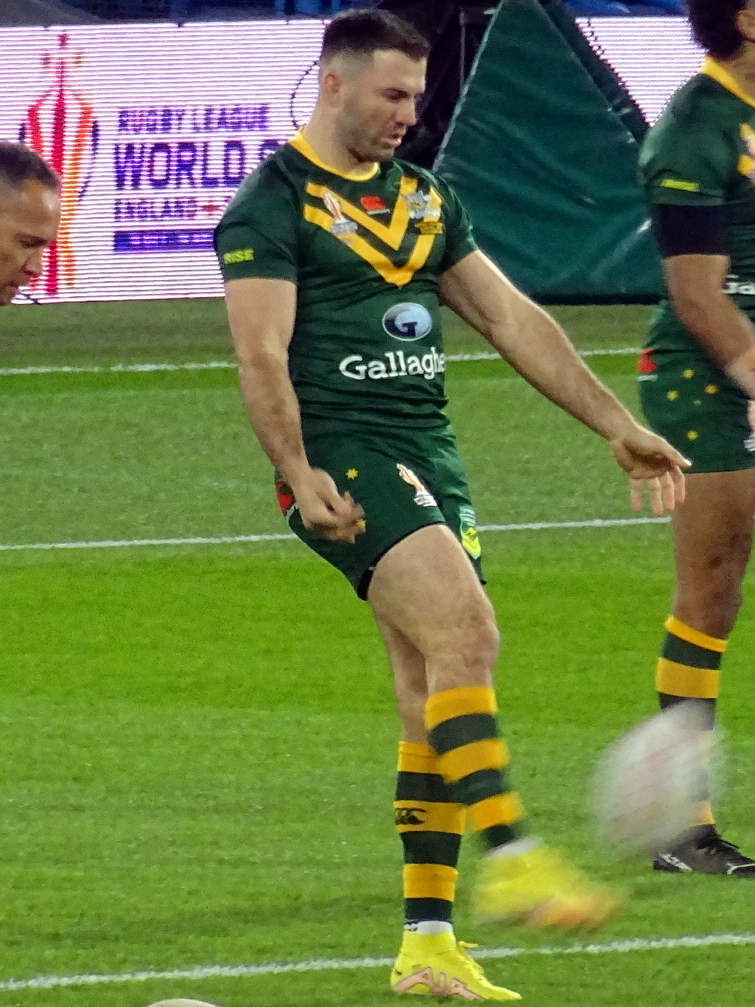
Why this matters
Start with the history Fiji were chasing. AAP records that Fiji had lost all seven Tests against Australia before Sunday, their closest defeat a 34-2 loss in a 2013 World Cup pool match. This was not a plucky performance measured in moral victories; for sixty minutes, by NRL.com's own assessment, Fiji arguably had the run of the game against the reigning champions on their own soil. The gap between rugby league's richest nation and a Pacific side built largely on NRL and Super League talent has been the sport's defining structural fact for decades. Sunday suggested that gap, at least on a single night with a single inspired playmaker, can nearly disappear.
Then there is what the scare says about Australia. The Kangaroos only narrowly beat New Zealand 24-22 in their opener last weekend, and have now delivered, in the words of BBC Sport's report, two unconvincing performances in two games. Trbojevic himself was honest about it afterwards, telling Premier Sports: "There are definitely some areas to improve on. We didn't start as we wanted to and couldn't get a flow. We just needed to play our style of footy. We weren't at our best but we came away with two points. We need to improve. We've got to enjoy a win but we've got to be our harshest critics too." When your match-winner is also your most candid critic, and when your pack has been outmuscled for an hour by the tournament's supposed underdogs, the semi-final favourites tag sits a little less comfortably than it did a fortnight ago.
The Tedesco question, answered — for now
Woven through the result is the selection story that dominated Australia's week. Tedesco, 33 and the oldest member of the squad, was overlooked for Reece Walsh in the opening win over New Zealand, returning against Fiji for his first Test in three years. AAP's verdict was blunt: a captain's knock got Australia out of jail, built on "several acts of Tedesco genius" — the pass for Staggs' opener, the dummy-half break that created Walker's try, the grubber that produced Trbojevic's second. The Tedesco-versus-Walsh debate for the No. 1 jersey at the pointy end of the tournament is not settled by one game, but Sunday made it very hard to leave the older man out of a semi-final. Australia also fielded four debutants — Walker, hooker Blayke Brailey, centre Bradman Best and second-rower David Fifita — and Walker's debut, a try and 12 points with the boot, was the other selection dividend.
What the numbers actually say
The scoreline's 14-point margin is the most misleading number of the night. Fiji led after 25 minutes, led again after 43, and were a correctly disallowed try from leading by two scores with thirty minutes left. Australia's six tries came in two clusters — two before half-time, then four in the final half-hour, three of them Trbojevic's in fifteen minutes — which is the statistical signature of a favourite surviving on individual brilliance rather than controlling a game. Fiji's four tries all came from the same creative source: Donoghoe assisted all three of Valemei's, and Wakeham's grubber made Milne's. When one five-eighth produces every try your opponent scores, the defensive read is not complicated — and Australia still could not stop it until the obstruction call and the Trbojevic burst changed the game's physics. The crowd figure matters too: 41,108 in Brisbane on a Sunday night for a pool game the hosts were expected to win easily is evidence of an appetite for genuine contests that this tournament, too often criticised for one-sided pools, badly needs.
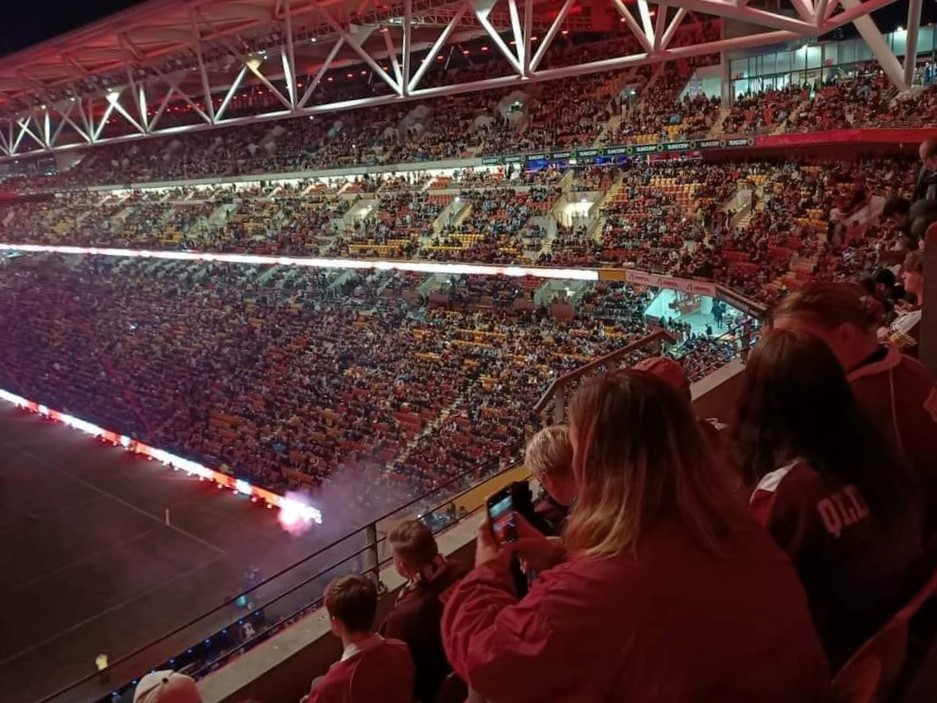
The Donoghoe game, and what it says about the Pacific pipeline
If one performance from Sunday travels beyond this tournament, it is Kurt Donoghoe's. The Dolphins five-eighth, coming off what AAP called a stellar club season, produced three try assists — all of them for Valemei, all of them with the same weapon, a long cut-out pass that kept finding the one Australian defender who had committed inside — and was named player of the match in defeat, an honour that almost never goes to the losing side in a World Cup pool game. Add Wakeham's kicking and game management, Navale's post-surgery return to dominate the middle, and a first-set line break from Bentley-Hape, and Fiji's spine and pack both functioned at a level Australian sides have rarely had to solve outside of New Zealand, England and, increasingly, Samoa and Tonga. That is the deeper structural story: the Pacific nations are no longer collections of heritage players assembled for a month, but teams built on week-in, week-out NRL combinations, and the World Cup is better — commercially, competitively and as a spectacle — every time one of them does what Fiji did for an hour in Brisbane. The sport has spent years debating whether its international game can matter as much as its club game. Sunday night, in front of 41,108 people, was an argument that it can, precisely because the result was in doubt until the 76th minute.
What happens next
The win confirms Australia in top spot in Pool A and sends them to a semi-final at Allianz Stadium in Sydney on Sunday, November 8 — NRL.com confirms the Kangaroos and the Jillaroos will feature in a semi-final double-header there, the women's game at 5.45pm AEDT and the men's at 8.05pm AEDT. Before that, Australia close their pool campaign against the Cook Islands in Townsville, a game that now doubles as a selection audition and a chance to fix the defensive edges Fiji exposed. Fiji's path is brutally simple: beat New Zealand on the Gold Coast on Saturday to join Australia in the knockout rounds, a task made harder but not fanciful by everything Sunday proved about this side. New Zealand, for their part, got back on track with an 82-16 win over the Cook Islands in Christchurch, per BBC Sport, so the Gold Coast game is a straight shoot-out for a semi-final place. If Donoghoe plays like this again, nobody should assume the result.
Read more on Signal Post News: Virat Kohli and the 2027 World Cup and India's archery gold sweep at the Asian Games.
Sources
Reporting based on AAP, "Tedesco gets Australia out of jail against fab Fiji" (Oct 25, 2026); NRL.com, "Turbo bags three as Roos outlast brave Bati in Brisbane" and "Rugby League World Cup semi-finals" (Oct 25, 2026); BBC Sport via BBC News, "Australia reach World Cup semis & New Zealand get back on track" (Oct 25, 2026); LeagueUnlimited match report and scoring summary, Australia (M) 36, Fiji (M) 22; Serious About Rugby League match timings (Oct 25, 2026). All photographs are file photos, credited individually in their captions, and are not from Sunday's match.