ASI, the Boston AI startup formerly known as Air Space Intelligence, raised $325 million in a Series C round at a $3 billion valuation on Tuesday, October 20, 2026, according to Reuters and the company's Business Wire announcement — money that lands on top of an $875 million FAA air-traffic contract and a $99 million U.S. Army contract.

What happened: a $325 million Series C, led by Spark Capital
BOSTON — ASI said on Tuesday that it had raised $325 million in a Series C financing round valuing the company at $3 billion, Reuters reported. The round was led by Spark Capital, with participation from affiliates of Citadel Securities, Meritech Capital and Craft Ventures, according to Reuters; the company's own announcement, carried by Business Wire, adds Energy Impact Partners and Andreessen Horowitz (a16z) to the investor list. Bloomberg, which first reported the transaction's shape, put it plainly: the money lets ASI expand an artificial intelligence system that helps the military, airlines and air-traffic controllers manage assets.
The company, previously known as Air Space Intelligence Inc., builds simulation and monitoring software that helps operators forecast disruptions hours, days or weeks in advance across complex systems such as air traffic, power grids and military operations. "While the broader tech ecosystem spent hundreds of billions teaching AI to manipulate words and generate text, ASI is deeply focused on AI systems that can manage and control physical assets," founder and chief executive Phillip Buckendorf said — a line carried in both the Reuters report and the company's announcement. In the announcement's fuller version, Buckendorf called the new capital assurance that ASI "scales as America's engine: the automated nervous system keeping the country running."
ASI said it would use the proceeds to expand deployments in energy, logistics and military environments and add to its research and engineering teams in Boston. The valuation is the headline, but the contract book underneath it is the substance: Reuters noted that ASI secured a five-year, $99 million U.S. Army contract in October and a 12-year, $875 million Federal Aviation Administration contract in June, covering military command systems and air traffic management respectively. A startup of roughly 150 staff, by earlier procurement reporting, now holds close to a billion dollars of federal contract ceiling — and is valued at three times that.
The FAA bet: SMART, and a startup that beat Palantir and Thales
The June FAA award is the deal that made ASI. The 12-year contract, worth up to $875.9 million, covers two air traffic management systems, including SMART — Strategic Management of Airspace, Routes, and Trajectories — an AI-supported platform that analyses weather, flight schedules, airport capacity and airspace restrictions to predict congestion days, weeks and even months in advance, shifting traffic management from reactive firefighting to advance planning. Procurement reporting at the time stressed the upset: ASI's Flyways platform was already operating at scale for U.S. carriers and the military, and the startup beat the software heavyweight Palantir and the air-traffic veteran Thales, both far larger and more entrenched in government work.
The FAA began limited use of SMART around Washington, D.C., in September, ahead of a planned nationwide rollout. The system provides recommendations to traffic managers; it does not directly control aircraft. That distinction — adviser, not pilot — is the one the agency and the company return to whenever the safety question is asked, and it is the distinction on which the whole deployment rests. Air traffic in the United States is a system where a single bad afternoon can cascade, a fragility Signal Post News readers saw in September's FAA outage that grounded Northeast flights. ASI's pitch is that foresight software makes those afternoons rarer — and that it arrives as working software, not as another decade-long modernisation programme. The FAA's last marquee effort, NextGen, was reportedly only 16 per cent complete after 15 years and $7.5 billion; ASI says it invested close to $100 million of its own money building its platform before the award.
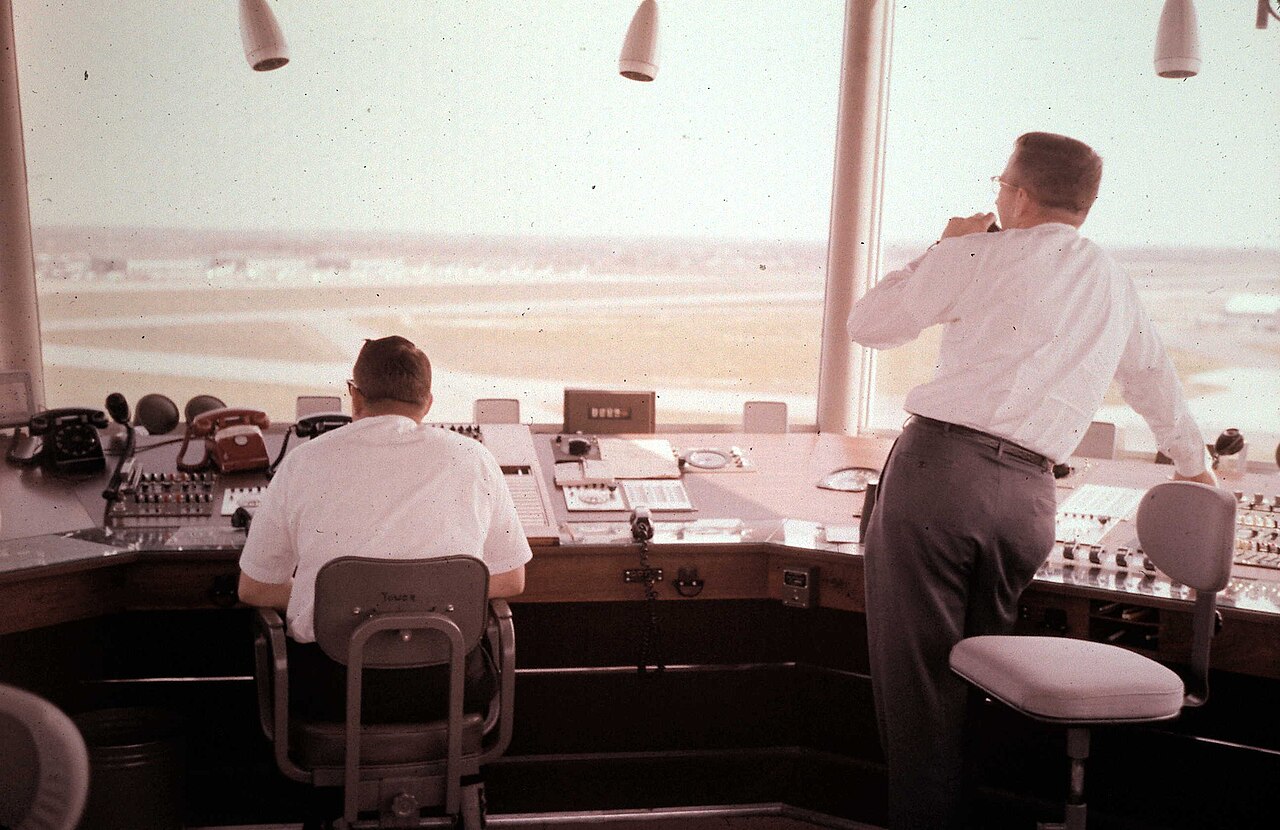
The scrutiny: Congress, safety questions, and an FAA that wants a piece of its own contractor
Success has brought the kind of attention startups usually meet later. In an October 9 letter, 25 Democratic lawmakers urged the FAA to suspend SMART's initial 90-day evaluation period until the agency provided more information about safety testing, controller training and oversight, and asked for a response by October 19. "Any upgrades and changes to ATC systems must be made with safety as the first priority," the lawmakers wrote. Carriers, for their part, have privately pressed the FAA over how SMART will decide which flights get moved when conflicts arise — the moment a forecasting tool stops being neutral and starts choosing winners among airlines.
Then, last week, the story took a stranger turn. POLITICO reported, from an internal FAA document it reviewed, that the agency is seeking an ownership stake in Air Space Intelligence — a warrant that would let the federal government buy shares in its own contractor at a predetermined price. The term sheet expires at the end of 2026; no agreement has been finalised, and neither the FAA nor ASI commented to POLITICO. It would be the first known arrangement of its kind for the FAA. Supporters of the idea, in the administration's broader practice, argue the taxpayer should share the upside of companies its contracts create. Critics see a regulator with a financial interest in a company whose system it must independently judge safe. Both readings can be true at once, which is precisely why the warrant — if it is exercised — will matter far beyond one startup. Tuesday's $3 billion valuation also gives that negotiation a fresh, very public price tag: whatever the government buys, it now buys into a company the private market has just marked at $3 billion.
Why this matters
The deepest significance of the ASI round is what it says about where the AI boom is going next. The first wave of AI money chased language: models that write, summarise and chat. ASI belongs to a second wave — sometimes called physical or infrastructure AI — whose value is measured not in tokens generated but in disruptions that never happen: the grid failure forecast a week early, the air-traffic jam dissolved before it forms, the military logistics snarl seen in time to reroute. That is a harder business to demo and an easier one to defend, because its customers are not experimenting; the FAA, the Army and the airlines have operational problems that do not wait for a better model.
The numbers frame the bet. A $325 million round at a $3 billion valuation, for a company whose disclosed federal contract ceilings total roughly $975 million, means investors are pricing ASI not as a contractor but as a platform — the layer through which many operators will run many systems. That is the same wager, in miniature, that the market has made on defence-tech generally: that software companies can take ground from the prime contractors by arriving with working products and iterating like startups. ASI's earlier funding tells the same story in smaller figures — its Series B in December 2023 raised $34 million at a $266 million valuation, according to funding records; in under three years, the valuation has multiplied more than eleven-fold, almost entirely on the strength of government adoption.
There is a genuine public-interest tension here, and a serious article should not dissolve it. A private algorithm that forecasts congestion is unobjectionable; a private algorithm whose recommendations shape which flights move, which grid assets are committed and how military operations are sequenced is a piece of national machinery. The congressional letter, the airlines' private lobbying and the FAA warrant story are three faces of the same question: what oversight fits a system this embedded? ASI's defenders — and the FAA officials who chose it over Palantir and Thales — answer that the alternative is not a public algorithm; it is the status quo of ageing systems and reactive management, in a network that already fails publicly and expensively. The critics answer that safety cases, training and accountability have to be proved, not pitched — the same oversight argument now running through Washington's wider AI debate, from the SMART letter to the FTC probe of rogue AI agents. The 90-day SMART evaluation, and what the FAA discloses about it, is where that argument will be settled in evidence rather than in press releases.
What happens next
Four things to watch. First, the SMART rollout: whether the FAA moves from the Washington-area limited use to the planned nationwide deployment on schedule, and whether the lawmakers who demanded a pause get the safety and training information they asked for — their October 19 deadline has now passed. Second, the warrant: the FAA's term sheet expires at the end of 2026, so the ownership question will be answered, one way or the other, within weeks — and a government stake in ASI, agreed days after a $3 billion private valuation, would set a precedent other agencies and other startups will study closely. Third, the Army work: the five-year, $99 million contract ASI secured this month extends its simulation approach from airspace into military command systems, the most sensitive deployment of all. Fourth, the hiring: ASI says the new money expands its Boston research and engineering teams, and in a market where AI talent is the scarcest input, a freshly capitalised infrastructure specialist is now bidding against the largest labs in the world.
Buckendorf's framing — an "automated nervous system keeping the country running" — is either the most ambitious claim a Boston startup has made this year or a straightforward description of where its contracts already point. On Tuesday, Spark Capital, Citadel Securities' affiliates, Andreessen Horowitz and the rest paid $325 million for the second reading. The evidence that decides between the two will not come from funding announcements. It will come from delayed flights that never happened, grids that held, and an evaluation report the FAA has yet to publish.
Sources
- Reuters, October 20, 2026: "AI startup ASI valued at $3 billion in latest funding round" — $325 million Series C led by Spark Capital; Citadel Securities affiliates, Meritech Capital, Craft Ventures; Buckendorf quote; $99 million Army and $875 million FAA contracts; Boston expansion plans
- ASI announcement via Business Wire, October 20, 2026: "ASI Secures $325M Series C at $3B Valuation to Power America's Critical Infrastructure With AI" — full investor list including Energy Impact Partners and Andreessen Horowitz (a16z); "automated nervous system" quote (text via syndication mirrors)
- Bloomberg Law, October 20, 2026: "ASI Hits $3 Billion Valuation in $325 Million Round Led by Spark" — ASI formerly Air Space Intelligence Inc.; defence and aerospace startup resurgence
- AVweb, October 16, 2026, reporting POLITICO: "FAA Seeks Ownership Stake in Air Traffic AI Contractor" — warrant/term-sheet reporting; $875.9 million 12-year contract; SMART description; September Washington-area limited use; October 9 letter from 25 Democratic lawmakers
- Background reporting on the June FAA SMART award (US Transport News / DroneXL, June 2026): ASI beat Palantir and Thales; Flyways in use at major U.S. carriers and the Air Force; NextGen comparison — company reach claims are ASI's own and are attributed as such in the body
- Funding-history records (Clarity): ASI (Air Space Intelligence), founded 2018, Boston; Series B December 2023, $34 million at a $266 million valuation
- Photos: downtown Boston from Fort Point Channel and civilian air traffic controllers at Memphis — file photographs via Wikimedia Commons (see captions); transmission towers at sunset in East Texas by Matthew T Rader via Wikimedia Commons (CC BY-SA 4.0)