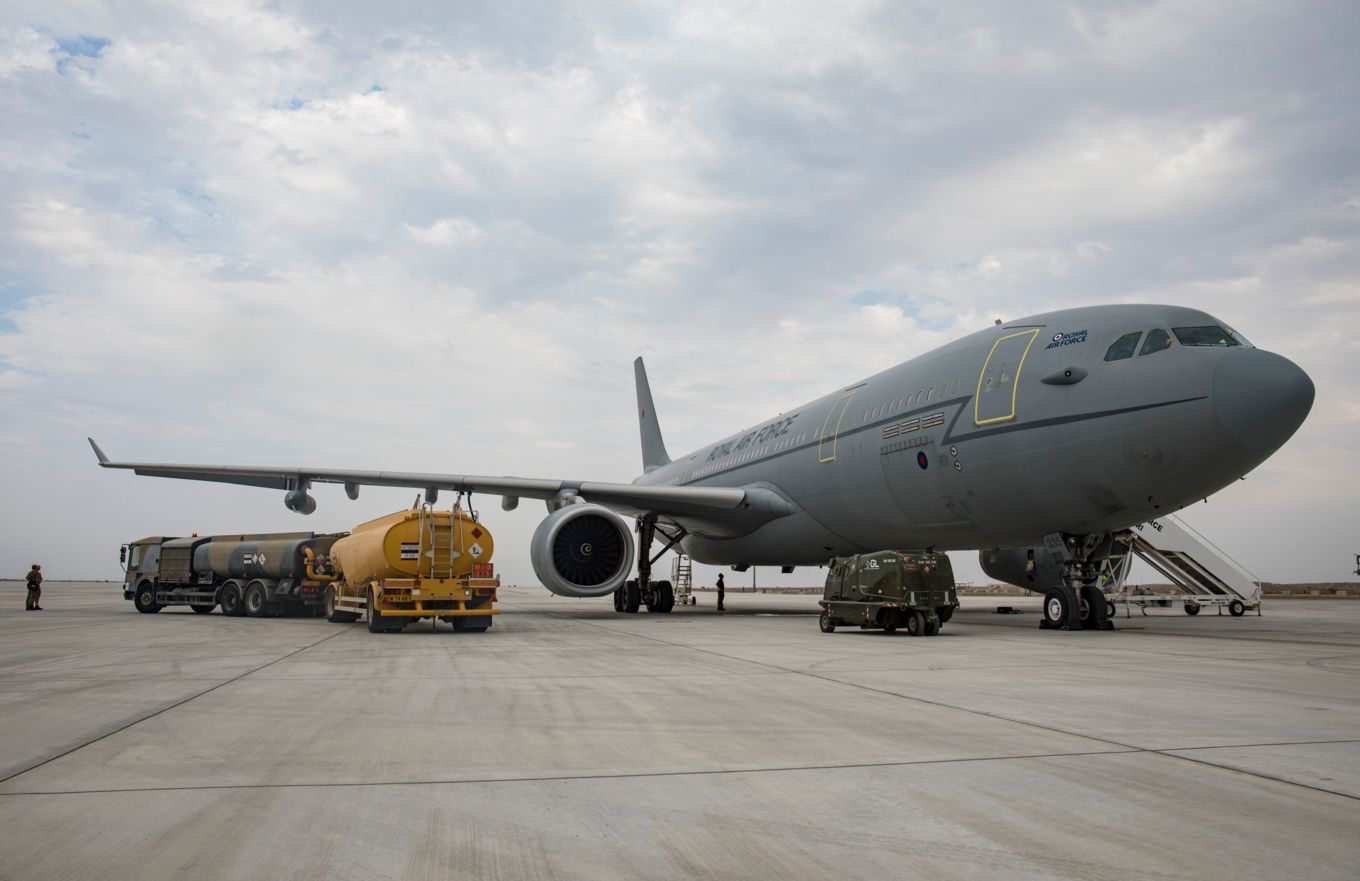
Britain will deploy a Royal Air Force Voyager tanker to support Saudi Arabia’s defence against Houthi drones and missiles, Prime Minister Andy Burnham announced on September 21 while travelling to the United Nations General Assembly in New York. The aircraft is expected to begin operating within days, according to the Press Association account of the decision, and officials indicated that the mission could last for weeks rather than become an open-ended commitment.
The stated task is air-to-air refuelling. British officials said the Voyager would extend the time Saudi aircraft can remain airborne while defending the kingdom against incoming threats. They also drew a boundary around the mission: the tanker is not intended to support strikes inside Yemen. The deployment supplements Britain’s existing Sky Sabre air-defence contribution rather than replacing it.
That distinction—refuelling defensive sorties but not offensive missions—is central to London’s argument. It is also the point most likely to be tested if the conflict intensifies. A tanker does not select targets or fire weapons, yet fuel is operational support: it can increase the reach, persistence and number of sorties available to another air force. Britain is therefore moving closer to the Saudi defence effort even as it says it is not entering the war in Yemen.
Why this matters
The significance of the deployment is not that a single Voyager adds a large new combat force. It is that aerial refuelling is a force multiplier. A fighter that would otherwise have to return to base can remain on station, cover a wider area or respond to a threat at greater distance. One tanker can support multiple receivers during a sortie, although the real effect depends on aircraft availability, crew rotations, fuel demand, basing, airspace access and the tempo of Houthi attacks.
Saudi Arabia has sophisticated fighters and ground-based air defences, but a sustained drone-and-missile campaign imposes a persistent readiness burden. Defensive aircraft must be positioned, fuelled and crewed before a threat appears. Cheap or comparatively expendable attacking systems can force far more expensive interceptors and aircraft to stay alert. Tanker support helps Riyadh manage endurance; it does not remove the cost imbalance or guarantee that every incoming weapon will be detected and stopped.
For Britain, the choice carries three linked stakes. The first is alliance credibility: Saudi Arabia is a long-standing security partner, and London wants to show that attacks on the kingdom will not be met with diplomatic language alone. The second is energy and shipping security. Houthi operations around western Yemen and Bab al-Mandeb create risks for Red Sea trade, while attacks or threatened attacks on Saudi territory can affect energy infrastructure and market expectations. The third is political control. A tightly defined defensive mandate may be easier to justify than participation in strikes, but it requires reliable separation between the missions being supported.
The deployment also sends a signal beyond Riyadh and Sanaa. Iran, which supports the Houthis, will read the mission as evidence that European military capacity can be added to Gulf defences. Other British partners will read it as a test of whether London can provide useful support without being drawn into a broader regional campaign. Neither interpretation determines what happens next, but both affect deterrence and escalation calculations.
The announcement and its limits
Burnham presented the operation as defensive assistance against missiles and drones. The Press Association reported that one Voyager would be used and that operations were expected to start within days. The mission is understood to be time-limited, potentially measured in weeks. Those parameters matter because they define the initial commitment: one aircraft, a refuelling role, support for air defence, no declared role in strikes on Yemen and no permanent deployment announced.
The RAF’s Voyager fleet is based on the Airbus A330 Multi Role Tanker Transport. It can refuel compatible military aircraft in flight and also carry passengers or cargo. In this mission, its value lies less in headline numbers than in scheduling. Tanker tracks have to be protected, deconflicted with civil traffic and positioned where receiver aircraft can reach them without exposing the tanker to unnecessary risk.
Public details leave important questions unanswered. Officials have not set out how many sorties the aircraft will fly, which Saudi platforms it will refuel, the precise command arrangement, or the operational rules used to determine whether a receiving aircraft is on a defensive mission. The absence of those details is not evidence that the rules are weak; it means that the public cannot yet assess how the stated boundary will be implemented in practice.
Sky Sabre and Voyager serve different functions. Sky Sabre is a ground-based air-defence system designed to detect, track and intercept airborne threats. Voyager extends aircraft endurance. Together they create a layered contribution: one helps defend a fixed area, while the other supports mobile aircraft operating across a larger air picture. Neither system alone ends the launch campaign that produces the threat.
Background: the September Houthi campaign
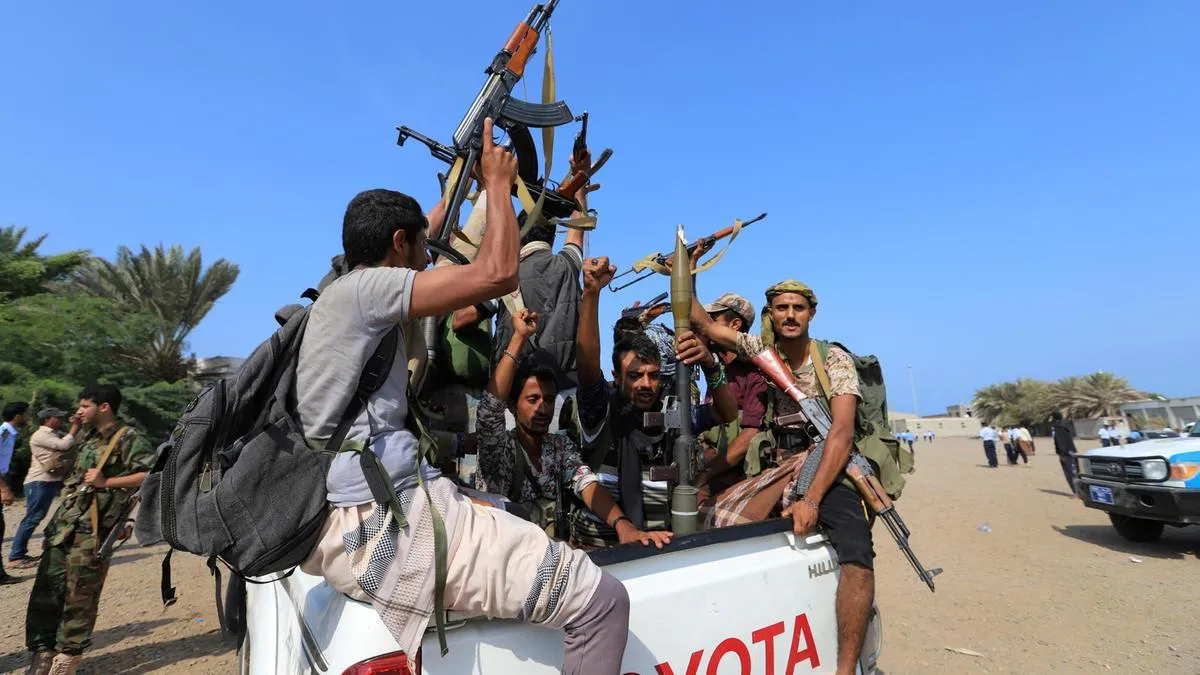
The deployment follows a sharp widening of the Yemen front. Reuters reported on September 21 that five Yemeni military sources described Houthi forces pushing toward the Kahboub Mountains near Al-Wazi’iyah district and Ras al-Ara. The sources said the aim was to strengthen positions around Bab al-Mandeb, Dhubab and Perim Island and to create options for new fronts. Those battlefield accounts are difficult to verify independently, and control of particular roads and ridges may change quickly.
The highlands matter because they sit behind the coast at the southern entrance to the Red Sea. Holding elevation can improve observation, protect supply routes and give coastal positions more defensive depth. It does not by itself close Bab al-Mandeb, but it can make the military balance around the waterway harder to reverse. The route links the Red Sea to the Gulf of Aden and is central to traffic between Asia and Europe.
The ground operation followed reported Houthi gains along the coast earlier in September, including Mokha and Perim, according to Houthi and Yemeni officials cited in international reporting. The movement has also claimed attacks on Saudi sites, while Saudi authorities have reported interceptions of missiles and drones. Each side has an incentive to emphasize success and minimize losses. Claims about strikes, damage, interceptions and territorial control should therefore be treated as attributed accounts unless corroborated by independent evidence.
Reuters also reported an account, originally published by The New York Times, that U.S. strikes against the Houthis had been prepared and then called off. Reuters said it could not independently verify that report, and U.S. Central Command did not confirm it. The episode is relevant because uncertainty over American intentions may affect Saudi requests for support and Houthi calculations, but it is not an established fact about U.S. operational orders.
Yemen’s conflict predates the current escalation. The Houthis seized Sanaa and much of northern and central Yemen in 2014; a Saudi-led coalition intervened in 2015 on behalf of the internationally recognized government. A truce reached in 2022 reduced large-scale fighting for years but did not produce a comprehensive political settlement. The renewed campaign has reopened military questions that were contained rather than resolved.
The humanitarian consequences are already serious. United Nations figures cited by Reuters put deaths in the wider current escalation at nearly 700, with thousands injured and more than 120,000 people internally displaced. Those figures are not a casualty count for the latest mountain fighting or for attacks on Saudi Arabia. They show the cumulative burden of the broader escalation in a country whose health, food and shelter systems were already weakened.
Who benefits, who loses, what critics are asking
Saudi Arabia is the immediate beneficiary. RAF refuelling can give Saudi defensive patrols more endurance and flexibility without Riyadh having to generate all tanker capacity itself. The support also offers political reassurance: a major European partner is willing to commit an aircraft and crews when the kingdom says it faces a sustained external threat.
Britain may gain diplomatic leverage and demonstrate a practical military capability that partners value. The mission can also support Britain’s interest in the security of energy infrastructure and commercial shipping. Those benefits come with exposure. If British-supported aircraft become associated with disputed strikes in Yemen, London will face demands for evidence that the defensive mandate was respected.
The Houthis lose some of the advantage created by forcing Saudi aircraft to cycle through fuel and readiness limits. At the same time, the group may use the British deployment to present its campaign as resistance to a wider foreign coalition. That narrative does not establish the legality or accuracy of Houthi targeting, but it can influence recruitment and political messaging.
Yemeni civilians and commercial crews remain most exposed to escalation. A stronger defensive shield may reduce the damage caused by attacks on Saudi territory, but it does not directly protect communities near front lines or end threats to shipping. Additional military capacity can deter attacks; it can also contribute to a cycle in which each side expands operations because it believes the other is preparing to do the same.
Critics are likely to focus on mission creep and accountability. They will ask how Britain verifies that fuel goes only to aircraft engaged in defence, what happens if a Saudi sortie changes task after refuelling, and who authorizes support during a fast-moving engagement. Supporters will argue that refusing assistance would reward missile and drone attacks and weaken deterrence. Both positions turn on the same operational facts: what the receiving aircraft is doing, what commanders know at the time and whether the mission remains within its published limits.
There is also a legal and parliamentary dimension. Defensive support to a partner is different from launching British strikes, but deployment of RAF crews into a conflict environment still warrants scrutiny of rules of engagement, risk and duration. A mission described as lasting weeks should be reviewed if it extends, expands to more aircraft or begins supporting a different category of sortie.
What the numbers imply
One Voyager is a meaningful but constrained contribution. Maintenance, crew duty limits and transit time mean one aircraft cannot provide uninterrupted coverage indefinitely. Its impact will be greatest when assigned to periods of elevated threat or used to relieve pressure on Saudi tanker assets. If the mission grows beyond one aircraft, that would be a substantive change rather than an administrative detail.
A mission measured in weeks suggests London is trying to answer an immediate operational need while preserving an exit point. The timetable may also be intended to influence adversary calculations during a diplomatic window around the U.N. General Assembly. A short mandate does not guarantee a short deployment: renewed attacks, requests from Riyadh or an unresolved air threat could create pressure to extend it.
Nearly 700 reported deaths and more than 120,000 displaced people in the wider escalation, based on U.N. figures cited by Reuters, show why the military decision cannot be assessed only through aircraft performance. The operational benefit of more persistent defensive patrols sits beside a humanitarian crisis that requires access, protection and diplomacy. The figures are estimates gathered during an active conflict and may be revised.
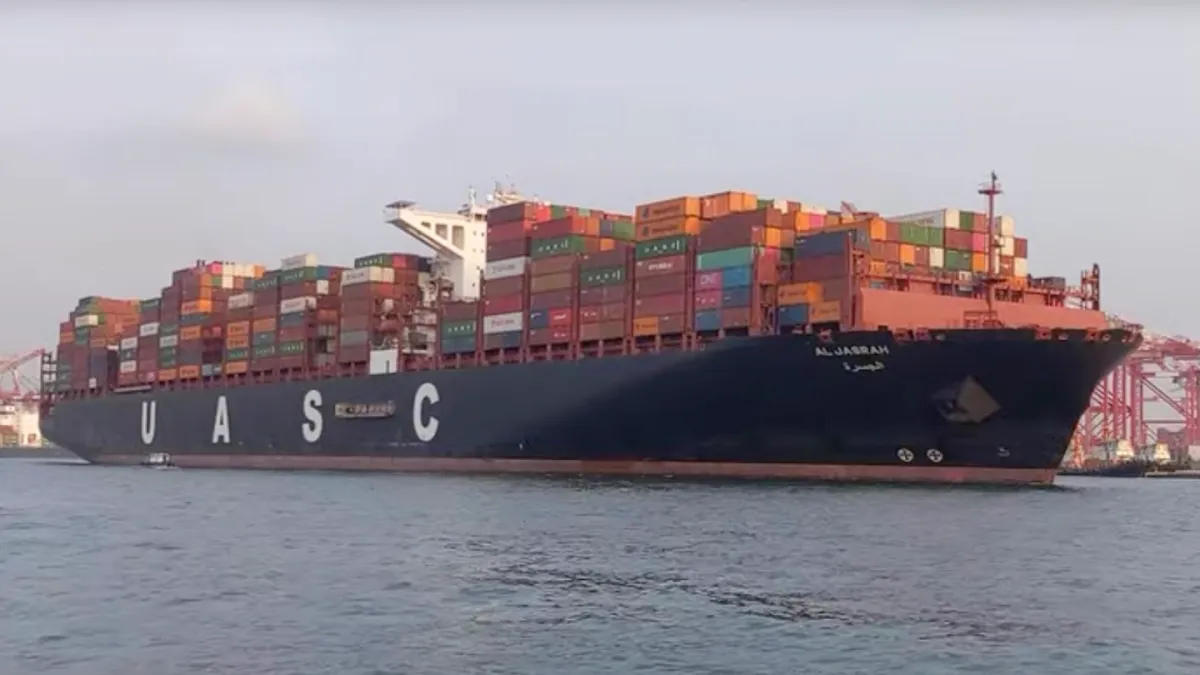
Bab al-Mandeb’s trade role magnifies even limited military developments. Earlier Associated Press reporting put the waterway’s normal share of world trade at about 12%. That does not mean a threat removes 12% of trade; ships can wait or reroute around the Cape of Good Hope. But diversions add sailing time, fuel expense, insurance costs and pressure on supply chains. Markets can react to credible risk before a passage is physically closed.
The central numerical lesson is asymmetry. The attacking side may use drones or missiles to force continuous, expensive defence. The defending side responds with fighters, interceptors, radar coverage and now tanker support. Success is therefore not measured only by the number of weapons intercepted. It also depends on whether defence can be sustained without exhausting crews, munitions, maintenance capacity or political consent.
What happens next: four scenarios
- The mission stays narrow and expires. Houthi attacks decline or Saudi forces absorb the remaining demand, allowing the Voyager to return after several weeks. This would support London’s claim that the deployment was a bounded response to an acute defensive need. Indicators would include fewer verified launches, lower Saudi alert levels and no request for an extension.
- Britain extends or expands support. Sustained attacks could lead to a longer deployment, additional crews or another aircraft. Any move from refuelling defensive patrols toward intelligence, targeting or support for strikes in Yemen would mark a major policy shift and should be identified as such rather than treated as continuity.
- The ground and maritime fronts converge. If Houthi forces consolidate positions near the Kahboub Mountains, Dhubab or Perim while attacks on Saudi territory continue, Riyadh may have to divide attention between territorial defence, Red Sea security and support for Yemeni allies. Tanker support would help air endurance but would not solve the ground-force or shipping-protection problem.
- Diplomacy reduces the operational pressure. U.N. General Assembly meetings, Saudi–Houthi channels or pressure from regional and international partners could produce a pause. Reuters reported that China had privately asked Iran to help restrain Houthi attacks after a Saudi appeal, citing Iranian sources; the details and Tehran’s response were not independently established. A credible reduction would require observable changes in launches, front-line activity and shipping advisories, not declarations alone.
The most important tests are practical. Watch whether the Voyager begins operations on the announced timetable, whether Britain publishes clearer mission rules, whether the deployment lasts beyond the initial window, and whether Saudi interception claims are matched by independently documented attacks or damage. On the Yemen front, verified control of high ground and roads will matter more than maximalist statements from either side.
Britain has not announced a return to offensive operations in Yemen. It has, however, made a consequential choice: to put an RAF aircraft and British crews into the support architecture of Saudi air defence. The mission’s credibility will depend on whether the government can keep its defensive boundary visible, enforceable and temporary while the campaign around it continues to widen.
- Press Association via AJ Bell: Burnham’s announcement, the Voyager mission, defensive scope, expected timing and Sky Sabre context
- The Times: British political and military context for the Saudi support decision
- Reuters: Houthi highlands campaign, humanitarian figures and contested U.S. strike report
- CNN: regional context for the September Houthi offensive
- Royal Air Force: official Voyager file photograph and air-mobility background
Reporting note: This original Signal Post News analysis is based on public reporting available through September 21, 2026. The British mission details are attributed to the government announcement and the Press Association account. Battlefield control, strike totals, damage and casualty claims remain attributed where they could not be independently verified. This is a fixed reporting snapshot.