Sudan army North Kordofan offensive
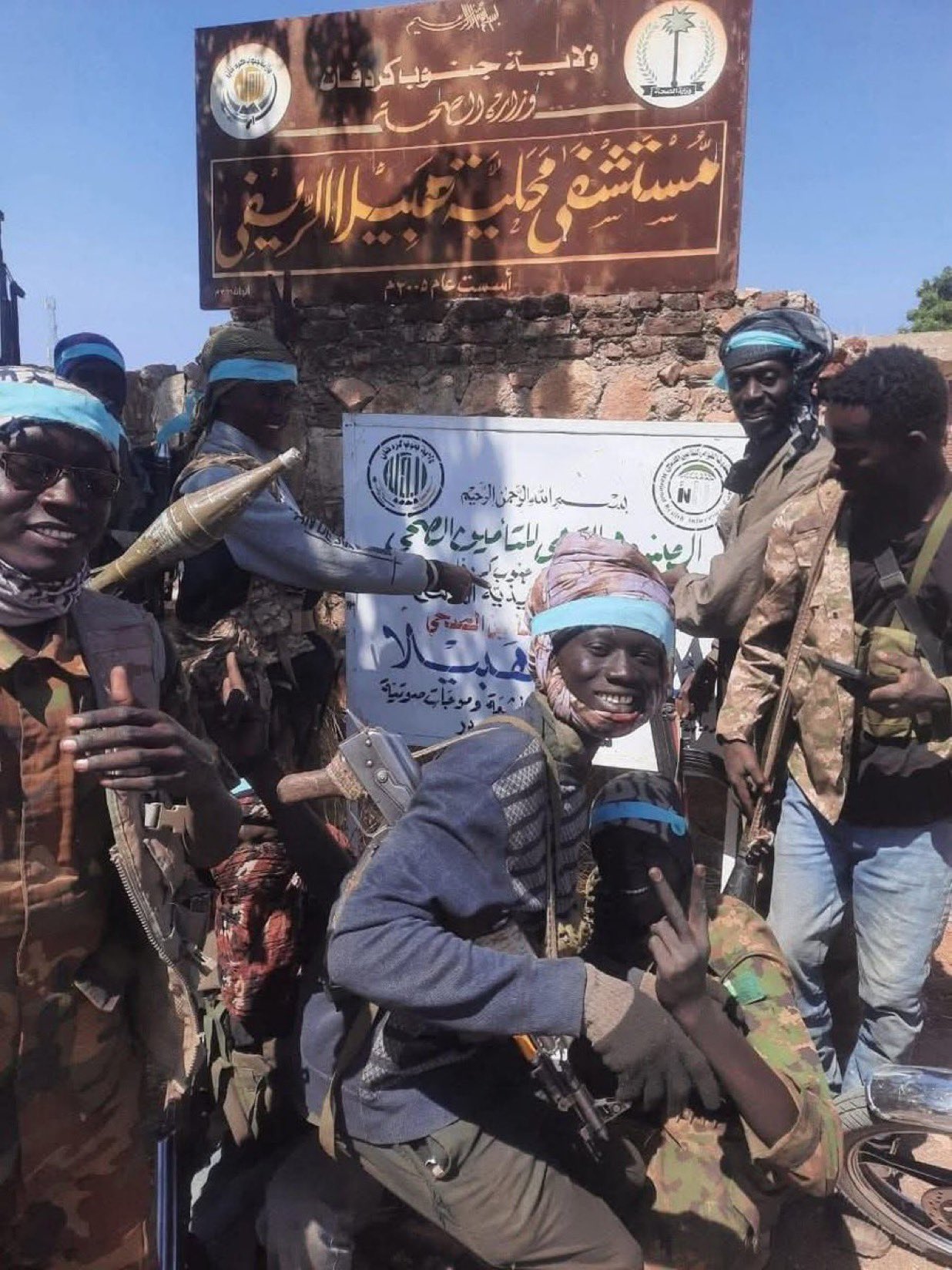
The Sudan army North Kordofan offensive that began on Thursday, September 17, is the Sudanese Armed Forces’ largest ground operation in the state since it recaptured Bara, Jabrat al-Sheikh and Umm Sayala in late July. The army and allied Joint Forces opened several axes at once: west from El Obeid toward Abu Qa’ud and Umm Sumaima in Al-Sheikan locality, and west from Bara and Jabrat al-Sheikh toward Sharshar and Sodari locality. Their declared objective is to clear Rapid Support Forces pockets and open the road corridor toward Darfur.
In its September 17 announcement, reported by the Sudan Tribune, the army said it had captured 11 areas: Kajmar, Sharshar, Al-Baniya Al-Kurayniya, Al-Qulai’at, Awlad Hazma, Maquldat, Rishan, Al-Qa’a, Ghabat Al-Laqad, Al-Kukaiti and areas near Al-Mazroub. Those are military claims, not an independently verified new map. Military sources cited by Anadolu also said allied forces captured al-Jamama, northeast of Sodari, on September 20 and circulated videos claiming control. Al-Jamama is a commercial hub on the route linking El Obeid with Al-Dabbah in Northern State.
Verification warning: Territorial claims in this offensive come largely from army statements and footage posted by allied forces. Sudan War Monitor says it has not independently verified all of the named areas. There are no verified casualty figures for the operation, and the RSF has not responded to most of the army’s claims. This report attributes claims to their sources rather than presenting them as settled battlefield facts.
Why this matters: Kordofan is the war’s hinge
After roughly three and a half years of grinding war, the army is betting that momentum can succeed where mediation has failed. North Kordofan is the hinge between the territory the SAF has retaken in Sudan’s center and the RSF’s Darfur stronghold. Whoever can hold the roads west of El Obeid controls not merely movement on a map, but the flow of fuel, ammunition, reinforcements, food and political confidence between two theaters of the war.
That makes the El Obeid offensive as much a political act as a military one. Army chief Abdel Fattah al-Burhan rejected the peace proposal backed by the United States, United Arab Emirates, Egypt and Saudi Arabia, arguing among other things that the UAE arms the RSF—an allegation the UAE has denied. The offensive’s timing advertises an alternative theory of negotiation: improve the army’s position first, then bargain from strength, or refuse to bargain on terms that treat the belligerents as equals.
The road to Darfur and the road to talks are therefore the same road in this phase of the war. If the army can maintain a corridor from El Obeid through the western approaches, it can pressure RSF supply routes and claim that military facts have overtaken the mediators’ formula. If it cannot hold the route, the campaign may instead demonstrate why neither side has been able to convert local victories into a national settlement.
That caution is essential. Khartoum in 2025 and Bara in July 2026 showed the army could recover important ground. Each advance was followed by RSF escalation elsewhere, particularly through drones and attacks against soft civilian infrastructure. The question is not whether the SAF can enter another village. It is whether it can secure a corridor long enough for the gain to alter the war.
Context: from the siege of El Obeid to the Kordofan campaign 2026
The battle for Kordofan began with the war itself. When fighting erupted in April 2023, the RSF seized El Obeid airport on the first day and moved to isolate the city. El Obeid, a state capital of roughly 500,000 people, became a strategic island under pressure: an army-held urban center surrounded by contested routes and exposed to repeated drone attacks.
The late-July recapture of Bara, Jabrat al-Sheikh and Umm Sayala changed that geometry. Those gains helped reopen the El Obeid–Khartoum road and gave the military staging points for a push farther west and northwest. The September operation tries to build on that opening rather than treat July as an isolated success. Yet the RSF still holds important positions, including Sodari, Umm Badr, Hamrat al-Sheikh and Kazgil. A road can be declared open and still remain vulnerable to raids, drones, mines and mobile units operating beyond fixed towns.
Military sources cited by Anadolu also said the army and allied formations captured Al-Farshaya and Al-Mamsouka in South Kordofan on September 17 along the El Obeid–Dilling road. That suggests the campaign is not a single spearhead but an attempt to widen pressure across connected axes. The more axes the army opens, however, the more territory it must supply, police and defend.
Darfur is the campaign’s larger horizon. El Fasher fell to the RSF in October 2025, removing the army’s last major urban base in the region. The United Nations Fact-Finding Mission later concluded that at least 60,000 people were killed there and said the violence bore hallmarks of genocide. The RSF has denied targeting civilians. For the SAF, a corridor pointing toward Darfur offers strategic and symbolic reversal. For civilians along that corridor, it can also bring the war into places that had become rear areas or temporary refuges.
The army is applying pressure beyond Kordofan as well. Reporting dated September 22 said SAF units advanced on Monday, September 21, in Kurmuk locality in Blue Nile state against the RSF and the Sudan People’s Liberation Movement–North, seizing vehicles and an ammunition depot. That parallel move may force the RSF and its partners to divide attention. It may also stretch the army across distant fronts.
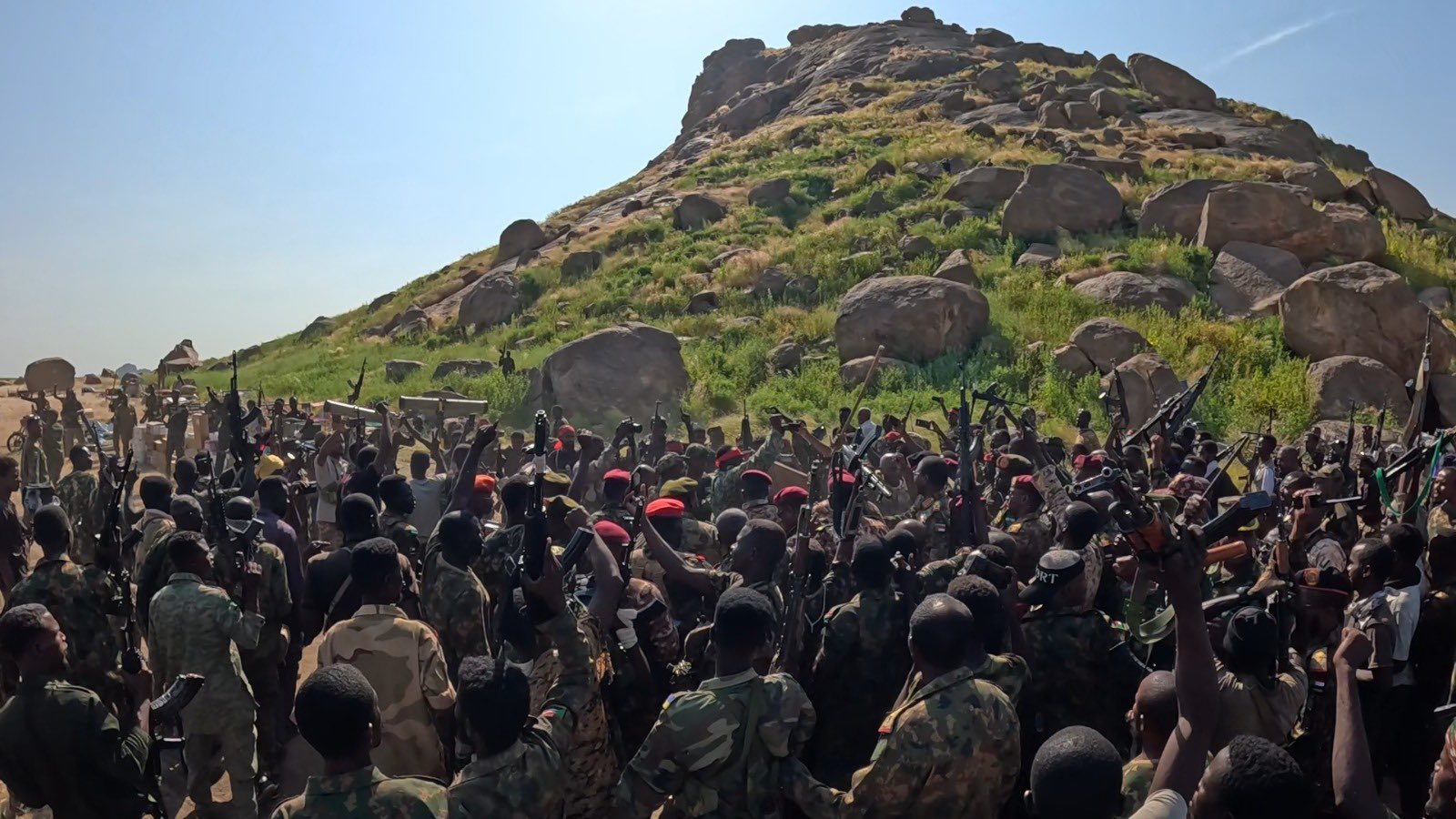
Four views of the offensive: army, RSF, civilians and foreign powers
The army’s angle: The SAF wants the September push read as continuation, not improvisation. Its capture of Khartoum in 2025 and the late-July Kordofan gains created a narrative of accumulating momentum. Africanews reported that 318 RSF fighters, including four commanders, defected to the army, a figure that supports that narrative if accurate. Defections can weaken local command and intelligence networks, but one reported transfer of personnel does not establish a broad collapse.
The RSF’s angle: Even where the group gives ground, drone warfare offers an equalizer. El Obeid has endured attacks that hit hospitals and schools, and drone strikes can threaten logistics far behind a moving front without requiring the RSF to hold every town. The United Nations says drone strikes killed about 1,100 civilians across Sudan between January and June 2026. That nationwide figure is not a casualty count for this offensive; it is evidence of the weapon’s civilian cost and strategic reach.
The civilian angle: Thousands of residents fled Hamrat al-Sheikh on Sunday, September 20, according to reporting cited by Demócrata. Local rights groups said RSF units were deploying vehicles and heavy weapons in residential areas. Those accounts require the same careful attribution as military communiqués, but the displacement is consistent with a recurrent pattern: civilians move before front lines are clear because waiting for certainty can be fatal. Sudan’s total displacement crisis is now about 13 million people.
The foreign angle: Burhan’s rejection of the U.S.-backed plan was tied to his allegation that the UAE supplies the RSF. The UAE has denied arming the paramilitary force. Egypt and Saudi Arabia have different security interests in Sudan, while Washington is pressing for a humanitarian pause and civilian transition. Every territorial change therefore affects a diplomatic contest over who can shape the eventual state, not only which force occupies a junction.
The numbers in context—and the verification fog around them
Sudan’s war has killed tens of thousands and displaced roughly 13 million people in about three and a half years. The U.N.’s figure of approximately 1,100 civilians killed by drone strikes from January through June 2026 captures only one method of violence over six months. The Fact-Finding Mission’s finding of at least 60,000 killed after El Fasher’s fall measures an especially catastrophic episode. None of those figures can be added to produce a precise national total, because they cover different periods, methods and evidentiary standards.
The army’s operational count is similarly specific but unverified. It named 11 captured areas—Kajmar, Sharshar, Al-Baniya Al-Kurayniya, Al-Qulai’at, Awlad Hazma, Maquldat, Rishan, Al-Qa’a, Ghabat Al-Laqad, Al-Kukaiti and areas near Al-Mazroub. Reporting cited by Demócrata relayed military claims that more than 60 operational vehicles were seized, 120 vehicles destroyed, and weapons and ammunition depots confiscated. The same reporting described drone strikes against RSF positions and supply routes in North and West Kordofan and pursuit toward the Darfur border. These are the army’s figures and descriptions; no independent tally has confirmed them.
There is firmer evidence for parts of the advance. Sudan War Monitor geolocated footage showing army-aligned forces in several named locations. One clip placed forces in Tna village at approximately 14°9′9.95″N, 29°26′54.72″E, about 47 kilometers southeast of Sodari. Al-Baraa bin Malik Brigade fighters were seen inside Tna on September 18. Geolocation can establish that a force was present at a particular location and time. It cannot by itself prove enduring control, the absence of nearby RSF units or the status of every other place named in a communiqué.
Compared with late July, the September tempo is faster and the geographic claim broader. July produced three notable recaptures and a reopened road toward Khartoum. September layers multiple westward axes, a commercial hub and reported South Kordofan gains onto that base. Yet the wider the claim, the larger the verification burden. Sudan War Monitor’s refusal to vouch for all 11 areas is not a minor footnote—it is the central discipline required to read the battlefield.
No verified casualty figures exist for the North Kordofan offensive. The RSF has not answered most of the claims. Silence is not confirmation, and military footage is not a complete order of battle. The ground truth remains foggier than either side’s communiqués.
What happens next: three scenarios, not predictions
Analysis scenario one—corridor consolidation: The army holds the towns it says it has taken, secures the El Obeid–Bara approaches and advances toward Sodari without losing its logistics chain. In this scenario, the Sudanese Armed Forces territorial gains become more than pins on a map: they constrain RSF resupply, support movement toward Darfur and give Burhan leverage to demand revisions to the peace framework.
Analysis scenario two—overextension and drone reprisals: The SAF outruns its supply and air-defense coverage while the RSF avoids a decisive ground battle. Drones hit El Obeid, road convoys and newly occupied positions; mobile RSF units re-enter areas after regular forces move on. The army then owns a longer, thinner line and civilians pay for a contest in which nominal control changes faster than security.
Analysis scenario three—an offensive becomes diplomatic leverage: Neither side wins a breakthrough, but the campaign changes the bargaining range. A revised deal could acknowledge the army’s stronger central position while attaching monitoring, humanitarian access and civilian protections to a pause. That would not vindicate military escalation; it would show how both camps use escalation to price the next negotiation.
The decisive indicators are practical: independently geolocated control over the road network, sustained civilian traffic rather than one-day military entries, reduced RSF drone reach, aid access and evidence that the army can supply the corridor without stripping other fronts. The real test of the Kordofan campaign 2026 is not how many names appear in an announcement. It is whether one side can hold a route long enough to change the war—and whether any battlefield change makes civilians safer rather than merely moving the danger west.
Related reading
- The Trump Sudan peace plan and Washington’s rejection of military rule
- Kiir dissolves South Sudan’s transitional government before elections
Sources
- Sudan War Monitor: large-scale army offensive targets RSF strongholds in North Kordofan
- Anadolu report carried by IM News: military sources and Joint Forces claims around al-Jamama
- Sudan Tribune report carried by IM News: army’s September 17 territorial claims
- Demócrata: army equipment claims, drone campaign and displacement from Hamrat al-Sheikh
- PeoplesMind: reported SAF advance in Kurmuk locality, Blue Nile
- IPS via Global Issues: war toll, displacement, drone casualties and El Fasher context
Reporting cutoff: September 23, 2026. Battlefield territorial claims come from army statements and allied social-media footage. Sudan War Monitor explicitly says it has not independently verified all named areas. No verified casualty figures exist for this offensive, and the RSF has not responded to most claims. All photographs are file photos and do not depict this operation.