Sudan army captures Sodari
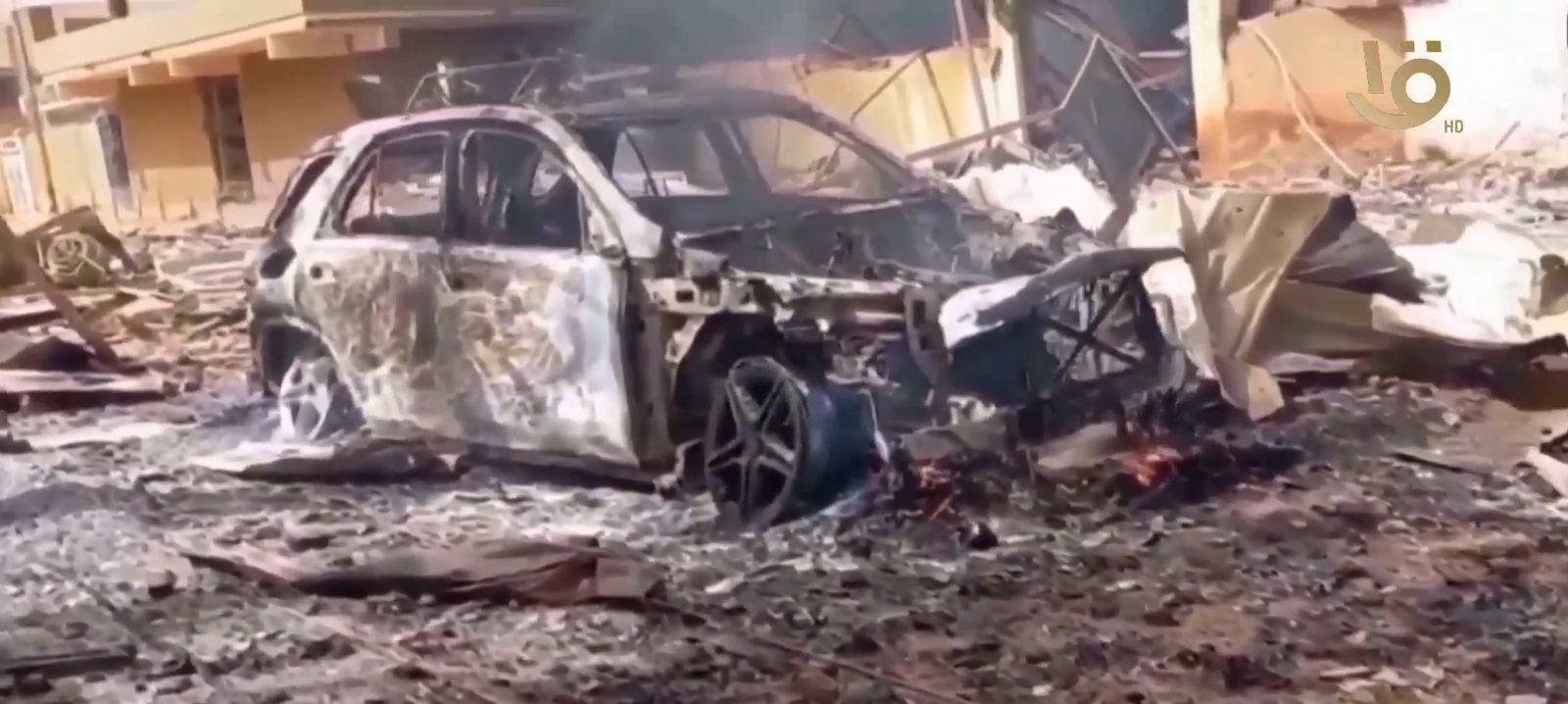
The Sudanese Armed Forces announced on Friday, September 25, that its troops had captured Sodari, a town in northwestern North Kordofan, after what the army described as fierce fighting that inflicted heavy losses on the paramilitary Rapid Support Forces in personnel and equipment. Those loss figures remain an army claim. Sudan Now said it could not independently verify the full extent of the army's control or the reported casualties.
The territorial change itself has stronger support. Sudan War Monitor independently geolocated footage of SAF and allied Joint Force soldiers at the Sodari branch of the National Health Insurance Fund, at 14°24′32.11″N, 29°5′32.84″E. A day earlier, the outlet had geolocated RSF fighters outside Sodari Hospital, just metres away. Taken together, the two videos establish that the town changed hands between Thursday and Friday even though the wider locality remains contested.
What happened in Sodari
The SAF issued its statement almost immediately after its forces entered the town, according to Sudan War Monitor. “With Allah's help and guidance, our forces today, Friday, succeeded in liberating the Sodari area in North Kordofan State after fierce fighting,” the army said. Its longer statement said the operation was carried out with supporting forces and claimed heavy losses among RSF personnel and equipment.
SudaPulse, citing ground sources reported by Sudan Tribune, said army troops and allied fighters launched a targeted assault on RSF defensive positions around the town before overrunning them. Radio Tamazuj reviewed videos showing SAF and Joint Force personnel at Sodari. The RSF did not immediately respond to the capture announcement.
Army spokesman Mohamed Deidan, responsible for the western Kordofan sector, told Sudan Now that troops had positioned near Sodari, carried out offensive operations and ambushes, and then entered the town. He argued that taking Sodari would disrupt RSF supply routes and increase pressure on remaining positions. He also called on RSF fighters in Al-Mazroub, Umm Kireidim and Umm Bader to surrender, effectively naming the army's likely next targets.
The most important caution is geographic. Control of Sodari town is not control of the whole Sodari locality, a large administrative area extending toward Darfur and West Kordofan. Sudan War Monitor says the RSF still holds Umm Badr and Hamrat al-Sheikh to the northwest. Late Friday, the RSF separately said it had repelled an army attack on Abu Qoud, west of El Obeid. Earlier in the week, the group published footage challenging premature claims that it had lost Sodari. Neither side's broader battlefield account is independently verifiable in full.
Why Sodari matters
Sodari is not simply another settlement on a long front. Field sources described it to SudaPulse as the RSF's primary operational base in North Kordofan. Its fall is the most significant territorial shift in the state since the army captured Bara and Jabrat al-Sheikh in July, and it extends a pattern: throughout 2026, the SAF has sought to push the RSF out of Kordofan's administrative centres one by one.
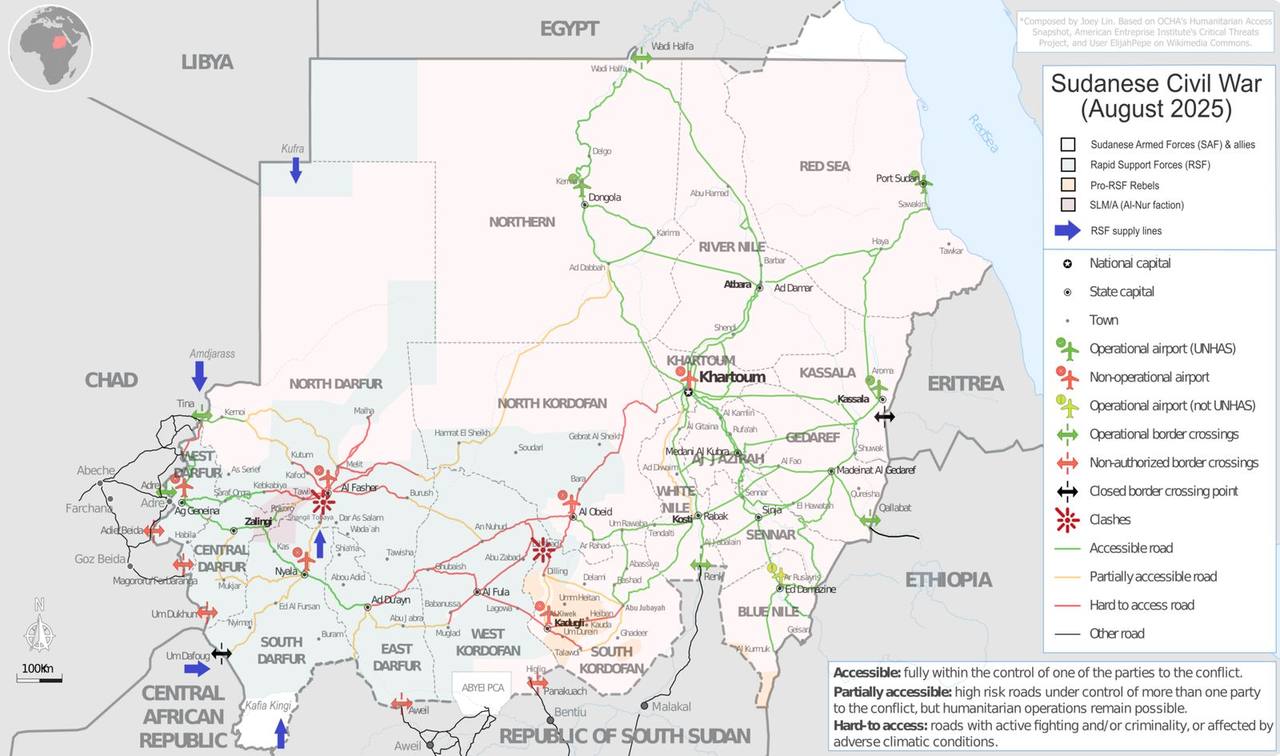
The geography is the strategic story. Sodari sits on the contested corridor linking Kordofan with Darfur. Movement along that axis affects fighters, fuel, ammunition and other supplies moving between the army's Kordofan positions and the RSF's Darfur stronghold. Each town the army secures can complicate RSF logistics and shorten SAF supply lines for a further westward push. But the remaining RSF presence northwest of Sodari means the route cannot yet be described as secure.
For a war increasingly marked by drone duels and grinding ground advances rather than the dramatic battles for major cities seen in 2023 and 2024, administrative centres have become a practical scoreboard. They provide roads, state buildings, communications points and places from which forces can sustain surrounding operations. Sodari therefore matters less for its name than for the network it anchors.
How the offensive reached this point
Sudan's war began in April 2023 as a power struggle between army chief Abdel Fattah al-Burhan and RSF commander Mohamed Hamdan Dagalo. It has since killed tens of thousands of people and displaced millions, according to the United Nations. After the army retook Khartoum and reopened the direct road to El Obeid, the centre of the ground war moved toward Greater Kordofan, now one of the conflict's main fronts.
In late July, the army seized Bara, Jabrat al-Sheikh and other towns. On September 17 it announced the capture of 11 areas around Sodari, Umm Badr and Hamrat al-Sheikh. Thursday brought what Sudan War Monitor described as the army's largest ground operation in the state since July. Friday's entry into Sodari was the payoff of that sequence: a named administrative centre changing hands after a campaign that had first tightened around it.
The RSF has answered territorial pressure with drones. Strikes on El Obeid killed two people and wounded about 20 in a mid-September wave, according to the Sudan Doctors Network. An attack on Um Ruwaba's courthouse reportedly killed about 10 to 13 people on September 8, and a college in El Obeid has also been struck. The United Nations says drone attacks by both sides killed more than 1,000 civilians in the first half of 2026. That pattern means a ground loss does not remove the RSF's ability to impose costs far behind a changing front.
Four angles on the new balance
The army's logic: reclaim territory, reopen corridors and inflict losses that degrade the RSF faster than it can recruit, while creating facts on the ground before any negotiation. Deidan's public surrender appeal to fighters in Al-Mazroub, Umm Kireidim and Umm Bader points to the direction of travel and adds psychological pressure to the military advance.
The RSF's position: the paramilitary has not confirmed losing Sodari, and its claim at Abu Qoud suggests it retains the capacity to resist west of El Obeid. Its doctrine is increasingly asymmetric: trade ground for drone strikes on cities and army infrastructure, using comparatively low-cost weapons to disrupt services and frighten civilians. Holding Umm Badr and Hamrat al-Sheikh also preserves an RSF presence inside the wider locality.
The civilian cost: every advance can create another wave of displacement. Africa Eye reported hundreds of families fleeing toward Tawila in North Darfur and Omdurman, with more than 2,300 newly displaced people, mostly women and children, arriving in Tawila. Drought and failed rainfall compound the fighting; crop losses reached about 90% in parts of West Kordofan. The International Organization for Migration warned that a supply pipeline used by more than 100 humanitarian organisations could run out within two weeks without additional funding.
The information war: both sides raced to define Sodari before the ground picture was clear. During the week, Sudan War Monitor found that a video circulated by army supporters as proof from Sodari was actually recorded at Al-Qa'a, about 60 kilometres east. The RSF answered with footage at the hospital. In this conflict, geolocation has become one of the few ways to separate a changing front line from the claims built around it.
The numbers in context
The army announced 11 areas captured on September 17 and one administrative centre, Sodari, on September 25. Two important towns in the locality — Umm Badr and Hamrat al-Sheikh — remain identified as RSF-held. More than 2,300 people were newly displaced to Tawila; crop losses approached 90% in parts of West Kordofan; and both sides' drone attacks killed more than 1,000 civilians during the first half of 2026, according to the U.N.
The campaign's tempo matters as much as any one number. Kordofan has seen three significant stages of army advance in roughly nine weeks: the late-July captures, the September 17 claims across 11 areas and the September 25 seizure of Sodari. That looks like a sustained, deliberate campaign rather than a single battlefield break. It still does not establish control over every road, village or rural stretch between the towns.
What happens next: four scenarios
1. The westward push continues. The army's named targets — Al-Mazroub, Umm Kireidim, Umm Bader and Hamrat al-Sheikh — point toward a rolling offensive closer to the Darfur border. Fighting around those settlements could intensify quickly, but operational plans and timing have not been independently confirmed.
2. The RSF retaliates with drones. Recent campaigns have followed a territory-for-drones pattern. Further strikes on El Obeid or army logistics would let the RSF answer the Sodari loss without immediately retaking the town, while again putting civilian areas within the blast radius.
3. The humanitarian system reaches a breaking point. With the IOM pipeline near exhaustion and the agricultural season badly damaged, new displacement from the offensive could push parts of Kordofan deeper into acute hunger. The clearest indicators will be arrivals in Tawila and Omdurman and whether aid agencies can maintain supplies.
4. Territory becomes negotiating leverage. Battlefield momentum shapes diplomacy. The army can argue from a stronger position as Kordofan towns fall, while proposals such as the Trump administration's plan — which says the warring leaders cannot govern — and allegations about chemical weapons raised around the U.N. General Assembly keep international pressure alive. Ground gained now could become leverage in any later ceasefire or political settlement.
Sodari's capture is therefore both concrete and limited. Geolocated footage supports the conclusion that the army and allied forces entered the town. It does not prove that every part of the locality is under army control, nor does it validate the combatant's claims about casualties. The next test is whether the SAF can hold the town, extend secure routes west and prevent drone retaliation from turning a territorial gain into another round of civilian loss.
Sources
- Sudan War Monitor — geolocation of SAF and Joint Force footage in Sodari, and the wider locality caveat
- SUNA / Fana News — Sudanese Armed Forces statement
- SudaPulse — ground-source account of the assault
- SudaPulse — Kordofan–Darfur corridor context
- Sudan Now — army spokesman's account and verification caveat
- Africa Eye — displacement, crop losses and aid-pipeline pressure
- The Sudan Times — RSF counter-claim at Abu Qoud
Related Signal Post News coverage
- The Thursday offensive and the army's claims across 11 areas
- The RSF drone campaign against El Obeid and North Kordofan
- The surge in Sudanese refugees reaching Chad
- The diplomatic track and the U.S. plan for Sudan