Vucic resigns Serbia president
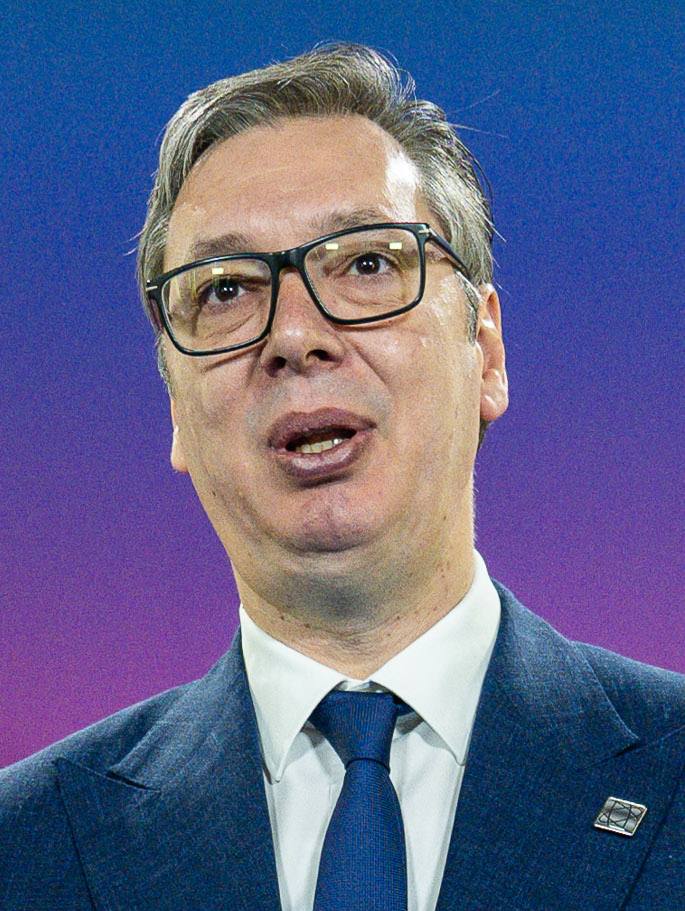
Serbian President Aleksandar Vučić resigned on Sunday, September 27, ending his second and constitutionally final presidential term seven months early and clearing a direct path to seek the prime ministership. He will head the Serbian Progressive Party's list in the October 25 snap parliamentary election, turning a constitutional handover into the opening move of a high-stakes campaign.
Hundreds of supporters gathered outside the Presidency in central Belgrade as Vučić marked the end of his tenure. “This is the last evening for me in this building,” he said. “I have faithfully served you and my fatherland, Serbia, … I am proud of what we have done together.”
National Assembly Speaker Ana Brnabic becomes interim president while Serbia organizes a successor vote. The constitution requires that election to be completed within 90 days; Vučić said its first round would be held by the end of December. That creates two separate verdicts in rapid succession: a parliamentary election on October 25, then a presidential contest before the year closes.
The immediate parliamentary field is organized around three main competitors. Vučić will lead the Serbian Progressive Party, or SNS, and its allies. Students Win represents the student-led anti-corruption movement. European Serbia brings together pro-Western opposition parties. The student and European Serbia camps still have to nominate presidential candidates, making unity, timing and candidate selection central variables in the second contest.
Why this matters: a resignation that preserves political initiative
Vučić is leaving one office, not leaving politics. The sequence gives him a way to convert the visibility and organizational reach built during 12 years as prime minister or president into a campaign for executive power in another constitutional role. He served as prime minister from 2014 to 2017, won the presidency in 2017 and was re-elected in 2022. Because he cannot seek a third presidential term, the premiership offers a legal route to remain at the center of government if the SNS-led list can form a majority.
That is why the resignation is more consequential than a routine early departure. It collapses the distinction between succession and campaign. Brnabic will handle the interim presidency, but public attention now moves immediately to whether Vučić can transfer his personal mandate to the parliamentary ballot. A victory would allow him to argue that voters renewed his authority in a different office. A defeat would demonstrate that the presidency had been masking a deeper erosion of governing-party support.
The timing also forces the opposition to fight on two fronts. Students Win and European Serbia must compete with the SNS on October 25 while preparing presidential nominations for a vote due within 90 days. That can reward momentum, but it can also magnify organizational weaknesses. A movement built around protest may be able to mobilize enormous crowds without yet having the local machinery, candidate discipline or coalition agreements required to convert demonstrations into parliamentary seats.
How 18 months of protests reshaped Serbia's political calendar
The present crisis began with the collapse of a concrete canopy at the renovated railway station in Novi Sad on November 1, 2024. Sixteen people were killed. Protesters blamed corruption and government failures for the disaster and demanded accountability. The authorities and the governing party have denied opposition accusations of systemic corruption and media control.
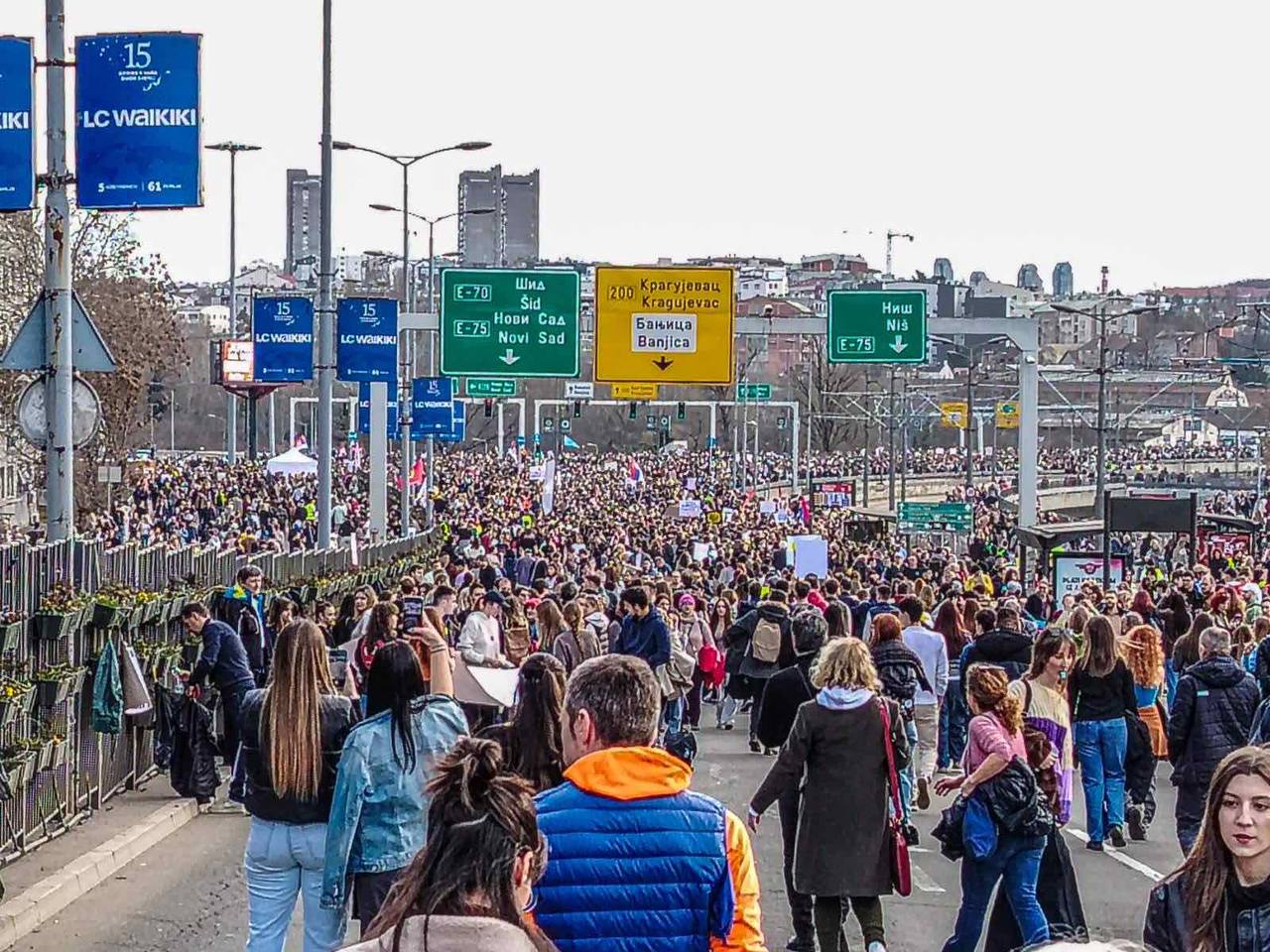
Student organizers transformed grief over the Novi Sad canopy collapse into a sustained national movement. Their demonstrations became among Serbia's largest since the fall of Slobodan Milošević in 2000. What began as pressure for a transparent investigation widened into a challenge to the way institutions function and, eventually, a demand for an early election.
That 18-month arc matters because it changed both the opposition's social base and its political vocabulary. Students Win is not simply another party label. Its appeal rests on a claim that institutions should be reset so they can work independently. In Reuters reporting from a September rally, student Stefan Lukić put the objective plainly: “We, as students, want to reset the system and start everything from the beginning, so that institutions can do their jobs.”
Vučić's answer has been to take the challenge to the ballot box while placing himself at the top of the SNS campaign. He has framed his record around stability, infrastructure, state capacity and national sovereignty. His critics frame the same period as one of concentrated power, weakened checks and media imbalance. The election will not resolve every institutional dispute, but it will test which account commands more support.
Who benefits — and who carries the greatest risk
Vučić and the SNS gain control of the opening move. The resignation lets the party campaign with its most recognizable figure at the front rather than defend a less visible prime-ministerial candidate. It also gives Vučić a simple message: he is asking voters directly for authority to govern. For supporters, the decision can look like accountability through an election rather than an attempt to cling to a post whose term was nearly over.
Students Win gains a clear contest, but inherits the burden of conversion. The movement can present the vote as the institutional outcome it demanded. Yet turning street mobilization into an electoral coalition requires candidate vetting, nationwide organization, turnout operations and protection of ballot integrity. Those are different skills from organizing marches, and the compressed calendar leaves little room for mistakes.
European Serbia could become pivotal. A pro-Western alliance may attract voters who want a conventional party program rather than a movement slate. It could also split anti-SNS votes if coordination fails. The balance between competition and cooperation will determine whether the opposition enlarges the electorate or divides it.
Ana Brnabic assumes institutional responsibility without an electoral honeymoon. As interim president, she must preserve continuity and public confidence while the person who dominated Serbia's executive politics campaigns for another office. Every dispute over procedure will be filtered through questions about the neutrality of institutions. That makes transparent administration of both elections essential.
Critics of the government gain a focal point, not an automatic advantage. They can argue that sustained pressure forced an early reckoning. But Vučić can counter that he voluntarily submitted his leadership to voters and that the SNS remains the only nationwide organization capable of governing. The resignation sharpens both narratives.
What the polling can — and cannot — tell us
No methodologically transparent, recent national poll with comparable figures for all three principal blocs was available in the reporting reviewed for this article. Signal Post News is therefore not assigning vote shares or a probability of victory. Poll numbers without a clear field period, sample, sponsor and treatment of undecided voters would create false precision in a rapidly changing campaign.
The observable indicators point in different directions. The SNS enters with the advantages of incumbency, a long-established national organization and a leader who has dominated Serbian politics for 12 years. Students Win has demonstrated the ability to mobilize large crowds and has drawn support from some opposition parties that chose not to run competing lists. European Serbia offers another organized opposition channel but also makes coordination more complex.
Crowd size is not a vote forecast. Protest turnout measures intensity among people willing to demonstrate; an election measures choices among the whole electorate, including citizens who dislike the government but distrust the opposition, and supporters who do not attend rallies. The reverse is also true: institutional advantage does not guarantee enthusiasm. The most useful early signals will be candidate lists, geographic reach, volunteer coverage, turnout intentions and whether the opposition can prevent fragmentation.
Recent elections elsewhere underline why raw headline numbers need context. In Morocco's 2026 parliamentary vote, first place did not produce anything close to a governing majority. In Switzerland's neutrality referendum, the final margin exceeded even late polling. Serbia's electoral rules, coalition math and turnout pattern must be read on their own terms.
Three scenarios for the October 25 parliamentary election
1. An SNS-led majority restores Vučić to government. If the governing list and partners secure enough seats to form a cabinet, Vučić's strategy succeeds quickly. His supporters would describe the result as a fresh mandate. The crucial question would then be whether a return to the premiership changes governing style or simply relocates the same center of power.
2. The SNS finishes first but needs difficult coalition bargaining. A plurality without a dependable majority would put smaller parties and allied lists in a decisive position. Vučić could still become prime minister, but the price might be policy concessions, cabinet posts or a narrower governing margin. That outcome would expose the gap between winning the most votes and commanding parliament.
3. Opposition blocs assemble a governing alternative. Students Win and European Serbia could deny the SNS power if their combined performance and post-election cooperation are strong enough. The challenge would be moving from a shared rejection of the status quo to an agreed program, leadership arrangement and institutional reform timetable. A divided opposition victory could be as politically fragile as it is symbolically dramatic.
A disputed or inconclusive result is a risk across all three scenarios. The campaign follows months of accusations about corruption and media control, denied by Vučić and his allies. Close margins would place exceptional weight on observer access, transparent counting and clear legal remedies. Confidence in the process may matter nearly as much as the seat totals.
The December presidential vote: succession, separation or consolidation
The presidential contest will be shaped by the parliamentary result, but it is not merely a second round of the same election. If the SNS wins in October, its presidential nominee can campaign on continuity with a Vučić-led government. If the opposition wins, the presidency becomes a test of whether voters want unified control or an institutional counterweight.
The sequence could also expose tensions inside the opposition. A single presidential candidate would make the contest simpler, but Students Win and European Serbia represent different organizational traditions and voter coalitions. Separate nominees could broaden first-round participation yet make it harder to consolidate support if a runoff is required.
For the SNS, candidate selection presents a different problem. Vučić's personal dominance has been an asset in parliamentary campaigning, but he cannot be the presidential nominee. The party must choose someone able to mobilize its base without appearing either entirely dependent on him or insufficiently loyal to the governing project. Brnabic's interim role will keep her visible, but interim succession does not itself determine candidacy.
The constitutional deadline is clear even if the political field is not: the election must be completed within 90 days, and Vučić says the first round will occur by the end of December. The compressed timetable gives momentum unusual power. A strong October result could carry directly into the presidential race; a surprise could reorder alliances within weeks.
What to watch next
- Candidate registration: whether Students Win and European Serbia coordinate parliamentary strategy and whom each backs for president.
- Campaign conditions: access to media, election observation, treatment of complaints and the transparency of voter administration.
- Turnout beyond Belgrade: whether student energy translates into organization in smaller cities and rural districts where the SNS has deeper networks.
- Coalition signals: which smaller parties commit to either bloc before the vote and which preserve room to bargain afterward.
- The transfer of office: how Brnabic exercises interim presidential powers while Vučić campaigns for prime minister.
Vučić's resignation closes one chapter of Serbia's political order while keeping its central figure fully engaged. The next four weeks will test whether 18 months of protest has produced an electoral alternative, whether the SNS can turn incumbency into renewal, and whether two rapid elections can command trust from a polarized public.
Sources: Reporting by Reuters on the resignation, succession rules and election field; Reuters on the campaign and protest movement; and The Associated Press on the constitutional term limit, Novi Sad disaster and political background. Polling analysis distinguishes sourced facts from Signal Post News assessment.