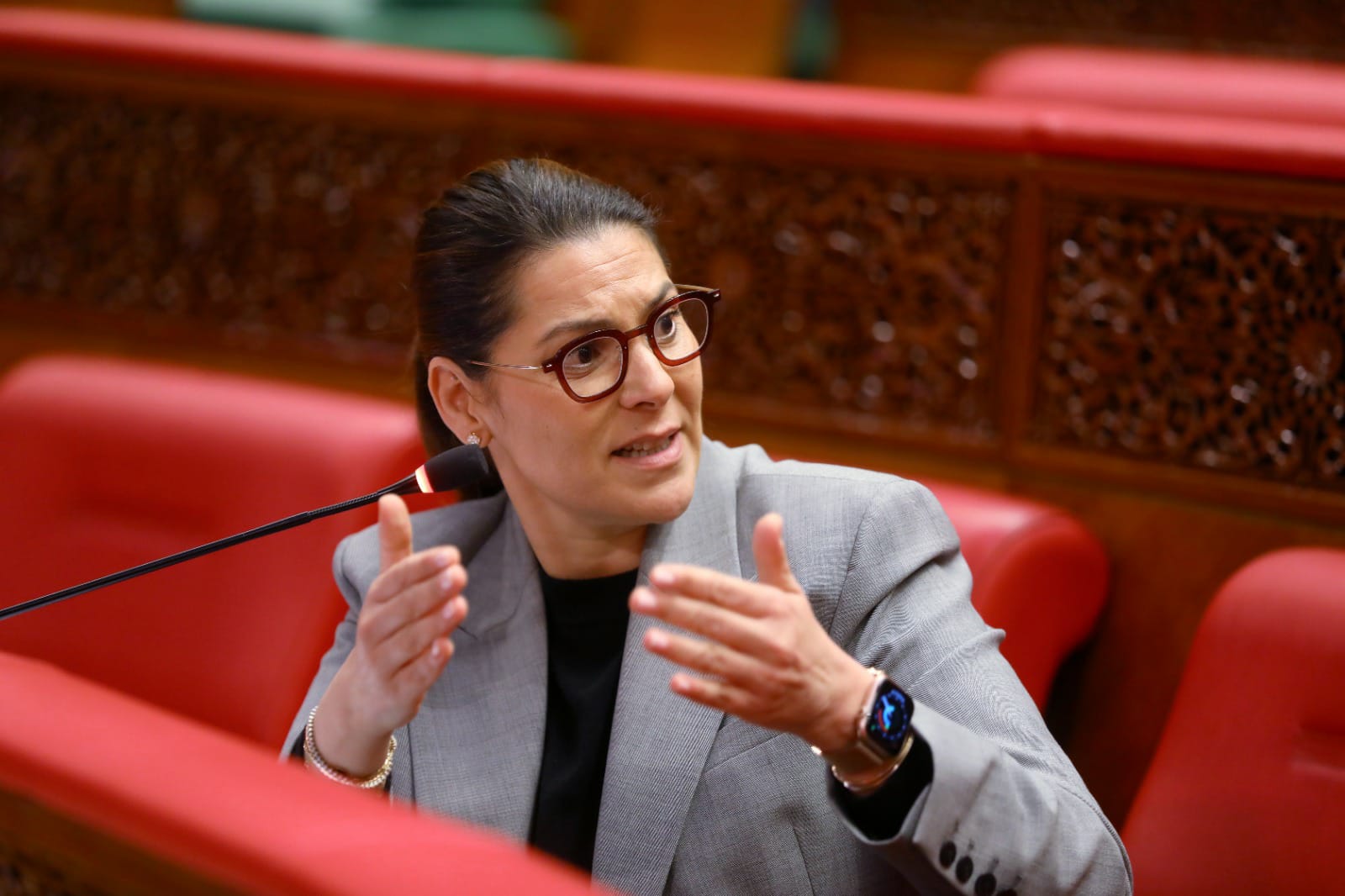
The vote was held on Wednesday, September 23. Interior Minister Abdelouafi Laftit announced preliminary official results the following day: the liberal-centrist Authenticity and Modernity Party, known as PAM, won 97 of the House of Representatives' 395 seats, ten more than in 2021. Fatima Ezzahra El Mansouri now leads the party best placed to form a government.
The result was also a rebuke to the outgoing coalition. Prime Minister Aziz Akhannouch's National Rally of Independents, or RNI, fell from 102 seats to 66 and lost first place. The conservative nationalist Istiqlal Party dropped from 81 to 65. The moderate Islamist Justice and Development Party, or PJD, moved in the opposite direction: under former prime minister Abdelilah Benkirane, it rose from 13 seats to 54. Benkirane said it would remain in opposition.
No party came close to the 198 seats required for a majority. The preliminary count therefore delivers a winner but not a government. Coalition negotiations, the palace's constitutional role and the credibility of a parliament chosen by barely more than one-third of registered voters will define the next phase.
The numbers that tell the story
The headline number is 97, but the more important number is 198. PAM controls just under a quarter of the chamber — about 24.6% — and needs another 101 seats to cross the majority line. Even a partnership with either the RNI or Istiqlal would fall short, forcing El Mansouri to assemble at least one additional partner or a broader agreement.
Seat-swing snapshot: PAM won 97 seats, up 10 from 2021; RNI took 66, down 36; Istiqlal won 65, down 16; and PJD captured 54, up 41 from its 2021 low of 13. The remaining seats went to the Popular Movement with 29, USFP with 26, PPS with 19, Constitutional Union with 17, MDS and AG with eight each, FFD and PE with two each, and PND and PUD with one each.
That distribution makes the Morocco coalition government 2026 problem unusually open. PAM can negotiate from first place, but it cannot govern alone or even with one of the two nearest rivals. The PJD's decision to stay out of government removes a 54-seat bloc from the bargaining pool and turns Benkirane into the chamber's most consequential opposition voice.
The participation figures are harsher still. Turnout was about 38%, the lowest since the 37% recorded in 2007 and down sharply from roughly 50% in 2021. With about 16 million registered voters, that equates to approximately 6.1 million ballots. Nearly 9.9 million registered Moroccans stayed home. Among registered 18- to 24-year-olds, only about 4% voted, according to Le360. The phrase Morocco voter turnout 38 percent is therefore not just an electoral statistic; it is the central legitimacy test facing the next cabinet.
Why this matters
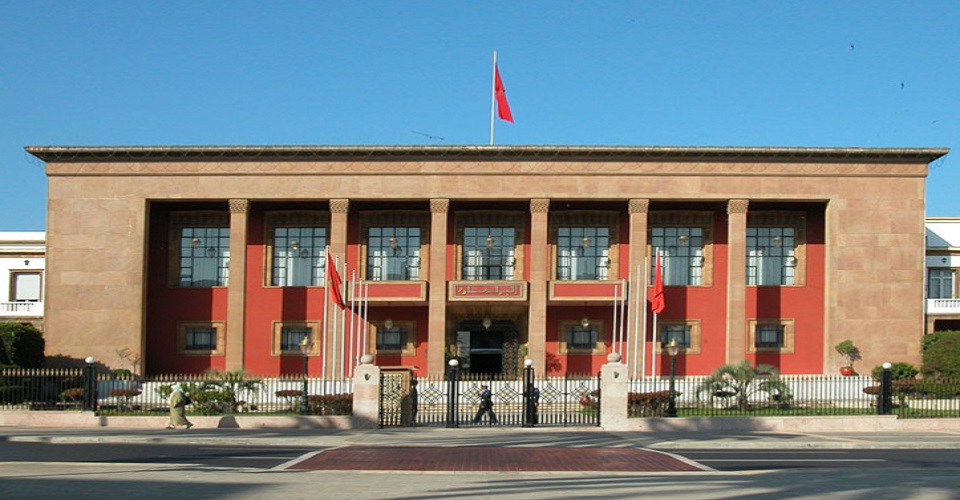
Morocco remains an important case of managed pluralism in the Arab world. Political parties compete, governments change and parliament matters, but King Mohammed VI retains decisive constitutional authority and appoints the prime minister from the party that wins the most seats. In that system, an election can meaningfully reorder party power without threatening the monarchy's central position.
The PJD's recovery illustrates both the system's resilience and its limits. Across parts of the region, Islamist participation has ended in rupture: Egypt's post-2011 experiment collapsed into military rule, while Tunisia's democratic transition later unravelled under presidential concentration of power. Morocco's Islamists governed for a decade, suffered a crushing electoral defeat in 2021 and have now returned through ballots. Mohammed Masbah of the Moroccan Institute for Policy Analysis described the vote as evidence of a relatively stable system in which Islamists can lose and win without destabilising the state.
That is the optimistic reading. The more troubling one is that 62% abstention narrows the mandate of every party. A stable transfer among elites is not the same as public confidence. Voter Majda Bakatir captured that distance bluntly: “I have lost all faith in the political class.” Her statement cannot represent millions of non-voters, but it reflects the distrust that campaigns failed to reverse.
The result is also a verdict on the Akhannouch government's economic stewardship. PAM and RNI traded blame during the campaign over food-price increases and policy shortcomings, even though they governed together. When RNI loses Morocco election headlines record a 36-seat fall, the political meaning is broader than a tactical defeat: voters who did participate demoted the party that held the premiership during a period of cost-of-living pressure and visible youth anger.
How we got here
Morocco's present political architecture dates to the 2011 constitution, adopted after Arab Spring protests pressed the monarchy to share more authority with elected institutions. The PJD won the 2011 and 2016 elections and led governments for two five-year terms. Its 2021 collapse to 13 seats appeared at the time to end its role as a major parliamentary force.
The PJD comeback Morocco result shows that judgment was premature. Economist Rachid Aourraz said the party gained largely through Benkirane's powerful oratory, especially in urban areas. His return provided a recognisable opposition message at a moment when the outgoing parties were vulnerable to accusations of economic drift.
PAM was founded in 2008 by Fouad Ali El Himma, a royal adviser, as a counterweight to Islamist parties. It has promoted social modernisation and secular-leaning positions while remaining close to the political centre of the Moroccan system. Its campaign joined managerial promises to an enormous spending commitment: $37 billion for one million jobs, alongside investment in healthcare, education, social protection and wages.
The campaign took place against unresolved social pressure. Gen-Z demonstrations in September 2025 focused on healthcare and education. A mass attempt to cross toward the Spanish enclave of Ceuta exposed the depth of migration frustration. Rising food prices gave PAM and RNI a concrete issue on which to blame each other. Our pre-election briefing on Morocco's 2026 vote tracked those forces before ballots were counted; the turnout now shows they were not peripheral to the result.
Winners and losers
The clearest winner is Fatima Ezzahra El Mansouri. PAM improved its seat count, finished first and now controls the opening move in coalition talks. The party also gains the chance to present itself as both change and continuity: change from RNI leadership, continuity within the broader governing establishment.
The PJD is the other major winner. Its rise from 13 to 54 seats is more than a fourfold increase and restores the party as a national force. By choosing opposition, Benkirane avoids responsibility for compromises inside a crowded coalition and gains a platform from which to challenge PAM's economic promises. The Abdelilah Benkirane factor will matter because his rhetoric appears to have mobilised urban voters even as national participation remained low.
RNI is the unambiguous loser. It lost 36 seats, first place and the presumption that the outgoing coalition's record would secure renewal. Istiqlal's 16-seat decline leaves it weakened but still potentially pivotal. Young citizens are the system's most consequential non-winners: a reported 4% participation rate among registered 18- to 24-year-olds means their discontent shaped the election mainly through absence.
Benkirane also alleged that some polling-station heads refused to provide reports to PJD observers. The claim warrants scrutiny, but it is an allegation, not an established finding. The preliminary results should not be treated as final until the official process is complete. Electoral confidence depends on authorities addressing specific complaints transparently rather than allowing them to harden into a general narrative of manipulation.
For regional context, Signal Post News has also examined how politics and migration are colliding in Southern Africa and how Gulf governments are splitting over pressure on Iran. Morocco's vote is different in form, but it reflects the same regional question: whether institutions can absorb public pressure before it spills beyond them.
What happens next
Under the constitution, King Mohammed VI appoints the prime minister from the leading party. On the preliminary count, that places El Mansouri in line to form the next government. The palace's formal decision and the subsequent coalition agreement will turn an electoral ranking into governing authority.
The first scenario is a broad establishment coalition. PAM could reopen negotiations with the RNI despite having ruled out another partnership during the campaign. El Mansouri softened that position after the result, saying she had “no red lines” and that “we have turned the page.” A PAM-RNI combination would still need at least 35 more seats; Istiqlal, the Popular Movement or several smaller parties could supply them.
The second scenario is a coalition designed to maximise distance from Akhannouch. PAM could partner with Istiqlal and seek enough medium-sized allies to clear 198. That would allow El Mansouri to argue that voters received a real change in leadership, but a broader coalition could also produce a more complex division of ministries and policy concessions.
The third scenario is prolonged bargaining. With 14 parties represented and no two-party route to a majority among the leading groups, negotiations can easily become a contest over portfolios rather than policy. The PJD's 54-seat opposition would then have a clear attack line: that parties voters punished had reconstructed power among themselves.
Whatever coalition emerges will be judged first against PAM's $37 billion promise and its pledge to create one million jobs. Those goals are politically potent precisely because youth participation and economic dissatisfaction are so acute. Financing, delivery timetables and measurable results will determine whether the pledge becomes a governing programme or another source of disillusionment.
The next cabinet must also address pressures that parliament alone cannot contain: the protest movement's demand for better schools and hospitals, migration pressure toward Europe and the cost of essentials. A government assembled from 38% turnout has less room for slow delivery. Its legal mandate will be clear; its social mandate will have to be earned.
The preliminary Morocco parliamentary election 2026 results therefore tell two stories at once. PAM won the right to try to govern, and the PJD won the right to oppose with renewed weight. But the largest bloc consisted of citizens who did not vote. Coalition arithmetic can produce 198 seats. It cannot by itself produce trust.
Sources and reporting basis
- Reuters — PAM wins most seats in Morocco's parliamentary election
- Associated Press via LaPresse — PAM wins 97 seats as turnout falls
- Wikipedia — 2026 Moroccan general election results and seat distribution
- North Africa Post — Parliamentary elections and regional stability
- Reuters via Devdiscourse — PAM campaign, coalition talks and PJD rebound
Reporting basis: The seat totals and turnout are preliminary. Interior Minister Abdelouafi Laftit's September 24 briefing is the official-results source cited by Reuters and AP. Benkirane's polling-station concern is reported as an allegation and has not been independently established. Coalition scenarios and political implications are Signal Post News analysis.