Pope Leo first general audience since surgery: eight days after surgeons removed the lower lobe of his right lung, the 71-year-old pontiff rode the popemobile through St Peter’s Square, stood to wave and bless babies, and thanked the world for its prayers.
World / Vatican — eight days after losing part of a lung, the pope stood, waved and worked a crowd in the rain — and the single change in the programme said as much as the spectacle
Eight days after surgery, a normal Wednesday — almost
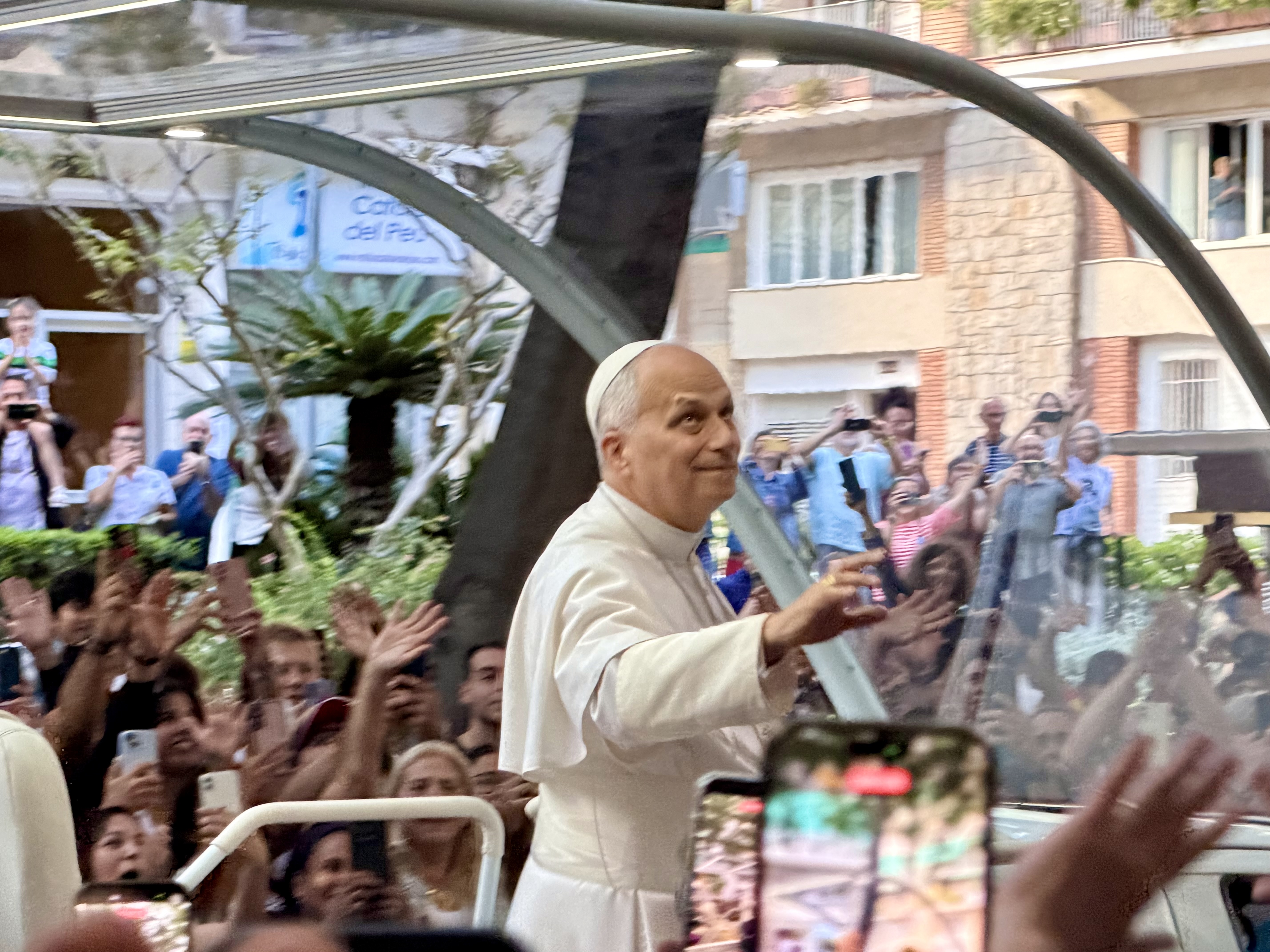
Wednesday’s audience, the first Leo has held since October 7, followed a normal format, Reuters reported. Crowds began gathering hours ahead of the 9:45 a.m. (0745 GMT) starting time, holding umbrellas under drizzling grey skies in Rome. The pope toured the square in the popemobile first — the part of the morning that, for a man eight days removed from having the lower lobe of his right lung removed, amounted to a public physical examination. He stood throughout, turned to wave to different sections of the crowd, blessed babies handed up to the vehicle, and stopped repeatedly to talk to pilgrims at the barriers.
“The first thing I want to say to you is thank you for the support and prayers,” Leo told the crowds in his opening remarks for the 50-minute event, without specifically mentioning his health. “Thanks be to God for his generosity,” he said, speaking in a clear voice as cheers broke out in the square. “Let’s renew our trust in the goodness and mercy of God.” After the tour, Leo offered a sermon in Italian. In the only major change from previous occasions, Reuters noted, he gave brief greetings afterwards in seven instead of nine other languages — a small, deliberate lightening of the load, and the kind of detail Vatican-watchers read as carefully as any medical bulletin.
The Holy See Press Office had confirmed the audience in advance, announcing on October 19 that Leo would hold the Wednesday audience in St Peter’s Square while continuing his recovery at the Vatican rather than travelling to his residence at Castel Gandolfo, where he usually spends the first part of the week. At that point the Vatican had not said whether he would make the customary popemobile tour. On Wednesday morning, he did — and that unannounced detail was itself the news: the tour is the one part of the audience format that cannot be faked, shortened from a chair, or delegated.
How we got here: eleven days that rewrote a papacy
The speed of this story is worth holding in full. On Sunday, October 11, Leo disclosed himself, at the noon Angelus, that doctors had found a localised nodule in his lung and that he had chosen surgery — an unusually direct announcement, made before any leak could force his hand. On Tuesday, October 13, a team led by Professor Stefano Margaritora at Rome’s Gemelli Hospital removed the lower lobe of his right lung in a video-assisted procedure; pathology confirmed what the nodule had suggested — lung adenocarcinoma, the most common form of lung cancer. We covered the diagnosis and the operation as they happened (Pope Leo’s lung cancer diagnosis and surgery).
Leo was discharged from the Gemelli on Saturday, October 17, after five days in hospital, telling a reporter he was “much better, thank you” as he left. His surgeon, speaking to Vatican News the same day, called him “an ideal patient,” said the lung’s re-expansion was proceeding on the usual timetable, and estimated a full recovery in about ten days. On Sunday, October 18, Leo appeared unaided at the window of the Apostolic Palace to lead the Angelus before some 15,000 people, thanking his doctors and promising to gradually resume his activities — the appearance we reported in his first public appearance since surgery. Even from his hospital bed he had kept working the phones on the war in Ukraine, appealing to Vladimir Putin for a humanitarian ceasefire around the embattled city of Oleshky and then urging Volodymyr Zelenskyy to cooperate on aid and evacuations (the pope’s Oleshky calls).
Wednesday’s audience is the third step of that staircase — window, then square, then the crowd itself. Each step has been calibrated: a wave from a window tests the voice and the balance; a popemobile tour tests stamina, a healing chest, and the ability to stand and turn for the better part of an hour in the rain.
Why this matters: in the Vatican, choreography is the medical bulletin
The Vatican has a centuries-old problem with papal health: the institution runs on the pope’s body, and information about that body is power. Earlier eras concealed illnesses for years; John Paul II’s long decline was visible to the world but rarely described honestly; Pope Francis’s final respiratory illnesses were chronicled in daily bulletins that still left the picture incomplete until the end. Leo — the first American pope, elected in May 2025 and at 71 the youngest pope in decades — has handled his own case in a noticeably different register. He announced the nodule before the surgery, named the cancer once pathology confirmed it, and has let each stage of recovery be demonstrated in public rather than merely described.
Wednesday’s audience fits that pattern exactly, and it is why a routine Wednesday event drew wire-service coverage around the world. A written bulletin can say a pope is recovering; a 50-minute audience, a standing popemobile tour and a clear, unamplified-by-resting voice show it. The one concession to the surgery — seven languages of greetings instead of nine — functioned as the honest footnote: recovery is real, and it is not finished. For the 1.4 billion Catholics Leo leads, and for the governments that have treated his energetic early papacy as a diplomatic channel — Washington, Kyiv and Moscow among them — the difference between a pope who is convalescing and a pope who is back at work is not a detail. It is the schedule of the institution for the next decade.
There is also a quieter reading. Leo framed the morning not as a triumph over illness but as gratitude — thanks for prayers, trust in “the goodness and mercy of God” — and he never mentioned his health directly. That restraint, repeated at the Angelus (“this experience has given me a profound sense of closeness to all those who are going through illness”), is becoming a theme of this pontificate’s second year: the pope as a patient among patients, rather than a sovereign exempt from the fragility he preaches about.
What the numbers say — and what nobody has said yet
The disclosed facts are these. Leo is 71. The tumour type, adenocarcinoma, is the most common form of lung cancer, and it was found by chance during routine abdominal examinations while he had no respiratory symptoms at all — a detail his surgeon has used to preach the value of preventive checkups. The operation removed the lower lobe of the right lung, not the whole lung; his medical team described the surgery as successful and without complications, and his discharge after five days came ahead of the week-long stay the Vatican had initially anticipated. Margaritora has said he expects a full recovery roughly ten days after surgery, which Wednesday’s performance did nothing to contradict.
But the numbers that will actually determine this papacy’s next phase have not been disclosed. The Vatican and the Gemelli team have not yet said how large the tumour was, or whether the cancer had spread to nearby lymph nodes — the two facts that, in lung-cancer medicine, separate a surgery that cured from a surgery that began a treatment. Histological testing of the tumour and lymph nodes is under way, and its results will decide whether Leo faces chemotherapy, immunotherapy or a targeted oral therapy next, or simply surveillance. Until those results are published, every judgement about his recovery — including optimistic ones based on a strong morning in the square — rests on the visible half of the evidence. Both things are true at once: he looked well on Wednesday, and the decisive document is still in a laboratory.
Who gains, who waits: a calendar in pencil
The immediate winners are easy to spot: the pilgrims who filled the square in the rain, the Vatican staff who can begin planning a normal schedule again, and the pope’s own diplomatic operation, which never fully paused — his hospital-week calls on Oleshky showed a pontiff determined not to vacate his one irreplaceable role as a channel both Kyiv and Moscow will still answer. The waiting, however, is concentrated in three places.
First, South America. Leo is due to visit Uruguay, Argentina and Peru from November 6 to 17 — one of the most intense trips arranged for a Catholic leader in decades, with about a dozen flights and two helicopter rides to high altitudes, a serious physiological test for a man recovering from lung surgery. His surgeon has given the trip a green light, saying there are “no clinical reasons why it should not take place” if recovery continues; the Vatican’s secretary of state, Cardinal Pietro Parolin, has been more cautious, indicating the pope may need to adjust the pace of his schedule to aid recovery. Wednesday’s audience strengthens the surgeon’s side of that argument without settling it.
Second, Assisi. Leo is due to close the Sant’Egidio Community’s “Unarmed and Disarming Peace” gathering there on October 27, marking the 40th anniversary of the historic interreligious meeting first convened by John Paul II in 1986. That appearance has still not been confirmed. Third, the rest of the Church’s calendar: the Vatican has provided no indication of Leo’s schedule beyond Wednesday. Every bishop with an ad limina visit, every ambassador awaiting an audience, every dicastery waiting on a decision is, for now, working from a blank page dated Thursday.
What happens next
Three signals will tell us whether Wednesday was a comeback or a cameo. The first is the pathology report: tumour size and lymph-node status, and with them the question of further treatment. The second is Assisi on October 27 — a short trip, a long day, and exactly the sort of event a careful recovery would either confirm confidently or quietly hand to a cardinal. The third is the November journey to Uruguay, Argentina and Peru: if it proceeds on anything like its planned scale, the argument about Leo’s stamina is over; if it is shortened, split or postponed, Wednesday’s audience will be re-read as the high point of a more guarded convalescence.
For now, the image that remains is the one Reuters’ reporters watched in the rain: a pope eight days out of cancer surgery, standing in an open car, turning from side to side to bless other people’s children. Whatever the laboratory reports say, Leo has made his own statement about how this papacy will handle illness — in public, on schedule, and on his feet.
Sources
Reuters, “Pope Leo takes to popemobile for first time since cancer surgery” (October 21, 2026) and “Pope Leo to hold Wednesday audience for first time since cancer surgery” (October 19, 2026); Holy See Press Office announcement via Vatican News, reported by Radio Veritas Asia and CathNews (October 19–20, 2026); Associated Press reporting on Leo’s discharge and the Angelus (October 17–19, 2026, via National Catholic Reporter and AP syndications); EWTN News / Vatican News interview with Dr Stefano Margaritora (October 17, 2026).