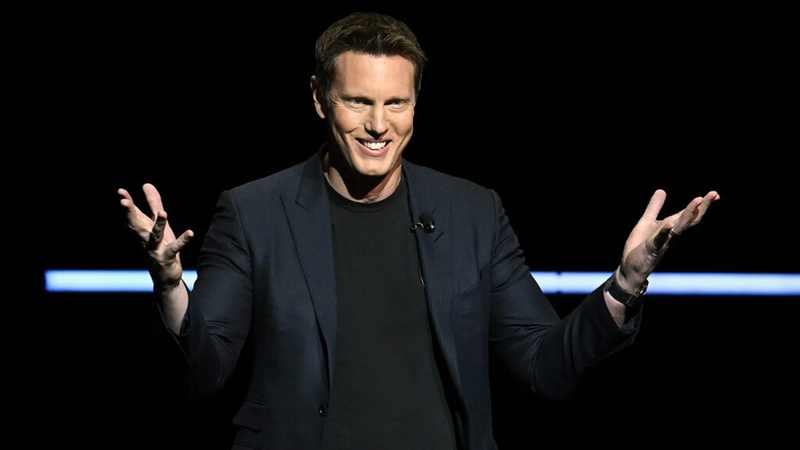
The combined company is called Skydance. Its Class B shares began trading Tuesday on the New York Stock Exchange under the SKYD stock ticker. Ellison is chief executive, while former Mattel CEO Ynon Kreiz serves as co-CEO. “Today is a historic day, not just for Skydance but for our entire industry,” Ellison said as the transaction closed.
The assets are almost a map of modern American entertainment: Warner Bros.' Burbank studio lot, Paramount Pictures, HBO, CNN, CBS News, CBS, HBO Max, Paramount+, CBS Sports and TNT Sports. The franchise shelf stretches from Harry Potter, Game of Thrones and DC to Top Gun, Mission: Impossible and The Godfather. This is not merely a larger studio. It is a company that can make the film, sell the advertising, own the news conversation, carry the game and distribute all of it directly to the household.
Why this matters
Media merger concentration in Hollywood now reaches the newsroom
The central issue is power. Hollywood was already controlled by a small group of global companies; this deal removes another independent buyer and gives one management team unusual influence over movies, premium television, sports and national news. Concentration can finance expensive productions and global distribution. It can also narrow the number of executives able to greenlight a script, buy a documentary, negotiate sports rights or fund a newsroom.
CNN and CBS News make the merger more sensitive than an ordinary studio combination. The settlement created editorial safeguards, but independence is not secured only by written promises. It is shaped by who controls budgets, appoints leaders and decides which operations are “duplicative.” Skydance can honor formal protections and still alter journalism through resource choices. That is why the editorial-independence question will outlast the closing ceremony.
Politics adds scrutiny without proving a predetermined outcome. The Ellison family has a long relationship with President Donald Trump, who said Tuesday that Skydance is “going to be a great company.” That history does not establish interference. It does mean every major personnel or standards decision at CNN and CBS will be examined for evidence that business relationships are influencing news judgments. The burden is now on management to make those decisions transparent and defensible.
How the Skydance merger closed
Warner Bros takeover: $81 billion in equity, nearly $111 billion with debt
The arithmetic explains both the deal's grandeur and its pressure. The headline purchase price is about $81 billion. Add roughly $30 billion of assumed debt and the transaction approaches $111 billion, placing it among the biggest media deals ever completed. Equity buys control; debt constrains what control can do next. Every dollar promised to creditors competes with production spending, technology investment and jobs.
That distinction is essential because management is not integrating two pristine growth companies. It is combining valuable studios and streamers with cable networks facing long-term decline. The debt makes cost reduction unavoidable in some form. The argument is over whether Skydance can remove genuine duplication without stripping away the creative and journalistic capacity that made the assets valuable.
The Warner Bros Netflix bidding war reshaped the endgame
Warner initially struck a studio-and-streaming agreement with Netflix in December, triggering a bidding war over which parts of the company should survive together. Netflix's approach focused on the growth assets. Paramount's winning bid took the broader enterprise, including linear networks. That choice gives Ellison more rights, reach and cash flow—but also more complexity and exposure to cord-cutting.
The battle was the streaming wars' endgame in miniature. The first phase was an arms race: every studio built a service, pulled back licensed programs and chased subscribers. The current phase is consolidation and rebundling. Libraries, advertising, sports and distribution are being reassembled because standalone services proved expensive to acquire customers for and easy to cancel.
Why Rob Bonta and 11 other attorneys general settled
In July, 12 Democratic state attorneys general led by California Attorney General Rob Bonta sued to block the transaction and temporarily secured a court order halting it. U.S. District Judge Martínez-Olguín in Oakland approved Paramount's settlement with the states on September 30, clearing the final legal path to Tuesday's close.
The settlement traded the uncertainty of continued litigation for enforceable commitments. Paramount pledged $1.5 billion in additional domestic production over five years, 30 high-quality theatrical films annually and safeguards for CNN and CBS. For Bonta, the practical calculation was that measurable production and newsroom conditions could protect more public interests than a case the states might ultimately lose. Whether that bargain was wise depends on enforcement, not the press release.
Who wins—and who carries the risk
Ellison, Kreiz and shareholders get a formidable platform
The clearest winner is Ellison. One year after buying Paramount for about $8 billion, he controls an enterprise with two century-old studios and enough intellectual property to compete across theaters, streaming, games, licensing and consumer products. The Ellison Kreiz co-CEO structure pairs Ellison's production and technology ambitions with Kreiz's experience turning franchises into global consumer businesses at Mattel.
Shareholders gain a cleaner scale thesis: combine libraries, spread technology and marketing costs, package streaming services and use global franchises more systematically. Theater owners could benefit if the 30-films-a-year promise translates into a steadier release calendar. A strong combined company may also be better equipped to fund expensive films that a smaller, debt-laden Warner or Paramount could not carry alone.
Paramount Skydance merger layoffs are the first human test
Employees received the warning on day one. Ellison and Kreiz wrote that integration “will bring change, including difficult decisions that affect our workforce,” according to Variety. Paramount has targeted $6 billion in cost cuts over three years, partly through layoffs. CNN staffers are reported to fear a “bloodbath,” while an August Los Angeles County government report warned the merger could erase 4,500 film and television jobs.
Those numbers deserve context. Disney announced about 7,000 layoffs in 2023 during its own cost-cutting campaign. The 2022 WarnerMedia-Discovery combination also produced years of restructuring, asset write-downs and job losses. A 4,500-job warning would therefore not be unprecedented for a media consolidation—but that is an indictment of the pattern, not reassurance for workers.
The CNN CBS layoffs merger concern is especially acute because cost savings can blur into editorial consolidation. Shared bureaus, combined production teams or fewer foreign correspondents may look efficient on a spreadsheet while leaving audiences with less original reporting. Specific layoff numbers and the final integration structure remain unknown; treating rumors as a settled plan would be irresponsible. The memo and $6 billion target, however, make clear that reductions are not hypothetical.
Creatives lose buyers; mid-budget films face a squeeze
Writers, actors, directors and independent producers now have one fewer major buyer. Jane Fonda, Mark Ruffalo and other Hollywood figures opposed the merger in public, arguing that concentration threatens jobs and creative choice. Their concern is not only about tentpole franchises. Mid-budget dramas, comedies and adult-oriented films are often the first casualties when a company needs fewer projects with larger global upside.
The 30-film pledge may prevent a simple collapse in volume, but quantity is not diversity. Thirty franchise sequels and low-risk genre pictures would satisfy a numerical target while doing little for independent voices. Regulators should test not just the count, but domestic spending, theatrical windows and whether the company preserves multiple genuine greenlight centers.
Consumers may get a super-bundle—and a higher bill
Combining HBO Max and Paramount+ could produce a compelling package: prestige drama, CBS programming, live sports, children's content and blockbuster libraries in one subscription relationship. A bundle could reduce churn and be cheaper than paying for both services separately.
But consolidation reduces competitive pressure. Skydance may have more leverage to raise prices, increase advertising or make the standalone services less attractive. The likely outcome is not an immediate single app but a staged rebundling—first joint offers, then shared technology and eventually a harder decision about whether both brands remain independent. Consumers should watch price changes, ad loads and whether sports migrate to more expensive tiers.
A symbol changes on the Burbank skyline
Warner Bros water tower gets the Skydance rebrand
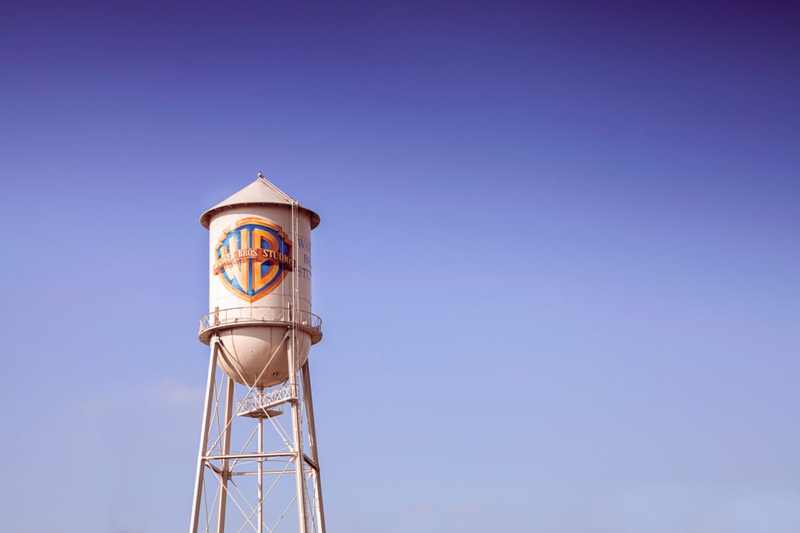
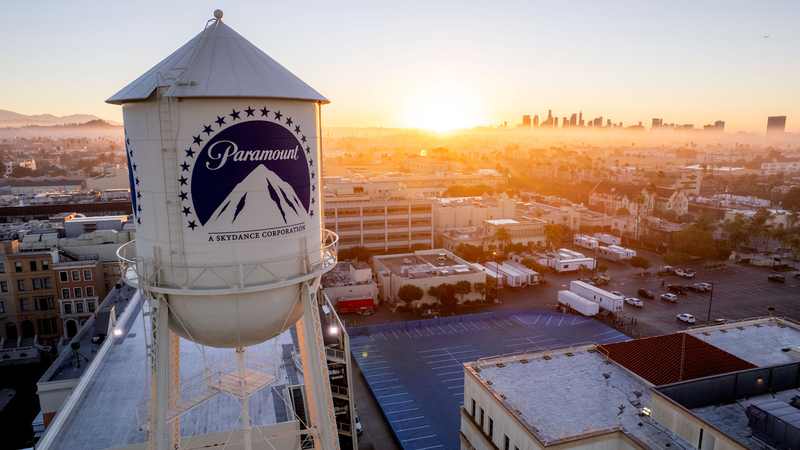
On Tuesday, workers began adding “A Skydance Corporation” to the 133-foot Warner Bros. water tower in Burbank. Built in 1927 and home to the WB shield for nearly a century, the tower is both industrial infrastructure and cultural shorthand. Its role in Animaniacs made it recognizable even to viewers who never entered a studio lot.
The sign is small beneath the shield, but the symbolism is exact: the legacy brand remains visible while authority moves above it. Paramount's own 1927 water tower received the same treatment after Ellison's takeover last year. Corporate strategy rarely gets such a literal skyline.
What happens next
The $6 billion cost-cut plan meets the 30-film promise
The first year will expose whether the merger's promises can coexist. Cutting $6 billion while increasing domestic production and releasing 30 quality films a year is possible only if management finds real overlap rather than treating creative labor as the easiest line to remove. Film counts, budgets, production locations and theatrical windows will be more revealing than investor presentations.
Linear networks are the obvious strategic pressure point. Skydance must decide which channels remain useful cash generators, which can be folded together, and which may be sold. Studios and premium brands are likely to receive protection; smaller cable networks and duplicative corporate functions are more vulnerable. Any sales would also show whether the “super-company” thesis was a durable plan or an interim structure for breaking up assets.
Streaming prices and editorial safeguards become measurable
Watch the next HBO Max and Paramount+ price moves, the design of any bundle and whether sports rights are used to force households into higher tiers. Also watch leadership appointments, bureau budgets and standards decisions at CNN and CBS. Editorial independence will be judged through a pattern of actions, not one policy document.
The 30-film pledge will be a regulatory test case. If Skydance complies in spirit as well as in count, future merger settlements may rely more heavily on production mandates. If the company finds loopholes or treats the commitment as a ceiling, the deal will become evidence that behavioral promises cannot substitute for preserving competition.
A template for the next mega-merger
Other companies will study how Paramount overcame a state-led lawsuit: litigate aggressively, then offer jobs, production and governance commitments concrete enough to settle. Regulators will study the opposite lesson—whether those concessions actually restrained a $111 billion company after closing. The answer could shape the next contest over streaming, sports rights or a distressed cable portfolio.
The deal is complete, but the verdict is not. Skydance has won scale, a famous library and a commanding seat at the center of American media. It has also inherited debt, aging networks, skeptical employees and a public-interest obligation that extends from movie theaters to newsrooms. The company will be judged less by the name on the water tower than by what it funds, what it cuts and whether audiences still have meaningful alternatives.
Sources and reporting notes
- Associated Press via Akron News Reporter: Paramount closes Warner Bros. takeover
- New York Post: $81 billion combination officially completed
- New York Post: Warner Bros. water tower receives Skydance branding
- Daily Caller: Paramount closes $81 billion Warner Bros. deal
- Fast Company: Skydance's new Hollywood scale and integration challenge
Reporting note: the transaction figures, closing date, pledges, leadership roles and public statements are reported facts. Layoff scope, future asset sales, streaming structure and price effects remain unknown; those sections are analysis and clearly framed as scenarios.