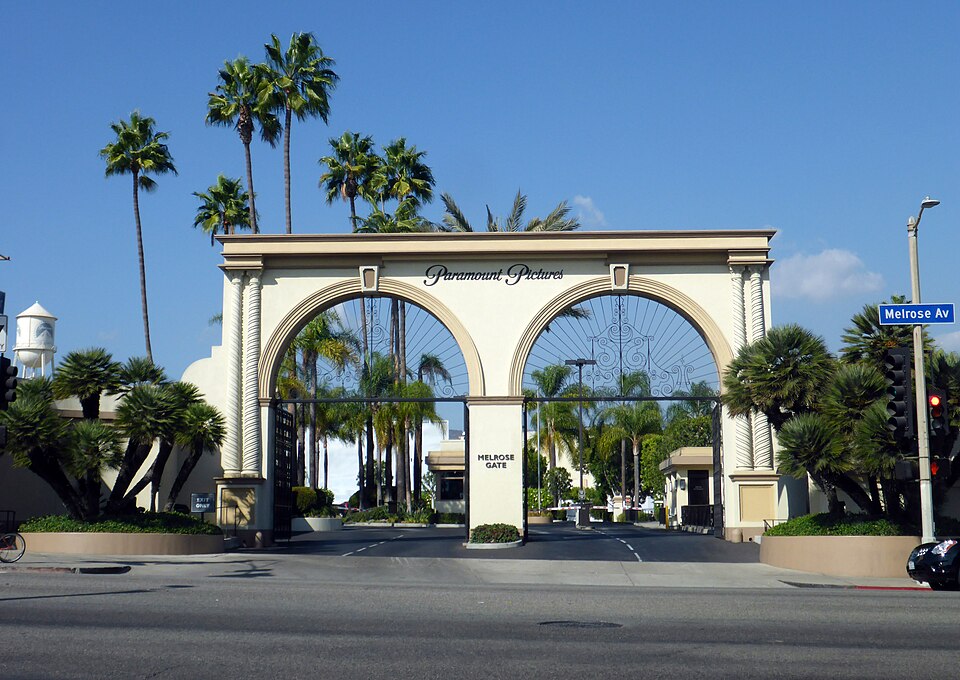
California Attorney General Rob Bonta announced Monday that a 12-state coalition had settled its antitrust lawsuit against Paramount Skydance, clearing the most serious remaining legal barrier to its takeover of Warner Bros. Discovery. The settlement still needs a judge’s final approval, and the companies still face the practical work of closing and integrating two sprawling media groups. But the balance of probability changed sharply in Los Angeles: the merger is now expected to close no later than early October, according to a memo Warner Bros. Discovery chief executive David Zaslav sent to staff and described by CNN.
The price needs careful attribution because different publications use different definitions. The Wall Street Journal describes the transaction as an $81 billion merger; Reuters, TheWrap and California’s earlier filings use a roughly $110 billion valuation. Those figures are not interchangeable, so this article treats them as source-specific measures rather than a single settled price.
What is not disputed is the scale. Under David Ellison, the combined company would place two of Hollywood’s oldest studios, Paramount+ and HBO Max, CBS, CNN, Cartoon Network and dozens of other television channels under one owner. Its franchise library would stretch from Top Gun and Mission: Impossible to Harry Potter, DC superheroes and Game of Thrones. That creates a media group with a stronger answer to Netflix, Amazon, Apple and YouTube—but also eliminates a major buyer of scripts, talent and distribution rights.
What the settlement requires
The consent framework tries to turn broad promises into measurable obligations. According to Bonta’s official announcement, the merged company must release 30 theatrical films annually in the first two years, including 20 wide releases, then 32 annually in years three through five, including 21 wide releases. At least four films each year must be independently produced. Missing the annual output floor can trigger a $30 million payment for every absent film, with most of the money directed toward union health and retirement funds, and a required divestiture of Paramount’s Miramax stake.
Paramount must also spend at least $1.5 billion more on U.S. film production across five years than it spent in 2025. The settlement creates a separate $25 million independent-film purchasing fund and a $47.5 million workforce fund for training and career development. Existing collective-bargaining agreements must be honored. The Paramount and Warner Bros. Los Angeles lots are to remain operating for filmmaking through at least the end of 2031.
The cable provisions attempt to preserve a form of competition inside the merged company. Paramount and Warner channels must negotiate basic-cable distribution separately for five years and cannot share confidential rate information. The company must keep a free streaming service such as Pluto TV operating. If it breaks distribution commitments, the remedies can include forced sales of cable channels; TheWrap’s account of the decree identifies BET, Comedy Central, VH1, Smithsonian, Destination America and Science among the assets potentially covered.
For news, Paramount must create a News Editorial Independence Board within 180 days of closing. Its five members must be active or retired established journalists with at least 10 years of experience, and no more than two may be affiliated with the same political party. The panel is expected to hear disputes involving alleged bias or failures to meet agreed fairness standards and to monitor whether CNN and CBS News remain independent from ownership and shareholders. An independent monitor and a committee of five states will oversee compliance with the broader settlement.
Why this matters
This is not merely a larger content catalogue. It is a transfer of bargaining power. Studios compete not only for ticket buyers and subscribers but also for directors, actors, writers, production crews, theatrical dates, cable carriage and intellectual property. Combining two of the remaining major Hollywood employers means fewer independent bidders at several points in that chain. The settlement addresses output and some distribution behavior, but it does not recreate the lost corporate rival.
That is the central divide in the antitrust argument. Paramount says scale is necessary to challenge technology companies whose resources and global distribution dwarf those of legacy studios. The states originally argued that the same scale could reduce choices, lower output and raise prices. Both propositions can be true at once: the merged company may be more formidable against Netflix and Amazon while workers, theaters and distributors face a more concentrated negotiating counterpart.
The newsroom issue is equally consequential. CNN and CBS News are national institutions with distinct histories, audiences and reporting cultures. Bringing both under the Ellison family’s control has drawn scrutiny because Larry Ellison is a known ally of President Donald Trump. David Ellison has denied that ownership would improperly shape coverage. The independence board is an unusual formal safeguard, but its effectiveness will depend on who is appointed, what information members can demand, how decisions are published and whether executives accept adverse findings in politically charged cases.
New York Attorney General Letitia James pressed for stronger job protections, while Connecticut Attorney General William Tong wanted tougher CNN and CBS independence provisions, according to CNN’s reporting. Those reservations expose the agreement’s limits: it is a negotiated remedy designed to end litigation, not proof that every coalition member believes the merger has become harmless.
How we got here
Paramount’s pursuit of Warner Bros. Discovery lasted for months and survived a bidding contest, global regulatory reviews and growing resistance in Hollywood. In July, Bonta led attorneys general from 11 other states in suing under the Clayton Act. They said the deal could substantially lessen competition in film distribution, anticipated blockbuster distribution and licensing of basic-cable channels. A federal court temporarily stopped the companies from closing while the case advanced.
Paramount agreed not to close until five days after the result of a trial then scheduled for March, or June 1, 2027, whichever came first. The Writers Guild of America brought a separate challenge focused on writers’ jobs and career opportunities. On Monday, the WGA also reached a settlement; the Journal reported that the union confirmed its case had been resolved.
The legal calendar was only one clock. Beginning October 1, Paramount faced a “ticking fee” of 25 cents per share if closing had not occurred—about $650 million per quarter or roughly $7 million per day, according to TheWrap and the Journal. That turned delay into a large recurring cash cost. Ellison also threatened to begin moving Paramount operations out of California without a settlement, increasing political pressure even as Bonta said the threat did not determine his decision.
At Monday’s Los Angeles press conference, Bonta emphasized that settlement was not endorsement. His framing matters: the states concluded enforceable commitments were preferable to the uncertainty of trial, but they did not withdraw their broader concerns about consolidation. Paramount, by contrast, characterized the result as complete clearance and said the combined company would produce more stories, more consumer choice and stronger competition.
Who wins, who loses
David Ellison and Paramount win the most immediate prize: a credible route to closing without being forced to dismantle the logic of the transaction in advance. The behavioral conditions are substantial, but the core studio, streaming, franchise and news assets remain together unless later violations trigger divestitures.
Warner Bros. Discovery shareholders gain greater certainty. The market no longer has to price the same probability of a March trial blocking or delaying payment. Market reactions varied by source and trading window: TheWrap reported both companies rallied about 10% Monday, while later Journal market coverage showed Warner up sharply and Paramount lower. The safe conclusion is that Warner investors welcomed the removal of a legal obstacle; the precise Paramount move depends on when it was measured.
California secures production and lot commitments, but not immunity from job cuts. The Los Angeles Economic Development Corporation estimated that a wholesale Paramount departure could cost as much as $21.2 billion in annual economic output, about 57,980 full-time jobs and $1.17 billion in state and local tax revenue. Avoiding that scenario matters. Yet a separate Los Angeles County analysis cited by TheWrap estimated merger-related rationalization could still put 4,500 local film and television jobs and more than 5,800 related jobs at risk over three years.
Workers receive floors, funds and enforceable penalties—but fewer employers. A guaranteed number of releases can preserve production demand. The workforce fund can help displaced employees retrain. Union contracts remain in force. None of those measures eliminates the basic merger incentive to consolidate duplicate departments, platforms, marketing teams, technology systems and executive structures. Hollywood unions are therefore divided between welcoming concrete protections and warning that concentration will reduce competition for labor over time.
Consumers could see both gains and losses. A deeper combined library may support a more competitive streaming bundle, more theatrical releases and larger investment in franchises. The opposite risk is less choice among suppliers, stronger leverage over cable distributors, subscription-price increases and fewer buyers willing to finance projects outside a narrower commercial strategy. The settlement puts limits around some conduct, but the ultimate consumer outcome will be measured in release diversity, prices and service quality—not the number of brands on a corporate chart.
What the numbers mean
- $81B / $110B
- Different source definitions for the deal and combined valuation
- $1.5B
- Minimum additional U.S. production spending over five years
- 30 → 32 films
- Annual theatrical floor: 30 for two years, then 32 for three
- $30M
- Penalty for every film below the annual commitment
- ~$7M a day
- Ticking fee Paramount faced beginning October 1
The $1.5 billion headline sounds transformative, but its meaning depends on the baseline. It is measured over five years against Paramount’s 2025 U.S. production spending—roughly $300 million in additional annual spending on average. Bonta’s office said only about 5% of Paramount production is currently in the United States. The decree can push that share higher if federal and state tax-credit conditions are met, but the figure is a floor, not a guarantee that every dollar lands in California.
The release quota is more concrete. Thirty films in each of the first two years and 32 in each of the next three equals at least 156 theatrical films, including a minimum of 103 wide releases and 20 independent productions. A $30 million per-film penalty is large enough to make missing the target a board-level decision rather than a rounding error. Still, quantity is not the same as competitive diversity. One owner can release 30 films while making choices that two independent studios would not have made.
The ticking fee explains the speed. At $7 million a day, a 90-day delay approaches the reported quarterly $650 million obligation. That penalty was not money invested in films or workers; it was the cost of waiting. Settling before October 1 preserved capital and removed uncertainty. The deal’s other constraint is nearly $80 billion in combined debt, according to the Journal, which could place pressure on spending even while the consent decree sets production floors.
The California departure estimates are best understood as a stress scenario, not a forecast. The $21.2 billion output figure measured a threatened relocation, while the smaller county estimates examined merger-related job cuts. Both show why public officials faced conflicting risks: block the merger and risk a corporate exit; approve it and accept likely integration losses.
What happens next
First comes judicial approval. The court must review the settlement and lift or modify the orders that kept the companies apart. Paramount and Warner Bros. Discovery can prepare integration, but final legal effect depends on that approval. Zaslav’s early-October timetable is an expectation, not a guaranteed closing date.
Second comes enforcement. The independent monitor will need access to release plans, spending records, cable negotiations and compliance reports. If Paramount misses a film target or mixes cable bargaining that was supposed to remain separate, the settlement’s credibility will depend on whether penalties and divestiture provisions are used rather than merely threatened.
Third comes integration—and almost certainly a fight over jobs. Two corporate headquarters, studio operations, streamers and cable portfolios contain obvious overlaps. Executives will promise efficiency; unions and local governments will count layoffs, outsourced work and productions moved abroad. The production floor may soften the impact below the line while doing less for duplicated administrative and technical roles.
Finally, CNN and CBS News will generate the board’s first real tests. A disputed interview, election call, investigative report or complaint from ownership could establish whether the panel protects newsroom autonomy or becomes another layer of governance without visible force. Independence cannot be proved at launch; it will be tested when coverage is inconvenient to the people who own the company.
Conclusion: the argument moves from permission to performance
The Paramount–Warner Bros. settlement is significant because it converts the merger debate from “Can this deal close?” to “Will these promises work?” The states obtained unusually specific production quotas, financial penalties, labor funding, separate cable negotiations and a formal mechanism for newsroom independence. Paramount preserved the strategic whole of the company it wants to build.
That compromise may stabilize production and create a legacy-media competitor with the scale to challenge technology platforms. It may also concentrate too much creative, economic and editorial power in one ownership group. The settlement does not resolve that dispute. It creates a five-year experiment with enforceable measurements. The evidence will be found in the number and range of films made, where the work happens, who keeps a job, what viewers pay—and whether CNN and CBS journalists can publish difficult reporting without the owner’s politics becoming the invisible assignment editor.
Sources and reporting notes
- California Attorney General: settlement announcement and official terms
- CNN: press conference, Zaslav memo and editorial-board details
- The Wall Street Journal: $81 billion framing, settlement penalties, scale and ticking fee
- Reuters: criticism of behavioral remedies and concentration risks
- TheWrap: consent-decree details, market reaction, ticking fee and Los Angeles economic estimates
Reporting cutoff: September 22, 2026. Final judicial approval remains pending. Valuation and market-move figures are attributed because sources use different transaction definitions and measurement windows.