NFL referee investigation Adrian Hill
Adrian Hill's exchange with Eric Wilson and Jeff Seeman's apparent words to Trey McBride have forced the league to examine the people who enforce its standards. The footage is uncomfortable; the institutional test is bigger.
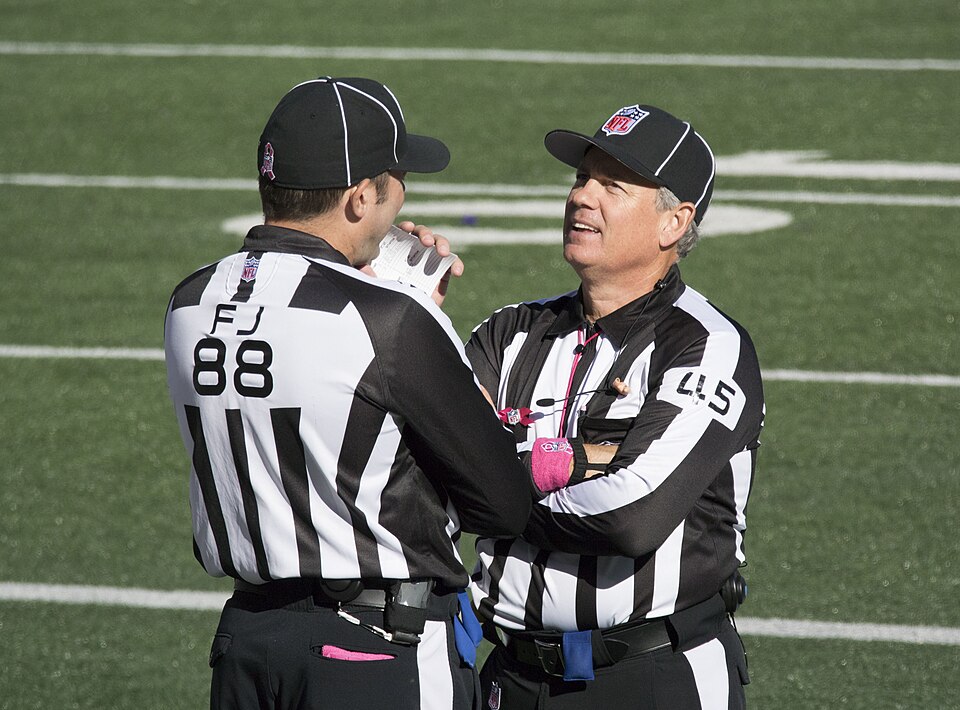
The NFL spent Monday reviewing two scenes that never should have become the defining images of its Week 4 Sunday. In Minnesota, referee Adrian Hill was knocked down on a dead play, then angrily confronted Vikings linebacker Eric Wilson even as Wilson tried to help. In New Jersey, line judge Jeff Seeman appeared to direct profanity at Cardinals tight end Trey McBride after McBride objected to a no-call. One moment was physical, the other verbal. Together they created the same problem: the neutral party looked emotionally entangled in the dispute.
That is the thesis the league has to confront. This is not primarily a referendum on whether officials may feel anger, embarrassment or fatigue. Of course they do. It is about whether the NFL's accountability system is credible when the person losing composure wears stripes rather than a helmet or headset. The sport cannot demand visible restraint from players, punish coaches for language and then retreat into silence when officials cross comparable lines.
What happened in the Eric Wilson–Adrian Hill collision
The Adrian Hill Eric Wilson video needs the full sequence
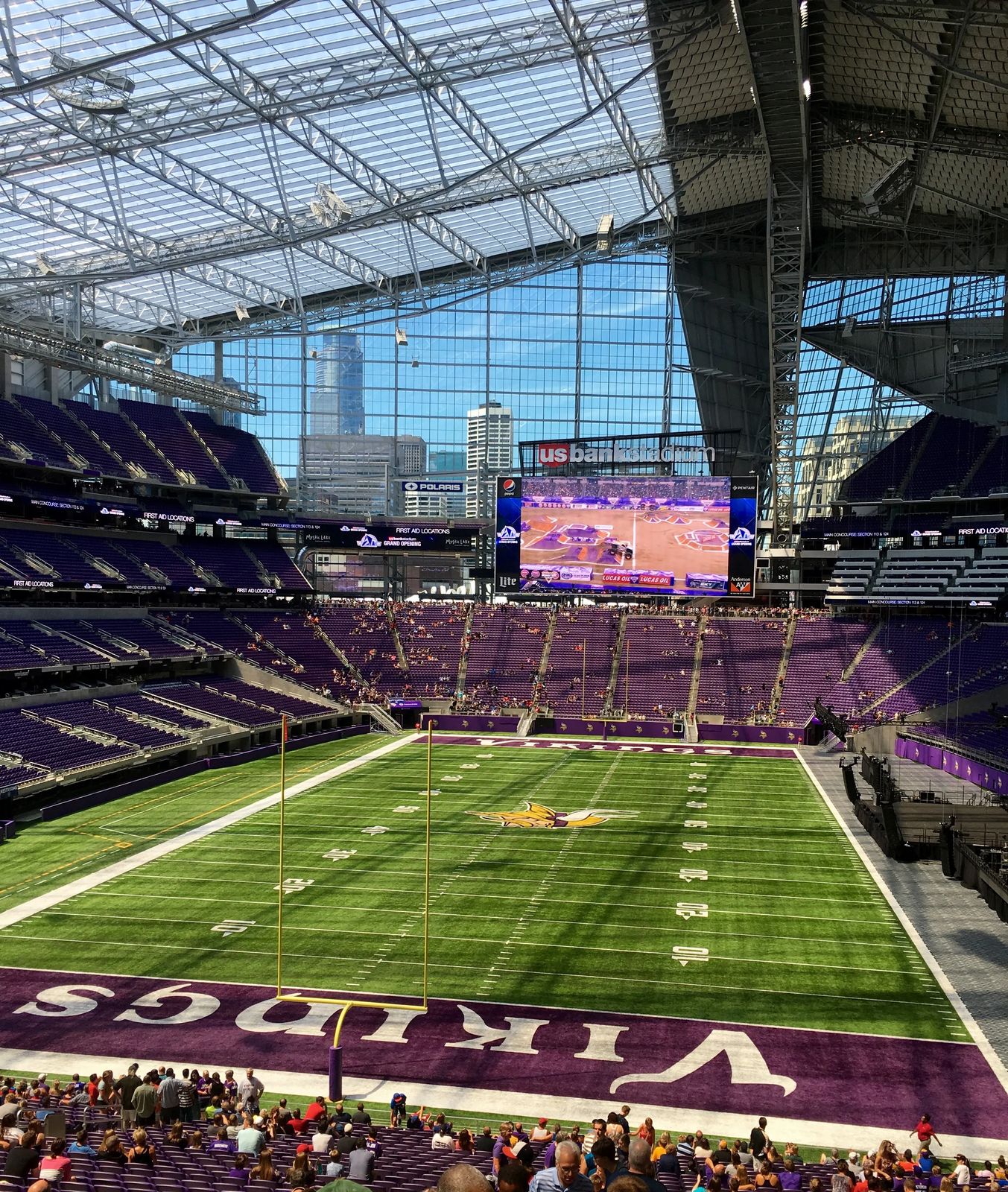
The first-quarter play at U.S. Bank Stadium had already been stopped for a neutral-zone infraction. Noise appeared to delay the players' recognition of the whistle. As Wilson moved toward Miami quarterback Malik Willis, Dolphins running back Ollie Gordon II shoved the Vikings linebacker from behind. Wilson's momentum carried him into Hill, sending the crew chief to the turf.
The collision was inadvertent. The footage also shows Wilson reach down as if to help Hill up. Hill rose quickly, stepped toward Wilson, spoke forcefully and pointed him back toward the Vikings' huddle before another official separated them. Hill did not eject Wilson and assessed no penalty for the contact or exchange. Those details matter because the viral shorthand — “Vikings Dolphins referee knocked down” — can erase both the shove that caused the collision and Wilson's attempted assistance.
Hill also deserves the context that he had just been hit by a large athlete during a confusing dead-ball sequence. A split-second surge of anger is human, and the league should not pretend otherwise. But a referee's authority rests on controlling that reaction. Once the danger passed and Wilson extended a hand, Hill's posture turned an accident into a national officiating story.
Wilson treated it lightly afterward. “That was funny, honestly,” he told reporters, adding that he apologized and that Hill “was cool about it.” ESPN reporter Kevin Seifert observed the two chatting amiably before the second-half kickoff. That reconciliation should lower the temperature around the people involved; it does not eliminate the NFL's need to review the conduct.
A flag-heavy game amplified every reaction
Hill's crew called 20 penalties for 140 yards, according to The Spun. That number does not prove bias or incompetence; a crew can correctly call a messy game, and raw totals do not establish which team benefited. But volume changes the emotional climate. Each flag becomes another argument, each conference another pause, and each disputed call another clip. In a 15–10 game without an offensive touchdown by the winning Vikings, administrative moments naturally occupy more of the audience's attention.
Minnesota improved to 4–0 atop the NFC North, and the New York Post noted that it was the Vikings' second win this season without an offensive touchdown. The result was legitimate and the standings are clear. The problem is perceptual: a close, low-scoring game with 20 accepted penalties leaves almost no cushion for an official's visible frustration.
The Jeff Seeman–Trey McBride exchange raised the accountability stakes
What the Jeff Seeman Trey McBride video does — and does not — establish
Late in the Giants' 36–24 victory over Arizona, McBride wanted a pass-interference call on Giants cornerback Dru Phillips. No flag came. McBride continued the argument from the sideline, and broadcast cameras captured Seeman appearing to direct an expletive toward him. The video has been widely lip-read, but the precise words have not been independently confirmed in available audio. “Appeared to” is the responsible formulation.
That distinction is not a loophole. Even without pretending the silent clip proves every syllable, the exchange was serious enough for the NFL to tell USA Today Sports, “We are looking into the matter.” The league's review can access the full broadcast, crew communications and statements that the public cannot.
NFL Players Association executive director JC Tretter framed the dispute as equal treatment: “Players are consistently held accountable when the roles are reversed. We expect the NFL to hold officials to the same standard.” The NFLPA JC Tretter officials complaint is powerful because it does not require officials to be emotionless. It asks the league to apply a recognizable standard across the boundary between labor and management.

Why this matters: trust is the NFL's most fragile asset
Officiating integrity has always mattered. It matters more in an era when legal sportsbooks advertise during games, betting lines scroll across studio shows and millions of viewers track individual plays for financial reasons. The NFL does not need actual bias for confidence to erode. A recurring appearance of bias can be almost as costly because it invites fans to reinterpret ordinary mistakes as evidence of something larger.
Nothing in either Week 4 incident establishes that Hill or Seeman favored a team. Hill's moment followed an accidental collision, and the McBride sequence concerned conduct after a disputed no-call, not proof that the no-call itself was corrupt. Conflating poor composure with fixed officiating would be reckless. Still, the NFL referee bias controversy grows whenever a neutral arbiter appears personally offended by a participant.
The league sells certainty: rules, replay angles, calibrated clocks and a centralized review operation. Fans know judgment remains unavoidable, yet they expect the people exercising it to look disinterested. When an official seems to retaliate verbally or respond as a combatant, the visual language of neutrality breaks down.
The double standard players can see
Players are fined for taunting, gestures, uniform violations and language that never reaches a broadcast microphone. Coaches can lose 15 yards for verbal abuse in real time. On the same Sunday, Patriots coach Mike Vrabel was penalized for unsportsmanlike conduct against Buffalo after telling referee Bill Vinovich that a call was “terrible” with an expletive attached, according to the pool report relayed by ESPN's Mike Reiss.
That does not mean officials should receive an identical dollar fine under a different employment structure. It means discipline should be legible. If a player says the same words an official appeared to use, viewers can see the flag, hear the league's explanation and often read the fine report days later. Discipline for officials is normally handled through internal grades, playoff assignments and future crew decisions. Those consequences can be meaningful, but their invisibility makes equal accountability difficult to demonstrate.
The NFL therefore faces a structural choice: protect the privacy and authority of officials, or provide enough transparency to show that authority is accountable. Total opacity may protect the crew for a week, but it exposes the institution for a season.
Officials are human — and that is an argument for better systems
The easiest response is to demand robotic perfection. It is also the least useful. NFL officials make high-speed judgments among elite athletes while stadiums roar, coaches campaign and television supplies viewers with angles the crew may never see. High-definition replay can reduce a 1.5-second decision to a frame-by-frame moral trial. One camera isolates a face; another captures a word; social media removes the preceding ten minutes.
Hill has officiated in the NFL since 2010 and has worn the white hat since 2019. Experience does not eliminate stress, surprise or pain. Seeman likewise works at a level where one judgment can alter a drive and dominate a news cycle. Their humanity is not a defense for poor conduct. It is evidence that the league should design procedures for moments when composure slips: quicker intervention by another official, clearer postgame reporting and centralized support that removes the need to argue on the sideline.
The history of NFL officiating flashpoints — from replacement officials to replay controversies and roughing-the-passer debates — shows that trust rarely collapses because of one call. It erodes when mistakes, opacity and defensiveness reinforce one another. HD scrutiny did not create human error; it made the gaps in the accountability system impossible to hide.
The broadcaster became part of the story
Why the NFL FOX deleted video referee episode matters
NFL on FOX posted the Hill–Wilson clip to X with a caption describing “an unintentional collision,” then removed it roughly 20 minutes later, according to talkSPORT. The dead link should not be embedded or treated as evidence of motive. But the deletion is relevant because it demonstrates the uneasy position of rights-holding broadcasters: they are news organizations covering a league whose games are also premium commercial inventory.
A removal can have an innocent explanation — rights management, editorial review, a caption concern or a production decision. Without an on-record account, anything more is speculation. Yet taking down a viral clip rarely makes the underlying event disappear. It instead creates a second question about why the record changed, especially once other accounts have preserved or described the footage.
Video: NFL on FOX via X (post later deleted). Adam Schefter separately shared footage while reporting that the league was reviewing the incident.
What the numbers can and cannot tell us
The 20 penalties and 140 yards in Minnesota are useful as a description of game texture, not a verdict. A proper officiating audit would separate accepted from declined penalties, judgment calls from procedural fouls, team distribution, replay corrections and the league's own postgame grading. Without that detail, a large total proves only that flags were unusually prominent.
Fine asymmetry is easier to establish institutionally than numerically. Player discipline is often public and itemized; official discipline is usually private and assignment-based. The public therefore receives a clean dollar figure on one side and an inference on the other. That information gap is why calls for “the same standard” resonate even if the underlying disciplinary systems cannot be identical.
Warren Sharp called Sunday “the MOST EMBARRASSING day” he could remember for NFL referees. That is opinion, not an empirical grade of the full Week 4 slate. But it captured the audience's mood after several conflicts arrived in one afternoon. The league should resist using either viral outrage or raw penalty totals as substitutes for its own film review — and then publish enough of that review to make the conclusion credible.
What happens next
The most likely outcome is quieter than the controversy. The officiating department can review all available angles, interview the crews, examine communications and adjust internal grades. An official could receive counseling, a downgraded assessment or reduced postseason consideration without the public learning the precise consequence. Because Wilson and Hill reconciled and no penalty was issued, the league may distinguish Hill's loss of composure from a formal on-field infraction. Seeman's case turns more heavily on what the review confirms was said and in what context.
A short public statement acknowledging completed reviews would be more valuable than a theatrical punishment. The NFL should say whether conduct standards were violated, whether corrective action was taken and whether existing procedures are sufficient. It need not release private employment files to explain its governing principle.
The incidents will also renew the debate over full-time officials and a broader sky-judge system. Full-time employment might create more training, film study and consistent feedback, but it cannot eliminate judgment or emotion. A sky judge could correct certain calls, but it would not solve sideline conduct unless empowered to intervene in crew management. Technology is strongest when it narrows a defined error; culture and accountability still govern behavior.
The league's best response is therefore layered: transparent standards, independent review inside the officiating department, better de-escalation protocols and selective use of centralized assistance. No reform will prevent every flare-up. The goal is to ensure that when one occurs, the NFL's response is more disciplined than the moment itself.
The bottom line
The Eric Wilson Adrian Hill collision was accidental. Hill was knocked down, Wilson tried to help, and the two apparently made peace before the game ended. Seeman's exact words remain unconfirmed in public, though the video appeared serious enough to prompt reviews by the league and the players' union. Those facts should keep the conversation proportionate.
Proportionate does not mean dismissive. Officials possess unusual authority precisely because football cannot function without trusted neutral judgment. Week 4 showed how quickly that authority can look personal. The NFL's review now has one job: demonstrate that the people enforcing restraint are subject to it, too.
Sources and reporting
- USA Today Sports — league response, McBride–Seeman review and Vrabel pool report.
- OutKick — league official's confirmation of the Monday Hill review and Hill's officiating tenure.
- talkSPORT — Wilson's postgame explanation and the NFL on FOX post deletion.
- The Spun — Minnesota penalty total.
- Sports Illustrated — Week 4 officiating context.
- The Sporting News — broader Week 4 reaction.