NFL Game Analysis
Jacksonville reached 3-1 by turning two interceptions and three Cam Little field goals into more value than Cincinnati found in 428 passing yards. The result belonged to Lawrence, the Jaguars' defense and a game transformed by Chase's exit.
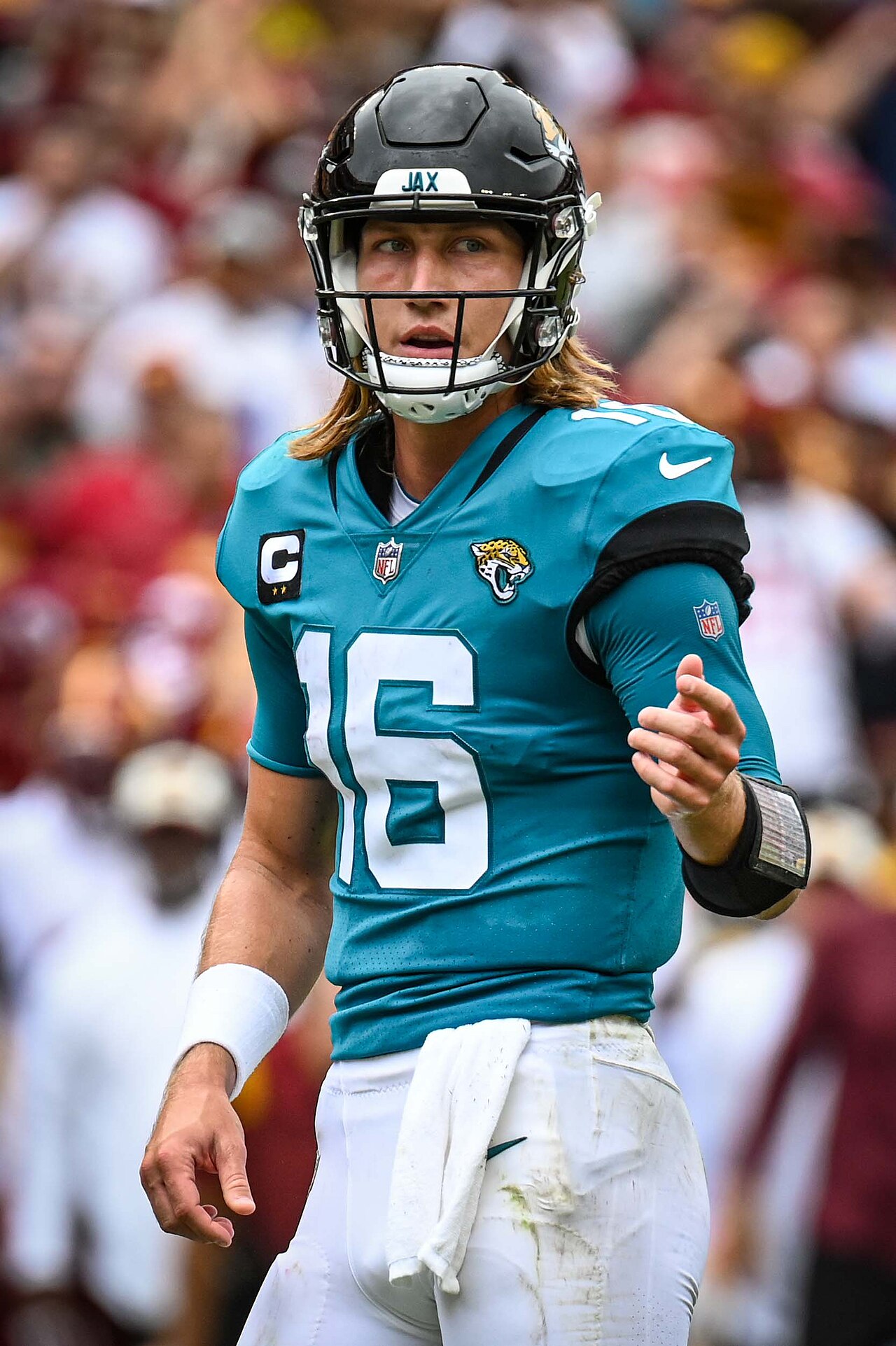
CINCINNATI — Jaguars beat Bengals 22-17 is the result that will sit in the NFL Week 4 results for Sunday, October 4, 2026, but the shape of Jacksonville's win at Paycor Stadium matters more than the five-point margin. Trevor Lawrence completed 18 of 23 passes for 227 yards, one touchdown and no turnovers, producing a 122.3 passer rating despite being sacked four times. Joe Burrow threw for 428 yards and brought Cincinnati to the Jacksonville 21 on the final drive, yet two interceptions and a fourth-down completion that stopped one yard short decided which quarterback's production actually became points.
Lawrence's first victory over Burrow in four career meetings carried a wider milestone. The sixth-year quarterback, selected No. 1 overall in 2021, now has at least one win over every AFC opponent. That achievement does not settle every argument about his career, but it gives a clean shape to his start: eight touchdown passes against two interceptions through four weeks, and a 3-1 Jaguars team standing alone atop the AFC South.
Cincinnati's afternoon moved in the opposite direction. Ja'Marr Chase caught three passes for 27 yards before leaving in the second quarter with concussion symptoms. Tee Higgins responded with 11 catches for 151 yards, and Burrow kept creating chances. But the Bengals became increasingly one-dimensional, producing only 23 rushing yards at 1.5 per carry. They moved the ball through the air; Jacksonville won the possessions that most directly changed the scoreboard.
How Jacksonville closed it out
The Jaguars did not win with one overwhelming stretch. They accumulated the game: a 7-yard Lawrence touchdown pass to Brian Thomas Jr. with 1:23 left in the first half, a 25-yard touchdown run by Chris Rodriguez Jr., and three Cam Little field goals. Little's longest make came from 55 yards. Jacksonville missed the two-point attempt after Rodriguez's score, leaving the Bengals within one possession and ensuring the finish would belong to the defense.
The game repeatedly threatened to tilt on plays that vanished. A 40-yard Parker Washington gain disappeared after replay showed his heel out of bounds. Bhayshul Tuten had a 44-yard touchdown run and a separate 3-yard touchdown run wiped out by holding calls. Cincinnati lost a 14-yard Samaje Perine touchdown run to another hold. Those erasures meant neither side could build cleanly through momentum; each had to restart drives after apparent breakthroughs.
Cincinnati still had the last meaningful chance. Burrow pushed the Bengals to Jacksonville's 21 and faced fourth-and-10. His pass to Chase Brown gained nine yards, ending at the 12. It was a fitting close to a day of impressive distance without sufficient payoff: the Bengals needed ten, moved nine and watched Jacksonville leave Cincinnati with a second straight 3-1 start.
Cam Little field goals, a 55-yarder and the Jourdan Lewis interception
Little's three makes were not background scoring. In a game where holding penalties repeatedly erased touchdowns, the kicker converted stalled possessions into a durable lead. The 55-yarder expanded Jacksonville's practical scoring range and allowed the offense to benefit from field position even when Cincinnati's pass rush got to Lawrence.
The sharper swing came from the Jourdan Lewis interception. Lewis returned Burrow's pass 45 yards to the Bengals 18, setting up a Jacksonville touchdown. That one play joined defense and offense without requiring a long drive. Foye Oluokun added the other interception in the red zone on a pass intended for Higgins, denying Cincinnati points after Burrow had moved the offense into scoring territory. One takeaway created a short field; the other erased a dangerous one. Together they outweighed a large share of Cincinnati's yardage advantage.
The numbers behind the result
| Measure | Jacksonville | Cincinnati |
|---|---|---|
| Quarterback | Lawrence: 18/23, 227 yards, 1 TD, 0 turnovers | Burrow: 39/54, 428 yards, 1 TD, 2 interceptions |
| Passer rating | Lawrence: 122.3 | Burrow: volume without enough scoring return |
| Leading receiving line | Brenton Strange: 7 catches, 95 yards | Tee Higgins: 11 catches, 151 yards |
| Rushing comparison | Bhayshul Tuten: 17 carries, 73 yards, 4.3 per carry | Team: 23 yards, 1.5 per carry |
| Accepted penalties | 23 combined; 16 in the first half | |
The comparison explains the apparent contradiction. Burrow completed 21 more passes and threw for 201 more yards than Lawrence. Higgins alone gained 151 receiving yards, while Chase Brown added 11 catches for 71 yards. Yet Cincinnati's possession volume did not become enough scoring. Mike Gesicki caught a 15-yard touchdown, but the interceptions severed two opportunities and the rushing game offered almost no alternative when Jacksonville could anticipate the pass.
Jacksonville's numbers were less spectacular and more useful. Lawrence completed 78 percent of his attempts and protected the ball. Strange led the team with seven catches for 95 yards. Tuten's 73 yards came at 4.3 per carry, giving the Jaguars balance Cincinnati could not match. The lesson is not that yardage is meaningless; Burrow's 428 yards kept the Bengals alive to the last snap. It is that turnovers, field position and finishing drives carry more leverage than volume. Jacksonville was efficient where Cincinnati was abundant.

Why this matters
AFC South standings: Jaguars 3-1 through a repeatable formula
Lawrence had been 0-3 against Burrow. Ending that run does not transform a head-to-head record into a referendum on two careers, but it does remove one more line from the list of opponents and moments used to question Jacksonville's quarterback. More important, he did it without chasing Burrow's stat line. Lawrence absorbed four sacks, stayed patient and avoided the turnover that could have forced Jacksonville into Cincinnati's preferred high-volume passing contest.
The AFC South standings show the Jaguars at 3-1 and alone in first place. It is the second straight season they have opened 3-1, a useful marker because repetition begins to look less like a burst and more like an organizational habit. Jacksonville's formula is becoming legible: an efficient quarterback, a defense that steals possessions and a kicker capable of scoring from distance. The team's earlier 35-6 win over New England showed the defense's ceiling; this narrower win showed that the same identity can survive a quarterback throwing for 428 yards against it.
Cincinnati is 2-2 after winning its first two and losing its next two, the same opening pattern for a second straight season. That repetition is less encouraging. The issue is not effort: Burrow's final drive nearly won the game, and Higgins carried a larger role after Chase left. The issue is structural. A team that requires its quarterback to attempt 54 passes while the running game produces 23 yards is asking precision to compensate for imbalance. Against a defense that keeps intercepting passes, that bargain becomes especially expensive.
The Ja'Marr Chase concussion changed the game — and maybe the season
Ja'Marr Chase concussion injury puts Week 5 under the protocol cloud
Chase's exit came after a sequence that demands a precise description. At the Jacksonville 30, Jarrian Jones turned Chase's facemask. Linebacker Ventrell Miller then lowered his helmet into Chase's head, driving it into the turf. Chase was examined in the medical tent and ruled out at halftime with concussion symptoms. His three catches had produced 27 yards before the injury.
The football consequence was immediate. Higgins delivered 11 catches and 151 yards, proving Cincinnati still had a high-level answer on the perimeter. Brown caught 11 passes for 71 yards, and Gesicki scored on a 15-yard reception. But the offense narrowed. Without Chase, and with Brown held to 1.1 yards per carry, Cincinnati leaned even more heavily on Burrow's arm. Jacksonville could concede catches while waiting for one mistake; the Jaguars got two.
The larger question belongs to player safety rather than play design. The sequence involved facemask torque followed by helmet contact to the head and the head striking the turf. Chase's Week 5 availability depends on the NFL concussion protocol, not the urgency of a 2-2 team's schedule. The league's spotters and review process must now examine the full sequence and the on-field response. Cincinnati must prepare as though the protocol, not competitive need, controls the timetable.
That uncertainty can shape more than one game. Chase is the receiver who changes coverage before the snap. Higgins can dominate targets, as his 151 yards showed, but the distribution of defensive attention changes when Chase is absent. Cincinnati did not become helpless; Burrow still reached the Jacksonville 21 on the final drive. It became easier to read, and at this level, predictability is often the difference between a long drive and a decisive interception.
Two quarterbacks, two trajectories
Lawrence's career has carried the burden attached to being the 2021 No. 1 overall pick. Every efficient afternoon is often treated as overdue, while every uneven one reopens the argument about whether he has met the expectations of his draft position. This game offered a quieter, more useful standard. He completed 18 of 23, found Thomas for a 7-yard touchdown with 1:23 left in the first half, produced a 122.3 rating and did not turn the ball over. Through four weeks he has eight touchdown passes and two interceptions.
The beneficiary is not only Lawrence. Jacksonville's defense can play aggressively when the quarterback does not repeatedly return short fields to the opponent. Little's range gives the offense value even when a drive stops. Tuten and Strange give Lawrence answers that do not require every possession to become a duel between marquee quarterbacks. A 22-point day can be enough when the offense does not subsidize the opponent.
Burrow's line demands respect: 39 completions, 428 yards and a touchdown are evidence of a quarterback refusing to let an undermanned, one-dimensional offense disappear. The loss does not belong to him alone. It does, however, show the cost of volume without support. Fifty-four attempts create more chances for brilliance and more exposure to a defense built around takeaways. The first interception became Jacksonville field position; the second erased Cincinnati's red-zone opportunity. The final fourth-down completion was accurate enough to gain nine yards and insufficient to gain ten.
The winners are Jacksonville's balanced structure and Lawrence's willingness to accept an efficient game. The losers are Cincinnati's margin for error and the idea that passing volume can indefinitely hide a rushing attack producing 1.5 yards per carry. The Bengals were close enough to win. That makes the imbalance more frustrating, not less.

The defense is the identity
Jaguars interception streak: NFL record pressure reaches nine games
Jacksonville has recorded an interception in nine consecutive games, a franchise record and the NFL's longest active streak. Takeaway streaks can be volatile, but this one has persisted long enough to affect how opponents must think. The Jaguars do not need to shut down every completion if they can end a critical possession themselves. Against Cincinnati, Lewis changed the field and Oluokun removed a red-zone chance.
The sequence extends the defensive argument made in the Jaguars' previous win and gives context to the broader Week 4 landscape, including Cleveland's own takeaway-driven 27-24 win over Pittsburgh. In close NFL games, the most valuable defense is often not the one that prevents all yardage; it is the one that changes possession and shortens the offense's path to points.
Travis Hunter at cornerback for 76 snaps
Travis Hunter played all 76 defensive snaps at cornerback. Early Pro Football Focus tracking credited him with six targets, three catches allowed for 21 yards and two pass breakups. The workload matters because it shows Jacksonville trusted him through a game in which Cincinnati attempted 54 passes. The early coverage numbers suggest that trust held up under volume.
Hunter's presence also makes the defense more flexible. A corner who can remain on the field for every defensive snap reduces the need for situational protection and lets the staff preserve its coverage plan across long drives. The Bengals generated yardage elsewhere, particularly through Higgins, but Hunter's full-game deployment is evidence that Jacksonville sees his cornerback role as foundational rather than ornamental.
The penalty problem
Referee Alex Moore's crew accepted 23 penalties, including 16 in the first half — the most in an NFL half this season. That volume turned the game into an administrative test as much as a tactical one. Drives changed shape after apparent scores, and viewers repeatedly had to wait for the result behind the result.
The wiped-out touchdowns were costly on both sides. Cincinnati lost Perine's 14-yard run. Jacksonville lost Tuten scoring runs from 44 yards and three yards. The overturned 40-yard Washington gain added another major reversal when replay showed his heel out of bounds. None of those plays belongs on the final scoring ledger, but together they expose a discipline problem that both teams must carry into Week 5.
Jacksonville can take comfort from winning despite losing explosive plays to flags. It should not mistake survival for resolution. A formula built on defense, ball security and kicking works best when the offense is not repeatedly asked to replace erased touchdowns. Cincinnati has the same warning. A team already struggling to run cannot afford to have one of its rare successful rushing scores removed by holding.
What happens next
Jacksonville plays the Philadelphia Eagles in London in Week 5, according to NBC Sports. The trip is a useful test of whether the Jaguars' 3-1 formula travels: protect the football, run well enough to keep the defense honest, trust Little from distance and wait for the defense to create a possession-changing play. Philadelphia will force Jacksonville to prove that the method is repeatable rather than merely the product of one opponent's imbalance.
The AFC South race now runs through a Jacksonville team alone in first place. A win in London would strengthen the value of this Cincinnati result; a loss would compress the early-season advantage. The important point is that Jacksonville controls its position rather than chasing it. Back-to-back 3-1 starts give the Jaguars another chance to turn a promising first month into something more durable.
Cincinnati's next week begins with Chase's health. His status depends on the concussion protocol, and the Bengals must resist framing clearance as a roster decision. If he cannot play, Higgins' 151-yard performance shows the offense has a lead receiver capable of carrying volume. It does not solve the Bengals rushing 23 yards problem. Cincinnati must find a credible ground threat or continue asking Burrow to win through an extreme number of attempts against defenses waiting for a mistake.
The AFC North implications are immediate even without projecting a final table. Cincinnati has moved from 2-0 to 2-2 for a second straight season, a pattern that raises questions about its ability to convert good starts into early separation. Jacksonville, meanwhile, leaves Paycor Stadium with the opposite feeling: the Jaguars did not require their best statistical offense to beat an elite passer.
Burrow's 428-yard fight and the Bengals' final drive deserve to remain part of the verdict. Cincinnati was one yard from extending the game at the Jacksonville 12. But the Jaguars owned the decisive details: Lawrence's zero turnovers, Little's three field goals, two interceptions and the final fourth-down stop. Those are not as loud as 428 passing yards. On Sunday, they were worth more.
Sources and reporting notes
Signal Post News wrote this analysis independently from the final score, player statistics, injury reporting and postgame context published by the following outlets.
- Reuters: Jaguars beat Bengals as Cincinnati loses Ja'Marr Chase, October 4, 2026
- Associated Press via theScore: Jacksonville intercepts Burrow twice and beats Cincinnati
- Jaguars Wire: the good, bad and ugly from Jacksonville's third win
- NBC Sports: Trevor Lawrence leads Jacksonville in the Week 4 win
Reporting note: Chase was ruled out with concussion symptoms. His availability will be determined through the NFL concussion protocol. Early coverage figures for Hunter are identified as preliminary PFF tracking.