Musk 366 million midterm spending: Elon Musk has spent roughly $366 million on the 2026 midterm elections so far — at least $276 million of it since July — in a push to keep the House and Senate in Republican hands, according to figures first reported by the New York Times and confirmed by his America PAC.
Midterms money / Musk has spent $366 million to help Republicans keep Congress
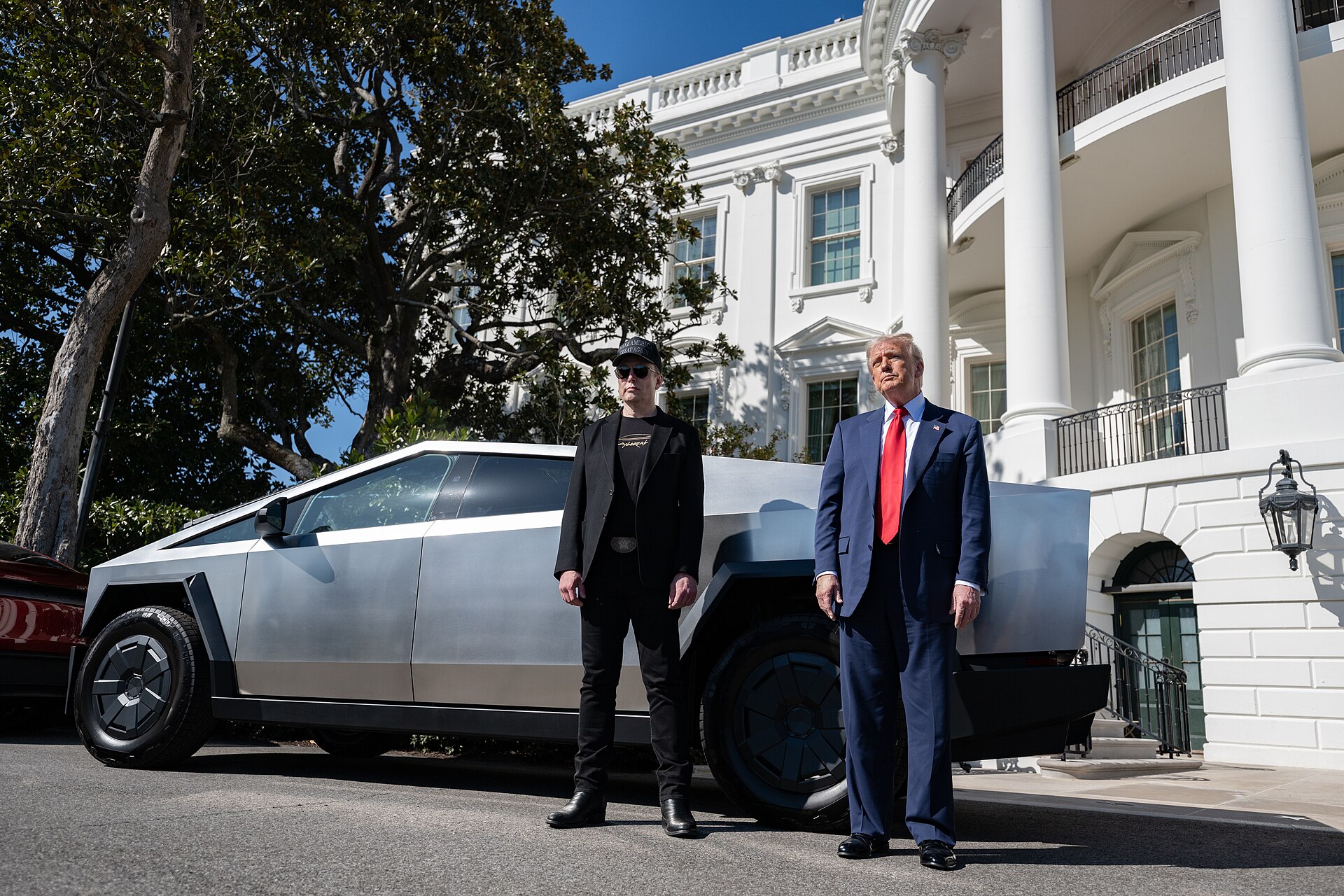
Elon Musk has spent roughly $366 million on the 2026 midterm elections so far, including at least $276 million since July alone, in an effort to help Republicans retain control of Congress. The figures, first reported by the New York Times and confirmed by a spokesman for Musk's America PAC, make the Tesla, SpaceX and X chief executive likely the single biggest political donor of the cycle — and they land just days before super PACs must publicly disclose their third-quarter fundraising, which will put the numbers on the official record.
The scale is easier to grasp in comparison than in isolation. Musk's largest single cheque — $158 million to the Senate Leadership Fund, the super PAC aligned with Senate Majority Leader John Thune — is, on its own, more than the Democrats' Senate Majority PAC raised from every one of its donors in the entire third quarter: $151 million. One person, writing one cheque, out-raised the opposition's flagship Senate group. And the $366 million total already exceeds the roughly $290 million Musk spent across the whole of the 2024 cycle, the spending spree that helped return Donald Trump to the White House — with weeks still to go before election day, and, according to the Times reporting confirmed by America PAC, further money moving through groups that do not disclose their donors at all.
Where the $276 million went
The breakdown of the third-quarter giving, confirmed by America PAC spokesman Andrew Romeo, reads like a map of the Republican Party's entire federal apparatus. The Senate Leadership Fund received $158 million — one of the largest known political donations in American history — to defend the Republican Senate majority. The Congressional Leadership Fund, the House Republicans' super PAC aligned with Speaker Mike Johnson, received $20 million. Musk put $76 million into his own America PAC, the turnout organisation he built in 2024. The Lone Star Liberty PAC, which is backing Texas Attorney General Ken Paxton's run for the US Senate, received $10 million. The Republican Governors Association received $10 million, and the Republican Attorneys General Association $2 million.
Two features of that list matter. The first is its breadth: this is not a bet on one candidate or one chamber, but funding for every layer of the party's campaign machinery at once — Senate, House, governors, attorneys general, and a privately controlled ground operation. The second is its timing. Midterm history runs hard against the president's party, and Reuters noted that the spending comes even as Democrats' chances of retaking the House and Senate have improved. Musk's money is, by his own spokesman's framing, a counterweight to that history rather than a victory lap: Romeo said the investments give Republicans "a fighting chance to defy history."
Why the Senate — and why Texas — got the biggest share
More than half of the quarterly total went to a single destination, the Senate Leadership Fund, and a striking share of that fund's own spending has flowed to a single state. The Senate Leadership Fund has spent well over $100 million in Texas, where Paxton — the state's Republican attorney general — is locked in a Senate race against Democratic state Representative James Talarico that recent polls show in a dead heat. CNN reported that the fund has described the Texas outlay as coming from a dedicated pot rather than being diverted from other competitive Senate races. Texas has not elected a Democrat to statewide office since 1994; that a Republican super PAC needs a nine-figure defence there says as much about the 2026 map as any poll.
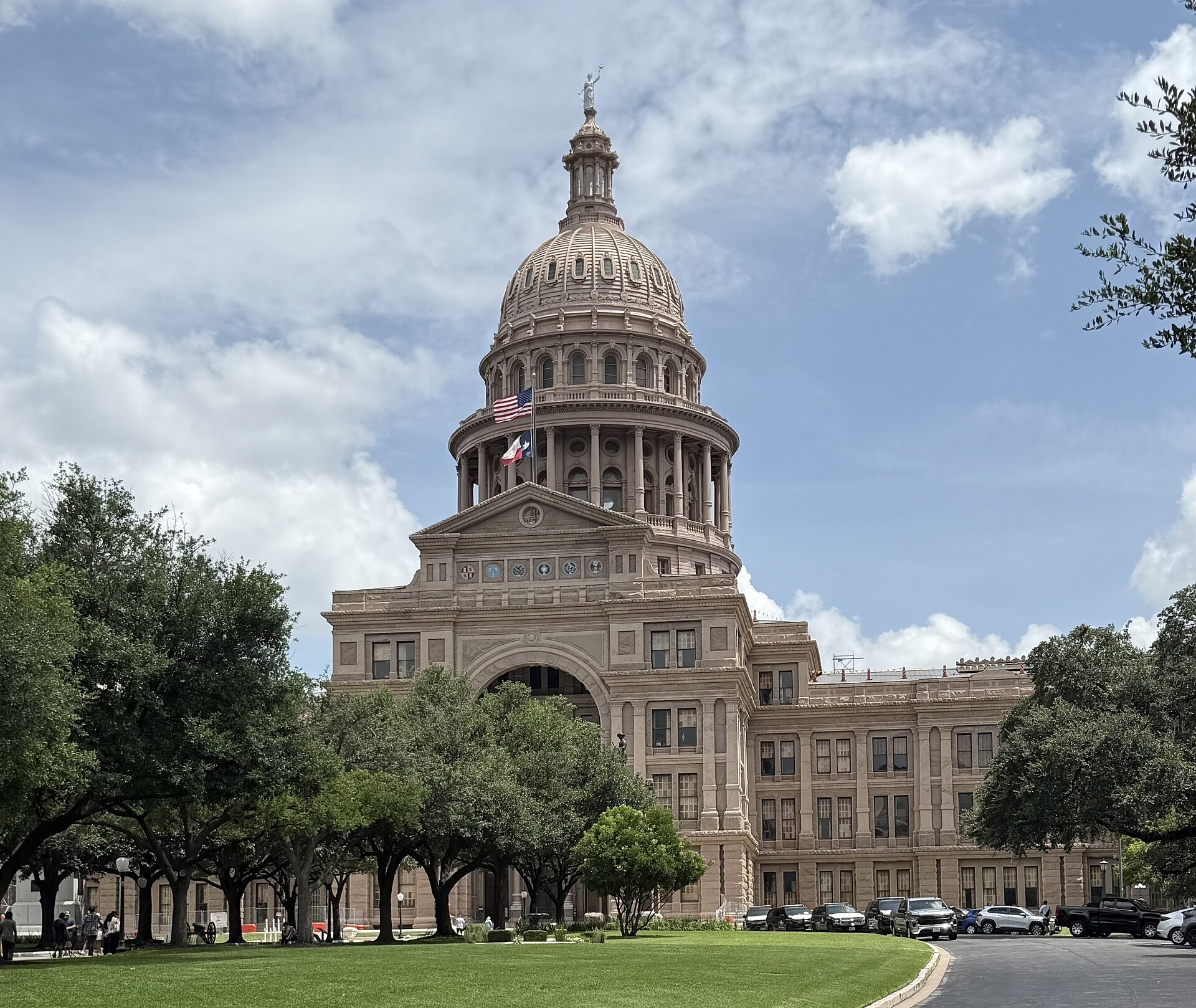
Musk's own $10 million to the Lone Star Liberty PAC stacks on top of that, and Texas is also where much of his business empire now sits — Tesla and X are headquartered in the state, and SpaceX's largest operations are there. The state is simultaneously a Senate battleground, the centre of Musk's corporate interests and, through Paxton, a race where a friendly attorney general turned senator would matter to every one of those interests. None of that makes the spending unusual by the standards of modern super PAC politics — donors routinely concentrate on their home states — but it does explain why a state Republicans have held for three decades is consuming more outside money than any other.
The ground game: what the $76 million buys
The $76 million Musk put into America PAC funds the least visible and, operatives in both parties tend to agree, the most durable part of the operation: people knocking on doors. America PAC is active in seven battleground states and nearly three dozen House races, and in the week of October 5 it fielded roughly 3,000 paid canvassers. The organisation says its canvassers have reached millions of households — about 6.5 million, according to the Times reporting — with a model aimed squarely at the central problem of midterm politics: persuading voters who reliably turn out for presidential elections but often skip midterms to cast a ballot.
That focus is the strategic signature of Musk's spending. Television and digital advertising, which the Senate and House super PACs buy in volume, raise a candidate's profile and define opponents; a canvassing operation converts sympathy into actual votes, one doorstep at a time, and it can be aimed with precision at low-propensity supporters rather than broadcast at everyone. The risk is equally well known: paid field programmes are hard to audit from outside, their quality varies enormously, and their effects are the last thing anyone can measure before election day. What is not in dispute is that no Democratic outside group has announced a field operation of comparable stated scale this cycle, which is precisely the asymmetry the $76 million was meant to create.
A reversal: from "a lot less" to the biggest donor of the cycle
The most remarkable feature of the $366 million is that Musk said, on the record, that it was not coming. In May 2025, after spending roughly $290 million to help elect Trump and then running the Department of Government Efficiency in the new administration, he said he would do "a lot less" political spending in the future. He then fell out publicly with Trump over the president's signature tax and domestic policy law, left his government role, and floated creating a new "America Party" — a move that would have put his money and his megaphone against both parties rather than behind one of them.
Instead, the relationship was repaired and the spending resumed at a larger scale than before. Trump presented Musk with the National Medal of Science last week, an honour Musk accepted in person, and the third-quarter cheques — written across the very months the feud was supposed to have ended his political involvement — tell the rest of the story. Whatever the America Party episode was, the reconciliation converted it into something closer to a negotiating pause: Musk returns to the Republican fold not as a junior partner but as its indispensable financier, a position no feud headline can now obscure. Related coverage of the medal ceremony is linked at the end of this article.
What is at stake for Musk
Musk's exposure in this election is not only ideological or reputational; it is commercial and regulatory. Reuters noted that there is a lot at stake for him with House Democrats calling for investigations into his government contracts as chief executive of SpaceX, as well as into his tenure running the Department of Government Efficiency under Trump. SpaceX's business depends heavily on federal launches and contracts, and a Democratic House majority would arrive with subpoena power, committee gavels and a stated interest in exactly those questions. Against that backdrop, $366 million — a small fraction of a fortune that Forbes has again put above $1 trillion this month — functions as something closer to insurance than to philanthropy: expensive in absolute terms, modest relative to the contracts and scrutiny it is intended to keep at bay.
His side states its case in different terms. Romeo's rationale, as reported, was that if Democrats win, "America risks becoming a socialist, woke and borderless country," and that the investments were made to stop that outcome. Supporters of the spending add the standard structural argument: super PAC contributions are lawful, disclosed at the federal level on the quarterly calendar — Thursday's filings will detail much of this money in public — and donors across the spectrum, including major Democratic financiers, use the same system the Supreme Court's campaign-finance jurisprudence created.
The other side: "hoping to buy these elections"
Democrats answered the disclosure with the argument that writes itself. Lauren French, a spokeswoman for the Senate Majority PAC, said Republicans were hoping to buy these elections, using vast sums to outrun an unpopular president, unpopular candidates and an unpopular economy. The Democratic group's own $151 million quarter — a very large haul by any historical standard — was nonetheless smaller than the single largest cheque Musk wrote, a comparison Democratic strategists are likely to repeat in their own fundraising appeals for the rest of the cycle.
Beneath the partisan exchange sits a public-opinion fact that neither party disputes: polling coverage of the spending, including in conservative media, has emphasised that large majorities of Americans across party lines say there is too much money in politics. That consensus has coexisted for decades with a legal framework that permits unlimited super PAC contributions, and it produces the defining tension of cycles like this one: a system almost every voter tells pollsters they dislike, operated at record scale by the donors both parties compete to recruit. Musk is the largest practitioner of that system in 2026, not its inventor — a distinction his critics tend to skip and his defenders tend to stop at.
Winners, losers and what money cannot do
The clearest winners so far are the Republican committees, which now hold a financial advantage in a cycle where the fundamentals — presidential approval, prices, the usual midterm penalty — have been running against them, and the consultants, broadcasters and platforms in a handful of states who sell the advertising that advantage buys. Texas political media may be the single biggest beneficiary in America this autumn. The Republican candidates in the seven battleground states also gain the field operation's attention whether or not their own campaigns could ever have afforded it.
The exposed parties are equally identifiable. Democratic candidates in the targeted Senate and House races must now answer a funded opponent and a funded turnout machine simultaneously, on a smaller budget. Republican candidates face a subtler version of the same dependency: a party whose midterm survival is underwritten to this degree by one donor has a centre of gravity outside its own campaign committees, and if the spending fails to hold either chamber, the post-election argument about who actually leads the party will be conducted in public. And Musk himself carries the risk he carried in 2024 — that visibility converts his companies into campaign issues. SpaceX contracts and his DOGE tenure are already named targets for Democratic investigators; a larger spend makes a larger target, and the insurance only pays out if Republicans win.
Finally, the honest limit on all of it: money buys attention, organisation and time, but midterms are decided by turnout and by voters' verdict on the incumbent president, and no cycle in the modern era has lacked a best-funded side that lost. Reuters' dry observation — that the $276 million arrived even as Democrats' chances of retaking Congress improved — is the necessary footnote to every figure in this article.
What happens next
Three dates now structure the story. On Thursday, super PACs file their third-quarter reports with the Federal Election Commission, converting the confirmed-but-reported figures into itemised public records — expect scrutiny of what else the filings contain, including any spending not in the announced breakdown, and of the parallel giving Reuters reported through groups that do not disclose donors, which will not appear in any filing. Through late October, the canvassing operation faces its only real test: whether early and absentee turnout in the seven battleground states tracks the electorate America PAC says it has been building since the summer. And on November 3, voters decide whether $366 million was the price of defying midterm history or the most expensive confirmation of it.
Either way, one precedent is already set. A donor who announced he would do a lot less now sits, weeks before a midterm, as the largest known spender in American politics — larger than in the presidential cycle that made him a political figure, and central enough to his party's prospects that both sides are campaigning, in part, about him. The filings on Thursday will add detail. The scale is no longer in question.
Related coverage: Trump awards the National Medal of Science to Elon Musk at the White House science summit · Emerson poll: Democrats' midterm standing and the enthusiasm gap
Sources: Reuters, CNN, Fast Company.