Morocco legislative elections 2026
Moroccans voted on September 23 in a contest that is formally about the 395 seats in the House of Representatives and practically about the credibility of elected government. A majority requires 198 seats. Approximately 16 million people were registered, and polling stations were scheduled to operate from 8 a.m. to 7 p.m., according to The Europe Today. Ministry notices relayed from the official election portal, elections.ma, also set out voting and proxy procedures; Walaw summarized those official instructions before polling day.
At this article’s September 23 reporting cutoff, no official seat allocation had been confirmed. A turnout figure of roughly 38% was circulating in late reporting, but Signal Post News is treating that number as unofficial in this dated article until it is confirmed by Morocco’s Interior Ministry. Readers looking for the latest Morocco parliamentary election results should therefore distinguish between an early participation estimate, provisional party totals and the final certified result. The North Africa Post’s Morocco election coverage was tracking polling and turnout reports as the count proceeded.
Why this matters: renewal or realignment
This 2026 Moroccan general election is the first national test after the Gen Z 212 protests and the first legislative ballot conducted after Aziz Akhannouch stepped down as leader of the National Rally of Independents. The immediate question is which party finishes first. The more consequential one is whether the governing establishment can rotate personalities while preserving the coalition architecture built in 2021—or whether voter disengagement and social anger force a meaningful change in political balance.
The stakes are not captured by seat totals alone. Morocco’s elected institutions operate inside a monarchy that retains decisive authority. The result will determine which party has the constitutional first move in government formation, who negotiates the coalition and which ministers defend budgets in parliament. It will not transfer the palace’s authority over defense, interior, foreign affairs and religious affairs. The ballot is therefore best read as a test of governing legitimacy within a bounded constitutional system, not as a presidential-style transfer of state power.
The 2021 baseline makes every gain and loss legible
In 2021, the RNI won 102 seats, the Authenticity and Modernity Party, or PAM, took 87 and Istiqlal secured 81. The Justice and Development Party fell to 13 seats from 125 in 2016, ending a decade in which the Islamist party had led government. Official turnout was 50.35%. Those figures, summarized in Demócrata’s guide to the 2026 contest, create three benchmarks: whether the coalition parties keep their combined dominance, whether the RNI can survive a leadership handoff and whether PJD Morocco can recover from its 2021 eclipse.
Comparisons require care because Morocco’s electoral rules were changed before the last election. Seat allocation is calculated using the number of registered voters in a constituency rather than only valid votes cast. That denominator can reduce the advantage of a high-turnout, disciplined party and makes fragmentation more likely. It also means Morocco election turnout 2026 is not merely a symbolic measure of confidence; disengagement interacts directly with the mathematics of representation.
Article 47: the winner nominates, the palace still decides
The 2011 constitutional reforms expanded the formal role of elected institutions after Arab Spring-era demonstrations. Article 47 requires the king to appoint the head of government from the political party that finishes first in House elections, taking the result seriously in a way the prior constitutional order did not require. In plain terms, Morocco’s king appoints the prime minister from the winning party—not necessarily its most visible campaigner—and the appointee must assemble a coalition capable of governing.
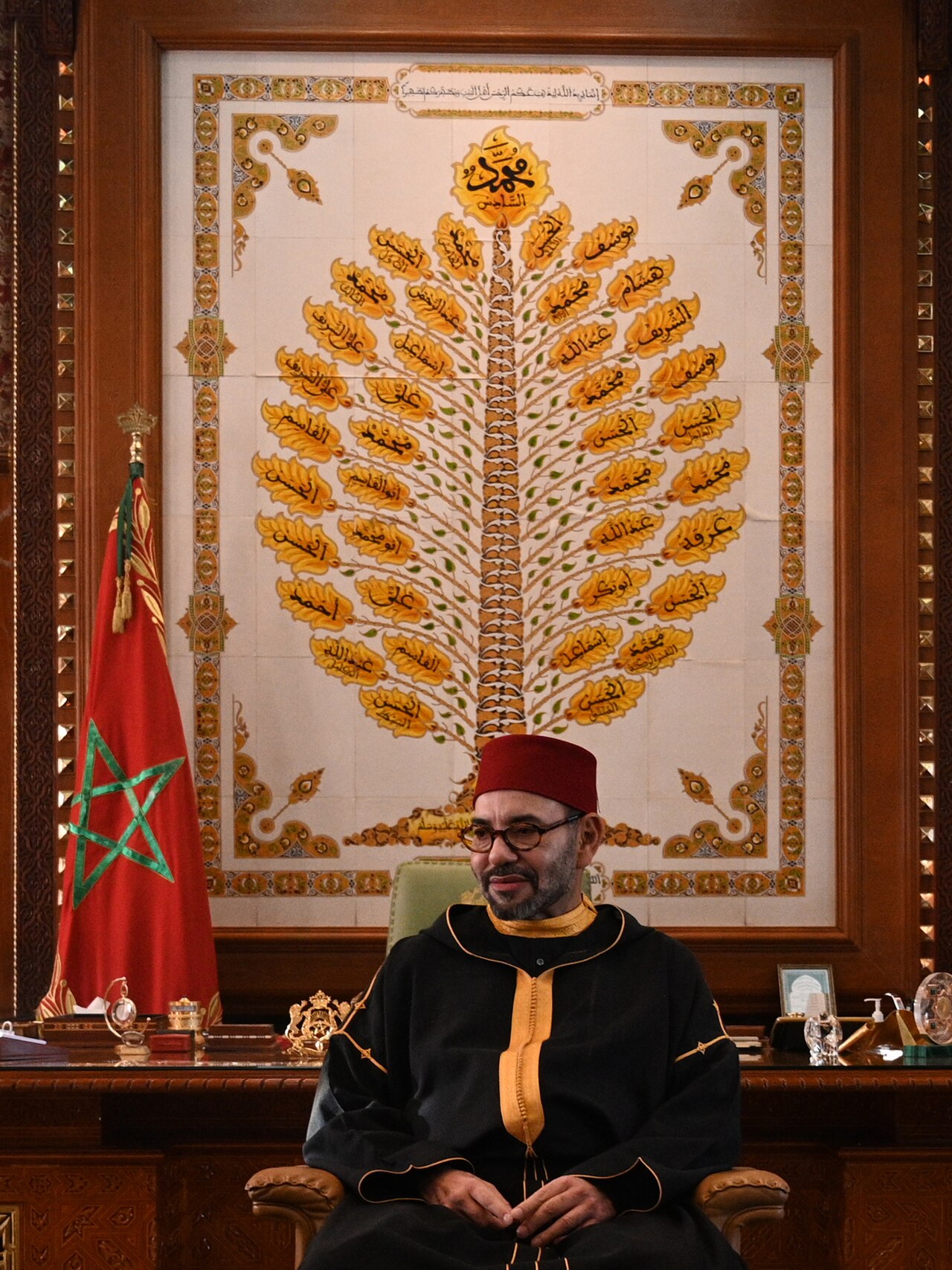
That reform matters, but so do the boundaries around it. King Mohammed VI presides over the Council of Ministers and the monarchy retains command of strategic files. Defense, internal security, foreign policy and religious authority remain centered on the crown. The elected government has room to tax, spend, legislate and administer, but its autonomy is uneven. That is why a change in first-place party may produce a different cabinet without amounting to a change in the state’s strategic direction.
RNI after Akhannouch: Mohamed Chaouki inherits the record
The phrase “Aziz Akhannouch steps down” describes a party succession, not an immediate disappearance from public life. Akhannouch left the RNI leadership and did not seek another parliamentary mandate. Mohamed Chaouki, whose name is also transliterated as Chouki in some reports, took charge of the party. The transition allows RNI to campaign on continuity while offering a different face, but it cannot separate the party from the outgoing government’s record on prices, employment and public services.
That record includes expanded social programs and infrastructure claims, but it is shadowed by cost-of-living anger and conflict-of-interest accusations surrounding Akhannouch’s business interests. The “Fraqchia” controversy—campaign shorthand built around sheep-import subsidies and the high price of meat—became a potent example. Critics asked why public support for imports did not translate into visibly cheaper food, while investigators examined whether importers captured excessive gains. The episode condensed a wider argument: households felt squeezed even when macroeconomic indicators improved.
For RNI, the election is therefore a succession stress test. A strong result would show that local networks and the party machine can preserve power after the founder-like dominance of Akhannouch. A sharp fall would suggest that leadership renewal cannot insulate the organization from accumulated discontent. The Politics & Society Institute describes the contest as a reordering shaped by low institutional trust, youth unemployment and the outgoing government’s record.
PAM’s Fouzi Lekjaa and the politics of the 2030 World Cup
PAM has tried to turn administrative competence and elite networks into a claim on first place. Fouzi Lekjaa is central to that strategy. The budget minister and president of the Moroccan football federation entered the race as a PAM candidate with exceptional visibility from Morocco’s preparations to co-host the 2030 World Cup with Spain and Portugal. His profile links fiscal authority, sporting ambition and the promise of international prestige.
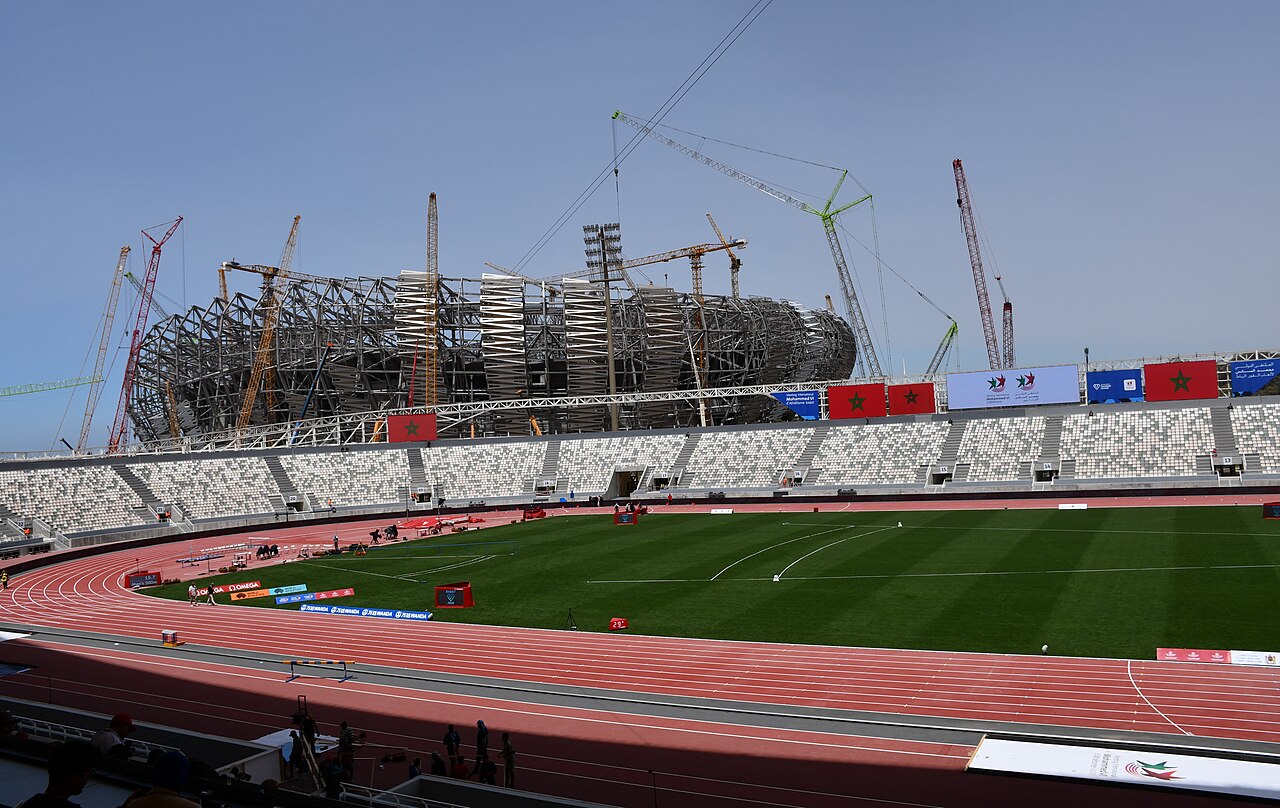
It also links PAM to the campaign’s most difficult spending debate. Morocco is building the vast Hassan II stadium near Casablanca and accelerating rail and urban projects for 2030. Supporters say the program will improve transport, attract investment and create jobs that outlast the tournament. Critics counter that the scale and urgency of World Cup construction expose the slower pace of hospital reform, rural services and reconstruction after the 2023 High Atlas earthquake.
The political question is not whether Morocco should host major events; the commitment is already embedded in national strategy. It is who controls the budgetary narrative. A Lekjaa-centered PAM victory could frame stadium and rail spending as state capacity. Opponents will frame the same projects as evidence that prestige receives deadlines and financing while health-system repair remains fragmented. The next government’s first year will reveal which story survives contact with appropriations and delivery.
Istiqlal offers stability; PJD seeks relevance
Istiqlal’s path is quieter. As a coalition partner with deep organizational roots, it can present itself as the stable hinge between RNI and PAM rather than the vehicle for a dramatic break. That makes it a potential kingmaker even if it does not finish first. Its leverage rises whenever the two larger coalition parties are close enough that neither can dominate negotiations alone.
The PJD approaches the election from the opposite position. After collapsing from 125 seats in 2016 to 13 in 2021, any substantial recovery would be politically meaningful even if the party remains far from first place. It can draw on opposition status, a disciplined base and public frustration with the three governing parties. Yet the electoral formula, the strength of local notables and the memory of its decade in government all limit the scale of a comeback. The likely contest is not a restoration of the old PJD-led order but a fight over whether the party again becomes a consequential parliamentary bloc.
Morocco’s Gen Z protests remain outside the chamber
The Morocco Gen Z protests began with demands for better education, health care and jobs, then widened into calls for Akhannouch to resign. According to figures attributed by Le Monde to the Moroccan Association for Human Rights, about 5,700 people were arrested during the movement and roughly 650 remained imprisoned one year later. Those are the association’s figures, not independent official totals.
The protest movement’s lasting force lies partly in its refusal to become a conventional party. Its core demands—better schools, functional hospitals and credible routes into work—were specific, but its organization did not translate neatly into candidate lists. That leaves young voters facing an uncomfortable choice: use institutions they distrust or withhold participation and risk allowing older, better-organized networks to decide the result. The first national ballot since the protests measures whether anger has become electoral pressure or durable withdrawal.
Low youth registration deepens the problem. If overall participation lands near the roughly 38% figure circulating on election night, the legitimacy debate will turn not only on who won, but on how narrow a slice of the electorate produced the result. The legal mandate would be intact. The political mandate would be harder to claim—especially for a government expected to make large, visible spending decisions before 2030.
Who wins, who loses—and what remains uncertain
RNI wins if it remains indispensable to coalition formation after changing leaders. PAM wins if it converts Lekjaa’s visibility and its local networks into first place. Istiqlal wins if fragmented results make it the essential stabilizer. PJD wins if it regains enough seats to lead a credible opposition. The palace wins if the transition produces a governable coalition without widening the distance between state ambition and public trust.
The clearest losers would be voters if coalition bargaining becomes only an exchange of portfolios. A government assembled from the same three parties could still mark a real policy change, but only if it sets measurable priorities for schools, hospitals, jobs and earthquake reconstruction. Likewise, an opposition gain would matter only if it improves scrutiny rather than amplifying grievance without a workable program.
There are also hard limits to election-night analysis. No confirmed seat allocation was available by this report’s September 23 cutoff. Coalition talks had not begun, and preliminary turnout reports were not a substitute for a certified count. Claims that any single figure was already “prime minister” would be premature: Article 47 first requires a winning party, then a royal appointment, then successful coalition formation.
Three coalition scenarios after the count
Continuity under a new lead party: RNI, PAM and Istiqlal could renew their partnership with a different party holding the premiership. This is the least disruptive scenario for budgeting and World Cup delivery, but it would need a persuasive explanation of what has changed since the Gen Z protests.
A narrower establishment coalition: The first-place party could replace one current partner with smaller centrist or left parties. That would create more negotiation risk but might produce a sharper program and a more visible parliamentary opposition.
A fragmented chamber and prolonged bargaining: If the leaders finish close and smaller parties recover, the Article 47 nominee could struggle to reach 198 seats. The palace would remain the constitutional anchor while party leaders trade ministries and priorities. Delay would matter because the 2027 budget cycle and World Cup construction timetable leave little room for a caretaker drift.
What happens next
The first step is the Interior Ministry’s confirmation of turnout and provisional results, followed by the allocation of all 395 seats. The second is the royal appointment under Article 47. The third—and politically decisive—stage is coalition formation. Watch which party claims the head of government, who receives finance, interior-adjacent and social portfolios, and whether the governing agreement includes measurable commitments on health, education, employment and earthquake reconstruction.
The next government’s first budget will be the truest result. It will show whether the Morocco 2030 World Cup stadium and rail program is paired with faster social investment, or whether the priorities that fueled the Gen Z 212 protests remain structurally separate from the state’s prestige projects. The election can renew the establishment by bringing in new leadership and a more accountable program. If it merely rearranges familiar parties while participation falls, it will instead confirm a realignment taking place outside parliament.
Reporting sources: Le Monde; The North Africa Post; The Europe Today; Demócrata; and Interior Ministry procedures published through the official Moroccan election portal, elections.ma, as reported by Walaw. Reporting cutoff: September 23, 2026; no final seat allocation was available at that cutoff.