Siberia plague outbreak
SHELEKHOV, Russia — A 28-year-old laboratory worker at the Irkutsk Anti-Plague Institute has died of plague, and Russian health authorities have placed nearly 200 of her contacts under medical observation — a Siberia plague outbreak response and one of the most serious biosafety scares to hit the region in years.
Daria Shipilova was hospitalized on September 29 with severe pneumonia and placed on a ventilator. She died two days later, on October 1. Regional officials initially referred only to a “particularly dangerous infection.” It was Alexei Tsydenov, the head of neighboring Buryatia, who later said publicly that she had died of plague — an announcement that transformed a local medical mystery into an international headline. The Moscow Times' report of the death drew 93,000 views on X within hours.
The district hospital in Shelekhov where she was treated has been quarantined and about 100 of its staff isolated. Russia's chief sanitary doctor, Anna Popova, flew some 2,600 miles from Moscow to take personal charge of the response. A mask order is in effect in Shelekhov, some public events in Irkutsk have been canceled, and law enforcement has opened an investigation into possible safety violations at the institute. Governor Igor Kobzev says the contacts under observation are asymptomatic and their initial tests have come back negative.
Why this matters: pneumonic plague, the one form of plague that travels through air
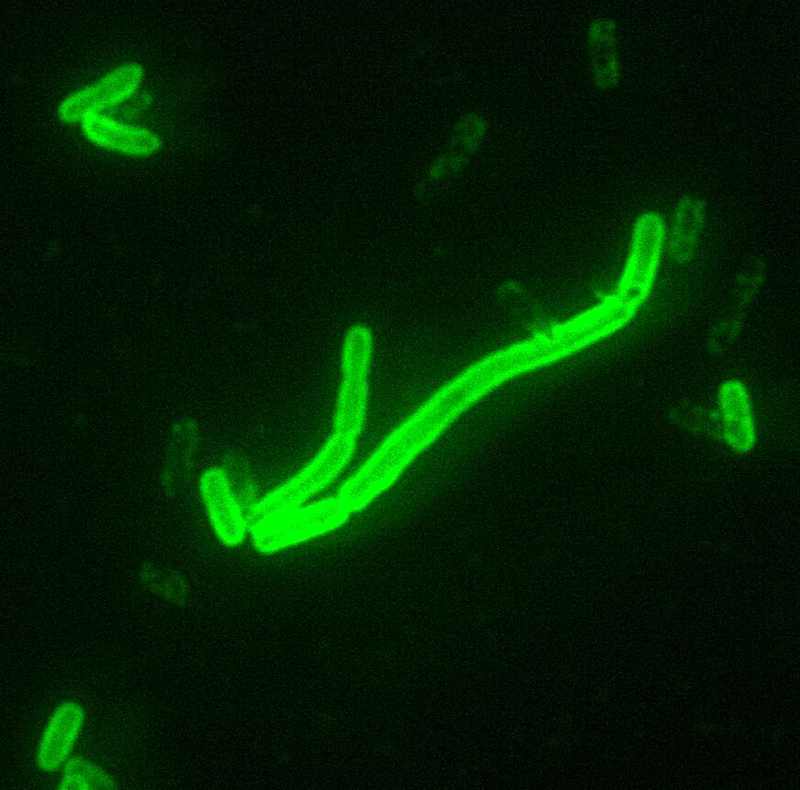
Plague is caused by the bacterium Yersinia pestis and takes three main forms. Bubonic plague — the Black Death of history — spreads through flea bites and does not pass directly between people. Septicemic plague infects the bloodstream. Pneumonic plague infects the lungs, and it is the outlier: it can spread from person to person through respiratory droplets, and untreated it is almost always fatal, sometimes within 24 to 72 hours of symptom onset.
That distinction is the entire story here. Russian media reports have described Shipilova's infection as pneumonic plague, but regional officials have not publicly confirmed the exact form. If the pneumonic form is confirmed, the roughly 200 people under observation represent a genuine containment perimeter around a transmissible, fast-killing pathogen. If she died of bubonic or septicemic plague, the human-to-human risk to those contacts is minimal and the episode is principally a laboratory-safety failure rather than an outbreak threat.
Analysis: The two-day arc from hospitalization to death is consistent with fulminant pneumonic plague — which is precisely why Moscow reacted as if it were. Popova does not fly 2,600 miles for a routine case. But speed of death alone does not confirm the form; severe pneumonia has many causes, and officials' early vagueness (“particularly dangerous infection”) suggests they were waiting on laboratory confirmation before naming the disease. The honest position, and the one the evidence supports, is that pneumonic plague is suspected but unconfirmed.
What happened — and what remains unconfirmed
The confirmed timeline is short. Shipilova, a medical-university graduate working as a lab technician, was admitted to Shelekhov District Hospital on September 29 with severe pneumonia, placed on mechanical ventilation, and died on October 1. Beyond that, two competing accounts of how she was infected are circulating in Russian media, and neither has been officially confirmed.
The broken test tube account
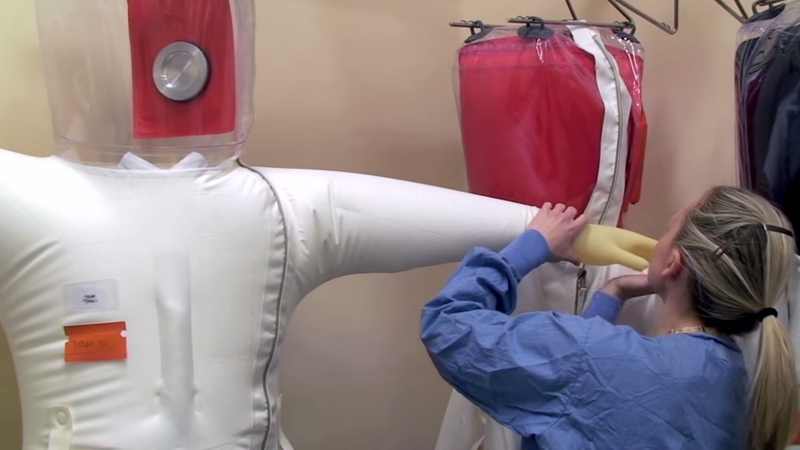
Several Russian outlets report that Shipilova accidentally broke a test tube containing live plague bacteria while collecting biopsy specimens for diagnostic work in the laboratory — some dating the incident to September 25, four days before her hospitalization. If true, it would be a textbook laboratory-acquired infection: a moment's lapse with a pathogen that forgives none. But the account rests on unnamed sourcing and has not been independently established, and investigators have not confirmed it.
The field expedition account
The competing version holds that Shipilova fell ill after a work expedition to Buryatia, near the Mongolian border, where Russian sources reported “active natural plague foci.” Anti-plague institute staff routinely travel to such regions to monitor plague in wild rodent populations. This account is also unconfirmed, and it points in a very different direction: occupational exposure in nature rather than a containment failure in the lab.
The two theories matter because they assign responsibility differently. A broken test tube indicts laboratory procedure at an institute whose entire purpose is the safe handling of this exact bacterium. A field infection indicts nothing except the inherent risk of working where plague lives in the wild — which, in Siberia and Mongolia, it does. The law-enforcement investigation into safety violations suggests officials are taking the lab-accident theory seriously, but an investigation is not a conclusion.
Background: Russia's anti-plague archipelago
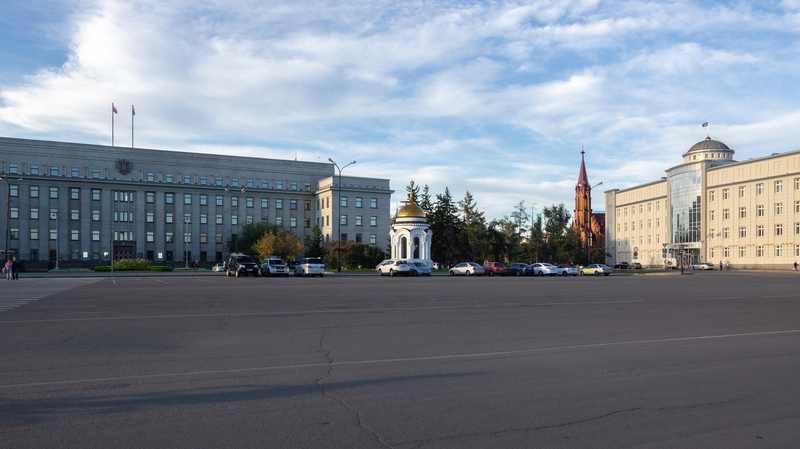
The Soviet Union built one of the world's largest anti-plague systems: a network of institutes, regional stations and field teams tasked with watching the natural plague foci scattered across Central Asia, the Caucasus and Siberia. The Irkutsk Anti-Plague Institute is a surviving outpost of that archipelago — a facility whose daily work involves culturing and studying one of humanity's oldest killers.
Those natural foci are the reason the field-expedition theory is plausible on its face. Yersinia pestis persists in wild rodent populations — including the tarbagan marmots of Mongolia and Transbaikalia — and spills into humans through flea bites or the handling of infected animals. Plague has never been eradicated; the World Health Organization still records cases every year, concentrated in parts of Africa, Asia and the Americas. Siberia's steppe is one of the pathogen's old addresses.
There is a deep irony here that public-health historians will recognize: the institutions built to master plague are also where laboratory-acquired infections occur. Documented lab infections with Y. pestis are rare, but they have happened — including a fatal 2009 case at the University of Chicago involving an attenuated strain. A death at a dedicated anti-plague institute, of all places, is what gives this story its sting.
Who is affected — and who answers for it
The roughly 200 contacts are under medical observation, not hospitalized with plague — a distinction some early social-media accounts blurred. Observation means monitoring for symptoms and, where indicated, prophylactic antibiotics; it is the standard perimeter drawn around a suspected pneumonic-plague case. That all remain asymptomatic with negative initial tests, per Governor Kobzev, is the single most reassuring fact in the story so far.
The hospital staff — about 100 isolated — sit at the center of the exposure map, since they cared for Shipilova during the two days when, if she had pneumonic plague, she was most infectious.
The institute faces a safety-violation investigation that could end careers and rewrite procedures regardless of which infection theory proves true. A 28-year-old technician dying of the pathogen she was hired to study is, at minimum, a catastrophic institutional failure of either containment or field safety.
Residents of Shelekhov are living under a mask order with FSB officers reportedly accompanying ambulances — local reports describe protective-suited medics on ordinary streets, a spectacle that has frightened a town that has been told, simultaneously, that there is nothing to fear and that everything is being done.
Reading the numbers
~200 observed, 0 confirmed: the observation figure — reported as 189 to nearly 200 — measures the breadth of contact tracing, not the scale of infection. Large perimeters are normal — and prudent — around a suspected pneumonic case. The informative number is the second one: zero confirmed secondary cases, with initial tests negative.
2 days from hospitalization to death underscores why officials moved at emergency speed. Whether that speed reflects pneumonic plague's lethality or simply a severe undifferentiated pneumonia will be settled by laboratory confirmation, not by the calendar.
2,600 miles — Popova's flight from Moscow — is a political as much as epidemiological signal. Russia's chief sanitary doctor does not personally take charge of a contained local incident; her presence says Moscow considers the downside risk — a confirmed pneumonic case with a broken containment perimeter — unacceptable.
Plague symptoms, treatment, and how it spreads: what to know
The questions flooding search engines since the Siberia outbreak share a theme: people want to know what plague actually is. Here are the answers, drawn from CDC and WHO guidance.
What are the symptoms of pneumonic plague? Sudden fever, headache, weakness, and rapidly developing pneumonia — shortness of breath, chest pain, cough, sometimes with bloody or watery mucus. It is the most serious form of the disease and can become fatal within 18 to 24 hours of symptom onset without treatment.
Is plague contagious? It depends on the form. Bubonic plague — the kind behind the Black Death — spreads through infected flea bites and rarely passes directly between people. Pneumonic plague, the form suspected in Irkutsk, is the exception: it infects the lungs and spreads person to person through respiratory droplets during close contact. That is why nearly 200 contacts were placed under observation.
Bubonic plague vs pneumonic plague: both are caused by the same bacterium, Yersinia pestis. Bubonic plague attacks the lymph nodes (the painful swellings called buboes); untreated, it kills 30 to 60 percent of patients. Pneumonic plague attacks the lungs and is almost always fatal without rapid treatment — but it is curable.
How is plague treated? There is no widely available vaccine. The defense is early antibiotics: treated within the first 24 hours of symptoms, the prognosis for pneumonic plague is good. After 24 hours without treatment, the mortality rate climbs toward 50 percent. Between 1,000 and 2,000 human cases are still reported to the WHO each year, mostly in the Democratic Republic of the Congo, Madagascar, and Peru.
Is the plague back? Plague never left. Natural plague foci persist across southern Siberia — Tuva, Altai, Transbaikal — and Russia's last widely reported human case before this one involved a child in the Altai Republic in 2016, linked to marmots. What is new in Irkutsk is not the bacterium but the setting: a suspected lab accident at one of the five institutes built to study it.
Is the plague back? What happens next in Siberia
Scenario one: contained. The most likely outcome given the negative initial tests. The observation period runs its course, no secondary cases appear, and the story narrows to the investigation's finding on how Shipilova was infected — a lab-safety reckoning or a field-exposure tragedy.
Scenario two: limited secondary transmission. If the pneumonic form is confirmed and someone among the 200 was exposed before isolation began, expect the quarantine to tighten quickly: extended observation, wider testing, possibly travel advisories for the Irkutsk region. Pneumonic plague responds to antibiotics if caught early, which is exactly what the observation net is designed to ensure.
Scenario three: institutional fallout either way. The safety-violation probe will produce findings regardless of the epidemiology. If the test-tube account is confirmed, expect personnel consequences and a review of procedures across Russia's anti-plague network. If the field account holds, expect new rules for expedition work in active foci. Either way, a young scientist's death will change how that system operates.
The world will know which scenario is unfolding within days — the incubation period for pneumonic plague is short, typically one to four days, so the 200 contacts are either going to become a story or a footnote quickly. For now, the facts support vigilance, not panic: one confirmed death, a wide and so far empty containment net, and an investigation that has not yet said the one thing everyone is waiting to hear.
Washington is watching: the White House monitors the Siberia outbreak
The Siberia plague scare has reached the White House. A Trump administration official told Axios on Sunday, October 4, 2026, that “the White House is monitoring reports of a suspected plague case and related quarantines in Russia.”
Russian health authorities, the official noted, “have taken precautionary measures in response to the death of a woman who worked at an anti-plague research facility, but have not confirmed that she contracted plague.” The statement marks the first confirmed U.S. government acknowledgment of the incident, elevating it from a regional Russian health story to a matter of international attention.
Separately, investigative journalist Annie Jacobsen — author of the recently published book Biological War: A Scenario — said Saturday she had been in contact with current senior U.S. military, intelligence, diplomatic and homeland security officials involved in biological threats, and that the U.S. government is closely watching developments surrounding the suspected outbreak. That claim has not been independently confirmed by the U.S. government.
Sources
- The Sun: Russian scientist dies of plague as Putin's top doctor rushes to Irkutsk
- Outbreak News Today: 189 people under observation after lab worker dies of possible pneumonic plague
- The Moscow Times: widely shared X post on the Shipilova death (93K views); East2West reporting via The Sun