Russia denies plague death
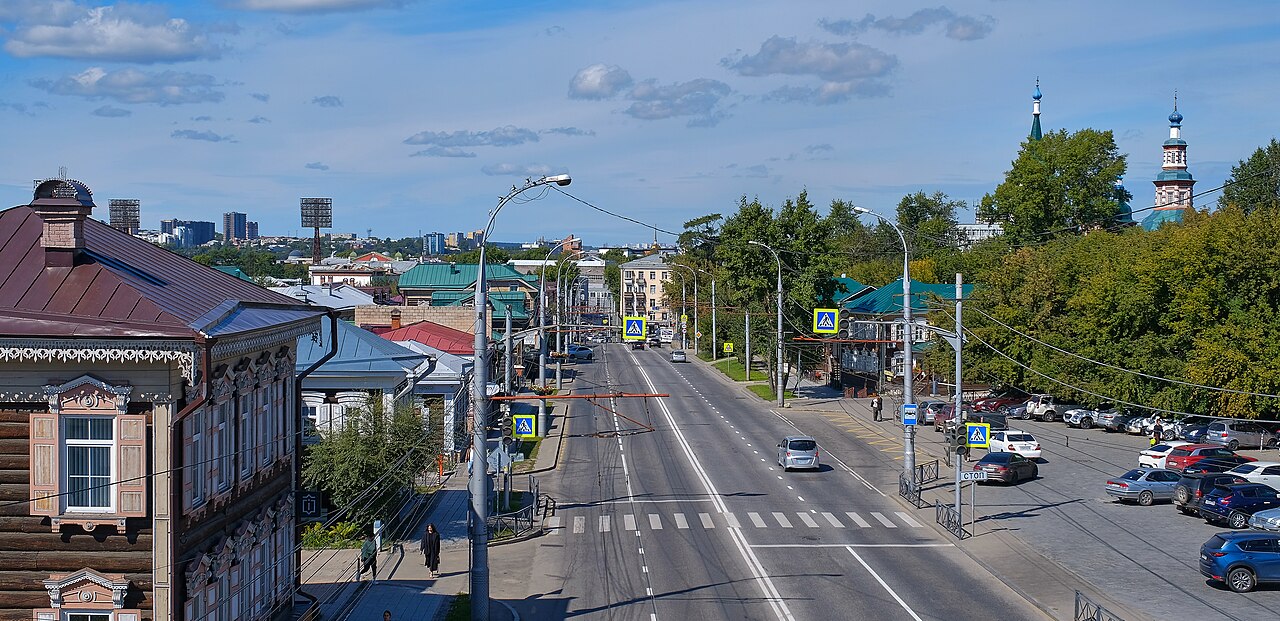
IRKUTSK, Russia — Russia’s federal health watchdog has officially rejected reports that a 28-year-old worker at the Irkutsk Anti-Plague Research Institute died of plague, describing her diagnosis instead as “pneumonia of unknown etiology.” In an October 4 statement relayed by TASS and Russian media, Rospotrebnadzor said expanded testing detected no microorganism connected with the employee’s work, no laboratory accident had been found, and the sanitary situation in Irkutsk and nearby Shelekhov was stable.
That is the most authoritative public account yet. It is also an account with a large unanswered space at its center: if not plague, what caused a healthy young laboratory technician’s lethal pneumonia, and why did authorities build such an extensive containment perimeter around her final days?
The worker, identified by independent regional outlet Lyudi Baikala and later international reporting as Daria Shipilova, was hospitalized September 29 with severe pneumonia, placed on a ventilator and died overnight October 1–2. Around 197 contacts were identified and approximately 189 were kept under medical observation—114 in one hospital, 63 in another and 12 at the institute, according to reports assembled by CNN. Officials say those contacts have shown no signs of infection and tests have been negative. There is no confirmed second case.
What changed: from “possibly plague” to an official denial
The reversal matters because the word plague did not begin as an anonymous social-media rumor. Alexei Tsydenov, head of neighboring Buryatia, initially wrote that the worker died of an unspecified form of plague, then softened that wording to “possibly.” Governor Igor Kobzev convened an extraordinary anti-epidemic commission with Rospotrebnadzor chief Anna Popova and urged the public to remain calm. Former Rospotrebnadzor head Gennady Onishchenko later told TASS that the case most likely was not plague.
Early reports from Lyudi Baikala and pro-Kremlin REN TV said Shipilova told clinicians she accidentally broke a test tube containing live Yersinia pestis on September 25 while collecting samples. That account remains unconfirmed. So does an alternative claim that her illness followed travel to Thailand; other versions placed her on field work in Buryatia near a natural plague focus. No public laboratory report has established any of those routes of exposure.
The Moscow Times, the Kyiv Independent and Euronews were among outlets that tracked the conflicting Russian accounts. Their reports, and the CNN report by Tim Lister and Svitlana Vlasova, consistently separate the reported broken-tube story from what federal authorities have actually confirmed. That distinction is essential: a compelling explanation is not yet evidence.
Why this matters: “mystery pneumonia” is not a neutral phrase
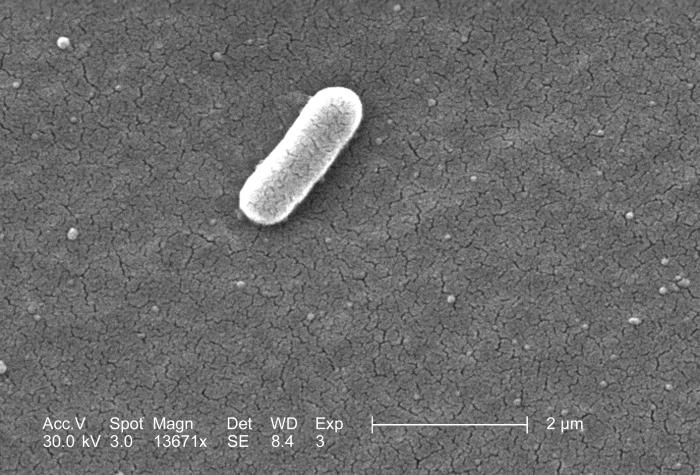
“Pneumonia of unknown etiology” is a legitimate clinical description. It means doctors have identified severe lung disease but have not established its cause. It is not, by itself, a euphemism or proof of concealment. Yet in an outbreak investigation, the phrase carries unusual historical weight because it describes a syndrome while postponing the answer that determines risk: bacterial, viral, toxic, occupational or something else.
Transparency is not measured by how confidently an agency says conditions are stable. It is measured by whether outsiders can reconstruct the evidence: what specimens were tested, by which methods, on what dates, with what sensitivity; whether the institute’s inventory reconciles; whether exposure logs and surveillance video were reviewed; and whether independent laboratories can confirm the result. Rospotrebnadzor’s conclusion may be correct. Its public explanation is not yet detailed enough to close the case.
The obvious historical echo is the 1979 Sverdlovsk anthrax disaster. Soviet authorities blamed contaminated meat after a military biological facility accidentally released anthrax spores; the true source was acknowledged only years later. The comparison should not be abused—there is no evidence of a mass release in Irkutsk, no confirmed second case and no demonstrated plume. But Sverdlovsk teaches a narrower lesson that applies: when a state agency has institutional and political reasons to minimize a biosafety failure, unsupported reassurance earns less trust than verifiable data.
The COVID-19 era sharpened that lesson globally. Early clusters of unexplained pneumonia can be ordinary, contained events; they can also become international crises when information is delayed or politicized. The responsible response is neither panic nor reflexive faith. It is rapid disclosure, genomic or culture-based evidence when available, and outside scrutiny proportionate to the risk.
The measures tell a more complicated story than the word “stable”
Reportedly, Shelekhov District Hospital was placed under quarantine. Visitor access was restricted at several Irkutsk facilities, including children’s and maternity hospitals, with some restrictions expected to last roughly three weeks. Public events were canceled, university classes were suspended, and the Irkutsk Aluminum Plant required masks. A criminal investigation into alleged health-safety violations resulting in death was opened.
None of those steps proves plague. In fact, forceful precaution is what competent public health looks like when the cause is uncertain and the downside risk is severe. Authorities may isolate 189 contacts precisely so the eventual number of secondary cases remains zero. But taken together, these actions show that officials treated the event as more than a routine community-acquired pneumonia.
Numbers need interpretation. One hundred eighty-nine observed contacts are not 189 cases. The figure measures the width of the exposure net, not the size of an outbreak. Negative tests and the absence of symptoms are genuinely reassuring. At the same time, three clusters of people held across hospitals and an institute imply that contact tracers saw several plausible exposure settings: the workplace, the treating hospital and the worker’s movements before isolation.
The criminal probe adds another signal. Investigators do not need proof of plague to examine whether safety rules were broken; a lethal occupational exposure to any pathogen could qualify. But opening the case means the state itself has not treated the no-accident conclusion as the final word, at least not yet.
What history says about prudent lab responses
Modern high-containment laboratories regularly pause work after safety failures without waiting for an infection to be proved. The U.S. Army’s Fort Detrick biodefense laboratories, for example, have halted selected operations after regulators identified containment problems. Such pauses are not admissions of an outbreak. They are a recognition that low-probability events involving high-consequence pathogens require evidence before normal operations resume.
Irkutsk’s response sits in that same logic. The quarantine and broad tracing may be signs of competence, not contradiction. The contradiction emerges only if authorities present the precautions as unnecessary theater while withholding the evidence that justified them.
Background: why an anti-plague institute exists in Siberia
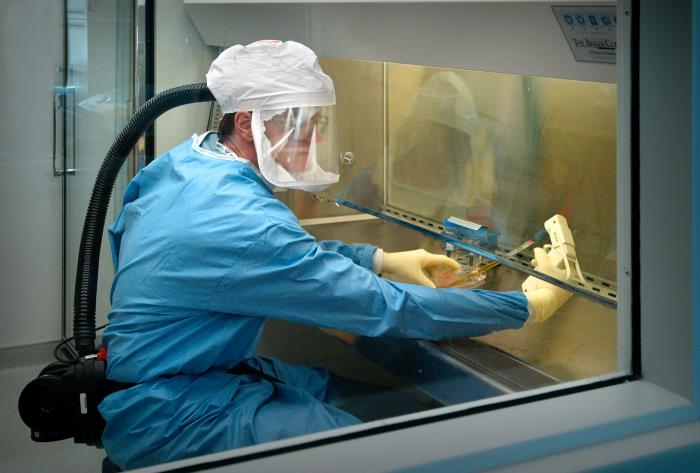
The Irkutsk Anti-Plague Research Institute belongs to a system built across the Soviet Union to monitor “natural foci”—landscapes where plague circulates persistently among wild rodents and their fleas. Southern Siberia, Buryatia and neighboring Mongolia contain such reservoirs. Human infections remain rare, but field teams sample animals and vectors because eradication from wildlife is impossible.
That ecology makes two competing possibilities plausible. Shipilova could have encountered an occupational hazard while processing material in a laboratory, as early reports allege. Or she could have developed an unrelated severe pneumonia while working in a profession that made officials unusually cautious. A third possibility is exposure during field activity in a natural focus. The evidence released publicly does not yet allow outsiders to choose among them.
Plague itself is no medieval relic. The bacterium persists on several continents and is treatable with antibiotics when recognized early. The lung form—pneumonic plague—is the dangerous exception because respiratory droplets can spread it during close contact. For a concise clinical guide, see Signal Post News’ explainers on whether plague is contagious and bubonic plague symptoms and treatment.
Who benefits from the denial—and who pays for ambiguity
The Kremlin benefits politically from closing the plague narrative quickly. Russia has every reason to avoid the international image of a laboratory accident, especially after the COVID-19 pandemic made pathogen origins a geopolitical battleground. Rospotrebnadzor also has an institutional interest: a confirmed work-linked infection at an anti-plague institute would raise questions about training, equipment, incident reporting and oversight.
Those incentives do not prove the denial false. Agencies can have reasons to protect themselves and still be right. But incentives matter when judging how much independent evidence the public should demand.
The losers from ambiguity are local clinicians and residents. Contact tracing works when people believe that telling authorities where they went and whom they saw will serve public health rather than narrative control. Acknowledging uncertainty strengthens that cooperation; changing labels without releasing evidence weakens it. Public trust can be squandered even when the underlying diagnosis eventually vindicates the government.
Critics of the broken-test-tube narrative note that a serious spill should trigger documented alarms, decontamination and exposure protocols, making a silent accident difficult to conceal inside a specialized institute. Others caution that the account may be garbled: an exposure can occur through an aerosol, sharps injury or specimen handling without the cinematic drama of shattered glass. Independent epidemiologists also note that cool weather does not automatically stop pneumonic transmission indoors; what limits spread is rapid isolation, antibiotics and the fact that sustained person-to-person plague transmission is uncommon.
Washington is monitoring; the international question is disclosure
On October 5, a Trump administration official told Axios that the White House was “aware, monitoring the outbreak, and assessing options,” according to an Axios report relayed by TradingView. The language does not confirm a plague case. It confirms that the mix of a high-consequence laboratory, a death and quarantines has crossed the threshold for U.S. attention.
The U.S. State Department was also reported to be monitoring with the Centers for Disease Control and Prevention and urging rapid, open information-sharing, according to the Washington Sun. Public responses from the World Health Organization and Russian health ministries remained limited in the international reporting reviewed for this article.
For global biosecurity, the minimum useful disclosure would include the final cause of death, the testing panel and sample dates, whether cultures or sequencing were performed, and whether the institute’s occupational records support the denial of an accident. Russia does not need to disclose sensitive research to answer those public-health questions.
What happens next: four scenarios to watch
1. No second cases emerge
This is the most reassuring and, based on the negative tests reported so far, the most plausible near-term outcome. The observation period ends, hospital restrictions lift, and the episode becomes a workplace-safety and diagnostic mystery rather than an outbreak. The unanswered cause of death would still matter, but the public-health danger would recede.
2. A contact tests positive
A confirmed infection among the 197 identified contacts would force authorities to publish a new exposure timeline and likely widen tracing. If Y. pestis were identified, the denial would become untenable; if another pathogen appeared, the “unknown etiology” label would finally acquire a name.
3. WHO seeks more information or access
An explicit WHO request would internationalize the case. The key question would not be whether a team immediately travels to Irkutsk, but whether Russia supplies enough primary data for outside experts to assess transmission risk.
4. The criminal investigation produces a record
The safety probe may become the most durable source of facts. Investigators can examine logs, protective equipment, pathogen inventory and witness accounts. A transparent finding could either substantiate Rospotrebnadzor’s no-accident claim or expose a preventable failure.
For now, watch the test results of contacts, any WHO statement, the date hospital quarantines and visitor bans lift, and whether officials identify a cause of death more specific than mystery pneumonia. This story will not be resolved by the confidence of the next press release. It will be resolved by whether the containment measures end without a second case—and whether the evidence explaining why is made public.
Sources
- Rospotrebnadzor statement relayed from TASS: pneumonia of unknown etiology and no work-linked microorganism detected
- CNN: Researcher at Russian plague laboratory dies of “unknown” infection
- Axios report relayed by TradingView: White House monitoring suspected plague case and quarantines
- Washington Sun: U.S. government monitoring suspected plague death
- New York Post: international reporting on the early plague claims and local response