iPhone Duo launch day: Apple's first foldable iPhone went on sale Friday, October 23, 2026, and buyers lined up before dawn at Apple Stores — including in Orange County, California — after preorders sold out in minutes and Apple warned walk-in stock would be strictly limited.
Technology / The preorder was gone in minutes. The walk-in stock is limited. So the oldest ritual in tech — the line — came back for the first iPhone that folds.
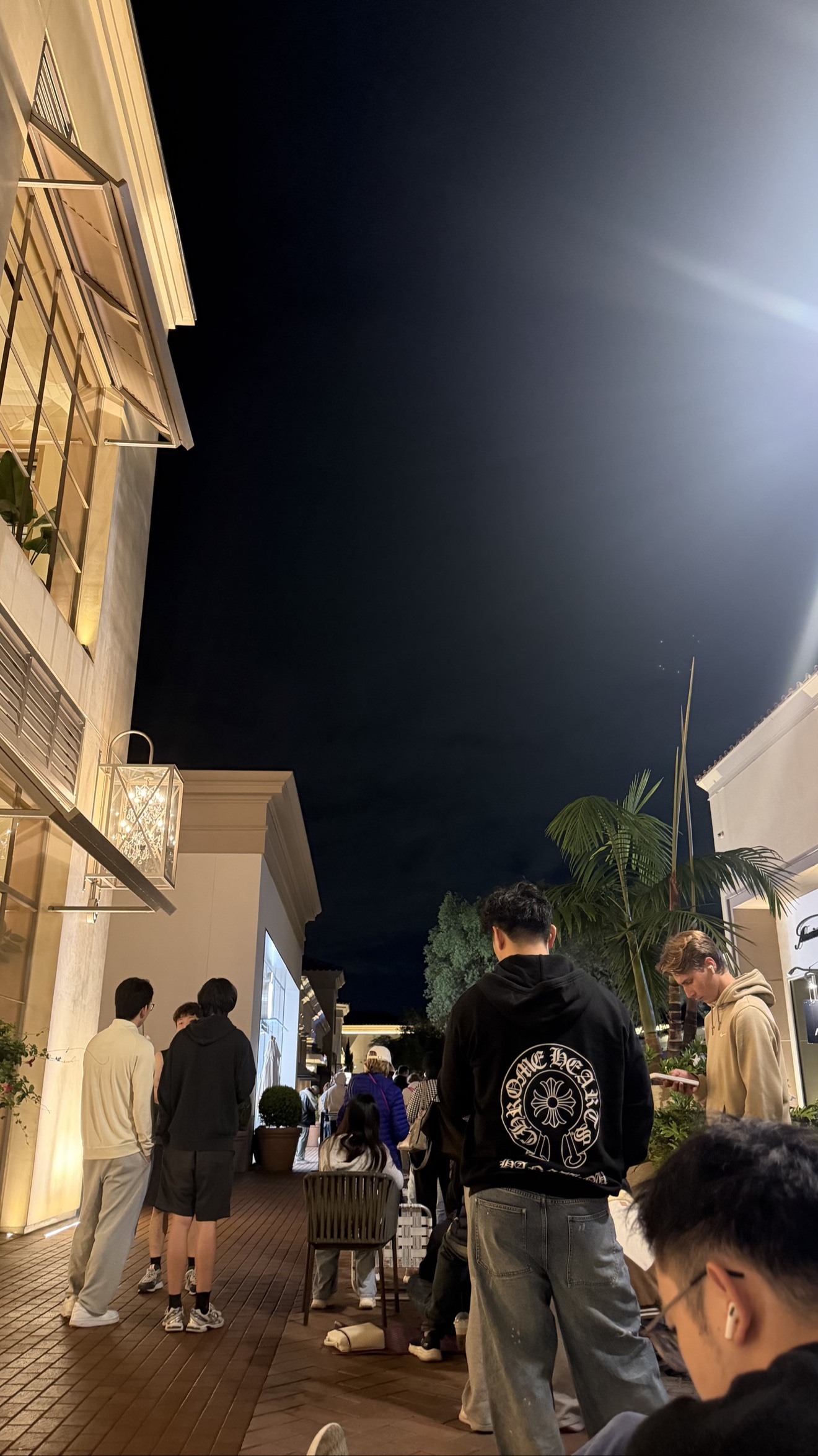
What happened
The iPhone Duo officially went on sale on Friday, October 23, in stores and online, one week after preorders opened on Friday, October 16. The preorder was not so much a launch as a land rush: CBS News, CNET and 9to5Mac all reported that preorders sold out "within minutes," according to USA TODAY, and MacRumors reported that shipping estimates on Apple's online store had slipped to January 25 within the first 30 minutes of ordering. Apple, asked by USA TODAY whether preorders had sold out on October 16, did not comment — it did not need to. The delivery calendar was the comment.
What stock existed for launch day itself, Apple rationed carefully and said so out loud. In a statement shared with MacRumors on Wednesday, the company said: "On Friday morning, our teams look forward to welcoming customers at Apple Stores to experience iPhone Duo and the incredible iPhone line-up for themselves. Apple Stores will have limited iPhone Duo available for walk-in customers, and we're working hard to get this revolutionary new product into customers' hands as quickly as possible." Apple added that, given "extraordinary" preorder demand, it expected supply to sell out quickly on Friday. Walk-in purchases are available in the United States, the United Kingdom, Canada, Australia, Mexico, Germany, the Netherlands, Singapore, Spain, Sweden, Switzerland, Türkiye, Austria and Belgium, and at select stores in Italy. In France, China, Hong Kong, India, Japan, Malaysia, South Korea, Taiwan, Thailand and the United Arab Emirates there is no walk-in stock at all — buyers there need a timed pickup reservation, a policy Apple uses partly to manage crowd sizes and partly as an anti-scalping measure. In the United States, purchases are limited to two devices per customer.
The lines, then, were not nostalgia. They were arithmetic. If you did not win the preorder in its first minutes, the line was the only remaining way to hold a Duo on launch day — and even that came with no guarantee, a point Apple underlined so heavily that British coverage of the launch led with the warning that buyers could leave empty-handed. The experience still varied sharply by postcode: MacRumors reported that one of its own staff bought an iPhone Duo at Apple Edinburgh early on Friday morning with no problem, with staff there saying the store had received more units than expected. At bigger-city flagships, and in Orange County, the queue told the truer story.
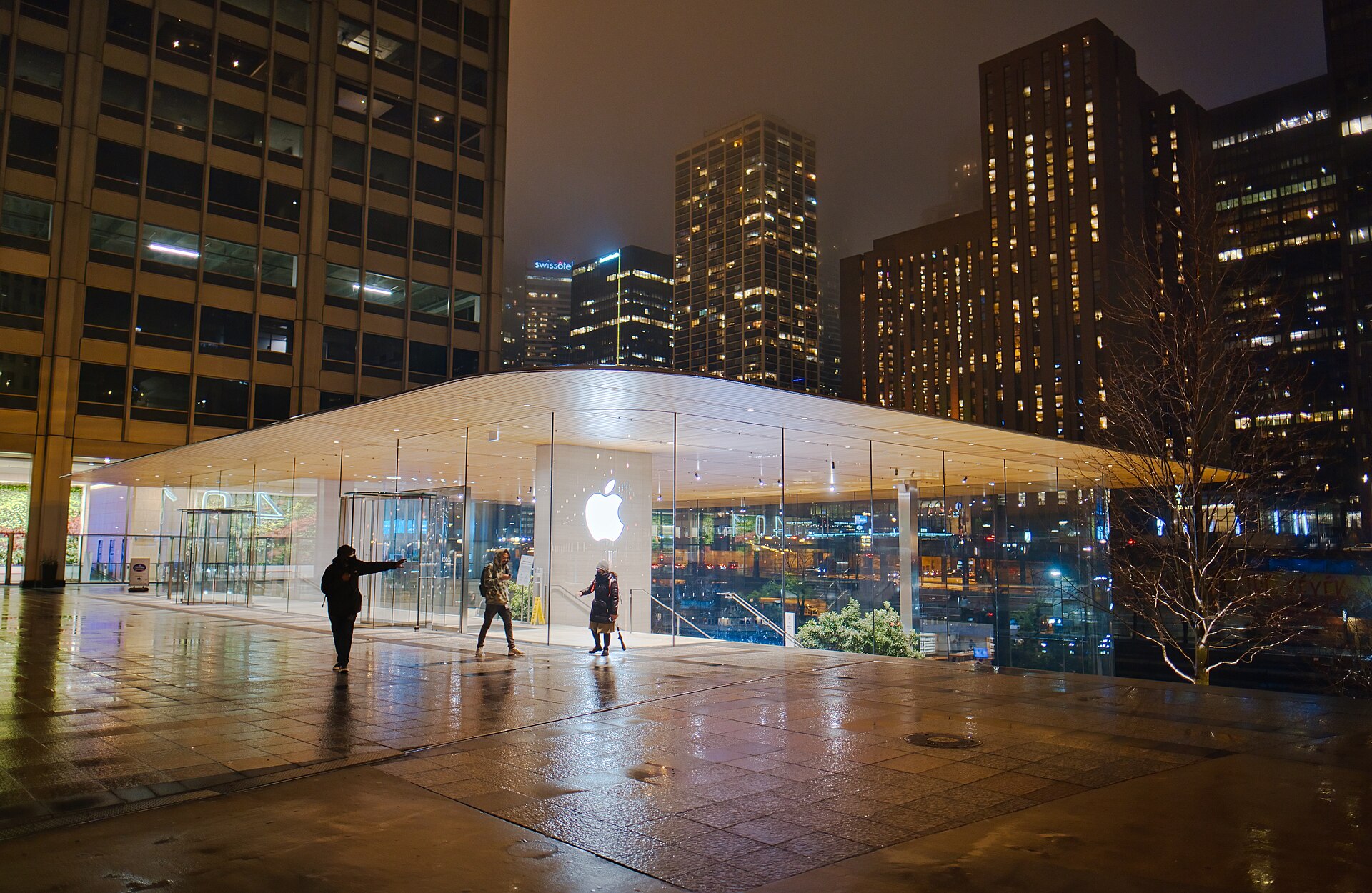
The phone they are queuing for
The Duo is the first entirely new iPhone form factor in years: a phone that opens like a book to reveal a foldable 7.6-inch Super Retina display — about 50% larger than the screen on the iPhone 18 Pro Max — and can run two apps side by side, according to Apple's launch material summarised by USA TODAY. It has a 48-megapixel Fusion main camera with zero shutter lag, dual FaceTime capture, support for the Apple Pencil (USB-C) for notes and sketching, and it runs iOS 27 with Apple Intelligence and the new Siri. In a small but telling nod to the past, Touch ID returns alongside Face ID-era hardware. It comes in two colours, Star White and Night Sky, and it is not cheap at any size: $1,999 for 256GB, $2,199 for 512GB, $2,599 for 1TB and $3,199 for 2TB. The entry price alone makes it the most expensive mainstream phone Apple has ever sold, which is precisely why the queues matter — at $1,999 and up, nobody camps on a pavement for a spec sheet they are lukewarm about.
Why this matters
Start with the obvious: Apple is late. Samsung put the first Galaxy Fold on sale in 2019, and for seven years the foldable was the one phone category Apple watched from the sidelines while rivals iterated in public — creases, hinges, durability scandals and all. Apple's answer, characteristically, was to wait until it could sell the category's most expensive, most polished version and let pent-up demand do the marketing. Launch day is the first real evidence of how that bet pays. A sold-out preorder proves scarcity; a sold-out preorder plus physical lines on three continents, for a $1,999 device, in the same autumn that the conventional iPhone 18 Pro also drew launch crowds, suggests something more durable — that a meaningful slice of the premium market has been waiting for Apple, specifically, to fold.
The second significance is what the Duo tests about price. The smartphone industry has spent five years discovering that buyers will stretch for a flagship at $1,199. The Duo asks whether they will stretch to $1,999 — double a standard flagship — for a new shape rather than a better camera. If the answer holds through the weekend and the January delivery backlog converts rather than cancels, every rival's pricing map for 2027 gets redrawn upward. If the backlog melts, the Duo becomes a halo product: glorious, quoted everywhere, owned by few.
The third point is subtler. Scarcity this visible is never purely a supply accident. Apple does not publish production numbers, and limited launch stock for a first-generation device with a novel display is genuinely prudent — yields on foldable panels are hard. But a company that wanted to damp the frenzy could simply have taken orders and shipped in January. Instead it put a small number of units into physical stores, in named countries, with a two-per-customer cap, and let the queues form. The line is at once a rationing mechanism and the most credible advertisement in consumer tech: strangers, in the cold, spending a night to spend $2,000. Apple knows exactly what that photograph is worth. This morning, it got thousands of them.
A short history of the iPhone line
The queue is the iPhone's oldest tradition. People camped outside Apple Stores for the original iPhone in June 2007, when nobody quite knew what the device was; they camped again for the iPhone 4 in 2010 and turned the iPhone 6 launch in 2014 into a global street festival that doubled as a grey-market pipeline. Then, gradually, Apple engineered the ritual away: online preorders, timed reservations, carrier financing and home delivery made the rational buyer stay home, and by the late 2010s the launch-day line had faded into a curiosity kept alive mainly at flagships and in markets where Apple restricted walk-in sales. September's iPhone 18 Pro launch showed the embers were still warm — Signal Post News covered the queues that formed for that phone's release weekend — but the Duo has done what a conventional flagship no longer could: it made the line necessary again. When the only stock is in the store and the store stock is "limited," the pavement becomes the checkout. The campers in Orange County this morning were not performing fandom. They were queueing because the system, deliberately or not, left them no faster route to the product.
Who wins, who loses
The winners start with the people at the front of this morning's lines and the preorder holders whose phones arrive today: in a market where, as Signal Post News reported last week, confirmed Duo preorders were already being resold on eBay for up to $5,000, simply holding one at retail price is an instant paper profit. Apple wins twice — once on margin, once on narrative — because every queue photograph argues that the most valuable company in consumer tech can still make the world stand outside in the dark. Carriers and accessory makers win quietly: a $1,999 phone sells financing plans, insurance and cases at attach rates no mid-range device can match.
The losers are equally clear. Walk-in buyers in the reservation-only countries — France, China, Japan, India, South Korea and others — never had a line to join. Scalpers lose a step to the two-per-customer cap and timed pickups, though the eBay listings show the trade bending rather than breaking. The harder question hangs over Samsung and Google, whose foldables spent years building this category: an Apple entry validates everything they argued about the form factor, and simultaneously threatens to take the premium end of it, the way the iPod once validated the MP3 player market shortly before owning it. And there is a risk on Apple's side of the ledger, too: a first-generation foldable, sold at the highest price in company history, into the hands of its most demanding customers, has no room for a hinge problem. The 2019 lesson of the first Galaxy Fold — delayed for months after review units failed — is the ghost at this launch.
What the sceptics say
Plenty of the queue's romance dissolves under scrutiny, and fair coverage should say so. Some of the scarcity is real engineering — foldable displays are genuinely hard to manufacture at scale — and some of it is a launch strategy that converts constraint into theatre; Apple has never once been harmed by a photograph of a crowd. Developers, meanwhile, flagged a practical gap before launch: apps install and run on the Duo automatically, but apps that have not been recompiled with Apple's latest tools will not adapt properly when the phone unfolds, sitting inside black borders on the big screen — the difference, as developer coverage put it this week, between "installs on iPhone Duo" and "optimized for iPhone Duo," with no official list of which apps are ready on day one. Add the known first-generation hazards of every foldable before it — the visible crease, the delicate inner panel, the repair bill — and the sceptical case writes itself: this is a very expensive ticket to be Apple's beta tester. The people in this morning's line had heard all of that. They came anyway, which is either the strongest possible verdict on the product or on the power of being first. Probably both.
What happens next
The weekend will supply the numbers that turn a scene into a story. Watch, first, for sell-through: how many stores report stock gone by Friday afternoon, and whether Apple's online store advice — MacRumors noted it was already telling U.S. customers to check back on Saturday, October 24 for pickup reservations — signals a fast replenishment or a long drought. Watch the January delivery estimates: if they hold or lengthen, demand is real and durable; if they snap back, the preorder spike was a sugar rush. Watch, third, the resale market, where the gap between the $1,999 retail price and the $5,000 listings is the cleanest real-time scarcity gauge anyone publishes. And watch the developers: the speed at which major apps ship Duo-optimized updates will decide whether that 7.6-inch screen becomes the Duo's reason to exist or its prettiest compromise. The line, for its part, has already delivered its verdict. Whatever the Duo turns out to be as a product, as an event it worked — before sunrise, on three continents, in the cold, at $1,999 a seat.
Related coverage: iPhone Duo compared: price, rivals and how Apple's foldable stacks up · iPhone Duo preorders sold out in minutes as eBay prices reached $5,000
Sources
USA TODAY (October 23, 2026) — iPhone Duo on sale Friday Oct. 23, preorders opened Oct. 16 and sold out "within minutes" per CBS News, CNET and 9to5Mac reporting; Apple no comment on the sellout; features and pricing from Apple's news release ($1,999–$3,199; 7.6-inch foldable Super Retina display; 48MP Fusion camera; Touch ID; Apple Pencil (USB-C); iOS 27). MacRumors (October 21 and 23, 2026) — Apple's "limited" walk-in availability statement in full; preorder shipping estimates slipped to January 25 within 30 minutes; walk-in vs reservation-only country lists; two-per-customer U.S. limit; Edinburgh launch-morning purchase; U.S. online store advising a Saturday Oct. 24 pickup-reservation check. AppleInsider (October 22, 2026) — lines forming days early, incl. hundreds at Apple Galaxy Macau (video by Lexus C via X) and the early Fifth Avenue walk-in line ~30 hours before launch. UNILAD (October 23, 2026) — Apple's warning that buyers could leave empty-handed; country lists; seven years after Samsung's first Galaxy Fold. Apple developer coverage via Gadget Hacks / iThinkDifferent (October 2026) — "Get Ready" Oct. 12, preorders Oct. 16 from 8 a.m. ET; app optimization vs installation distinction. Firsthand reporting and photograph: Alany Chu / Signal Post News, Orange County, California, October 23, 2026.