India-Nepal floods September 2026
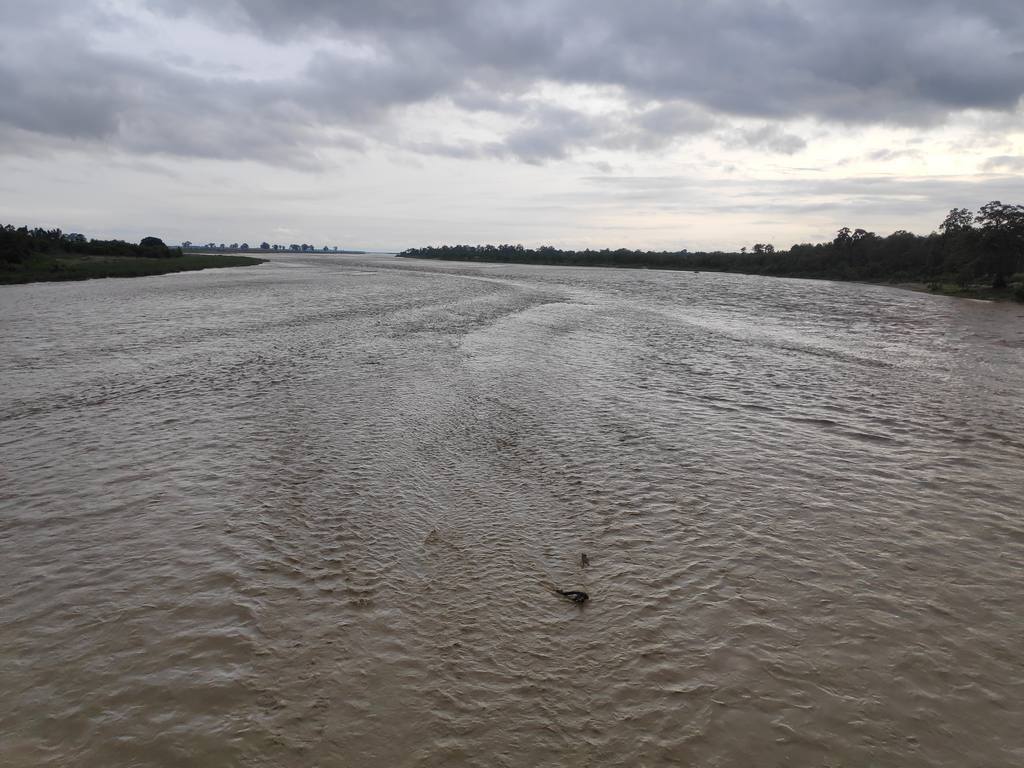
Torrential late-monsoon rains have killed at least 77 people across northern India and Nepal since Thursday, September 24, drowning villages in India's most populous state and burying homes under landslides in the Himalayan foothills. It is the second catastrophic flood wave to strike Nepal in just over a month — and it arrived while the country was still counting its dead from the last one.
What happened
In Uttar Pradesh, state relief commissioner Hrishikesh Bhaskar Yashod said Sunday that 56 people had died, 46 were injured and more than 1,000 houses were damaged. The state recorded 66.5 millimetres of rain from September 25 to the morning of September 27, compared with a normal 7.6 millimetres for that span, according to Reuters and AFP reporting published September 27.
Nepal's National Disaster Risk Reduction and Management Authority, or NDRRMA, reported 21 dead, five missing and five injured in its September 27 update. Landslides caused 14 deaths and left five people missing; floods caused four deaths; three more people died during continuous heavy rainfall. The agency said 247 families were affected, 260 homes were destroyed, 80 were partially damaged and roughly 3,000 residents were moved out of high-risk areas.
Families buried as they slept
At Nishi Khola in Baglung district, a landslide buried a house while a family slept, killing four people — three children and a woman — Reuters reported. In Palpa district, Lumbini province, debris buried another home, killing a 75-year-old man; his daughters, aged 17 and 15, were missing, according to The Kathmandu Post.
The numbers are moving. A later September 28 compilation by Demócrata, combining district reports with a later cutoff, put the toll above 100. The confirmed official counts used here remain 56 in India and 21 in Nepal, with several people missing. The divergence does not necessarily mean one tally is wrong: flood death tolls change as districts report at different times, missing people are located and duplicate records are reconciled. Every figure should therefore be read with its source and timestamp attached.
Rivers above danger, 70,000 evacuated
India's Central Water Commission placed 30 monitoring stations across seven states in a “severe situation.” The Ganga, Gandak, Kosi, Bagmati and Narmada all rose above danger levels. In Odisha, more than 70,000 people in low-lying areas were evacuated as rivers swelled, NDTV reported.
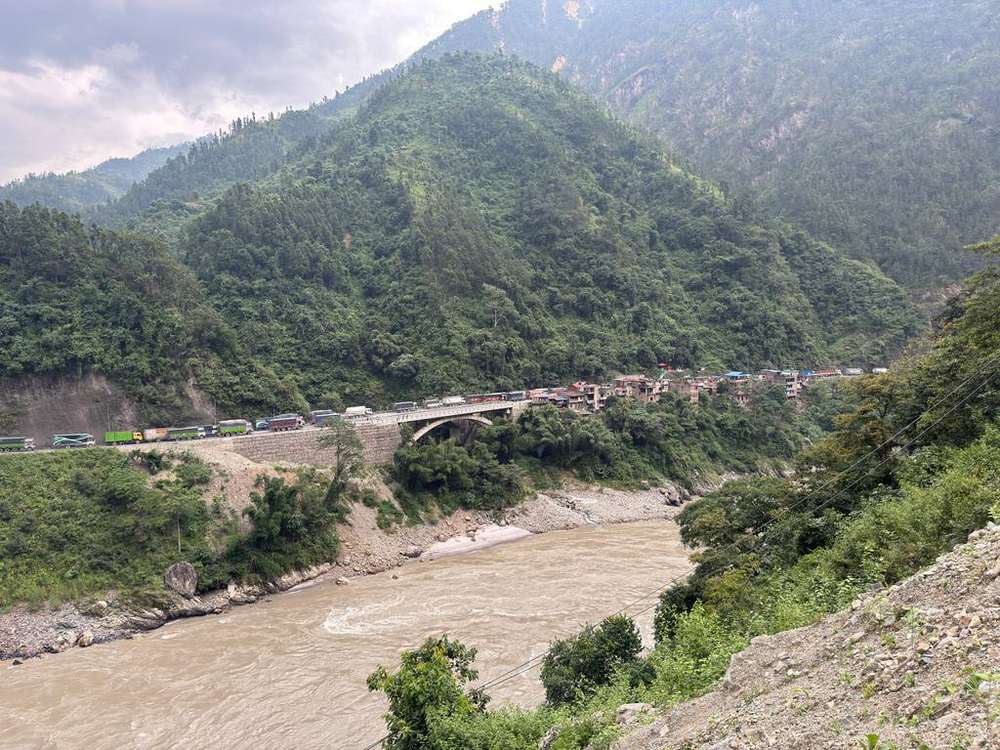
Nepalese authorities warned of possible flash floods in 49 of the country's 77 districts. Electricity was completely disrupted in Manang, Mustang, Myagdi and Baglung. Floodwaters from the Rahuganga River damaged the structure and transmission towers of a 40-megawatt hydropower project; Water Resources and Energy Minister Biraj Bhakta Shrestha said a technical team had been mobilized to restore it.
A Bay of Bengal system fed the deluge
A depression over the Bay of Bengal moved inland and intensified rain across the region, according to the Uttar Pradesh relief commissioner's office. NDRRMA traced Nepal's downpours to the same kind of low-pressure system, active from September 24 through 27.
About 9,000 foreign tourists and trekkers were in Nepal during the downpours. NDRRMA and the Nepal Tourism Board issued English-language advisories telling them to seek shelter and stop travelling.
The numbers, in context
Nearly nine times normal. The 66.5 millimetres measured against a 7.6-millimetre norm makes this an exceptional late-season event, not an ordinary monsoon pulse. A state statement covering an earlier 24-hour window put the anomaly at 19 times normal rainfall across 63 districts, Reuters reported. The storm was most violent in its first day, then kept coming.
More than 240 million exposed. Uttar Pradesh has roughly the population of Pakistan spread across one of the world's densest river plains. When the Ganga and its tributaries rise together, the number of people placed in harm's way is staggering.
Two catastrophes in five weeks. The August 26 glacial-collapse floods on the Nepal–Tibet border killed more than 1,450 people and left thousands missing, according to Reuters and NDRRMA. Nepal's leader called that disaster a “warning to the world.” NDRRMA spokesperson Shanti Mahat said Rasuwa and Nuwakot, the districts devastated in August, should remain alert even though they were not then classed as high risk. A country still searching for thousands of missing people is now absorbing another deadly wave.
Why this matters
The climate signal
Scientists have warned for years that South Asia's monsoon is becoming more erratic: longer dry spells broken by concentrated deluges. A near nine-fold rainfall anomaly in late September, as the June-to-September monsoon should be winding down, fits that pattern. The immediate disaster is weather; the accumulating trend is climate.
The agricultural calendar
Local officials reported more than 2,000 hectares of farmland flooded and over 100 cattle dead, according to Demócrata. Farmers are warning that sowing for the next season could be delayed. A missed sowing window now becomes a food-price and rural-income shock months later. Uttar Pradesh officials say crop damage is being assessed and compensation will be paid; the gap between a promise and a payout is where rural anger usually grows.
Infrastructure in the path of water
The damaged 40MW Rahuganga project is a reminder that Nepal's energy ambitions run through the same steep valleys that funnel landslides and flash floods. Every new hydropower tower in those gorges is a bet that the slopes above will hold.
The humanitarian system is being pulled in several directions at once: 3,000 people relocated, 407 rescued by police in three days according to People's Review, 9,000 trekkers warned off trails and power cut across four districts. That would strain any emergency service; Nepal's is already stretched by the August catastrophe and the unfinished search for its missing.
Who bears the cost — and who answers for it
The poorest households carry the heaviest burden: hillside families in unreinforced homes, smallholders with fields in floodplains, daily-wage labourers who lose income whenever roads close, and the 247 Nepali families whose homes were destroyed outright.
Officials point to evacuations, helicopter rescues in Jajarkot, Myagdi and Sankhuwasabha, and relief distribution as evidence that the response system worked under extreme conditions. Critics will ask why so many homes remained in mapped high-risk zones five weeks after the August disaster, whether river embankments and drainage in Uttar Pradesh have kept pace with floodplain development, and whether Nepal's warning network reaches the villages that need it most.
Both governments now face the politics of compensation: measuring crop losses and getting money to flood-hit families. In India's most populous state, flood relief is always political, and promises are easiest to make while the water is still high.
What happens next
Forecasters expect gradual improvement as the monsoon season approaches its end, according to Demócrata, but Nepal's disaster authority says further flash floods remain possible. Forty-nine of 77 districts are still under watch.
The immediate priorities are restoring power to the four cut-off districts, reopening blocked highways into and out of Kathmandu and across western and central Nepal, completing crop-damage assessments and paying families before the sowing window closes.
The longer horizon is harder: South Asia's flood toll is a policy choice as much as a weather outcome. Early-warning systems, enforced building codes on unstable slopes, maintained embankments and managed river releases all reduce the body count from the next “nine-times-normal” event. The August disaster was called a warning to the world; September is the world's reply arriving early.
Sources
- Reuters — Floods, landslides kill 15 in India, four in Nepal as rivers rise (September 27)
- Reuters via The Hindu BusinessLine — Floods, landslides kill 56 in India and 14 in Nepal (September 27)
- AFP via Seoul Economic Daily — Monsoon Floods Kill or Leave Missing Over 80 in India, Nepal (September 27)
- NDRRMA official update via Indian Economic Observer (September 27)
- Demócrata — Monsoons in Nepal and India leave more than a hundred dead (September 28)
Reporting basis: Official counts and published reports available at 6:15 AM Pacific time on September 28, 2026. Death tolls may change as districts reconcile reports.