Nepal Himlung avalanche deaths
An avalanche buried tents at a Mount Himlung base camp in Nepal's Manang district on Sunday, killing at least four Nepali guides and support staff and leaving 12 missing — as rescue teams dig through snow and helicopters race a severe-weather window.
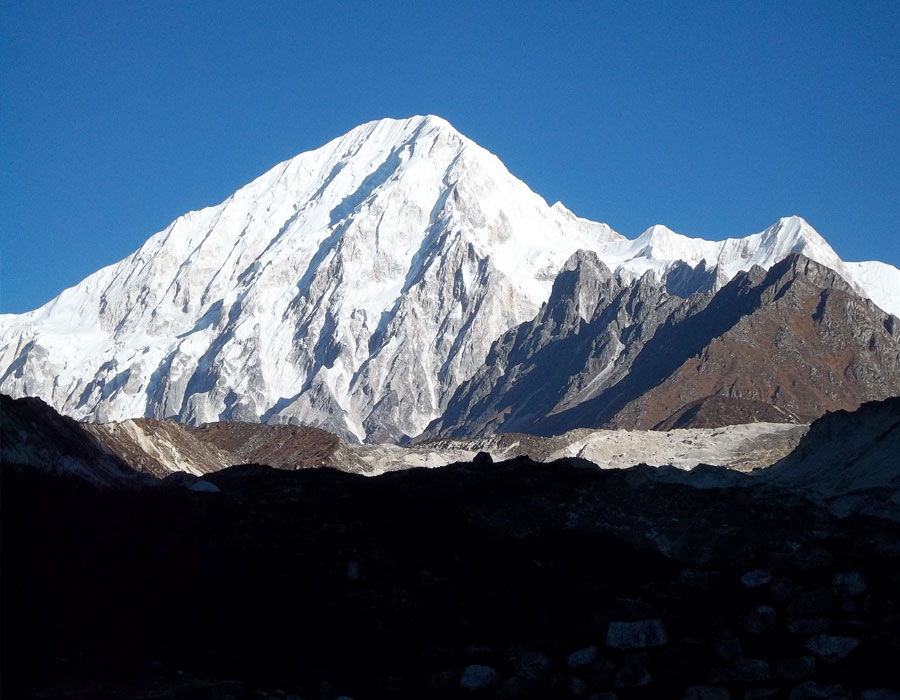
The Nepal Himlung avalanche deaths have exposed the danger borne first by the people who build a Himalayan season before paying clients ever step onto the mountain. An avalanche struck the base camp of Mount Himlung in north-central Nepal on Sunday, September 27, 2026, burying tents where more than two dozen expedition guides and support staff were preparing the mountain for the autumn climbing season. At least four Nepali nationals were killed and 12 remained missing on Monday as rescue teams dug through snow at the 7,126-meter (23,380-foot) peak, with helicopters ferrying the rescued and the recovered dead off the mountain.
What happened at Himlung base camp
The avalanche hit on Sunday amid severe weather across Nepal's Himalayan belt. Teams at base camp were fixing ropes, pitching tents and preparing equipment ahead of foreign clients' arrival for the autumn climbing season, which began this month. Officials believed 27 people were at the camp when the snow came down. Eleven later made contact, and 10 were rescued and flown from the mountain.
By Monday, four bodies had been recovered. Two were airlifted to Kathmandu and taken to the morgue at Tribhuvan University Teaching Hospital, where family members and friends gathered; an Associated Press photograph by Niranjan Shrestha showed mourners waiting there. Two other bodies were taken to Chame, the headquarters of Manang district. Chief District Officer Mukti Prasad Khanal confirmed the casualty and rescue figures to IANS.
The arithmetic remains provisional because the search area is still active and the sequence of contacts, evacuations and recoveries has changed through the day. What is clear is that the camp, not a summit push, was the center of the disaster: the avalanche hit the people laying the physical foundations for expeditions that had not yet begun.
The rescue effort: helicopters and eight guides digging
The Nepal National Mountain Guide Association is leading the ground search. Eight experienced mountain guides used improving weather on Monday to dig through snow that had buried tents, while helicopters were mobilized from early in the day to carry survivors and the dead away from the mountain. Deputy Superintendent of Police Shailendra Thapa said about 12 people were initially reported missing. Nepal's National Disaster Risk Reduction and Management Authority later confirmed the recoveries through Nepal Police.
The people at the camp were associated with Himalayan Holidays Nepal and Imagine Nepal Treks. Expedition organiser Mingma Gyalje Sherpa said two members of his kitchen staff were among the missing. One expedition member managed to telephone after the avalanche struck on Sunday morning and said colleagues had been scattered. Rope-fixing teams had left higher slopes after a weather warning the previous week, but some workers remained at base camp, where the operational assumption had plainly been that shelter was safer than exposure above.
Who the victims were: Nepal's mountain guides
The Nepal National Mountain Guide Association identified the four recovered dead as Birendra Gurung, Ghanshyam Rai, Chhebi Bhote and Pasang Bhote, all Nepali nationals. Their jobs placed them in the familiar but too often invisible workforce of Himalayan climbing: the guides, rope fixers, porters and kitchen staff who establish a functioning camp before an expedition can sell an ascent.
The clients they were preparing for had not yet arrived. That distinction is not incidental. It explains whose labor is concentrated at risk during the first weeks of a season, and why a mountain accident can kill the support team before the international climbing world has even gathered at base camp.
Why this matters: the Himalaya's hidden workforce
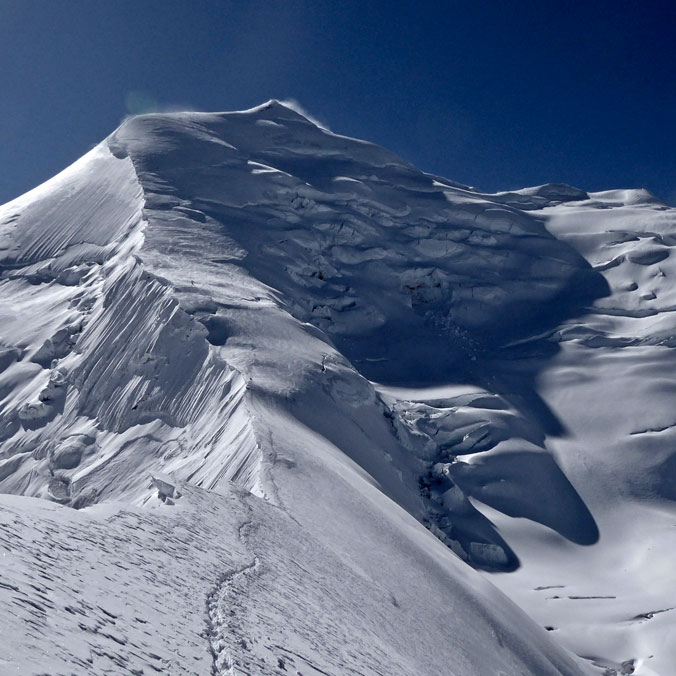
Himlung stands below Nepal's 8,000-meter giants, and that lower profile can make it sound forgiving. It is not. Avalanches do not respect the fame attached to an altitude, and a 7,126-meter mountain can combine steep snow, unstable weather and remote rescue conditions as lethally as a better-known peak.
The autumn season creates a particular imbalance of exposure. Nepali workers move onto the mountain early to establish camps and lines while many foreign clients remain in Kathmandu or have not yet reached Nepal. When those workers die, their names often travel less widely than the names of foreign climbers killed on summit attempts. Himlung reverses the familiar camera angle: the people lost were not background figures in someone else's expedition. They were the expedition infrastructure.
The timing also matters because the avalanche followed government-issued severe-weather warnings. A warning is not a force field; it cannot remove every person from every high camp at once. But it does create a legitimate question about how operators and local authorities decide when a camp remains viable after higher slopes have been evacuated.
Nepal's deadly weather season: 21 dead in four days elsewhere
The Himlung disaster was part of a broader spell of destructive weather. Nepal's disaster management agency said 21 other people were killed and five more were missing in different parts of the country between Thursday and Sunday. Manang district's administration also reported flooding and landslides over the weekend after heavy rainfall.
Manang's District Security Committee had restricted trekking in high-altitude areas from September 25 through September 27 because forecasts called for heavy to very heavy rainfall and snowfall. The government issued severe-weather warnings across the Himalayan nation. Those restrictions demonstrate that the risk was recognized; the investigation now facing the climbing sector is whether base-camp staffing rules matched the seriousness of the forecast.
It would be too simple to say that every death was therefore preventable. Himalayan weather can move faster than helicopters, and a base camp may be the least dangerous available refuge once conditions close in. The harder and more useful question is whether the workers who remained had an equally safe route out, the authority to use it and enough lead time to do so.
What happens next: the autumn climbing season hangs in the balance
Nepal's autumn climbing season began this month, and Himlung is a popular 7,000-meter training objective for climbers preparing for 8,000-meter peaks. Tourism is a vital source of income, and Nepal has been urging visitors to return after the catastrophe in August. That economic pressure is real, but so is the need to avoid turning a calendar into a safety deadline.
The immediate priority is the missing. The search will continue when weather permits, with the eight guides on the ground and helicopters dependent on visibility and safe flying windows. Beyond the rescue, officials and operators will face questions about whether the September 25–27 restrictions should have kept high camps closed longer, and whether base-camp workers received the same protection as trekkers and arriving clients.
Two paths are plausible. The season may proceed under tighter weather windows, stricter staffing limits and a slower schedule for fixing routes. Or, if unstable conditions hold over Manang, operators may pause Himlung expeditions until snow settles and access can be reassessed. The decision should turn on the mountain, not the commercial cost of waiting.
How Himlung fits into Nepal's climbing economy
Himlung Himal rises 7,126 meters in the Manang region near the Tibetan border. For climbers, it is often treated as a stepping-stone: high and technical enough to test systems, but below the rarefied category of the world's 8,000-meter peaks. For Nepal's expedition economy, that role makes it valuable. Himlung supports permits, logistics, lodges, transport and seasonal employment.
But the business runs on Nepali guides, porters and kitchen staff like the four people recovered from the snow. Any accounting of the season that begins with client numbers or summit success misses the labor underneath. The mountain was being made ready for others when the avalanche struck.
The confirmed toll has moved as rescuers reached the buried camp: early reports counted two bodies, while officials and the guide association later put the recovered dead at four. The figure of 12 missing comes from police and district officials and may change again as contacts are reconciled and digging continues. That uncertainty should be stated plainly, not used to blur what is already known: four named Nepali workers are dead, families are waiting, and a weather-limited rescue is still underway.
Sources
- Associated Press via KCAU 9 News: Rescue teams search Nepal mountain for 12 swept by avalanche, September 28, 2026
- IANS: Nepal: At least four dead in avalanche at Himlung base camp, September 28, 2026
- PTI via 7Globe: Two bodies recovered after deadly Himlung Himal avalanche, September 28, 2026
- HiveJaw: Four dead, 12 missing after Himlung avalanche, September 28, 2026