IDF Press Files Gaza journalists
IDF Press Files Gaza journalistsThe Press Files IDFGaza journalist death tollHamas media operatives GazaMuhammad Abd al-Aziz Muhammad NagarMohammad Al-Najar journalistAmmar Mahmoud Muhammad SharafiGaza ceasefire violationsjournalists killed in Gaza 2026press freedom Gaza warhow many journalists killed in Gaza warIDF journalists Gaza Hamas operative claims
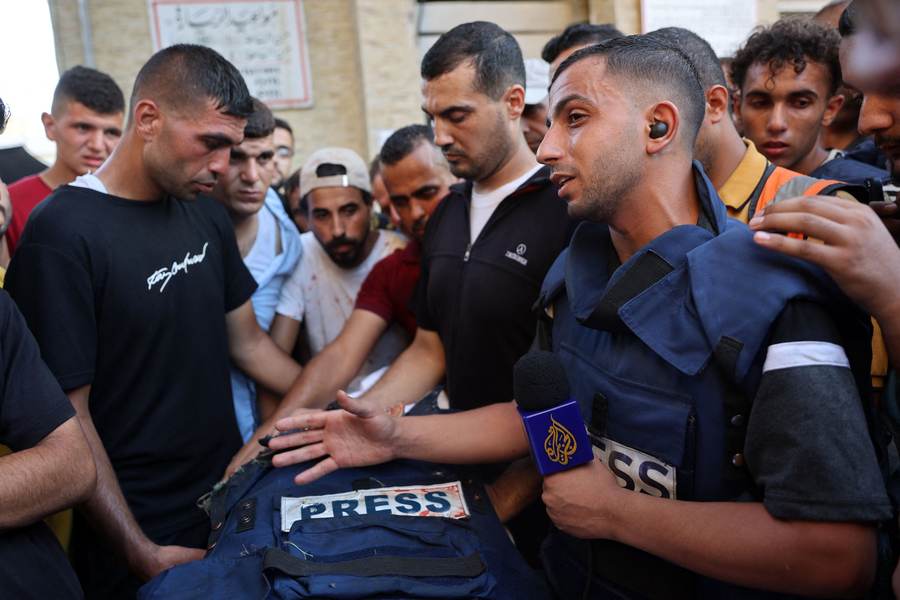
GAZA — IDF Press Files Gaza journalists allegations and a new round of lethal strikes have collided in a dispute over who counts as a reporter, who can be treated as a military target and what evidence the public should demand before accepting either label. On Thursday, October 1, Israel’s military said it had killed Muhammad Abd al-Aziz Muhammad Nagar in southern Gaza one day earlier. The IDF described him as a Hamas military-wing operative who took part in the October 7, 2023 attack on Israel. Palestinian accounts described him as Mohammad Al-Najar, a Radio Quran presenter and journalist. The varying spellings reflect transliteration from Arabic; the reports appear to concern the same man.
The IDF said Nagar had recently advanced attacks against Israeli troops and civilians and worked to rebuild Hamas’s military capabilities. It called those activities a systematic ceasefire violation and said precision munitions and aerial surveillance were used before the strike. Signal Post News could not independently verify the alleged Hamas role, the claimed October 7 participation or the targeting process. The military’s assertions therefore remain allegations attributed to the IDF, not independently established facts.
In a separate strike in the Gaza City area, the IDF said it killed Ammar Mahmoud Muhammad Sharafi, whom it identified as a Hamas military-wing platoon commander. It framed that strike as removing a threat and responding to violations of the October 2025 ceasefire. Hamas denies rebuilding its arsenal and accuses Israel of using recurring attacks to undermine the agreement. Those competing narratives now shape nearly every strike, but neither resolves the status of the people killed.
What the IDF says happened
Muhammad Nagar and the Radio Quran identification
The military announcement, reported by United with Israel, Matzav and other outlets, says the man presented in Palestinian reports as a journalist was also an active Hamas fighter. The allegation is consequential because participation in hostilities can remove a civilian’s protection from direct attack for the duration of that participation. Employment by a broadcaster, possession of press credentials or performance of journalistic work does not by itself settle the legal question in either direction.
That distinction is often lost in the information war. Calling someone a journalist does not create immunity if the person is directly participating in hostilities. Calling someone a militant does not erase the need to prove that status, distinguish the target and minimize civilian harm. The same person can have a media role and an organizational affiliation, but the legal and factual questions turn on conduct, timing and reliable evidence rather than labels alone.
A separate strike on Ammar Sharafi
The IDF’s account of Sharafi is more straightforward but no more independently verifiable: it called him a Hamas platoon commander and said the strike was undertaken to remove a threat. No public evidence reviewed for this report established what attack he was allegedly planning, when it was expected or what command responsibilities he held. The absence of public evidence does not prove the claim false; it limits what outside observers can responsibly conclude.
That evidentiary gap matters because the strike occurred amid a broader day of reported casualties. Reuters reported that a strike on a Gaza City apartment killed a woman, a vehicle strike in Tel al-Hawa killed four people and wounded 14, and later attacks in the south added to the toll. Just Security’s October 1 Early Edition, citing Reuters, counted at least seven people killed Wednesday, including Al-Najar near a mosque in Khan Younis.
Why this matters
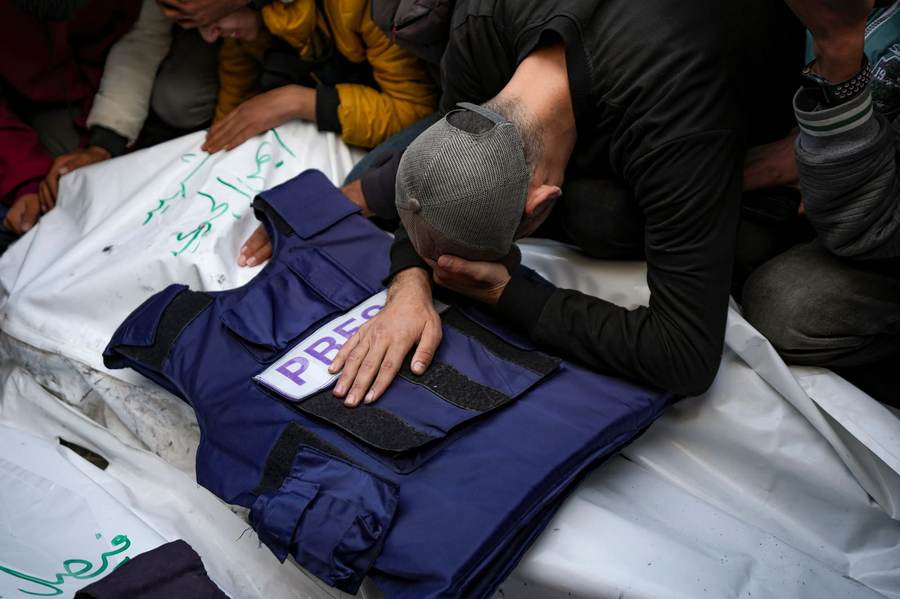
This dispute is not only about one strike. It tests the credibility of two systems that have been making incompatible claims for three years. Gaza authorities count Al-Najar as a journalist killed in the war. Israel says the same man was a combatant whose public media identity obscured his military work. If the IDF produces verifiable evidence, casualty databases may need to distinguish more carefully between media workers who were civilians and people who also served operational roles. If the evidence remains secret or conclusory, the campaign risks becoming a mechanism for discrediting dead reporters after they can no longer answer the allegation.
The stakes extend to current reporting. Israel has largely barred independent foreign journalists from entering Gaza except on tightly controlled military visits, leaving Palestinian reporters and media workers as the principal witnesses on the ground. That makes their safety central to the world’s ability to know what is happening. It also increases the importance of transparent vetting when intelligence agencies allege that a reporter was tied to an armed group.
For the IDF, the issue is strategic as well as legal. Israel faces persistent accusations that it deliberately targets journalists. A documented case showing direct operational activity could rebut an individual claim and expose abuse of press status. But an expansive list without a clear standard can have the opposite effect: it can look like retroactive justification for a death toll that press-freedom groups describe as unprecedented.
Context: The Press Files and a battle over definitions
Ten profiles became a list of 170
On October 1, the IDF launched “The Press Files”, a mini-site presenting names, photographs, alleged organizational roles and selected intelligence for 10 Gazans publicly identified as journalists. The initial group included photographer Hassan Aslih. Hours later, the military released a much larger list of 170 names it said belonged to Hamas or Palestinian Islamic Jihad while appearing in media casualty counts.
The stated purpose is to counter the claim that Israel deliberately targets journalists. The site turns a longstanding IDF argument into a public evidence campaign: show an individual media identity next to an alleged militant role, then invite readers to reconsider the broader casualty number. Yet the scale of the list creates its own burden. Ten profiles can be evaluated one by one; 170 names require consistent standards, source disclosure and a process for correcting errors.
The military’s release also compresses different categories. A propagandist, a political media employee, a person with family ties to a militant, a member of an armed group and a combatant directly participating in hostilities are not legally interchangeable. A credible database needs to say which category applies to each person and what evidence supports it. Merely placing all names under a single militant label makes the political message simple while leaving the analytical work unfinished.
Press-freedom groups challenge the framework
The Committee to Protect Journalists says Palestinian reporters have faced an unprecedented pattern of killing, injury, detention and obstruction. In an April 2026 summary, CPJ said it had documented at least 207 Palestinian journalists and media workers killed in Gaza and accused Israel of repeatedly labeling reporters as terrorists without substantiated evidence. Israel rejects the claim that it systematically targets journalists and says Hamas and other armed groups embed military activity within civilian institutions.
Independent verification is exceptionally difficult. Gaza’s communications infrastructure has been repeatedly damaged; witnesses may be displaced or killed; Israel controls most external access; Hamas governs institutions inside the territory; and intelligence offered by the IDF is often partial or cannot be tested publicly. Those constraints do not make verification impossible, but they mean confidence should attach to specific evidence, not to the authority of either side.
Multiple angles: who benefits, who loses and what critics say
Who benefits from the Press Files campaign
The Israeli government and military benefit if the records withstand scrutiny. Each documented dual-role case weakens blanket claims that every person counted as a journalist was a protected civilian at the time of death. It also gives Israeli diplomats a concrete response to questions about targeting policy rather than a general denial.
Independent casualty researchers benefit from any release that includes testable names and evidence. Competing lists can expose duplicate records, outdated job descriptions and inconsistent definitions. That work, however, is useful only if researchers can inspect the supporting material, contact employers and families, and publish corrections without political pressure.
Hamas can benefit politically when Israel publishes allegations that appear broad, unreviewable or timed to blunt criticism after a fatal strike. If a weak entry is exposed, it can cast doubt on stronger entries as well. The organization also benefits from ambiguity when military and media roles overlap, because uncertainty complicates outside judgments about its conduct and Israel’s response.
Who loses
Working journalists lose first. A broad suspicion that press credentials are cover for militancy can make every camera operator, fixer and radio presenter appear threatening. That perception can shorten the time a soldier has to distinguish a reporter from a combatant and undermine one of the few visible protections available in a battlefield.
Families lose the ability to establish a public record. When a relative is killed and then accused posthumously, families face two simultaneous burdens: mourning the death and contesting an intelligence claim they may be unable to see. Conversely, families of Israeli victims lose when someone who participated in the October 7 attack is remembered only through a civilian occupation. Accurate classification matters to both groups.
The public loses when the debate collapses into two absolute slogans: every named reporter was a civilian, or every disputed reporter was a terrorist. Both erase the possibility that the records contain a mixture of civilians, political media employees, propagandists and combatants. The only responsible route is case-by-case evidence.
What critics say
Press-freedom advocates argue that an armed force cannot be the sole judge of its own targeting record, particularly when it withholds intelligence for security reasons. They call for independent investigations, foreign media access and a transparent method for adding or removing names. The Council on American-Islamic Relations urged members of Congress to condemn the latest Gaza strikes, according to a five-outlet trend summary, while Al Jazeera emphasized that a journalist was among those killed.
Israel’s defenders answer that armed groups deliberately exploit civilian institutions and that international coverage too often repeats a media title without investigating organizational membership. They point to intelligence dossiers, public praise of attacks and affiliations that some news organizations have reviewed after publication. Their strongest argument is that press status and militant activity can coexist. Their weakest is any suggestion that an allegation alone resolves whether lethal force was lawful.
Data-driven reasoning: what the figures do and do not show
Three journalist counts answer different questions
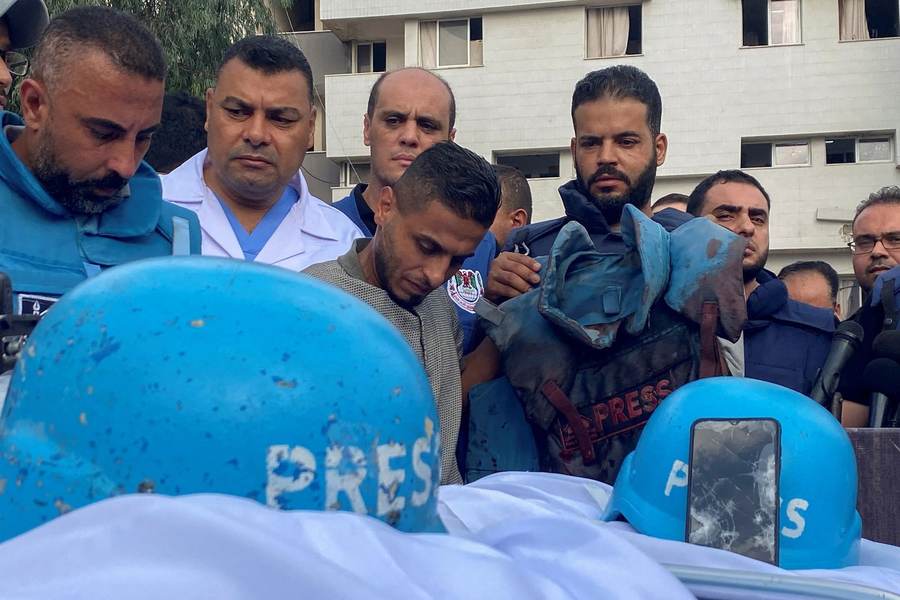
Gaza’s Government Media Office says Al-Najar was the 263rd journalist killed since the war began. CPJ’s April 2026 summary counted at least 207 Palestinian journalists and media workers killed in Gaza. The IDF’s new list alleges that 170 people presented as journalists had Hamas or PIJ affiliations. These numbers cannot simply be subtracted from one another.
The Gaza office, CPJ and the IDF use different source pools, dates and definitions. The 170 figure is an allegation set, not necessarily a list of people all included in either civilian-death database. Affiliation also does not automatically show direct participation in hostilities at the time of death. A statistically honest comparison requires a name-by-name match, a consistent cutoff date and categories that distinguish employment, membership, command role and combat activity.
Reports say CPJ has removed between 19 and 22 names during reviews, while an analysis associated with the Meir Amit Intelligence and Terrorism Information Center argued that roughly 60 percent of 266 Gaza residents classified as media workers had ties to armed organizations. Both points show that lists can change and affiliations deserve scrutiny. Neither proves that all remaining entries are civilian nor that all challenged entries were lawful targets. Methodology, evidence and correction procedures matter more than the headline percentage.
The ceasefire toll places the media dispute inside a larger war
Gaza health authorities put the number of Palestinians killed since the October 2025 ceasefire at about 1,439 in reports published around October 1. Reuters has placed the full Palestinian death toll since October 2023 above 74,000, while noting that four Israeli soldiers have been killed in Gaza since the ceasefire took effect. Hamas-led attackers killed about 1,200 people in Israel on October 7, 2023.
Those figures establish scale, not individual culpability. A high civilian toll does not prove a particular strike unlawful; an alleged militant role does not explain every civilian death around that strike. The data instead show why the evidentiary standard matters. Each classification shifts how governments, courts and the public understand proportionality, targeting policy and the human cost of a ceasefire that has not stopped lethal violence.
Wednesday’s seven reported deaths also show how fast narratives harden. One person appears as a journalist in one ledger and an October 7 operative in another. If evidence is withheld, the disagreement becomes permanent. If evidence is released and independently tested, the record can move closer to a shared account even when political conclusions remain divided.
Forward-looking analysis: three scenarios
Scenario one: the files become auditable
The most constructive path is for the IDF to publish enough underlying material for independent specialists to test each claim without exposing operational sources. News organizations and press-freedom groups could then issue transparent revisions, and the military could correct errors. A credible appeal or review process would matter as much as the initial publication. This scenario narrows disagreement but requires both sides to accept findings that cut against their preferred narrative.
Scenario two: dueling lists harden
The more likely near-term outcome is two parallel records. Israel will add names to The Press Files; Palestinian authorities and press groups will maintain broader journalist casualty lists; and each new death will be absorbed into the existing argument. International audiences will select the database that matches their politics. The result is not simply disagreement but an erosion of the categories that protect civilians and reporters during war.
Scenario three: another strike forces outside scrutiny
A future attack involving several clearly identified journalists, especially one documented by multiple cameras or foreign witnesses, could trigger an external investigation or conditions on military assistance. CAIR’s call for congressional condemnation shows the political pressure already forming in Washington. Conversely, publicly verifiable evidence that a prominent journalist directly commanded attacks could push major outlets to tighten accreditation and casualty-list standards.
The immediate indicators are concrete: whether the IDF releases source material for Nagar and Sharafi; whether employers acknowledge, dispute or investigate the alleged affiliations; whether casualty databases revise individual entries; and whether foreign journalists gain independent access to Gaza. Until then, the responsible conclusion is limited. Israel has made serious allegations. Palestinian organizations and press-freedom advocates dispute the broader framing. The deaths are real; the classifications remain contested.
Sources and reporting notes
- Israel Defense Forces: The Press Files — the military’s initial profiles and stated purpose.
- United with Israel, October 1, 2026 — reporting of the IDF statements on Nagar and Sharafi.
- The Algemeiner, October 1, 2026 — the 170-name release and dispute over casualty lists.
- Just Security Early Edition, October 1, 2026 — Reuters-derived account of at least seven killed and the journalist identification.
- Reuters, September 30, 2026 — Gaza City strikes, casualties and both sides’ ceasefire claims.
- Archynetys multi-outlet trend summary — CAIR’s response and comparison of coverage.
- The Trent — explicitly notes that the IDF’s operative claims could not be independently verified.
Reporting cutoff: October 1, 2026 at 9:48 p.m. PDT. Signal Post News could not independently verify the IDF’s operative identifications. Casualty totals and organizational affiliations are attributed to the sources making them; spellings vary across transliterations.