National Rally Senate seats
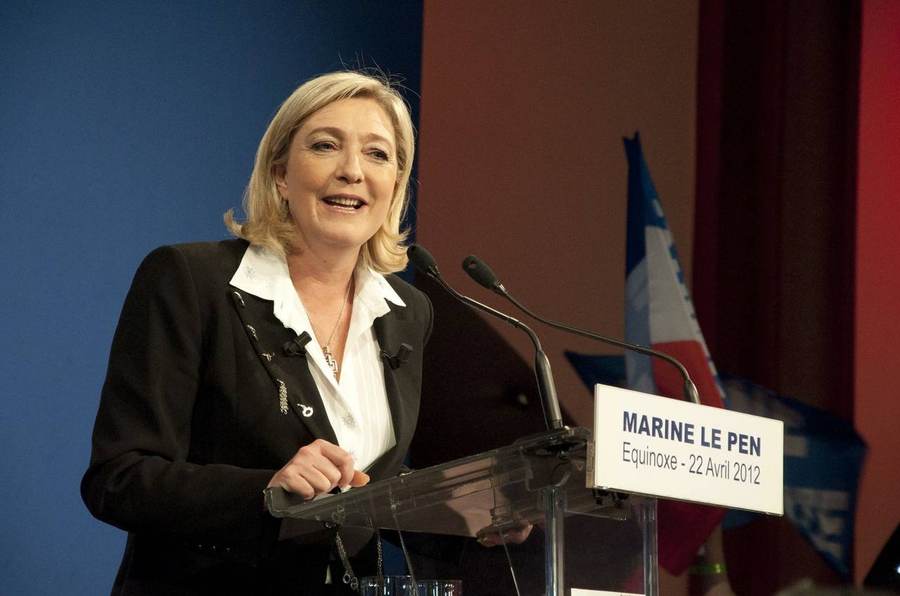
France's far-right National Rally (RN) and its allies secured a record 14 seats in the Senate on Sunday, September 27, quadrupling the party's presence in the 348-seat chamber and crossing the threshold needed to form a parliamentary group for the first time. The result, announced after partial elections renewed 178 seats across 64 of France's 101 departments, lands seven months before the first round of the 2027 presidential election, for which Marine Le Pen starts as a favorite in early polling.
Nine RN senators were elected on Sunday, according to an AFP tally of results, joining the three who won seats in 2023. Two more seats went to the party's ally, Éric Ciotti's Union of the Right for the Republic (UDR), bringing the combined RN-UDR bloc to 14 — with some counts putting the total at 15 if a Republican senator who announced a switch is included. RN president Jordan Bardella announced on X that the party's senators would form a group with their UDR allies. "This is a historic victory, and a major milestone with the formation for the first time of a group in the Senate," Le Pen said, adding that the results had "exceeded our expectations."
Le Pen told supporters the new senators would serve as an "essential megaphone for the presidential campaign" and "defend the voice of the territories." RN deputy Sébastien Chenu declared there was "no longer a glass ceiling" for the party, calling the night an accelerator for the presidential race.
Why this matters: the last chamber falls
The Senate was the one French institution the National Rally had never cracked. The upper house is elected indirectly, by an electoral college of roughly 93,000 local officials — mayors, departmental and regional councilors — who have historically acted as a firewall against the far right, rewarding entrenched local networks over national momentum. The RN first entered the Senate in 2014, when it was still called the National Front, with just two seats; it held three after the 2023 renewal. Sunday's jump to 14 is therefore not merely arithmetic — it is the collapse of the party's last institutional glass ceiling.
That matters because a parliamentary group is machinery, not symbolism. Crossing the 10-senator threshold unlocks speaking time, committee seats, dedicated staff, public funding and the right to request parliamentary inquiries. For a party whose 2027 strategy depends on demonstrating governing credibility, a permanent, funded presence in the upper house converts campaign momentum into institutional weight. Le Pen's "megaphone" framing is candid about the purpose: the Senate group will function as a relay for the presidential campaign once Emmanuel Macron leaves the Élysée next spring.
The result also completes a trilogy of breakthroughs. The RN emerged as the single largest party in the National Assembly after Macron's snap legislative elections in 2024, though it fell well short of a majority. Municipal gains in March enlarged the pool of grand electors sympathetic to the party. The Senate was the missing piece; it is missing no longer.
How 93,000 local officials delivered the breakthrough
French senators serve six-year terms, with half the chamber renewed every three years by local elected officials rather than by direct popular vote. That design was supposed to make the Senate the most conservative — with a small c — of France's institutions, insulated from the swings of national mood. What Sunday's vote shows is that the RN's implantation in local France has deepened to the point where the insulation no longer holds.
The geography of the gains tells the story. The breakthrough is concentrated in the Mediterranean belt — two seats in the Bouches-du-Rhône, two in the Var, one each in the Vaucluse, the Hérault and the Gard — with surprises further west and north: one seat in the Gironde, where deputy Edwige Diaz may chair the new group, and one in Seine-Maritime. The UDR took two seats in the Alpes-Maritimes, including that of European deputy Laurent Castillo. Former RN senator Stéphane Ravier was not returned, a reminder that the night was a collective advance rather than a reward for every incumbent.
This is the institutional dividend of the "dédiabolisation" strategy Le Pen has pursued for over a decade: the patient conversion of protest votes into local mandates, and local mandates into an electoral college that now returns far-right senators. The Senate, designed to resist exactly this kind of surge, has instead certified it.

Who benefits — and who is boxed in
Marine Le Pen and Jordan Bardella gain a campaign machine. Fourteen senators with staff, funding and committee positions amount to a permanent institutional platform for the 2027 race. Bardella, who announced the group on X within hours of the results, gets to present the RN as a party of government-in-waiting rather than a protest movement. For Le Pen — convicted in March 2025 over the misuse of European Parliament funds, a verdict she is appealing — the result is also personal vindication: her party keeps advancing while her own legal battle continues, and AFP and Guardian reporting describe her as preparing to run in 2027.
Éric Ciotti's UDR becomes a kingmaker on the right. Ciotti quit the mainstream conservative Republicans (LR) in 2024 after calling for an alliance with the far right — a move treated at the time as political self-exile. His two senators are now the margin that makes the RN's group possible, and the RN-UDR alliance gives him a relevance in the upper house that LR's leadership cannot ignore.
The Republicans lose their monopoly on the right. LR and its allies retain their majority in the chamber, and the upper house's LR president of more than a decade, 77-year-old Gérard Larcher, is expected to be re-elected next week. But the Senate was the last place where the traditional right could claim to have contained the far right institutionally. That claim is now gone, and Bardella's outstretched hand to "sincere patriots" among LR senators is an open invitation to further defections.
The left gets a consolation prize with a warning attached. The hard-left France Unbowed (LFI) won a Senate seat for the first time, a genuine milestone for the party. But the night's dominant story is the far right's advance, and the right, centre and Socialists remain the chamber's three major forces — a structure that leaves the left fragmented while the right reorganizes around the RN's momentum.
What the numbers actually say
Perspective is essential, because both the triumphalist and the dismissive readings of Sunday are incomplete. Fourteen seats in a 348-member chamber is 4 percent of the Senate. The conservatives kept their majority. Larcher's expected re-election means the chamber's formal leadership will not change. Measured against legislative power, the RN remains a small minority in the upper house.
Measured against the party's own trajectory, the result is transformative. From two senators in 2014 to three in 2023 to 14 in 2026, the RN has nearly quintupled its upper-house presence in a dozen years — and the 10-seat threshold is a binary switch: below it, a party is a collection of isolated senators; above it, it is an institution with resources. The relevant comparison is not 14 against 348 but 14 against the zero groups the party has ever held in the Senate before.
The electoral-college math also deserves attention. Senators are chosen by some 93,000 local officials, a body that changes slowly as municipal councils turn over. The RN's March municipal gains expanded its share of that college, which means Sunday's result partly reflects victories won months ago — and that the party's local implantation is now deep enough to keep paying institutional dividends in future renewals.
What happens next: the road to April 2027
Three things will determine whether Sunday is remembered as a milestone or a high-water mark. First, the group's internal discipline: Edwige Diaz, tipped as a possible chair, will need to turn 14 senators from two parties into a coherent parliamentary force, and the RN's history of internal tensions will be tested by the temptations of a funded, staffed group.
Second, the presidential campaign itself. The Senate group gives Le Pen and Bardella a platform, but the 2027 first round — scheduled for April — will be decided by direct popular vote, a different electorate from the 93,000 grand electors. Early polls put Le Pen ahead in the first round, yet the history of French presidential runoffs is a history of republican-front coalitions assembling against the far right in the second round. Institutional credibility helps; it does not dissolve that dynamic.
Third, the response of the traditional right. Larcher's re-election next week will be the first test of whether LR tries to quarantine the new group procedurally or reaches an accommodation. Bardella's invitation to LR's "sincere patriots" suggests the RN intends to keep pulling at that seam. Every defection, every committee bargain, will be read as a signal about the shape of the right in 2027.
What to watch next
- The group's formation: whether the final count settles at 14 or 15, who chairs it, and how RN and UDR senators divide committee assignments.
- Larcher's re-election: the Senate presidency vote next week and whether LR seeks any procedural accommodation with the new group.
- The 2027 field: how Le Pen's legal situation and the RN's institutional gains interact as the April first round approaches.
- Local implantation: whether the RN converts Senate resources into deeper municipal networks ahead of the next renewal cycle.
- The Macron succession: how the presidential majority and the centre position themselves against a far right that now holds institutional ground in every chamber.
For decades, the French Senate was the room the far right could not enter. On Sunday it did not merely enter — it took a group, with staff, funding and a megaphone. The 2027 presidential race now has a new institutional fact at its center, and both Le Pen's supporters and her opponents will spend the next seven months arguing about what it means.
For context on the wider European right's institutional gains, see our analysis of Vučić's resignation and Serbia's snap election gamble, and for the crisis in French governance that frames this advance, France's budget crisis under Lecornu.
Sources: AFP tally of results and reporting on the Senate elections; The Guardian on the record gains and Le Pen's "historic victory" claim; AnewZ on the 15-member group projection and threshold mechanics; Brussels Signal on the geography of the gains and municipal roots; NewsCord comparing 13 outlets on the RN-UDR group formation; Public Sénat on the 10-senator threshold.