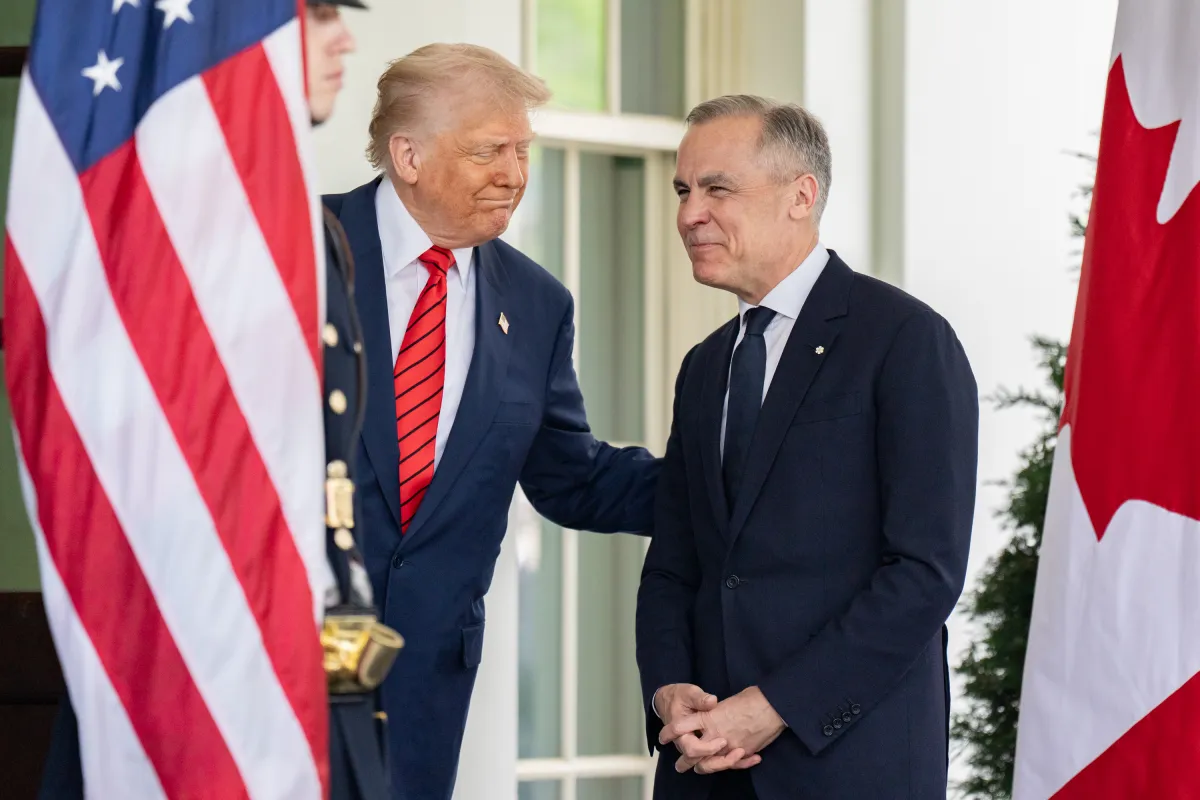
OTTAWA — The most startling disclosure of the United Nations General Assembly week did not come from a podium speech. It came from an interview. Prime Minister Mark Carney told The New York Times, in an interview published Wednesday, that his government has examined the possibility that the United States — Canada's closest ally, its largest trading partner, and its partner in continental air defense since the Cold War — could take military action against Canada. He called the scenario an “extreme tail risk,” the language of finance, where a former central banker of his stature spent his career sizing up disasters that almost never happen.
“I think you have a responsibility in these roles to look at extreme tail risk,” Carney said. “That's just risk management. That's not a base case, but it would be irresponsible not to (prepare).”
He declined to discuss in detail what that examination involved. But when pressed on whether he took President Donald Trump's repeated threats to make Canada the 51st state seriously, Carney, according to the Times, suggested he had carefully examined the possibility of a U.S.-led military invasion. Hours later, Trump posted that Canada is “destroying itself.” The two leaders were in the same city this week for the UN General Assembly and did not meet.
Why this matters — more than a headline, a rupture in the North American order
A prime minister of a founding NATO member publicly admitting his government has gamed out an American invasion is unprecedented in modern Canadian history. The U.S.–Canada border has been the world's longest undefended boundary for generations; Canadian war planning against the United States belongs to the era of Defence Scheme No. 1 in the 1920s.
By speaking this aloud, Carney has punctured the comfortable assumption that the continental security order is a permanent feature of geopolitics rather than a political choice that must be renewed. Markets, allies, and adversaries all read signals like this one. Beijing and Moscow will cite it as evidence that the Western alliance is a fiction; European capitals will read it as another data point in the ledger of American unreliability; and Ottawa's own bureaucracy will now plan, openly or quietly, for a world in which American protection is a variable rather than a constant.
The deeper significance is not that an invasion is likely — everyone, including Carney, says it is not — but that the head of government of America's closest neighbor believes the scenario can no longer be left unexamined. That is itself a verdict on the state of the alliance, and it adds a Canadian warning to Western allies' growing unease during UNGA week.
How we got here — from 'economic force' to an 'extreme tail risk'
In January 2025, Trump ruled out using military force to annex Canada, saying he would instead use “economic force” to pressure Ottawa. The economic force has been relentless. After bilateral trade negotiations collapsed in August 2026, Canada suspended talks on Aug. 21 after Washington introduced last-minute terms Ottawa considered unfair and economically damaging. The day after talks broke down, Trump imposed 50 percent duties on $28 billion in Canadian goods; Canada implemented retaliatory tariffs in early September; and the president signed an order to identify and remove products of Canadian origin from U.S. government procurement systems. The broader U.S.–Canada trade dispute has turned economic dependence into an instrument of pressure.
The trade war has bled into sovereignty politics. Carney has begun reviewing Canada's planned purchase of 88 U.S.-made F-35 fighter jets, a review launched more than a year ago in response to the trade war, and his government is looking to reduce reliance on Elon Musk's Starlink satellite network. He has said he and Trump still speak “frequently” — including several times since the talks collapsed — which makes the admission all the more striking: the contingency planning is not happening against an enemy, but against a partner he still calls.
The military modeling nobody was supposed to hear about
The interview was not the first hint of this thinking. In January, the Globe and Mail reported that the Canadian Armed Forces had modeled a hypothetical U.S. military invasion of Canada and the country's potential response — reportedly the first time in roughly a century that the Forces had created a model of an American assault.
Senior government sources told the paper that planners expect American troops to overrun Canada's conventional positions within roughly a week — two days at the outside — since Canada lacks the personnel and equipment for a conventional defense against a force that size. The modeled response leans instead on unconventional tactics: ambushes, sabotage, drone strikes carried out by small, irregular units — the playbook Afghan mujahideen used against Soviet troops in the 1980s, later turned against U.S. and allied forces, Canada's own troops included, during the Taliban's two-decade war in Afghanistan.
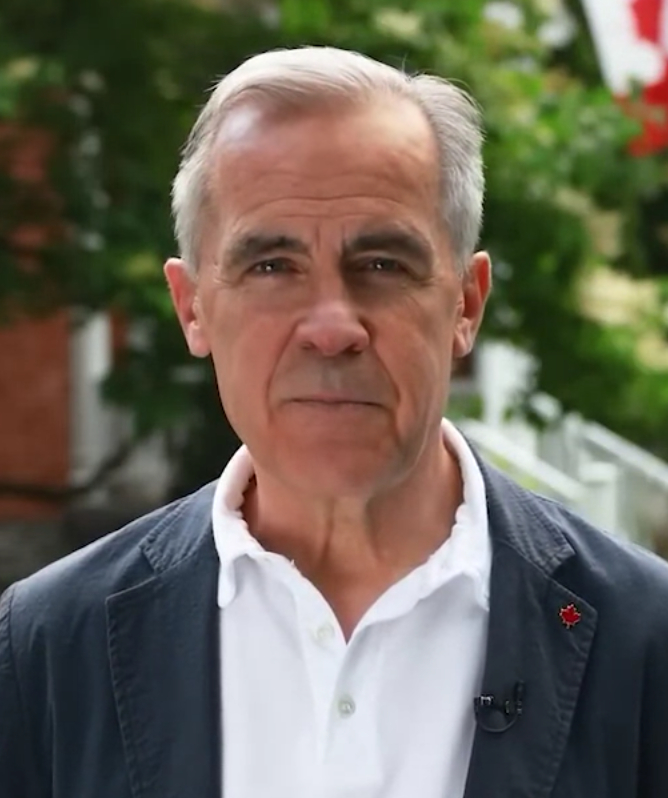
Officials were careful to describe this as a model, a theoretical framework, not an operational plan. The logic is that of a porcupine defense — make occupation unbearable — the same doctrine that small states from Taiwan to the Baltic republics have studied. The irony that Canadian planners reached for the Afghan playbook against their American ally is the kind of detail that will echo for years.
Who wins, who loses, and what the critics say
Winners: First, Carney himself, domestically. Nothing unifies a fractious electorate like an external threat, and the prime minister's careful, central-banker cadence makes the admission sound like duty rather than panic. Second, the diversification lobby: every procurement officer in Ottawa now has political cover to shop for alternatives to American weapons and networks. Third, Beijing: Carney explicitly said Canada wants to deepen economic ties with other countries including China, while ruling out closer defense ties, and nothing advertises American unreliability to the Global South quite like Washington's closest neighbor hedging against it.
Losers: First, the integrated North American defense establishment. NORAD, the world's oldest joint air-defense command, rests on trust; contingency planning against your command partner corrodes that trust whether or not it is ever needed. Second, Canadian business, which depends on American supply chains that tariffs are already strangling. Third, the idea of the alliance itself: every allied capital reading this will quietly ask what its own tail-risk file should contain.
Critics say speaking publicly about invasion planning is reckless and self-fulfilling — it alarms the public, angers Washington, and risks turning a tail risk into a crisis. The counter, which Carney offered himself, is that a government that does not plan for the catastrophic because it is impolite is not being prudent; it is being negligent. The balanced truth is that both things are real: the admission is defensible as risk management and damaging as diplomacy, and Carney appears to have decided the former outweighs the latter.
What the numbers actually imply
Put the figures in context. The $28 billion in goods hit by 50 percent duties represents only a fraction of the roughly $900 billion-plus in annual two-way trade — but tariffs of this scale function less as revenue instruments and more as coercion tools, designed to concentrate pain in politically sensitive export sectors. Canada's retaliatory tariffs in early September show Ottawa has chosen escalation over appeasement, a strategy that raises the stakes of every future negotiation.
On potash, Canada accounts for most U.S. imports of the key fertilizer ingredient, which is why Trump this week floated a potash deal with Belarus — a sanctioned pariah state — rather than reconcile with the ally that already supplies it. That single anecdote is the trade war in miniature: leverage pursued even at the cost of absurdity. On defense, 88 F-35s is one of the largest fighter procurements in Canadian history, and putting it under political review signals that Ottawa now treats military procurement as sovereignty policy, not just capability policy.
No other NATO government has publicly acknowledged modeling a U.S. attack; the closest parallel is Greenland and Denmark's quiet contingency discussions earlier in Trump's second term. But Ottawa said it on the record, in the New York Times, in UNGA week — as Trump's UNGA-week bilateral meetings showed how personal diplomacy now drives American foreign policy.
What happens next — three scenarios
Scenario one, the base case: managed deterioration. Carney and Trump keep talking, a limited deal on potash or autos is struck, and the tail-risk file stays in a drawer. This is what “frequent” phone calls are for.
Scenario two, accelerated decoupling. The F-35 review ends with a split buy or a European alternative, Starlink contracts are wound down, Canada deepens economic ties with China and Europe, and North American integration — built over eighty years — is steadily unwound by political choice rather than crisis.
Scenario three, the tail itself. A miscalculation, a sanctions spiral, or a domestic crisis in Washington turns the modeled scenario into something real. It remains, as Carney insists, unlikely — but the difference between September 23 and September 24, 2026 is that the prime minister of Canada has now said on the record that his government has thought it through.
Watch for the outcome of the F-35 review, the Starlink decision, whether the two leaders meet at the next G7 or G20, and whether Washington responds to the interview with retaliation or restraint. The last matters most: allies are watching to see what it costs to tell the truth about risk.
Mark Carney approached the interview the way he approached everything at the Bank of England and the Bank of Canada — as an exercise in naming the worst case so that policy can survive it. The tragedy embedded in the admission is that the worst case is no longer a recession or a bank run, but the American alliance itself. Canada is not preparing for war with the United States. It is preparing, quietly and now publicly, for a world in which it must be able to imagine one — and that imagination is the news.