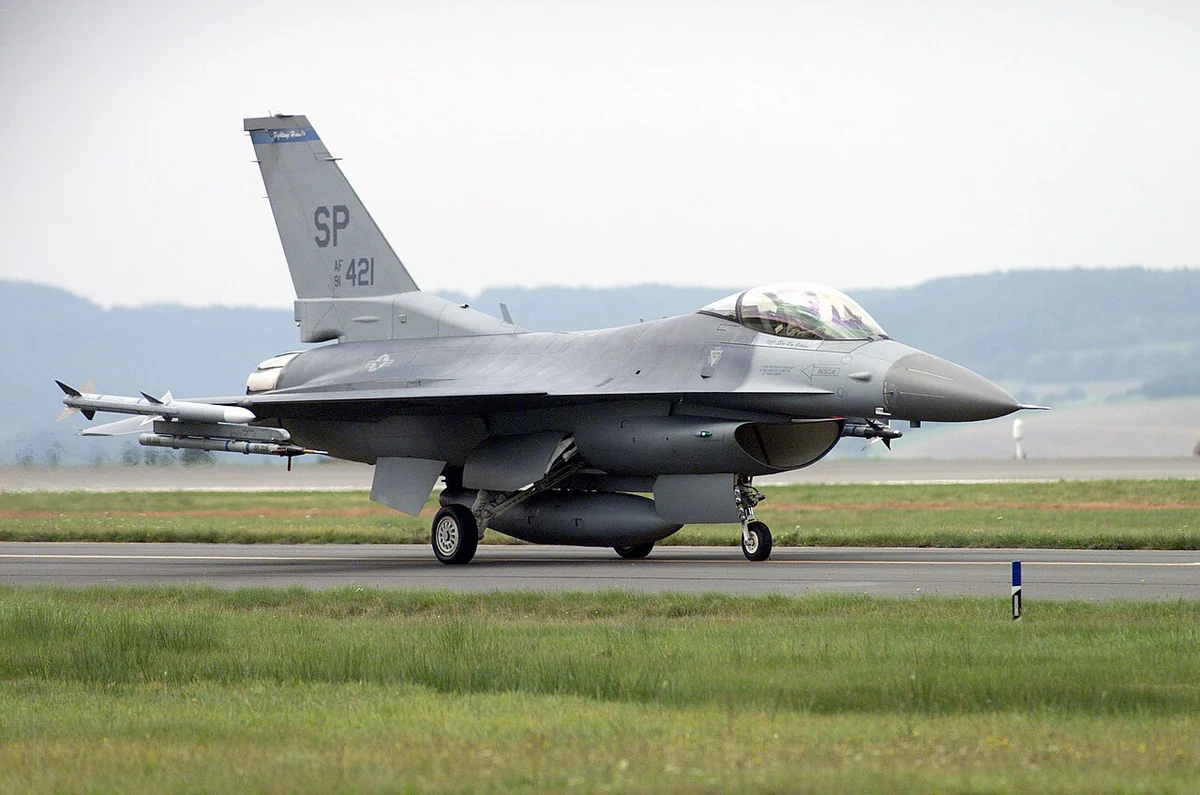
SPANGDAHLEM, Germany — A U.S. Air Force F-16 Fighting Falcon assigned to the 52nd Fighter Wing crashed at Spangdahlem Air Base in western Germany at approximately 2:30 p.m. local time on Tuesday, September 22, the wing said. The pilot ejected, survived and received medical care. Emergency responders went to the scene, and the base said the cause remains under investigation.
The F-16 crash at Spangdahlem Air Base occurred as two aircraft were returning from a four-jet training exercise, according to German air traffic control. Two F-16s were still in the training area while two approached the base; one of the returning jets crashed, and the other three aircraft diverted to Ramstein Air Base and landed safely. A base spokesperson told reporters the crash occurred during the approach phase.
Those are the central verified facts. Officials have not released the aircraft’s tail number, maintenance status, the pilot’s diagnosis, the precise point of impact, weather data, an account of the cockpit emergency or any preliminary cause. There is no verified evidence of drones, an external threat or hostile action. Until investigators publish evidence, treating the accident as sabotage or linking it to a wider security event would be unsupported.
What officials know, what they have withheld, and what witnesses saw
The 52nd Fighter Wing’s statement establishes the aircraft type and assignment, the approximate time, the successful ejection, medical care, emergency response and an active investigation. German air traffic control supplied the four-aircraft training sequence and the diversion to Ramstein. Reporting by Reuters, the Associated Press, Washington Examiner and Military Times carries those accounts.
Eyewitness reports add atmosphere, not a technical explanation. People near the base described thick black smoke. Speicher Mayor Birthe Thomsen said she saw a jet rapidly losing altitude and called emergency services. Those observations may help investigators establish direction, timing and the visible sequence, but they cannot identify whether the initiating problem involved propulsion, flight controls, another aircraft system, maintenance, weather or pilot actions.
The distinction matters because an approach accident compresses time and altitude. Investigators will seek flight-data and maintenance records, radio traffic, radar tracks, weather observations and physical evidence from the wreckage. They will also interview the pilot and ground personnel. The normal inquiry examines aircraft systems, maintenance history, pilot actions and environmental conditions together; mentioning those categories describes the process, not a theory of cause.
Why Spangdahlem is a NATO air-power linchpin
Spangdahlem sits in Rhineland-Palatinate’s Eifel region and has hosted the U.S. Air Force since the mid-1950s. The base supports American and NATO missions across Europe and beyond. Its location links a permanently established fighter presence with the alliance’s dense network of airfields, training areas, logistics routes and command relationships.
That makes the base more than a parking place for jets. A fighter wing’s value comes from the full system around the aircraft: pilots, maintainers, weapons and fuel specialists, airfield crews, emergency services, communications and allied access. When European security demands quick reinforcement or distributed operations, a mature base can generate sorties, receive diverted aircraft and connect U.S. forces to NATO partners without constructing that network from scratch.
Spangdahlem is reported to host approximately 20 F-16s and roughly 5,000 military and civilian employees, with family members adding to the wider community. The aircraft count is operationally significant but not limitless. Losing one jet does not disable the wing; it does reduce a finite inventory, creates investigative and recovery work, and can slow training while commanders assess whether the event is isolated.
The Ramstein diversion illustrates the resilience built into the alliance’s basing system. Three aircraft could land at another major U.S. installation rather than continue toward a disrupted runway environment. Redundancy is a strength. It is also a reminder that readiness depends on multiple bases, air traffic authorities and host communities functioning as one network.
The operational-tempo and aging-airframe questions
The F-16 entered U.S. service in 1978. Successive blocks have received new avionics, weapons, structural work and safety improvements, but many Europe-based aircraft are decades old. Age by itself does not make an aircraft unsafe, and it is not evidence that age caused this crash. Military fleets are designed around inspections, component life limits, maintenance schedules and upgrades precisely because calendar age and flight hours accumulate.
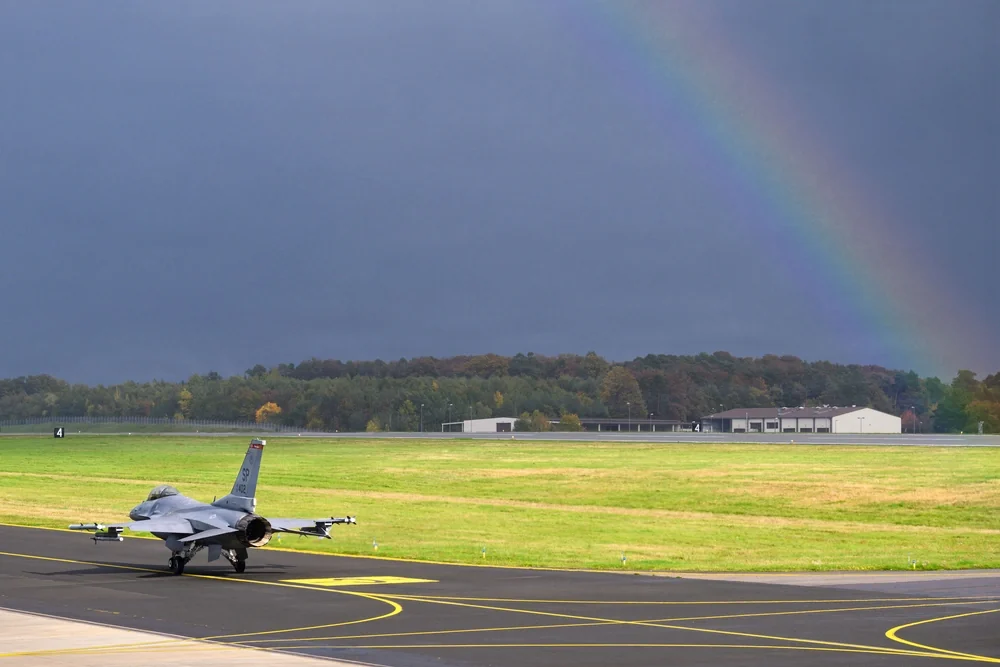
Operational tempo changes the maintenance burden. Training sorties consume airframe life, engine cycles and technician time even when every flight is routine. Spangdahlem’s October 2025 surge, which concentrated as many as 50 sorties in a day, showed how the wing practices generating aircraft quickly. Surge exercises can improve readiness and expose weak processes, but they also depend on disciplined inspection and recovery afterward. The relevant question for investigators is not whether the base flies often; it is whether this aircraft’s records, parts and procedures met standards for the mission it flew.
If early evidence points to a component, procedure or maintenance practice shared across aircraft, commanders could order focused inspections across the wing or the wider fleet. If the evidence appears unique to this jet, a narrower response is more likely. Fleet-wide inspection is therefore a possible risk-control measure, not a conclusion that a fleet-wide defect exists.
The timing sharpens attention because the Germany accident was the second U.S. F-16 crash in under a week. The earlier aircraft went down south of Traverse City, Michigan. That pilot also ejected and was hospitalized in stable condition, while a hazardous spill prompted a one-mile evacuation around the rural crash site. Two accidents close together warrant comparison, but proximity in time does not prove a common cause. Investigators would need evidence tying aircraft configuration, components, maintenance or flight circumstances together.
The ACES II ejection seat did its most important job
The pilot’s survival directs attention to the F-16’s ACES II ejection system and the maintenance teams responsible for it. An ejection is violent and can cause injury, but it is a last-resort survival system built to move the pilot clear of an aircraft when controlled landing is no longer possible. The successful escape does not reveal why the jet crashed; it does show that one of the aircraft’s final safety layers functioned.
Spangdahlem had highlighted that maintenance work in August 2026, publishing material on 52nd Maintenance Squadron aircrew-egress technicians. Such teams inspect the seat, canopy and associated explosive and survival components on fixed schedules. Their work is largely invisible until an emergency turns maintenance precision into the difference between a fatal crash and a surviving pilot.
That outcome should not be used to minimize the event. A pilot required medical care, an aircraft was lost, emergency crews entered a potentially hazardous site and nearby residents experienced the smoke and uncertainty of a military crash. Ejection-seat performance is one part of the investigation and recovery, not the whole story.
The German community carries the consequences as well as the benefits
Spangdahlem is embedded in the Eifel rather than isolated from it. The base supports thousands of jobs and spending, and generations of American families have lived alongside German towns. It also brings aircraft noise, military traffic, environmental concerns and the low-frequency but high-consequence risk of an accident. A crash makes that bargain immediate.
For nearby residents, the first priorities are practical: whether anyone on the ground was hurt, whether roads or land remain restricted, what fuel or other hazardous material must be contained, and when investigators will release enough information to explain the risk. The Michigan evacuation shows why crash-site hazards cannot be treated as only an aviation matter, although no equivalent one-mile evacuation has been verified at Spangdahlem.
Base politics in Germany often turn on two truths at once. Spangdahlem contributes to NATO deterrence and the regional economy; its operations also impose costs on host communities that do not control U.S. flight schedules or maintenance decisions. Transparent communication, environmental testing where needed and a clear account of the investigation are therefore part of alliance credibility. Trust is built not only through strategic arguments but through how officials handle a damaged field, a smoke plume and residents’ questions.
What the second crash in under a week does—and does not—mean
The two accidents create a legitimate fleet-readiness question because the same aircraft type was involved and both pilots ejected. They do not establish a trend by themselves. A meaningful comparison requires aircraft block and age, unit, mission profile, phase of flight, maintenance history, weather and any common component evidence. Those details have not been released for a common-cause assessment.
The scrutiny will nevertheless be higher. Commanders must protect pilots while preserving training needed for deterrence. A broad stand-down can rapidly reduce risk and allow record checks, but it also interrupts currency and readiness. A targeted inspection can be less disruptive, but only if investigators are confident about what to inspect. The tradeoff is between acting quickly with incomplete information and waiting long enough to act precisely.
That balance appears across modern defense systems. Signal Post News has separately examined how an intelligence error nearly drove a dangerous U.S.–China naval encounter, how RAF tanker support extends allied air operations, and how new drone speeds strain air-defense decision time. The systems differ, but the institutional problem is similar: readiness depends on technology, trained people and procedures that catch failures before a compressed decision becomes irreversible.
What happens next
- Crash-site recovery and evidence preservation. Investigators will secure wreckage, document the impact area and collect records, radar data and communications. Environmental authorities may assess fuel or other hazardous materials.
- A preliminary safety judgment. The wing could continue normal flying, impose local restrictions, pause selected F-16 operations or order targeted inspections. A temporary stand-down is possible, but none should be assumed until announced.
- Comparison with the Michigan accident. Safety officials will determine whether the two crashes share any relevant aircraft, component or procedural factors. If not, their closeness in time may remain coincidence rather than a fleet-wide signal.
- Procedure or maintenance changes. Findings could lead to revised approach procedures, training, maintenance checks or part inspections. The response should follow evidence rather than public pressure for a single dramatic action.
- Release of preliminary findings. The first official update may establish a sequence without assigning final cause. A complete accident investigation can take longer because technical, operational and human evidence must be reconciled.
The immediate story is a successful ejection from a failed flight: one pilot survived, emergency crews responded and three companion aircraft reached Ramstein. The larger story is the obligation to learn without guessing. Spangdahlem’s role in NATO makes continued readiness important; its location in a living German community makes transparency equally important. The strongest response will preserve both—by grounding conclusions in evidence, correcting any common risk found across the F-16 fleet and explaining the results to the people who fly from, work at and live around the base.
Sources and reporting notes
- 52nd Fighter Wing: official crash statement, pilot ejection, medical care and investigation
- Reuters: crash confirmation and official response
- Associated Press: Spangdahlem context and community response
- Washington Examiner: approach phase, four-aircraft exercise, Ramstein diversion and Michigan comparison
- Military Times: training formation and diversion details
- 52nd Fighter Wing: August 2026 ACES II egress-maintenance feature
- DVIDS: October 2025 Spangdahlem surge-operations photograph and caption
- National Archives / DPLA record: 2002 Spangdahlem F-16 file photograph by Staff Sgt. Timothy Cook
Reporting cutoff: September 23, 2026 at 2:00 p.m. Pacific time. Official information establishes the crash, successful ejection, medical care, emergency response and active investigation. The pilot’s detailed condition, aircraft identity and cause were not released. Eyewitness observations are attributed and do not establish a cause. Analysis of NATO readiness, fleet inspections and possible next steps is Signal Post News synthesis.