In the spring of 2026, while the United States was fighting a war with Iran, an intelligence report flashed through the U.S. military with the kind of claim that can move aircraft, ships and armed people: a Chinese cargo vessel in the Middle East was carrying components of a nuclear weapons program.
The report was wrong. According to four sources cited in a CNN exclusive published September 18, a special operations command analyst had used a chatbot to examine intelligence connected to the ship’s manifest. The system combined open-source information with secret signals intelligence and produced a false conclusion. The analyst then used artificial intelligence again to package that conclusion into the familiar format of an official intelligence report.
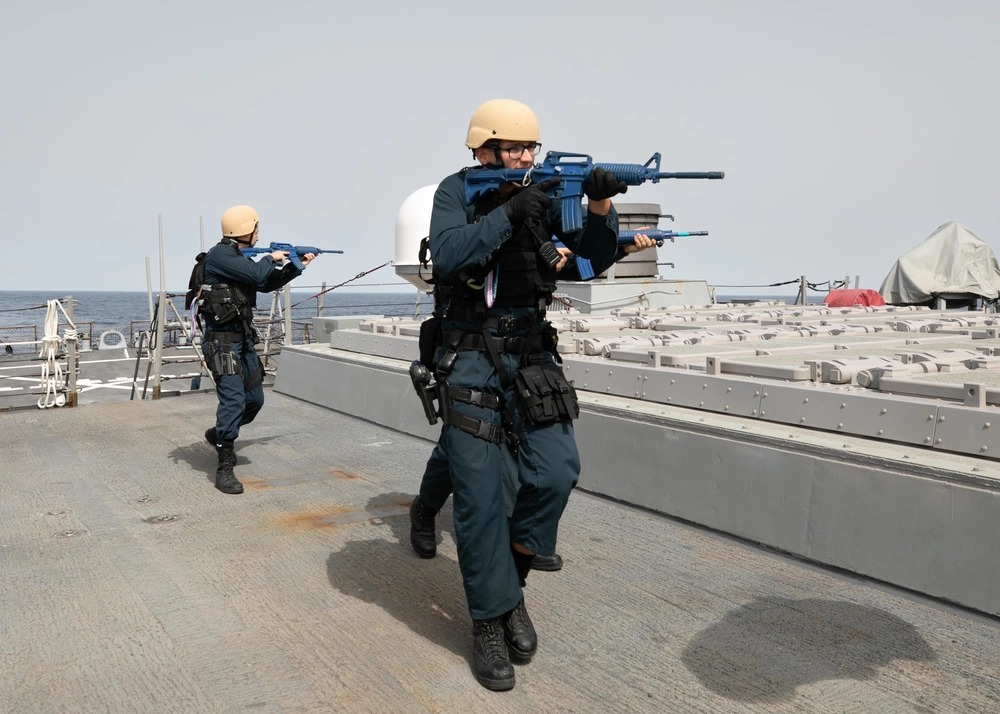
What happened next is the point. The U.S. military began planning to intercept the ship. Armed personnel prepared to board it, according to two of CNN’s sources, and military aircraft were already in the air, according to two people familiar with the incident. Officials caught the error only shortly before the operation. CNN said it could not determine what cargo the chatbot had misidentified, and the Pentagon and U.S. Special Operations Command Pacific did not respond to its requests for comment.
No weapon was fired and no boarding took place. But the near miss exposed a more immediate danger than the distant prospect of autonomous machines going rogue: people can treat a machine-generated answer as intelligence, wrap it in an authoritative format, pass it through a fast-moving command system and bring states to the edge of armed conflict before anyone checks whether the original claim is true.
What the reporting says happened
The chain began with intelligence reporting about a Chinese ship’s manifest that originated with U.S. Special Operations Command Pacific in Hawaii, CNN reported. An analyst queried a chatbot about the material. It remains unclear whether the model was a commercial service or a government system, which matters because the available data, security controls, audit logs and reliability testing may differ sharply between tools.
The chatbot fused open-source intelligence with classified signals intelligence and declared that the cargo included components for a nuclear weapons program. A source described the resulting report to CNN as “entirely false.” Another said it “almost started a war.” Those descriptions come from unnamed sources familiar with the episode; the Defense Department has not publicly released the report, the prompt, the model output, the vessel’s identity or a formal after-action review.
The analyst’s second use of AI may have made the error more dangerous. Instead of remaining an exploratory answer inside a chat window, the claim was packaged into a standardized intelligence product and disseminated. Familiar formatting can act as a credibility amplifier: recipients may see the institutional form before they see the uncertain provenance. In a wartime operating environment, speed and the fear of missing a fleeting threat can compress the time available for challenge.
The episode was not a story about a chatbot independently ordering a military operation. Humans requested the analysis, accepted the output, converted it into a report and began making operational preparations. Humans also stopped the sequence by digging deeper. That distinction does not reduce the seriousness of the failure. It locates responsibility where oversight can act: tool selection, analyst training, source validation, report labeling, supervisory review and rules governing how AI-assisted judgments enter targeting or interdiction workflows.
Three senators are done waiting
On September 19, Sens. Mark Warner of Virginia, Jack Reed of Rhode Island and Chris Coons of Delaware called for an immediate inspector-general investigation. Warner is vice chair of the Senate Intelligence Committee, Reed is the ranking Democrat on the Senate Armed Services Committee and Coons serves on the Senate Judiciary Committee.
In a letter to Defense Secretary Pete Hegseth and Director of National Intelligence Jay Clayton, the senators said recent events had created “growing concern” that agencies were prioritizing accelerated AI adoption and experimentation over effective governance. They asked the relevant inspectors general for unrestricted access to the Chinese-ship incident, another reported failure involving AI-enabled targeting and any similar episodes not yet public.
The CNN report on the senators’ letter linked the demand to a February U.S. strike on a school in Minab, Iran, that killed nearly 200 children and adults. CNN reported, citing three sources, that commanders bypassed warnings in critical databases — including one powered by AI — that target intelligence was severely outdated. The senators’ concern is therefore broader than one hallucinated cargo manifest: it is whether AI-enabled systems have repeatedly introduced or failed to stop spurious information in workflows that can end in lethal force.
Military.com reported that the lawmakers want greater public transparency in the inspectors general’s ultimate findings because these failures affect confidence in U.S. intelligence and warfighting missions. The Pentagon had not publicly answered the central factual questions by publication: which model was used, what safeguards failed, who approved dissemination, how close the operation came to execution and whether similar incidents have been identified.

Why this matters
An attempted interdiction of a Chinese vessel during a U.S. war with Iran would not have been a routine law-enforcement stop. Boarding a foreign commercial ship with armed personnel could have been interpreted in Beijing as an attack, especially if the vessel resisted, escorts appeared or communications failed. The episode combined three escalation accelerants: an extraordinary allegation involving nuclear weapons, a compressed wartime decision cycle and a target connected to another major power.
The danger did not depend on an AI system having authority to fire. It depended on the system’s output acquiring authority through human institutions. Intelligence work often involves fragments, ambiguity and probabilistic judgment. Large language models are designed to produce fluent answers, not to preserve a perfect boundary between established evidence, inference and invention. A confident sentence can therefore look more settled than the evidence behind it.
That is especially hazardous when a report crosses organizational boundaries. The analyst may know that a chatbot helped generate the assessment; the commander receiving a formatted product may not. If uncertainty, provenance and machine involvement are not visible at every stage, each handoff can strip away caution while preserving the conclusion.
The near miss also lands inside the strategic competition driving the Pentagon’s acceleration. U.S. officials argue that artificial intelligence can help process enormous intelligence streams and support faster decisions, and that falling behind China would carry its own military risk. The incident shows the false choice in that debate. The question is not speed or safety. A system that accelerates falsehood into an operation is not operationally superior.
The governance gap at the center of the storm
In January, Hegseth announced an Artificial Intelligence Acceleration Strategy intended to remove bureaucratic barriers, expand experimentation and put leading models in the hands of the department’s roughly three million military and civilian personnel across classification levels. Military.com reported that GenAI.mil, the Pentagon’s internal platform launched in December 2025, had more than 1.2 million unique users by April 2026.
Scale arrived before a single verification standard. Multiple officials told CNN that different parts of the military and intelligence community were using different tools under different instructions and safety rules. Reliability varied. There was no uniform requirement for verifying model-generated information before it entered an intelligence product.
The phrase “human in the loop” is not a control by itself. A human can be rushed, poorly trained, overconfident in the tool or unaware that an upstream product contains generated material. Effective oversight requires defined duties: who must verify every underlying source, who must challenge a novel claim, what confidence level is required, how AI use is labeled, what audit trail is preserved and which decisions cannot proceed without independent corroboration.
The Pentagon has adopted Responsible Artificial Intelligence principles, but principles must become enforceable operating procedures. High-consequence workflows need model and version records, retained prompts and outputs, source-level citations, red-team testing, uncertainty displays and a mandatory second review outside the originating chain. A system should not be allowed to transform a speculative answer into a standard intelligence report without making its machine contribution impossible to miss.
Who wins, who loses
The immediate winners are inspectors general, oversight committees and cautious analysts if the incident produces a public accounting and binding rules. The fact that one person checked again before the operation shows that skepticism works. Formalizing that skepticism protects analysts who slow a process down for good reason rather than rewarding only speed.
Military AI vendors could gain or lose depending on transparency. Companies able to show rigorous provenance, access controls, evaluation results and incident reporting may benefit from stricter standards. Vendors whose products cannot distinguish source material from generated synthesis, or cannot support meaningful audits, would face justified limits in high-consequence environments.
Commanders and service members lose when information quality is hidden. They carry the legal and physical consequences of acting on a false report. So do civilian mariners who may have no idea that a machine error has placed them inside a military threat picture.
U.S. credibility also loses. Allies share intelligence and depend on American assessments; adversaries watch for evidence that U.S. decision systems are unreliable. A false report that nearly triggered an operation gives Beijing a factual basis to question American safeguards and a propaganda opportunity to portray U.S. military AI as reckless. Public disclosure is uncomfortable, but secrecy after exposure would deepen the trust problem.
What the numbers actually say
One ship, one false report and one aborted operation are the publicly reported core of this episode. There is no disclosed count of how many personnel, aircraft or vessels were committed, how many minutes remained before boarding or how many similar cases have occurred. Those missing numbers are not a reason to minimize the incident; they are a reason the requested investigation needs access to operational records.
Four sources described the episode to CNN. Two said armed military personnel were preparing to board the vessel. Two sources, with some overlap in the reporting, said aircraft were in the air. Anonymous sourcing limits what the public can independently verify, but the detail and the senators’ formal response make the allegations specific enough to demand an official answer.
Three senators signed the letter. That is not a bipartisan congressional finding, and it does not prove the underlying account. It is significant because the signers sit on committees responsible for intelligence, armed services and law, and because they asked inspectors general for unrestricted access rather than simply accepting press reports as conclusive.
More than 1.2 million users were reported on GenAI.mil by April, four months after launch. That number measures adoption, not operational quality. It does, however, define the scale of the governance problem: even a rare failure rate can create many opportunities for error when a tool reaches a seven-figure user base.
Nearly 200 people were reported killed in the February Minab school strike cited by the senators. The letter does not establish that AI caused those deaths; CNN reported that warnings in databases, including an AI-powered one, were bypassed. The distinction matters. The oversight question is whether the workflow surfaced risk clearly, whether humans ignored it and whether the system design made that easier.
What happens next
The first question is whether the Defense Department and intelligence community inspectors general open the investigation the senators requested. A credible review would need the original manifest reporting, the chatbot prompt and output, the model identity and version, the generated intelligence report, dissemination records, command communications and the timeline that led aircraft and boarding personnel toward action.
The second is whether Congress receives answers that can be made public without exposing sources or methods. The vessel’s identity and classified signals intelligence may remain protected. But the public can still be told what category of system failed, what checks were missing, how the error was detected, how close the operation came to execution and what rules changed afterward.
The third is whether the Pentagon pauses particular uses while it investigates. A department-wide halt to artificial intelligence is neither likely nor necessary. A targeted restriction on using unverified generative output for targeting, interdiction or finished intelligence would be proportionate while safeguards are tested. The most important rule is simple: no consequential claim should become operational merely because a model says it confidently or presents it cleanly.
Finally, officials will have to decide whether speed remains the dominant performance measure. Hegseth’s acceleration strategy assumes that faster adoption strengthens the force. The Chinese-ship episode suggests a different measure: how often a system helps people reach a correct, auditable and reversible decision before force is committed.
The machine did not fire a weapon. It did not have to. It moved the people who do — and the distance between a chatbot's confident sentence and armed men preparing to board a foreign ship was, this time, a single human being who asked one more question before it was too late.
Sources
- CNN exclusive, September 18, 2026: U.S. military AI false-intelligence report and Chinese ship near miss
- CNN, September 19, 2026: Warner, Reed and Coons demand an investigation
- Military.com: lawmakers demand a Defense Department investigation