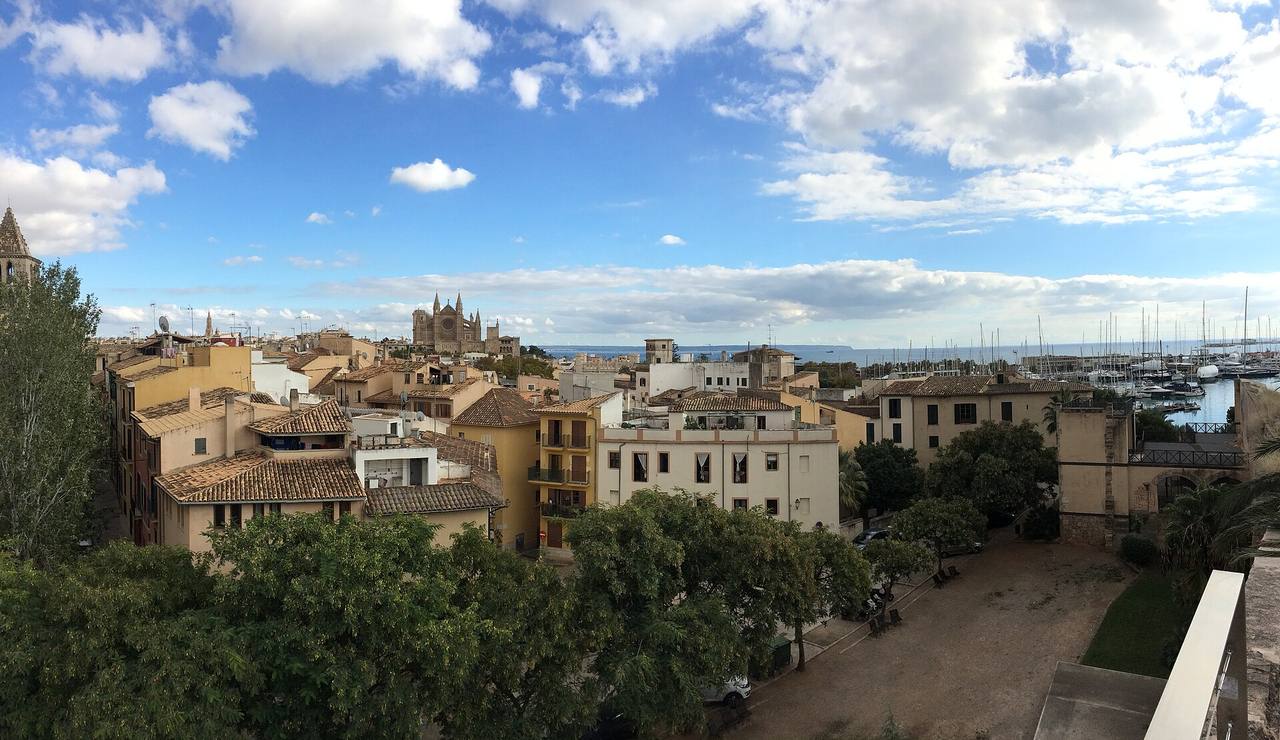
Europe marine heatwave record 2026 — the numbers are now in, and they describe a summer the continent's seas have never seen before. European waters notched their hottest summer months since satellite sensors began providing reliable data in 1982, according to a Reuters analysis of sea-surface temperatures published Saturday. Taken together, European seas averaged 21.6°C (70.9°F) between June and August, the highest in 45 years of available data. Records fell from the English Channel to the Mediterranean Sea, and scientists say the transformation of marine ecosystems now underway is carrying catastrophic consequences for some of the fisheries — and the coastal communities — that have depended on these waters for generations.
The headline figure conceals the violence of the detail. An offshore buoy near Mallorca recorded 33.02°C (91.44°F) on August 5, the highest temperature ever registered in the Spanish port authority's buoy network. In the Bay of Biscay, traditionally cool Atlantic waters averaged 21.4°C across the summer — more than 2.4°C above the 1991–2020 norm — with readings from the U.S. National Oceanic and Atmospheric Administration peaking on August 13 at 23.2°C, the highest of the satellite era. Scientists define a marine heatwave as five or more days of water temperatures well above an area's historic norm; in the 1980s, the Bay of Biscay averaged a handful of such days per year. By the end of August this year, it had logged 186 — more than three out of every four days. "What is surprising is the speed at which this occurs," Jean-Pierre Gattuso, senior research scientist at France's National Centre for Scientific Research, told Reuters. "Records are broken almost every day in many places."
Mediterranean sea temperature record 2026: a summer of broken buoys
The Mediterranean has been the epicenter of the anomaly. Almost all buoys in the Levante-Balear basin set local temperature records during the summer, Spain's state port authority Puertos del Estado reported earlier in September: coastal buoys off Tarragona and Barcelona registered 30.7°C and 30.5°C respectively on August 9, and record temperatures were also registered at several Bay of Biscay buoys, including 28.4°C near the northern town of Pasaia on June 23. Copernicus Marine Service data visualized in mid-August showed sea-surface temperature anomalies of around +6°C in the western Mediterranean, concentrated in the Gulf of Lion off southern France, with anomalies above +5°C extending into the Atlantic off the Iberian Peninsula.
Put that in the context of the land. Spain also experienced extreme heat on land this year, recording 61 days under heatwave conditions across the mainland and Balearic Islands in 2026 — the highest number on record and well above the previous peak of 41 days in 2022, according to the weather service AEMET. The extraordinary heat, as Reuters put it, didn't stop at the shoreline. Scientists have said that human-caused climate change was the main driver of the recent record-breaking sea temperatures around Europe, warning of severe consequences for marine ecosystems and coastal communities. The world's oceans absorb the majority of the excess heat trapped by greenhouse-gas emissions, and retain it longer than the land or the atmosphere — which is why a summer that scorched the land has now been written, even more durably, into the sea.
Bay of Biscay marine heatwave days: 186 and counting
Few areas strayed further from the norm than the Bay of Biscay, the great Atlantic bight stretching from Cape Ortegal in Galicia to the Pointe de Penmarch in southern Brittany. Its traditionally cool waters were immortalized in Ernest Hemingway's 1926 novel "The Sun Also Rises," whose protagonist recovers on the northern beaches of San Sebastián. A century later, the cool is gone. "Now if you want to swim in cold water, you have to go to the westernmost portion of Galicia," in the far northwestern corner of Spain, said Jose Manuel Rico Ordas, a professor of marine ecology at the University of Oviedo in the northern Asturias region. Galicia benefits from strong winds that push warm surface water away from the coast during the summer months, allowing cold, deep-sea water to take its place in a process known as upwelling — and even that refuge is narrowing.
The Bay of Biscay numbers deserve a second look because they show how a statistical record becomes a lived transformation. One hundred eighty-six marine heatwave days by the end of August means that for most of the summer, the bay's waters sat among the top 10% of values recorded over the 30-year 1991–2020 baseline. The 1980s baseline for the same bay was a handful of such days per year. In four decades, the exceptional has become the routine — the sea running a fever not for a week, but for a season. And a sea that stays feverish for an entire season, as Copernicus-linked researchers have noted, is no longer an anomaly. It is the new shape of the European summer.
Kelp forests disappearing from Spain's coast: 95 percent gone
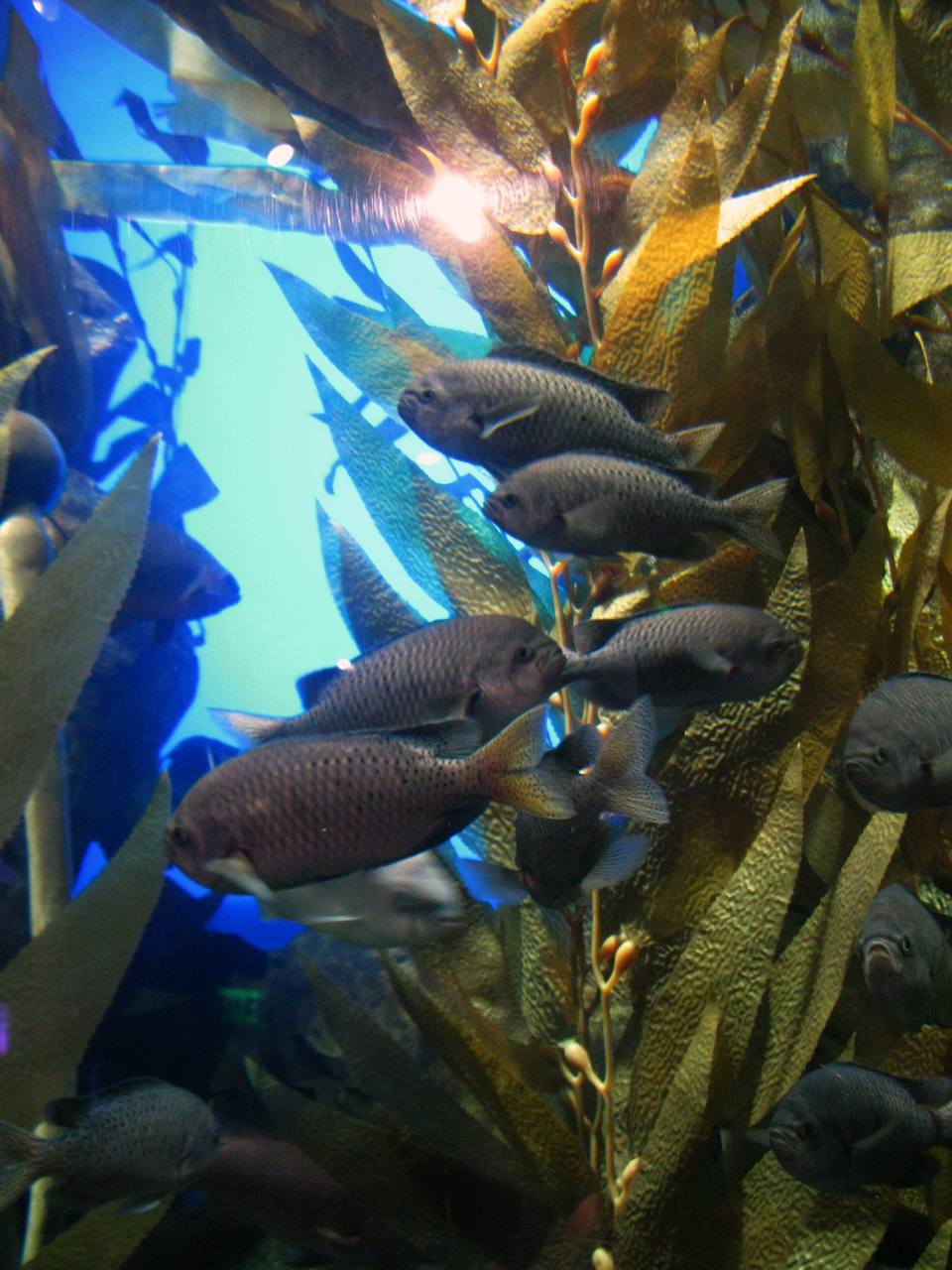
The Bay of Biscay's cool waters once gave life to extensive kelp forests — underwater forests that provide vital food, shelter, and nurseries for dozens of species sustaining the region's small-scale fisheries. Rico Ordas has been spending summers on the bay since he was a child and now studies its transformation, and his estimate is stark: roughly 95% of the large, brown seaweed stands have disappeared, based on sampling along the rugged Asturias coast since 2010. He attributes the decline primarily to climate change. Kelp needs cold water — typically below 20°C (68°F) — to survive, and temperatures that were once exceptionally rare in the bay have become the norm. "Now, it's the opposite," he told Reuters.
The warming is not the only pressure. Fish overgrazing — in particular by dreamfish, which thrive in warmer temperatures — has added to the kelp's decline. The compounding matters: heat weakens the forest, warm-water grazers finish it, and the species that depended on the forest have nowhere to go. "We are finding no more lobster, no more crayfish, no more sea urchins and many other species that are associated with the good status of kelp forests," Rico Ordas said. The kelp forest is what ecologists call a foundation species' habitat — remove it and the architecture of the local food web collapses with it.
The response, tellingly, is coming from the people with the most to lose. Concerned fishermen have been teaming up with scientists and environmental activists to try to restore kelp forests by planting seedlings grown in laboratories. Manuel Angel Reiriz Gonzalez, president of a local fishermen's guild in Galicia, recently ferried members of one such project in a boat he uses for sport fishing charters out of the port of Ribeira. The group brought a box full of small stones seeded with kelp, which they tossed into the choppy waters. Climate change threatens a way of life that has sustained Gonzalez's community for generations, he said — his family has been diving for sea urchins and harvesting clams for more than a century. But now, recurring heatwaves are hurting shellfish stocks, and the area has seen an influx of Portuguese man o' war and trigger fish from warmer climes to the south, species that prey on local fish and crustaceans. "We had some very bad years for clam production, but we worked on seeding them, and the species gradually adapted," Gonzalez said. He hopes the seabed restoration efforts can do the same for kelp forests. The disappearance of kelp could lead to the decline of sea urchins and other species fishermen depend on, he said: "At that point, as a fishing guild, we would cease to exist."
The Mediterranean's thousand invaders and the jellyfish shutdown
The Biscay story is the Atlantic version of a continent-wide reshuffling. In the Mediterranean, new and invasive species from the Red Sea and beyond are entering through the Suez Canal, displacing native populations, reshaping food chains, and threatening fisheries, researchers say. In all, there are more than 1,000 non-indigenous species in the Mediterranean, according to a recent report by the Cyprus Academy of Sciences, Letters and Arts, based on surveys by scientists in 11 countries. Species that sustained coastal communities in Spain and southern England for generations are disappearing, as unfamiliar arrivals surge into newly hospitable waters.
The economic footprint of the heat extends beyond fishing boats. In August, a massive swarm of jellyfish shut down reactors at France's Gravelines nuclear power plant when they clogged its cooling system — for the second time in as many years. The plant in northern France is cooled from a canal connected to the North Sea. It is a small parable of the summer: the same warming that rearranges ecosystems also gums up the industrial infrastructure built for a cooler century. Power plants, desalination intakes, and coastal tourism — the Mediterranean's great economic engine — all assumed a sea that behaved the way it did in the 20th century. That assumption is now a liability.
Octopus boom in Devon fisheries: the 'octopus apocalypse'
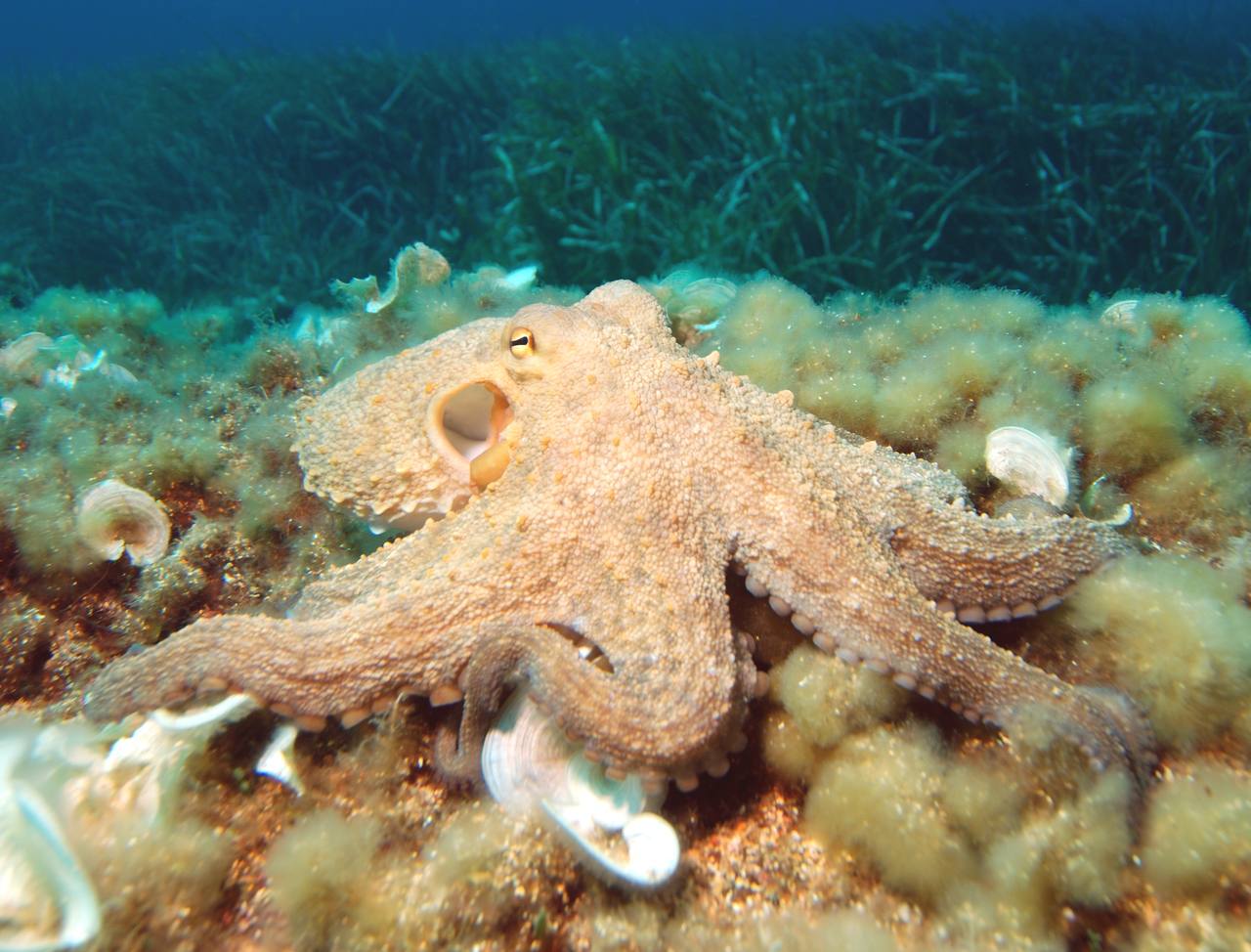
Nowhere is the reshuffling more vivid — or more economically double-edged — than on the south coast of England. Fishermen there are reporting a surge in landings of common octopus: around 2,600 metric tons were caught last year and upwards of 3,000 tons so far this year, according to figures compiled by the UK Marine Management Organisation. Before 2025, annual landings were less than 30 tons. That is a hundredfold explosion, and it has a clear mechanism. Octopus larvae are carried into British waters on currents from breeding grounds near the Channel Islands, Brittany, and places further south, said Bryce Stewart, senior research fellow at the Plymouth-based Marine Biological Association. Previously, many didn't survive the frigid temperatures. But since 2022, the English Channel has been under heatwave conditions for around six months out of the year on average, logging more than 900 days in all, the Reuters analysis found. "Now they're actually breeding in UK water quite prolifically," Stewart said.
For Ian Perkes, owner of the eponymous fish merchants in the south Devon seaside town of Brixham, the octopus bloom has proved a boon. There is a ready market in southern Europe for the once-rare species and no fishing quotas, he said. "There was one week where we had 200,000 kilos" — 200 tons. But not everyone profits from the shellfish-loving octopuses, which feed on local lobsters, brown crabs, and scallops. For members of the South Devon and Channel Shellfishermen's cooperative, 2026 has been an "octopus apocalypse," according to its executive officer, Beshlie Pool. One recent fishing trip yielded a single crab all day, she said. The Marine Biological Association estimates the octopus bloom could account for about £10 million ($13.25 million) in lost shellfish catches against about £12 million in octopus landings between January and September 2025. But the benefits are not evenly distributed: some shellfishermen have switched to catching octopuses, but many do not have the necessary equipment, Pool said, and four of the coop's roughly 90 vessels have gone out of business in the past 12 months.
Why this matters: the sea is Europe's economic infrastructure
The deeper significance of the 2026 marine heatwave is that it strikes at systems Europe assumed were stable. Start with the physics: the world's oceans absorb the majority of the excess heat trapped by greenhouse-gas emissions and retain it longer than land or atmosphere. That makes the sea a lagging indicator — by the time the water breaks records, the warming is already banked, and it will persist. Marine heatwaves are becoming more frequent, more intense, and more widespread, scientists warn, which means the 2026 summer is better read as a preview than a peak.
Then the economics. European fisheries are not just an industry; in places like Ribeira, Brixham, and the Asturian coast, they are the organizing institution of community life — the guild, the merchant, the century-old diving family. When kelp forests vanish, the guild that Gonzalez leads faces literal extinction: "as a fishing guild, we would cease to exist." When octopus eat the crabs, the shellfishermen who cannot afford new gear go out of business while the merchants who can sell octopus to southern Europe thrive. The aggregate numbers can even look fine — £12 million of octopus against £10 million of lost shellfish — while the distribution destroys livelihoods. That is the classic signature of climate disruption: the totals mask the casualties.
There is also a governance gap the heat has exposed. There are no fishing quotas on octopus in UK waters — the boom is unregulated, which means a gold rush with no guardrails. If the octopus eat through the crab and lobster stocks and then die off themselves, as Stewart warned — "Will the octopus still be here next year? If they've eaten all the crabs and lobsters, and the octopus die off, then what do we do?" — the fishery could be left with neither. Fisheries management moves at the speed of stock assessments and quota negotiations; marine heatwaves move at the speed of a season. The institutions are mismatched to the phenomenon.
Who wins, who loses: the arithmetic of a warming sea
Map the winners and losers and a pattern emerges: mobility wins, rootedness loses. The winners are the species that can move or adapt fast — octopus riding warm currents into the Channel, trigger fish and Portuguese man o' war pushing north into Galicia, the 1,000-plus non-indigenous species colonizing the Mediterranean through the Suez Canal — and the businesses positioned to harvest them, like Brixham's octopus merchants with their ready southern-European market. The losers are the sessile and the settled: kelp forests that cannot migrate, the lobsters, crayfish, and sea urchins that depended on them, the clam seeders of Galicia enduring "very bad years," the shellfishermen pulling up a single crab a day, and the four vessels that have already gone out of business.
Zoom out and the ledger widens. Losers include France's nuclear operator, cleaning jellyfish out of Gravelines' cooling intakes for the second summer running, and Mediterranean coastal tourism, whose product — the cool, clear sea — is literally warming away; recall Hemingway's San Sebastián, where cold water now requires a trip to far northwestern Galicia. Potential winners include aquaculture operations that can farm warm-water species, and the restoration economy itself — the scientists, activists, and fishermen tossing kelp-seeded stones off Ribeira are building, stone by stone, a new kind of coastal industry: ecosystem repair. Whether repair can keep pace with the heat is the open question; 95% losses since 2010 suggest the sea is currently winning.
What happens next: scenarios for Europe's seas
Three trajectories follow from the 2026 data. In the first, adaptation outruns the heat: kelp restoration scales from boxes of seeded stones to coastline-scale rewilding, fisheries regulators set precautionary octopus quotas before the boom busts, and the Mediterranean's invasive-species wave is managed rather than merely observed. This is the optimistic path, and it requires institutions to move at the speed of the science.
In the second, the reshuffling accelerates without management: next summer breaks this summer's records — Gattuso's "records are broken almost every day in many places" suggests it will — the octopus boom collapses after devouring the shellfish base, kelp-dependent fisheries in northern Spain cross the guild-extinction threshold Gonzalez fears, and the Mediterranean's tropicalization locks in, with native commercial species commercially extinct in the warmest basins. The £10-million-versus-£12-million arithmetic of Devon becomes the template: totals that hide ruin.
In the third, the sea forces a reckoning beyond fisheries: another jellyfish shutdown at Gravelines or a sister plant turns marine heat into an energy-security story, insurers reprice coastal risk, and the 61 land heatwave days Spain logged in 2026 start to look like the mild prelude to a Mediterranean that stays above 30°C for months. The through-line of all three scenarios is the same: the ocean's thermal memory means 2026's heat does not dissipate with autumn. It is stored, and it compounds.
The analytical bottom line is this: the 2026 marine heatwave is not a weather story but an economic and ecological restructuring, measured in degrees and paid in livelihoods. European seas averaged 21.6°C this summer — a number that will be cited for years — but the number is only the surface. Underneath it are the vanished kelp forests of Asturias, the seeded stones off Ribeira, the jellyfish in the cooling canal at Gravelines, and the octopus now breeding prolifically in waters that used to kill their larvae. The sea has changed faster than the rules written for it. Everything that follows — the quotas, the restoration, the relocations — is Europe catching up to water that already moved on.
Related reading
Sources and reporting notes
- Reuters: How Europe's intensifying marine heatwaves threaten its fisheries (September 26, 2026; analysis of NOAA and Copernicus Climate Change Service data)
- Reuters: Europe's seas are breaking heat records. Its fisheries are paying the price (September 26, 2026)
- Reuters: Spain sea temperatures hit record highs in summer of 2026, port authority says (September 11, 2026; Puertos del Estado buoy data)