Business / Every laboratory on earth that coaxes DNA out of a blood sample, a swab or a piece of tissue is probably using tools made by one company. On Wednesday night that company agreed to disappear from the stock market: Sweden's EQT, backed by sovereign money from Abu Dhabi and pension money from Canada, will pay €46.50 a share in cash for Qiagen — and this time, unlike six years ago, Qiagen's own boards are urging shareholders to take the money.
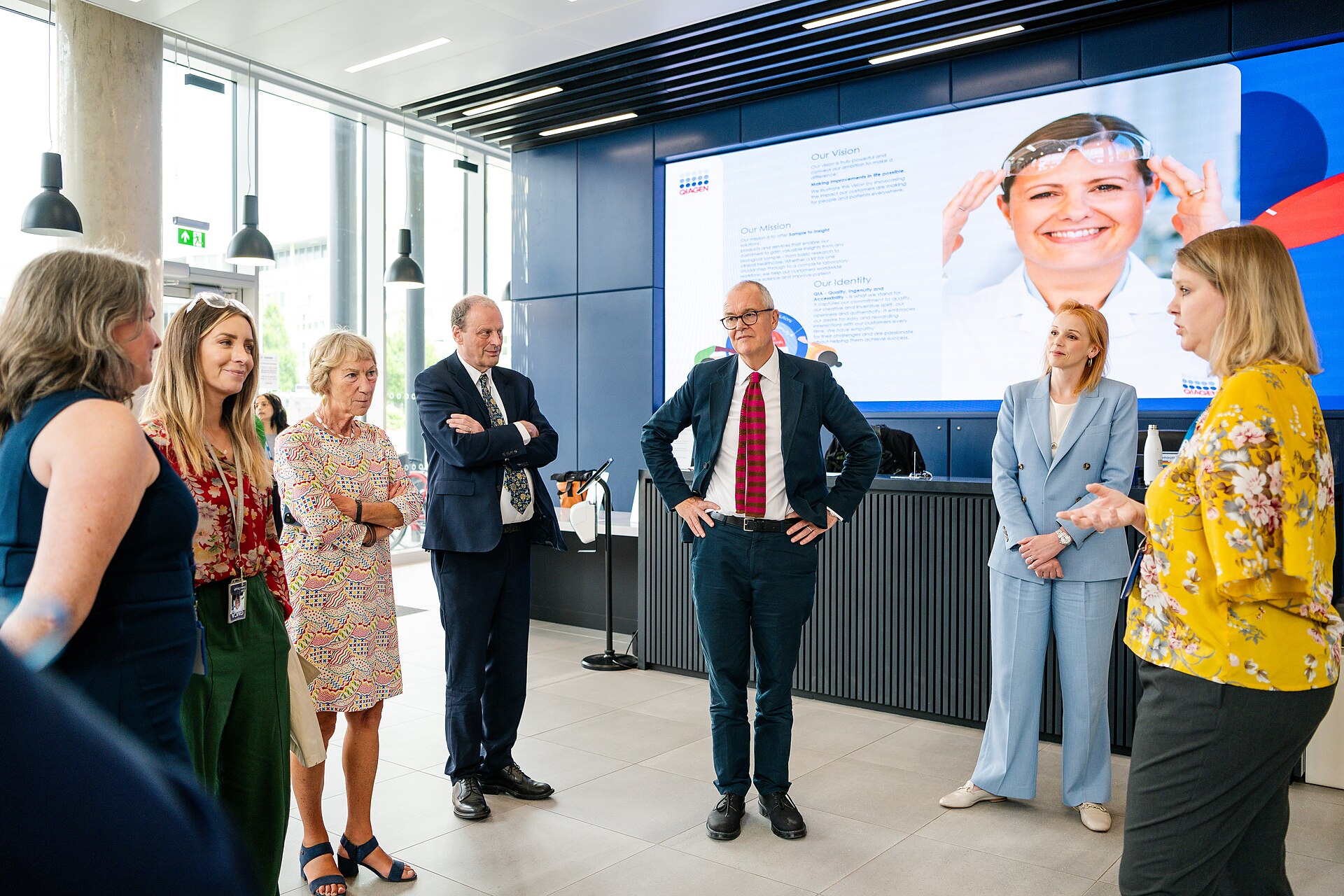
EQT buys Qiagen, the Dutch molecular testing company, for about €9.6 billion ($10.8 billion) in equity value, the two companies announced late on Wednesday, October 21 — a recommended all-cash takeover offer of €46.50 per share that values Qiagen at about €10.8 billion ($12.1 billion) including roughly $1.1 billion of net debt. The price is a 40.3 percent premium to Qiagen's unaffected share price of €33.15 on July 8, 2026, the last trading day before reports of private-equity interest surfaced, and a 46.9 percent premium to its three-month volume-weighted average price of €31.66. Qiagen's supervisory and managing boards unanimously support the deal, which is expected to close in mid-2027. Track it live: live market data and index trackers.
What was announced on Wednesday night
The deal arrived after the European close, in two regulatory disclosures filed minutes apart. Qiagen said it had entered into a Business Combination Agreement with Crown NL Bidco B.V., a holding company indirectly controlled by the EQT XI fund, with co-investors Luxinva S.A. — a wholly owned subsidiary of the Abu Dhabi Investment Authority (ADIA) — and CPP Investment Board Europe Inc., part of Canada Pension Plan Investment Board (CPP Investments). The bidder will make a voluntary public tender offer for all outstanding Qiagen shares at €46.50 in cash.
Two numbers in the announcement are easy to confuse, and most headlines used only one of them. The offer values Qiagen's share capital at about €9.6 billion, or $10.78 billion — the figure Reuters led with. Including about $1.1 billion of net debt, the enterprise value is about €10.8 billion, or $12.1 billion. Both are correct; they simply measure different things, and the gap between them is the debt EQT is effectively taking on with the company.
The premium tells a similar two-part story. Against the last closing price before the announcement, €46.50 is a rise of only 8.6 percent, because the stock had already climbed about 10 percent this year as takeover reports circulated, recovering from more than six-year lows hit in May. Against the price before any of that speculation — the €33.15 close on July 8 — the premium is 40.3 percent, and against the preceding three-month average it is 46.9 percent. Which premium shareholders feel they are getting depends entirely on when they bought.
A board that ran an auction, then said yes unanimously
This was not a company ambushed by a bidder. Qiagen's two boards said the offer followed a comprehensive review of strategic options that included discussions with both strategic and financial buyers, and both boards unanimously concluded the EQT deal was the best path forward and agreed to recommend that shareholders tender their shares.
"This transaction offers shareholders compelling value while positioning Qiagen for its next phase of development under private ownership," said Stephen H. Rusckowski, chairman of the supervisory board. "After considering Qiagen's stand-alone strategic prospects and the alternatives available through discussions with strategic and financial parties, we unanimously concluded that this is the best path forward for Qiagen, its shareholders and other stakeholders." Chief executive Jonathan M. Pratt made the operational case: "Under private ownership, we can move faster and have greater freedom to put resources behind the most attractive opportunities that align best with our long-term strategy." Chief financial officer Roland Sackers added that the agreement "provides our shareholders with an attractive premium while giving Qiagen a strong partner that shares our strategic priorities."
EQT, for its part, presented the deal as a healthcare landmark rather than a financial trade. "Qiagen is an outstanding global leader in the life science tools and diagnostics market," said Matteo Thun-Hohenstein, a partner at EQT, adding that the firm had followed the company for many years. Michael Bauer, EQT's global co-head of healthcare, called it "a landmark transaction for EQT" and said the firm was proud to invest alongside ADIA and CPP Investments, "whose long-term perspective and experience with large-scale transactions make them outstanding partners."
What Qiagen actually does, and why buyers keep circling it
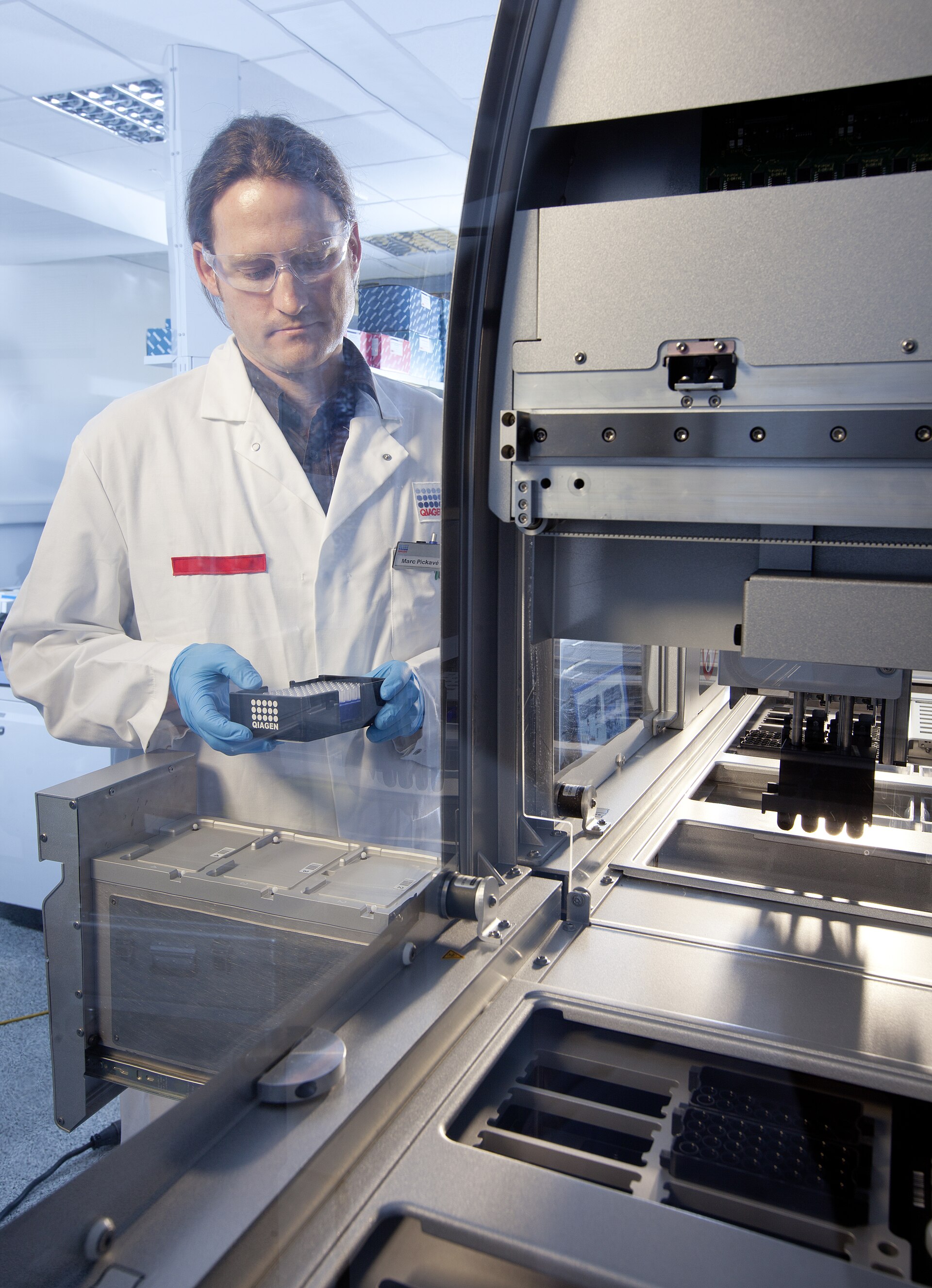
Qiagen, a Netherlands holding company headquartered in Venlo and listed in both Frankfurt (QIA) and New York (QGEN), sells what it calls Sample to Insight solutions: the technologies that isolate and process DNA, RNA and proteins from blood, tissue and other material, the assays that prepare those molecules for analysis, the bioinformatics that interpret the results, and the automation that strings the steps together. It serves more than 500,000 customers across life-science research — academia, pharmaceutical development and industrial uses such as forensics — and molecular diagnostics in clinical healthcare. As of September 30, 2026, it employed about 5,400 people in more than 35 locations.
That breadth is precisely the attraction, and the problem. A company that sells into thousands of laboratories has recurring, diversified revenue that private equity loves; a company trying to invest across all of those fronts at once, while reporting quarterly to public shareholders, moves at the speed its guidance allows. In the same disclosures, Qiagen reported preliminary third-quarter net sales of $548 million, level at reported and constant exchange rates, with adjusted diluted earnings per share of $0.65 — and suspended its full-year 2026 outlook while the transaction is pending, a routine step that also underlines how completely a pending takeover now governs the company's public life.
Why this matters
The Qiagen deal matters on three levels. First, it is another very large asset leaving public markets for private ones, following the same pattern as this month's other mega-transactions: a business whose value builds over a decade of research and regulatory work is being priced by three long-horizon owners — a Swedish buyout fund and two of the world's most patient pools of capital, a sovereign wealth fund and a national pension fund — rather than by quarterly trading. EQT is not a small sponsor making a bet; it manages €354 billion in total assets (€195 billion fee-generating) and says it has invested more than €30 billion across more than 210 healthcare companies, with a healthcare team of around 100 professionals in 15 countries and former holdings from Galderma and Parexel to Aldevron, Dako and HemoCue.
Second, it closes a six-year argument about what Qiagen is worth. Thermo Fisher Scientific agreed to buy Qiagen in 2020 in a deal valued at about $11.5 billion, then abandoned the takeover after failing to win enough shareholder support: the pandemic had sent demand for Qiagen's coronavirus testing surging, the share price rose with it, and enough investors decided the offer was too low. The nominal prices of the failed 2020 bid and this week's offer look similar. The contexts could hardly be more different. In 2020 shareholders were being asked to sell at the top of a testing boom they could see; in 2026 they are being offered a 40 percent premium over a share price that touched six-year lows in May, after the pandemic testing windfall had fully normalised. Acceptance, this time, comes as the board's unanimous recommendation rather than after a shareholder revolt.
Third, what EQT has promised constrains what it can do. Under the Business Combination Agreement, EQT committed to support Qiagen's strategy, key brands, operational footprint, research and development, employee arrangements and prudent financing, and Qiagen will keep its name and brand. A leveraged owner that has publicly promised to protect R&D and the footprint has less room for the classic cost-cutting playbook — which is either reassuring for employees and customers, or a question about where the returns come from, depending on your vantage point.
The road to mid-2027 is longer than it looks
A signed agreement is not a closed deal, and this one's timetable is unusually explicit about the hurdles. The tender offer itself has not yet begun: the offer document must first be cleared by Germany's financial regulator, BaFin, and the bidder will file a tender-offer statement on Schedule TO with the U.S. Securities and Exchange Commission. Shareholders will then be asked to do two things — tender their shares, and, at an extraordinary general meeting during the initial acceptance period, approve a set of post-closing measures designed to give the bidder full ownership of the business. The offer requires a minimum acceptance of 50 percent of the share capital plus one share, merger-control and foreign-investment clearances, and those EGM resolutions.
The post-closing mechanics carry a quiet sting for holdouts. Shareholders who do not tender will, once the post-closing measures are implemented, receive a cash distribution equal to the offer price minus applicable withholding taxes — which, the announcement warns plainly, may leave them with less than if they had tendered. Both the Frankfurt and New York listings will then be terminated. And if closing has not happened within ten months purely because regulators are still deciding, Qiagen may pay an interim dividend of up to $0.47 per share, on top of — not deducted from — the offer price. EQT has removed the excuse bidders most often hide behind: the money is committed, equity and debt financing are in place (Morgan Stanley, Jefferies, Deutsche Bank, SMBC, Crédit Agricole and UniCredit are bookrunners on the debt), and there is no financing condition.
What happens next
Three scenarios now compete. The base case is the one the documents describe: BaFin clears the offer document, the acceptance period runs, the EGM approves the post-closing measures, regulators in Europe and the United States clear a diagnostics deal that overlaps with no obvious EQT portfolio rival, and Qiagen delists around mid-2027 with its management — which stays in place until closing — still running the company. The second scenario is a repeat of 2020 in miniature: an activist or event-driven holder argues that a business with 500,000 customers and a suspended outlook is worth more than a 40 percent premium to a depressed price, and builds a blocking position — though the 50-percent-plus-one threshold, deliberately far below the levels that undid Thermo Fisher, makes that much harder this time. The third is time itself: a closing expected in mid-2027 leaves roughly eight months in which markets, regulators or a rival strategic buyer could change the picture, and the interim-dividend clause shows both sides have already priced in regulatory delay.
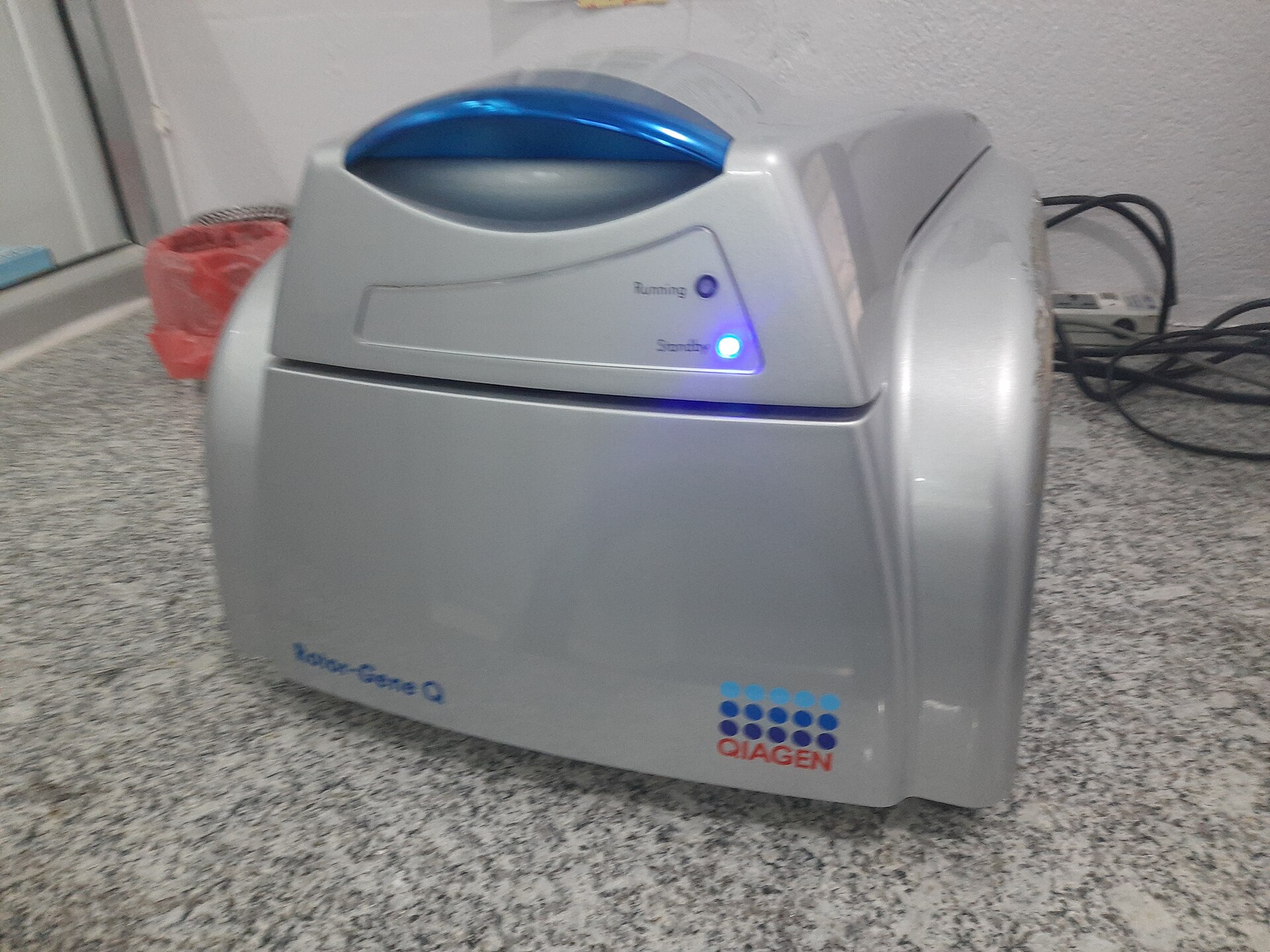
For the laboratories that run on Qiagen kits, the practical answer is simpler. Nothing changes on the bench this year: the company trades independently until closing, its name survives, and its new owners have contractually promised to fund the long-term strategy its public shareholders were asked, in the end, to stop waiting for. Signal Post News has been tracking this earnings season's repricing of listed companies — from Meta's record-revenue quarter and new Class C stock to PepsiCo's third-quarter forecast cut and Samsung's record profit in the AI chip boom. Track it live: the live markets tracker.
Sources
Qiagen N.V. ad hoc announcement under Article 17 of the EU Market Abuse Regulation, "Conclusion of a Business Combination Agreement with EQT Private Equity; preliminary Q3 2026 results and suspension of full-year 2026 outlook" (October 21, 2026, via EQS News) — the €46.50 cash offer by Crown NL Bidco B.V., the EQT XI control and ADIA (Luxinva) and CPP Investments co-investors, the enterprise value of about €10.8 billion ($12.1 billion including about $1.1 billion of net debt), the 40.3 percent premium to the €33.15 unaffected price of July 8, 2026 and 46.9 percent premium to the €31.66 three-month VWAP, the unanimous board approval, the 50-percent-plus-one minimum acceptance threshold, the post-closing measures and delisting, the possible interim dividend of up to $0.47 per share, preliminary Q3 2026 net sales of $548 million and adjusted diluted EPS of $0.65, and the suspension of the full-year 2026 outlook. Qiagen and EQT Private Equity joint announcement, "Agreement on a recommended voluntary all-cash public takeover offer" (October 21, 2026, via EQS News) — the Rusckowski, Pratt, Sackers, Thun-Hohenstein and Bauer statements, EQT's commitments on strategy, brands, footprint, R&D and employees, the BaFin and SEC Schedule TO steps, certainty of funds and adviser lists, Qiagen's profile (more than 500,000 customers, about 5,400 employees in more than 35 locations at September 30, 2026), and EQT's profile (€354 billion in total assets under management, more than €30 billion invested across more than 210 healthcare companies). Reuters, "Buyout firm EQT to acquire Qiagen for $10.8 billion" (October 21, 2026) — the €9.6 billion ($10.78 billion) equity value, the 8.6 percent premium to the last close, the shares up 0.7 percent in extended trading and about 10 percent in 2026 after recovering from six-year lows in May, and the history of the abandoned 2020 Thermo Fisher Scientific takeover valued at about $11.5 billion after insufficient shareholder support, following then-CEO Peer Schatz's announced departure in October 2019.