Cristiano Ronaldo statement Portugal
Sports / Football / Portugal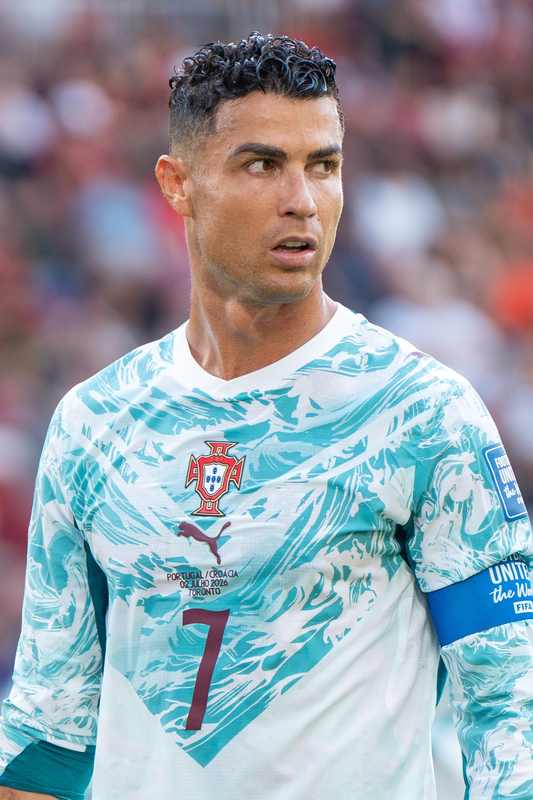
The Cristiano Ronaldo statement Portugal had been waiting for arrived on Tuesday as an apology, an accusation and an unfinished goodbye. In nearly 2,000 words, the captain accepted sole responsibility for leaving the national-team camp in Copenhagen on September 30, demanded that the Portuguese Football Federation punish him and then alleged that new coach Jorge Jesus had broken his word twice. Jesus disputes the foundation of that account, saying no agreement was made.
The 11-page Instagram statement, counted at 1,966 words by The Times, gives Ronaldo's fullest explanation of why he walked out of the camp. It also reveals something larger than the immediate dispute: Ronaldo says he wrote a letter retiring from international football after the 2026 World Cup, still keeps it, and changed course only after the FPF president urged him to reconsider on the flight home from the United States.
The result is not a neat act of contrition. It is a carefully drawn distinction. Ronaldo says leaving was wrong and must carry consequences. He does not concede that his grievance was imagined. Portugal is therefore dealing with two questions at once: what punishment fits a captain who abandoned camp, and whether trust between the country's defining player and the coach charged with leading it to 2030 can be rebuilt.
What the statement actually says
Ronaldo's account begins after the World Cup. Jesus, 72, had replaced Roberto Martinez and was presented on July 10 on a four-year contract through the 2030 tournament, which Portugal will co-host. Ronaldo says he supported the appointment. The two men already knew one another from Al Nassr, and Ronaldo says Jesus persuaded him not to close his international career immediately.
The plan, according to Ronaldo, was built around workload management rather than guaranteed status. He would play the first and last matches of the international window and skip the intervening away games in Norway and Denmark. That distinction matters. Ronaldo says he never demanded to start every match or insisted on a quota of minutes; his complaint is that the coach proposed a schedule, won his agreement and then departed from it without a convincing explanation.
Portugal's sequence is clear even where the private conversations are contested. Ronaldo started the 1-0 win over Wales on September 24 and played 65 minutes. He was an unused substitute in the 2-1 victory over Norway on September 27. He left camp on September 30. Portugal then beat Denmark 4-2 without him. Results strengthened Jesus's hand, but they did not settle what had been promised behind closed doors.
Ronaldo also offers an unqualified apology. He calls the departure “a mistake for which I alone take responsibility,” apologizes to the Portuguese people, to supporters who traveled to watch him and to his teammates, and says, “I should not have done that.” The apology does not erase the accusation; the accusation does not dilute the apology. That tension is the statement's organizing principle.
The two broken promises, as Ronaldo tells it
The Oslo warm-up that went nowhere
The first rupture came on the day of the Norway match. Ronaldo says a member of Jesus's staff told him to prepare to play about 30 minutes. He began warming up at halftime and continued, but Jesus never sent him on. When the final whistle confirmed Portugal's 2-1 win, Ronaldo headed down the tunnel.
Being an unused substitute was extraordinary in the context of his career: by the reporting cited in his account, it was the first time in 18 years that he had gone through an official Portugal match without entering the field. Yet Ronaldo's stated objection is not simply that an icon was benched. He writes, “The coach had broken his word to me.” In his version, the instruction to warm up contradicted both the original workload plan and the immediate suggestion that he would get half an hour.
There is a legitimate coaching answer to that complaint. Matches change. Managers alter substitutions because of score, shape, injuries or game state, and a warm-up is not normally a binding promise. The sharper issue is whether Jesus had created a specific expectation to keep Ronaldo committed to Portugal and then failed to communicate why it had changed. On that point, the public evidence remains two competing accounts, not a settled finding.
The eight-point document
Ronaldo says the second rupture followed a private meeting with Jesus. Al Nassr sporting director Simão Coutinho attended, an unusual detail that blurs the line between club and country. According to Ronaldo, the discussion produced an eight-point document describing what Jesus would clarify at his next press conference.
The requested points, as Ronaldo describes them, were not an instruction to apologize. They included statements that Ronaldo had never demanded playing time, that he respected the coach's decisions and that asking him to warm up without using him had been a mistake. That last point could have acknowledged poor handling while preserving the manager's power over selection.
Ronaldo says the public remarks that followed bore no resemblance to the private understanding. “It was the second time he had broken his word to me,” he wrote. “I decided to leave the training camp.” That is his explanation, not an independently established fact. Jesus denies that any agreement existed, and the federation has not publicly produced the document or a record of the meeting.
The retirement letter: the statement's biggest revelation
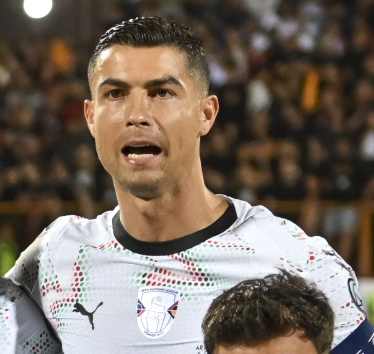
The most consequential passage may have little to do with Oslo. Ronaldo says he wrote an international-retirement letter after the 2026 World Cup and still has it. On the flight back from the United States, he says, the FPF president asked him to reconsider because the federation wanted him to continue. Jesus later reinforced that decision with the workload plan Ronaldo now says was broken.
This changes the context around the dispute. The captain was not merely trying to protect his minutes; on his account, he had already prepared to leave and was persuaded to stay under a negotiated understanding of how his body and role would be managed. If that is accurate, the disagreement is partly about the terms of a succession plan. If Jesus is correct that no agreement existed, it instead looks like a player mistaking conversation for commitment.
Ronaldo is not presenting the retirement letter as notice that he will quit now. He promises “one or more farewell matches,” says he wants a proper departure and remains available after any suspension if he is fit, playing for his club and, as he put it, hopefully scoring goals. The letter is leverage only in the broadest sense: it reminds the federation that an orderly ending was once available and may still be possible.
'Punish me': Ronaldo's extraordinary demand
Elite-sport apologies usually ask institutions to move on. Ronaldo asks the FPF to act. “The consequence of this act of mine must be assessed and punished by the Portuguese Football Federation,” he wrote. He adds that he is “not just any player,” but captain, and calls that an aggravating factor because “the rules are the same for everyone.”
As a matter of fact, the federation must decide what its rules require. As a matter of analysis, demanding punishment is also a powerful framing device. It lets Ronaldo claim the language of accountability while denying Jesus the argument that fame has placed the captain beyond discipline. It transfers the case from a personal standoff to an institutional process, where proportionality and precedent can be debated.
That creates a difficult test for the FPF. A token sanction could appear designed to protect a star. An unusually severe one could appear to settle a coaching dispute through punishment. Ronaldo's request does not free the federation from judgment; it raises the stakes of that judgment. Whatever it decides will define whether equal rules mean identical treatment or treatment calibrated to the captain's greater responsibility.
Jesus's side: denial and an open door
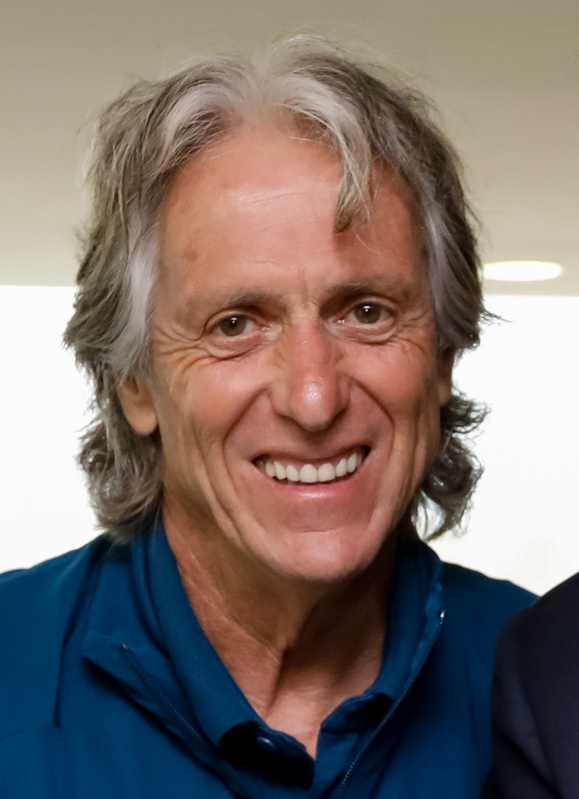
Jesus rejects the premise at the center of Ronaldo's case. He says no agreement was made. At his press conference he declared, “I don't apologize to anyone!” That line asserts the doctrine he has applied since taking the job: Ronaldo is subject to the same selection authority as every other player.
Yet Jesus did not close the international door. “Cristiano Ronaldo will be called up for the next international break, if he wants to return. It's his decision,” the coach said. The formulation is both invitation and challenge. Ronaldo may return, but not on terms that require the coach to concede there was a pact or surrender control of the team sheet.
The FPF did not immediately respond to requests for comment, according to the reports reviewed for this article. That silence leaves the contested points unresolved: whether the workload plan amounted to an agreement, what the eight-point document said, whether Jesus accepted it and what disciplinary rule applies to leaving camp. Any fair account must preserve that uncertainty. Ronaldo has supplied detail; detail is not the same thing as independent proof.
Why this matters
A power struggle bigger than one camp
Portugal is managing the late career of the all-time leading scorer in men's international football: 143 goals, more than 230 caps and two decades of competitive gravity. The federation cannot treat that history as irrelevant. It also cannot let history become a separate constitution for one player.
The conflict recalls the 2022 World Cup, when Fernando Santos benched Ronaldo and demonstrated that even Portugal's biggest name could be moved out of the starting side. The personnel and circumstances are different, but the structural question is familiar: can a coach make an ordinary football decision about an extraordinary footballer without the decision becoming a referendum on respect?
Jesus's “player like any other” doctrine protects the locker room only if it is matched by credible communication. Ronaldo's demand to be punished protects his public case only if he accepts the sanction without turning it into another grievance. The presence of Al Nassr sporting director Coutinho in the meeting adds another complication. A club official may help mediate because he knows both men, but his involvement also shows how Ronaldo's club and country worlds now overlap.
The 1,000-goal chase and the farewell
Ronaldo says he stands 21 goals from 1,000 for his career and wants to score the landmark for Portugal. That ambition supplies a sporting reason to continue, not merely a ceremonial one. It also risks making national-team selection feel like a stage built around an individual record. Portugal must judge whether his current form helps win matches; the milestone cannot decide that question.
The promise of one or more farewell matches belongs in a different category. A farewell recognizes a career. Competitive selection rewards present usefulness. Ronaldo himself effectively separates the two by saying he will be available after suspension if physically fit, playing and scoring. The cleanest path is to keep those tracks separate: earn Nations League minutes on merit, preserve the right to a proper goodbye regardless of when the competitive end arrives.
Portugal's 2030 horizon
Jesus was hired through the 2030 World Cup, which Portugal will co-host. Ronaldo will not define that tournament as a player, but the way his era ends will help define the culture Jesus carries into it. A federation that humiliates its greatest scorer sends one message; a federation that cannot enforce basic camp discipline sends another. The durable answer lies between indulgence and erasure.
At 41, Ronaldo has reached a phase where workload management is sensible and role change is unavoidable. His 18-year run without spending a full official Portugal match unused explains why Oslo felt historic to him. It does not create a right to play. Jesus's authority to choose is real. So is the practical obligation to manage expectations honestly when persuading a veteran to continue.
Portugal has faced high-profile tests throughout the current Nations League cycle; the wider competition is also beginning new coaching eras across Europe. That context matters because renewal is not unique to Portugal. What is unique is the scale of the figure being renewed around.
What happens next
First, the federation must decide whether to open or complete a disciplinary process and what sanction follows. Ronaldo has already said he will serve a suspension. The credibility of the decision will depend on whether the FPF explains the applicable rule and separates the camp departure from the unresolved dispute about private promises.
Second, attention turns to the November international break. Jesus has said Ronaldo can be called if he wants to return; Ronaldo says he will be available after punishment if fit and active at Al Nassr. A recall would not by itself repair trust. Both sides would need a clear understanding that selection belongs to the coach, workload discussions are explicit and disagreements stay inside camp.
Third, Portugal's Nations League campaign continues with every team sheet now treated as evidence. If Ronaldo is selected, his minutes will be scrutinized. If he is omitted, the decision will be read as either discipline or permanent transition. That is why process matters more than symbolism: the federation should not make a football decision masquerade as punishment, or punishment masquerade as a football decision.
Finally comes the farewell promise. Ronaldo has not retired. He has disclosed that he came close, that the letter exists and that he wants the ending to be deliberate. The immediate conflict may be loud, but the longer obligation is simple: Portugal must create conditions in which its captain can be judged by the same rules, its coach can lead without ambiguity and its greatest scorer can leave without pretending the end of an era is an ordinary substitution.
Sources
- Reuters — Ronaldo accuses Jesus of broken promises and leaves the door open to a return
- USA Today — Ronaldo apologizes and gives his account of the Portugal dispute
- The Times — The 1,966-word statement and retirement-letter revelation
- talkSPORT — The statement, apology and camp-exit timeline
- Associated Press via Fox Sports — Ronaldo says he remains available for Portugal