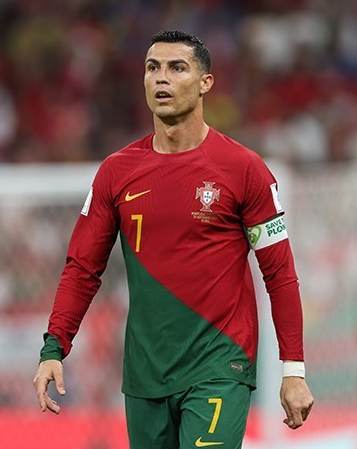
COPENHAGEN — Ronaldo leaves Portugal camp with the most important part of the story still unstated. Cristiano Ronaldo said Wednesday that he departed after Jorge Jesus's news conference and a conversation with Portuguese Football Federation president Pedro Proença, promising to tell supporters “the truth” about his reasons in due course. Portugal confirmed the departure and said preparations for Denmark on October 1 and Norway on October 4 would continue with the other 24 players.
That is the verified core. Everything beyond it — a permanent split, an ultimatum, a forced exit or a voluntary international retirement — remains interpretation. Jesus denied there had been any incident. Ronaldo did not accuse the coach of one. Yet a captain with 234 caps leaving camp midway through a competitive window, hours after his manager publicly addressed reports of a rift, is not routine squad management. It is a test of whether Portugal can finally separate reverence for its greatest player from the coach's right to choose a team.
What happened: the Ronaldo Portugal camp exit reason is still disputed
Ronaldo started Portugal's 1–0 Nations League win over Wales on September 24. He had a goal ruled out and was substituted after 67 minutes. Three days later, in a 2–1 win against Norway, Jesus left him on the bench for the full match while Gonçalo Ramos — the player who has most often carried the succession argument — scored.
According to Sky Sports and TNT Sports, it was the first time since Portugal's Euro 2008 defeat by Switzerland that Ronaldo had been selected for a competitive international and not used. He had been an unused substitute in a June 2024 friendly against Croatia, but the competitive context makes the Norway decision more consequential. It was not merely rest; it was an assertion that Portugal could win an important match without needing to put him on the field.
Jesus told reporters there was “no incident whatsoever” and insisted the decision had been his. He had previously coached Ronaldo at Al Nassr, so neither man entered this reunion as a stranger. Later Wednesday, Ronaldo announced his departure. Reuters reported that Portugal's squad reached its hotel without Ronaldo and without Jesus; TNT Sports, citing Marca, said Ronaldo left Parken in an FPF vehicle before taking a private plane to Madrid. Those movements are reported facts. The motive is not.
Why this matters for the Cristiano Ronaldo Portugal national team relationship
For two decades, Portugal's central selection question was how to maximize Ronaldo. Now it is whether the team is permitted to minimize him on a given night. That is a fundamentally different problem. A player can accept fewer minutes in theory and still find the reality of ninety unused minutes intolerable; a coach can respect a legend and still conclude that a different striker better fits one opponent.
The episode matters because both principles are defensible. Ronaldo has given Portugal a record no other men's international has matched: 146 goals in 234 appearances, according to UEFA. He scored in every calendar year from 2003 through 2026 and became the first man to score at six World Cups. A player with that history is not treated like an ordinary reserve. But a national team cannot function if history becomes a guaranteed place. Jesus's authority depends on the dressing room believing that the same sporting test applies to every name.
Portugal also has matches to win now. The Portugal Nations League squad is not a testimonial cast; it is a competitive team preparing for Denmark and Norway. The cleanest way to honor Ronaldo is not to pretend he is still 28. It is to define a role he can accept and in which his penalty-box movement, finishing and competitive memory remain assets rather than vetoes over tactical change.
Background and parallels: from Roberto Martínez and Ronaldo to Jorge Jesus
The immediate dispute sits inside a transition that began long before Copenhagen. At the 2022 World Cup, Fernando Santos benched Ronaldo for the knockout match against Switzerland and Gonçalo Ramos scored a hat trick in a 6–1 win. Portugal then lost to Morocco in the quarterfinals after Ronaldo came on as a substitute. That sequence established the modern dilemma: replacing him can liberate the attack, but one successful succession match does not automatically end the old era.
Roberto Martínez managed the balance differently. The Roberto Martinez-Ronaldo partnership kept the captain central after the World Cup and through another tournament cycle, with selection framed around continuing production rather than an age deadline. Jesus, 72, replaced Martínez after the 2026 World Cup and arrived with an unusual advantage: he already knew Ronaldo from Al Nassr. That familiarity was supposed to make hard conversations easier. It may instead make the present rupture more personal, because each man knows exactly what the other expects.
Football history offers two broad endings for iconic internationals. Some, like Germany's Miroslav Klose after the 2014 World Cup, leave after a final peak and control the goodbye. Others remain through diminishing roles until the coach, tournament or body makes the decision unavoidable. Portugal has postponed that choice because Ronaldo kept scoring. The Copenhagen exit suggests that selection status, not goal total, may finally force it.
Who benefits, who loses and what the critics will argue
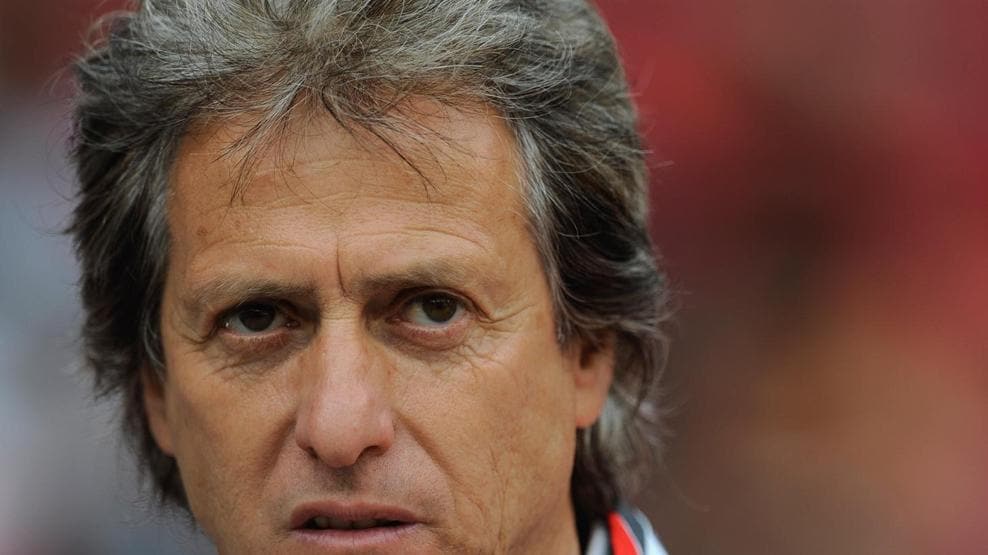
Jesus gains authority if Portugal responds well. A win over Denmark without Ronaldo would tell the dressing room that the coach's decisions can survive the biggest name in Portuguese sport. It would also protect players such as Ramos, Rafael Leão and the attacking midfielders from being treated as supporting actors in somebody else's farewell tour. But the coach owns the downside too. If Portugal looks blunt, every missed chance becomes evidence for Ronaldo's necessity.
Ronaldo protects his agency but risks his legacy. By leaving before the next match and promising an explanation, he keeps control of the narrative rather than accepting a silent demotion. Supporters who believe his record earns special handling will see self-respect. Critics will see a captain withdrawing when a reduced role became real. Both readings are possible because the decisive evidence — what was said privately — has not been published.
The federation loses stability. Proença now has to defend the coach's right to select while preserving a relationship with the most marketable Portuguese athlete of his generation. The FPF statement was deliberately narrow: Ronaldo had left; 24 players remained; preparations continued. That was sensible crisis communication, but it cannot be the final settlement if either side expects Ronaldo to return.
The squad inherits both freedom and pressure. Younger attackers gain minutes and a clearer pathway. They also lose the player whose presence absorbs attention and whose goals have rescued Portugal for years. This is why the question “who replaces Ronaldo for Portugal?” is slightly misleading. No single forward replaces 146 goals, captaincy, set-piece responsibility and psychological gravity. Those functions have to be distributed.
The data: Ronaldo at age 41 and Portugal's future
Ronaldo's numbers argue against casual dismissal. UEFA lists 146 goals in 234 Portugal appearances, both men's international records. Lionel Messi, the nearest active comparison cited by UEFA, stood at 125 goals in 207 Argentina matches. Ronaldo broke the men's scoring record against Ireland on September 1, 2021, at age 36, then extended it for five more years. His six-World-Cup scoring mark underlines how long the peak lasted.
But career totals measure accumulated greatness, not present tactical fit. At 41, recovery between matches matters more; pressing volume, transition speed and minutes load have to be managed. The Wales-to-Norway sequence showed the shift in concrete terms. Ronaldo started and played 67 minutes in the first game; Portugal won by one. He played zero minutes in the second; Portugal scored twice and won again, with Ramos on the scoresheet. Two matches cannot prove a new hierarchy, but they can make one imaginable.
The 979 reported senior career goals add another tension. Ronaldo has openly pursued 1,000, and international matches have historically supplied a meaningful share of his scoring opportunities. If this is the end, the chase continues largely at club level. Yet Portugal cannot select around a round-number target. The national-team question is narrower: does his expected contribution in a defined role exceed what another forward adds to the same game plan?
Cross-country comparisons reinforce the management challenge. Argentina continued organizing around Messi because the collective structure and his role remained mutually reinforcing. Germany moved on from Klose after a title at 36. Portugal's case is different from both: Ronaldo is older, more statistically dominant in national-team history, and playing as a high central finisher in an era that asks forwards to trigger pressure as well as end moves. There is no template that decides the answer for Jesus.
Portugal squad news, September 2026: who replaces Ronaldo?
For Denmark, the first answer is likely collective. Ramos offers penalty-area movement and pressing from the front. Leão can carry transition threat from the left. Bruno Fernandes and Bernardo Silva can own more of the possession and set-piece responsibility. A front line without Ronaldo may move more, defend earlier and share shots more widely; it may also lack the ruthless near-post run or late-match aura that opponents still plan around.
That tradeoff should be judged over patterns, not one result. Analysts should watch Portugal's recoveries in the attacking third, the number and location of touches in the opposition box, how many players arrive around the penalty spot, and whether chance quality rises or merely possession. Before-and-after debates often confuse pace with effectiveness. A younger forward line can look quicker without producing better shots.
Ronaldo international retirement: three scenarios from here
Reconciliation is the most constructive outcome. Ronaldo explains the exit, Jesus states the role clearly, and both agree that selection will be opponent-specific. That path lets Portugal use a historically great finisher without making him the default answer to every tactical question. It requires Ronaldo to accept that the bench can mean the full match, not a guaranteed cameo.
A managed farewell is the second path. The federation could bring him back for a designated final appearance, allowing the captain to leave before a squad announcement turns retirement into rejection. This protects ceremony, but it only works if all sides agree that the competitive argument is over.
An unresolved break is the dangerous scenario. Ronaldo waits to reveal his version, Jesus keeps selecting on merit, and every Portugal game becomes a referendum on an absent player. That would damage everyone: the coach works under permanent comparison, the squad answers questions about a teammate who is not there, and Ronaldo's final international image becomes a departure in an FPF van rather than a goal or a salute.
Is his international career over? The honest answer on September 30 is no one outside the room knows. What is over is the fiction that the transition can remain painless and indefinitely delayed. Portugal has crossed from succession planning into succession itself. Ronaldo's promised truth will explain the exit; only his willingness to accept a genuinely different role can decide whether it becomes a return.
Sources
- Reuters — Ronaldo's statement, the sequence after Jesus's news conference and the squad's arrival at the hotel.
- Sky Sports — Portugal match context, Ronaldo's 234th cap and Jesus's denial of an incident.
- USA Today — the Portuguese Football Federation statement confirming Ronaldo's exit and the remaining 24-player preparations.
- TNT Sports — the departure timeline, Norway benching and reporting attributed to Marca.
- talkSPORT — family reaction and the debate over whether the exit signals retirement.
- UEFA — international appearances, goals and scoring records.
Reporting checked September 30, 2026. Claims about a permanent retirement or an irreversible split remain unconfirmed.
Sports Desk · Soccer analysis · Back to all stories