Ebola death toll Congo 2026
The Ebola death toll Congo 2026 has crossed 4,000, a threshold that forces a harder judgment than the language of “response” usually permits. The Democratic Republic of Congo's Health Ministry reported 4,018 deaths among 8,300 confirmed cases on October 1 and 2. That is a case-fatality rate of 48.4%: nearly one death for every two confirmed patients. Another 2,162 people have recovered. These are not merely the grim totals of a dangerous virus. They are the balance sheet of an epidemic being fought without a licensed vaccine for the strain involved, inside a conflict zone where treatment infrastructure, surveillance and public trust have all become casualties.
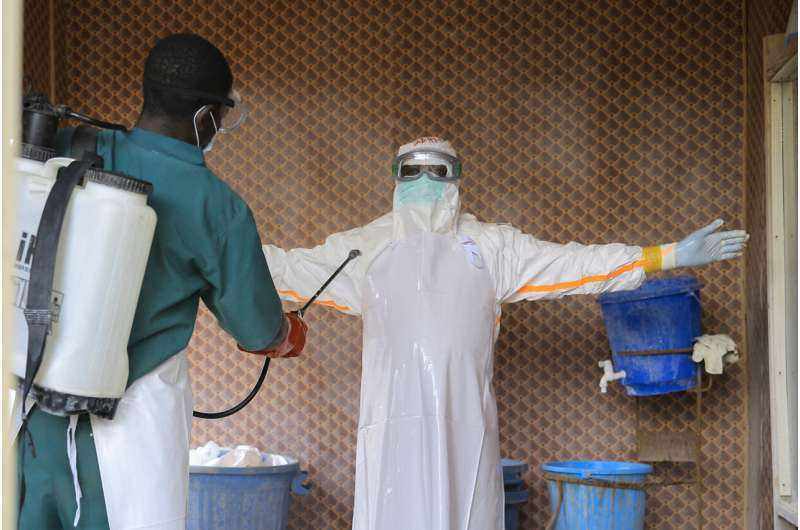
Why this matters: a fatality rate near one in two
The arithmetic is the first alarm. A 48.4% fatality rate is markedly higher than the roughly 39% crude rate recorded during the 2014–2016 West Africa epidemic, which infected more than 28,600 people and killed more than 11,000. Comparisons across outbreaks need care: case finding, access to treatment and reporting completeness all change the denominator. But that caution does not soften the conclusion. Congo's patients are dying at a devastating rate, and the country has already recorded more than 4,000 deaths in an outbreak that began less than five months ago.
The second alarm is biological. Congo declared the outbreak on May 15 after identifying the rare Bundibugyo virus. The licensed Ervebo vaccine was built for Zaire ebolavirus, and there is insufficient evidence that it protects against Bundibugyo. There is no licensed Bundibugyo vaccine and no known specific treatment. Supportive care, rapid isolation, safe burials and contact tracing therefore carry a weight that vaccination carried in other emergencies. When any one of those systems fails, there is no pharmaceutical safety net waiting behind it.
The third alarm is geographic. The World Health Organization declared a Public Health Emergency of International Concern on May 17. Its assessment has rated the national risk “very high” and the risk to bordering countries “high.” By late September, 63 health zones in seven provinces had been affected, including a new foothold in South Ubangi in the northwest. The fastest-growing Ebola outbreak on record is not burning inside a sealed laboratory. It is moving through trade routes, displacement camps and insecure communities that connect Congo to its neighbors.
The official curve and the uncertainty underneath it
WHO data through September 29 counted 8,224 confirmed cases and 3,982 confirmed deaths. The ministry's later total — 8,300 cases and 4,018 deaths — is consistent with an epidemic still adding cases faster than international situation reports can be reconciled. Ituri has carried the heaviest cumulative burden; as of September 23, the province had recorded 6,032 confirmed cases. This outbreak is Congo's 17th and already its largest and deadliest. Worldwide, only the 2014–2016 West Africa emergency remains larger by total infections and deaths.
Yet the latest weekly curve is treacherous to read. Africa CDC says confirmed cases are falling. Ordinarily that would be the headline everyone wants. But the agency also warned that insecurity and difficulty securing community cooperation may be suppressing detection in some hotspots. Médecins Sans Frontières said on October 1 that the true toll was probably higher than the official count because surveillance and case detection remain incomplete. A falling line on a dashboard can describe progress; it can also describe blindness.
Health Minister Roger Kamba offered a more hopeful interpretation at an October 2 briefing: “We are no longer talking about outbreaks at the provincial level, but outbreaks concentrated in individual health zones.” Twelve health zones, he said, had gone 42 days without a new case. That is meaningful evidence of localized containment. But it does not settle the national picture. A country can extinguish transmission in one district while missing chains in another. The right question is not whether some places are improving; it is whether surveillance is strong enough to prove where the virus is no longer spreading.
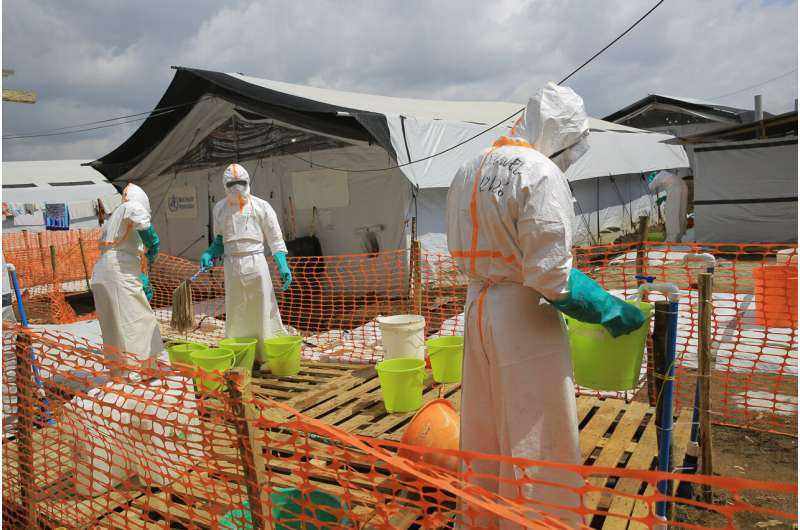
Background: Congo has seen this sabotage before, but not this vaccine gap
The 2018–2020 Kivu outbreak should have been the warning manual. Violence against clinics, mistrust of outsiders, election tensions and armed conflict repeatedly interrupted treatment and contact tracing. Health teams eventually defeated that outbreak with painstaking community work and a vaccine effective against the Zaire strain. This time, the familiar obstacles are back while the strongest tool in the old playbook is missing.
That difference changes the stakes of every operational failure. Contact tracing is not bureaucratic housekeeping; it is the mechanism that finds infection before symptoms become severe and before families, caregivers and funeral attendees are exposed. Paying surveillance workers is not a secondary labor dispute; it is epidemic control. Protecting a transit center is not a matter of preserving government property; it is the means by which suspected patients are separated from crowded communities and moved toward care.
Authorities launched a village-centered approach in September, working through local leaders rather than relying only on centralized campaigns. It is the right instinct because trust is local. Some residents still dismiss Ebola as a hoax, and that disbelief did not appear from nowhere. It is rooted partly in the way previous outbreaks were managed, in chronic distrust of government and in the experience of communities that see emergency money arrive while basic services and wages do not.
Containment infrastructure has become a casualty
In Kigonze, on the outskirts of Bunia in Ituri province, soldiers searching for weapons burned an Ebola transit center, according to a senior United Nations official. The fire forced 19,000 people in the surrounding displacement camp to flee. One incident therefore did two kinds of damage at once: it removed scarce isolation capacity and scattered a population whose movements health teams now have to trace. The building can be rebuilt. The lost chains of contact cannot be reconstructed so easily.
The attack is an indictment of a response in which security policy and health policy are pulling in opposite directions. A treatment center does not become expendable because the surrounding camp is insecure. In an outbreak, the center is part of the security architecture. Destroying it while searching for weapons may answer one perceived threat by amplifying another that crosses checkpoints invisibly.
The human infrastructure is also fraying. Health workers in Bunia, including members of surveillance teams, protested unpaid wages with placards reading “No money, no data!” and “No payment for months.” Front-line workers have struck repeatedly since May. Their complaint is not peripheral to the case count. If the people who identify exposures cannot afford transport, food or rent, then the epidemic's official map will develop holes exactly where the danger is greatest.
Violence has also targeted those who defend public-health measures. Marie-Célestin Karondwa, a local official of the ruling Union for Democracy and Social Progress, was attacked at his home in Butembo on Sunday, September 27. His house was set on fire, and he later died in hospital from the beating. The killing turns public advocacy into a personal risk and tells community figures that cooperation may make them targets. That is how mistrust compounds: intimidation silences the people best placed to counter it.
Who loses when the numbers become a political argument
Infected communities lose first, especially patients who reach care late because isolation feels punitive or facilities are too distant. Families lose income during quarantine and can lose social standing when neighbors associate them with disease. Children and older adults lose when household transmission runs ahead of testing. Border communities lose when fear invites blunt travel restrictions rather than focused surveillance.
Front-line workers lose twice. They face infection — at least 50 health workers have died — and then are asked to keep the response running without reliable pay. The ministry, meanwhile, has an understandable reason to emphasize 12 health zones with no new cases. Africa CDC and MSF have an equally compelling reason to warn that apparent easing may be a mirage. The dispute should not be reduced to optimism versus pessimism. It is a contest between what the data show and what the detection system may be missing.
The public loses when officials treat uncertainty as a communications problem to be managed rather than evidence to be investigated. In an epidemic, admitting blind spots is not weakness. It is the starting point for deploying mobile laboratories, rebuilding contact lists and directing staff to places where the case curve looks suspiciously clean. False reassurance is more dangerous than an honest range.
Critics are therefore right to call the Bundibugyo vaccine-trial race the only plausible long-term exit from repeated emergency improvisation. But “long term” matters. A candidate still has to prove safety and effectiveness, be manufactured at scale and win community acceptance. Vaccine research cannot become an excuse to underfund the unglamorous work that saves lives this week.
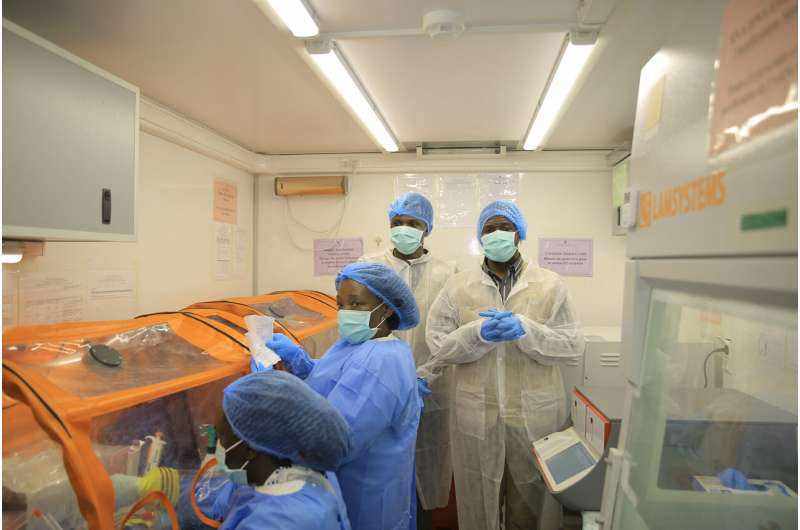
The data tell a story of speed, not just scale
Four thousand eighteen deaths would be catastrophic at any pace. Reaching that toll since mid-May is what makes this outbreak historically distinct. It has grown faster than any previous Ebola outbreak and has already overtaken the national total from Congo's 2018–2020 emergency. The comparison with West Africa is equally sobering: Congo remains below that epidemic's more than 28,600 infections and 11,000 deaths, but its reported case-fatality rate is about nine percentage points higher.
The 19,000 people displaced by the burning of one transit center belong in the same data story. Epidemic models often treat treatment beds, tracing teams and population movement as variables. In Ituri, they are connected events. Remove an isolation point, force thousands to move and stop paying the people who track them, and the response does not merely lose capacity. It creates fresh uncertainty at scale.
Mobile laboratories offer one reason not to surrender to that uncertainty. In Butembo, teams have cut the wait for some test results from roughly 72 hours to six. Speed matters because every hour between suspicion and confirmation affects isolation decisions and contact tracing. But a fast laboratory cannot test a patient no one can reach, and it cannot return a result to a surveillance team that has stopped work over unpaid wages.
What happens next: three possible paths
Analysis, not forecast: the first path is localized containment. The village-centered approach wins cooperation, mobile testing shortens delays, unpaid workers receive their wages and the 12 quiet health zones remain free of new cases. Under that scenario, officials can narrow the response to active chains and rebuild the Kigonze capacity without allowing displacement to seed new clusters.
The second path is a deceptive plateau. Reported cases continue to fall, but surveillance gaps widen in insecure areas. Hospitals see fewer confirmed patients while community deaths and unlinked infections persist. This is the scenario Africa CDC and MSF are warning about: the curve looks better because the system is seeing less. The proof against it would be a rising share of identified contacts under follow-up, fewer community deaths and sustained access to hotspot communities.
The third path is renewed geographic expansion. Transmission takes hold in South Ubangi or another newly affected zone, or an undetected case crosses a border before symptoms are obvious. WHO's “high” risk rating for bordering countries is not a prediction of regional spread; it is a measure of how costly delayed detection could be. Screening at official crossings helps, but the decisive work is still control at the source and rapid communication across borders.
The vaccine-trial timeline remains a fourth, slower clock. A successful candidate could restore the ring-vaccination strategy that helped end previous outbreaks, but regulators cannot trade rigor for urgency. The world should fund the trial and manufacturing readiness simultaneously, so that positive results do not lead to months of avoidable delay.
What the world should do now
The immediate priorities are not mysterious. Pay health workers in full and on time. Finance contact tracing and safe transport at the scale the geography demands. Protect treatment and transit centers as essential civilian health infrastructure. Fund laboratories, protective equipment and dignified burials. Support local leaders who can explain measures in the languages and institutions people already trust.
International donors should also resist the habit of waiting for cross-border transmission before treating an African epidemic as a shared threat. WHO's emergency declaration and risk assessment already provide the warning. Money spent after cases appear abroad buys airport screening and crisis meetings; money spent now buys early diagnosis, wages and isolation capacity where transmission is happening.
Congo's ministry can point to genuine progress in some health zones. It should. But the only credible victory is one demonstrated by strong surveillance, not inferred from silence. The outbreak has passed 4,000 recorded deaths because the virus found every weakness around it — conflict, distrust, underpayment and geographic distance. Ending it requires treating those weaknesses as part of the epidemic, not as background conditions the medical response must somehow work around.
Sources
- Associated Press via KCAU — ministry totals, the Bundibugyo strain and the attack on Marie-Célestin Karondwa.
- Reuters — confirmed infections crossing 8,000 and the outbreak's rank in Congo and worldwide.
- Sky News via Radio X — the 4,000-death threshold, WHO warnings and falling case counts.
- Associated Press via Phys.org — the burned Kigonze transit center, worker protests and mobile laboratories.
- Xinhua via Qazinform — the minister's October 2 briefing, recoveries and 12 quiet health zones.
- World Health Organization — outbreak geography, risk and the September situation assessment.
Reporting cutoff: October 3, 2026. National ministry figures are newer than WHO's data through September 29. Where falling case counts may reflect access or surveillance gaps, the article identifies that uncertainty. Analysis is by Signal Post News.
Related coverage
- How North Kivu became Congo's new Ebola hotspot as contact tracing collapsed
- The race to test a Bundibugyo-specific Ebola vaccine in DR Congo
- More health and world coverage