China US $30 billion tariff cut
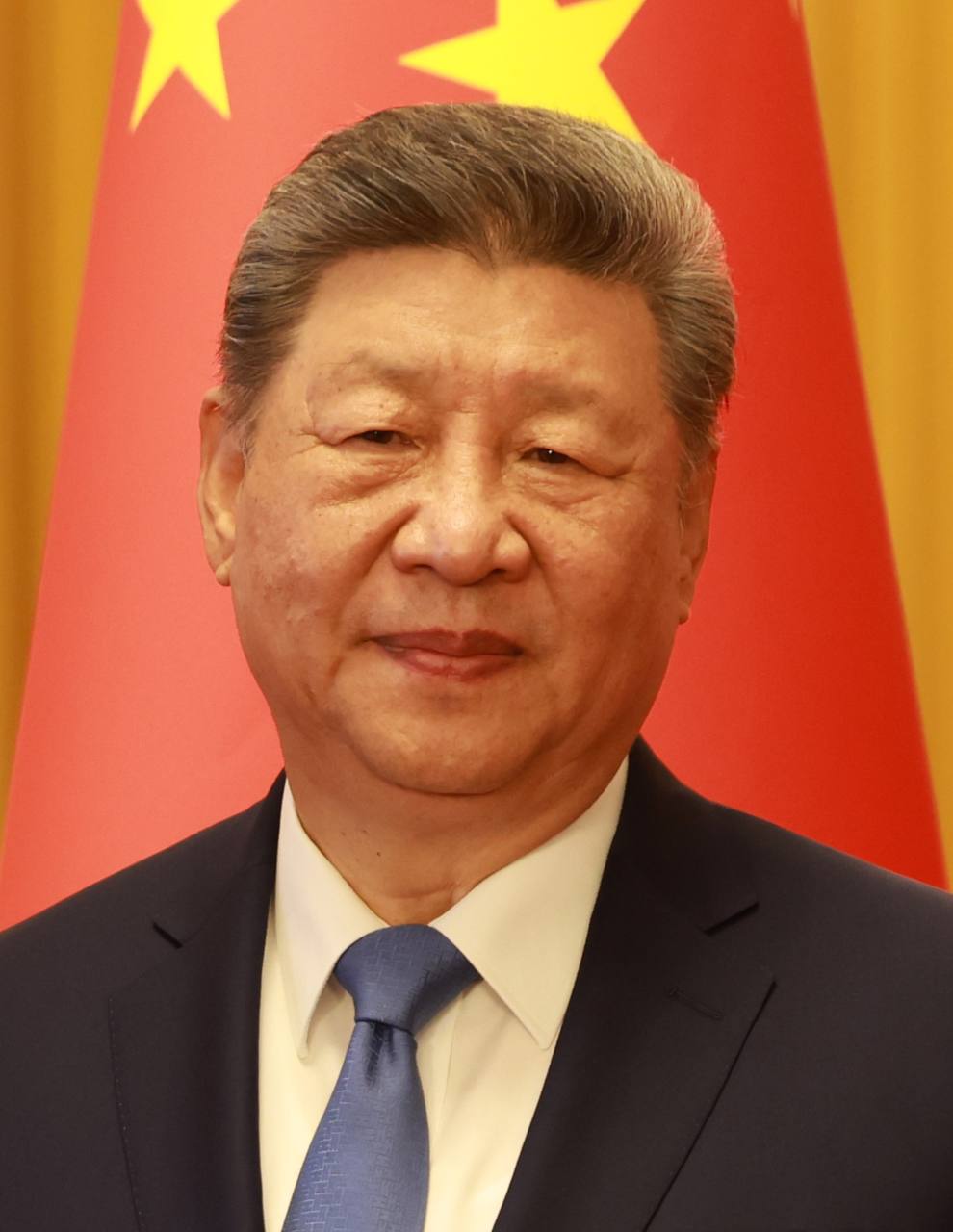
China said on Saturday that it had agreed with the United States on a $30 billion reciprocal tariff-reduction arrangement and on launching a formal dialogue on artificial intelligence, under an eight-point consensus reached during President Xi Jinping's three-day visit to Washington. The announcement, carried in a Chinese Foreign Ministry readout, gave the summit — which ended Friday and was heavy on ceremony, light on televised drama — its first concrete economic deliverables. The tariff relief would cover US exports such as agricultural goods, wood and cosmetics heading to China, as well as Chinese exports including small appliances, toys and decorations heading to America. On AI, the two sides agreed to a dialogue on the technology's risks and benefits, with the next round set for November, plus a dedicated communication channel for AI-related incidents. The two governments also agreed to establish a trade council and to extend the outcomes of earlier talks in Kuala Lumpur. The deal lands on top of an already-announced two-month extension of the US-China trade truce, which had been due to expire on November 10 — a move US Treasury Secretary Scott Bessent detailed on Wednesday, saying it buys time “to work on a potentially bigger trade deal.” Xi has since returned to Beijing, state news agency Xinhua reported on Saturday.
What was actually agreed — and what we only know from Beijing's account
Precision matters here, because the two capitals are telling this story in different voices. The eight-point consensus itself was unveiled by the Chinese Foreign Ministry on Saturday. The White House has confirmed the tariff recommendations and the AI dialogue, and it described the summit in its Friday statement. But the full eight-point list — including pledges on Iran, international waterways, and mutual support for hosting the APEC leaders' meeting and the G20 summit — comes from Beijing's readout alone. The U.S. Embassy in Beijing did not immediately respond to a Reuters request for comment on China's account. That asymmetry does not make the announcement false, but it does mean the most expansive claims currently rest on one government's telling, and Washington has not yet published a matching readout.
What both sides agree on: tariff reductions on $30 billion of goods in each direction, limited to non-sensitive products; a trade council; an AI dialogue with a November round and an incident-communication channel; and an extension of the Kuala Lumpur outcomes. What comes only from Beijing: the characterization of the visit as opening “a new chapter in China-US relations” (Foreign Minister Wang Yi's phrase), the mutual hosting pledges for APEC and the G20 — Trump had earlier signaled in a social media post that both leaders would attend each other's gatherings — the understanding that Iran should honor its commitment not to develop nuclear weapons, the principle that no country or entity should impose transit tolls on international waterways, and the pointed detail that Beijing “valued” Washington's use of the term “super intelligence” in place of “artificial intelligence.”
That last flourish deserves a pause. In diplomatic communiqués, vocabulary is policy: by praising the American side's phrasing, Beijing is signaling it wants the AI conversation framed around frontier capabilities and shared governance rather than around containment. Xi himself, per reports of the talks, presented AI as an area where both powers have “the capability and the responsibility to cooperate,” insisting the technology remain under human control and serve human well-being — and reiterated that the two countries could overcome the “Thucydides Trap,” the political-science shorthand for the idea that a rising power and an established one are fated to clash. For a summit that, per CNBC's reporting, deliberately steered around the hardest items on the agenda — Taiwan, Iran, the sharpest edges of the technology contest — the AI dialogue is the designated bright spot, and both sides are invested in keeping it glowing.
Why this matters
Strip away the ceremony and three things make this genuinely significant. First, it is the first time since the tariff war's worst phase that Washington and Beijing have put a dollar figure on relief and attached it to a standing institutional mechanism — a trade council — rather than to a handshake and a 90-day clock. Truces expire; councils meet. If the council actually functions, it converts crisis management into process, which is how trade relationships get stabilized rather than merely paused.
Second, the AI dialogue is the first formal bilateral channel on the technology that both governments now describe as civilizational in importance. An incident-communication channel for AI is, in effect, a hotline for the algorithmic age — a recognition that autonomous systems, cyber operations, and misjudged machine-speed events could create a crisis neither side intended. That both countries agreed to build one before such an incident, rather than after, is the kind of boring, grown-up diplomacy that prevents wars nobody wants.
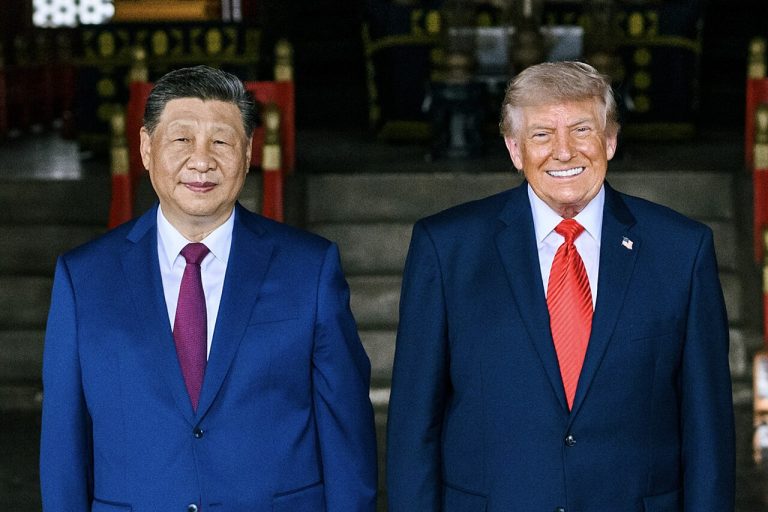
Third, the timing. This summit was not supposed to produce much. It followed a brief meeting on the sidelines of the UN General Assembly in New York on September 22, and expectations for the Washington leg were modest: personal diplomacy, red carpets, careful language. That a tariff package and an AI channel emerged anyway suggests both leaders felt they needed a deliverable — Trump, facing midterm-year pressure on prices, and Xi, steering an economy that needs external stability. The politics of the announcement matter as much as its economics: both men can go home claiming they are managing the world's most consequential rivalry without letting it boil over.
How we got here: from 145% tariffs to a Washington handshake
The road to this weekend began in February 2025, when Trump imposed a 10% tariff on all Chinese imports, citing Beijing's role in the fentanyl crisis and illegal immigration. China retaliated with tariffs on American coal, liquefied natural gas, crude oil and vehicles. The spiral peaked in April 2025, after Trump's “Liberation Day” reciprocal-tariff announcement pushed U.S. duties on Chinese goods to 145%; China answered with tariffs of up to 125% on American products, effectively freezing large stretches of bilateral trade.
The first off-ramp came in May 2025 in Geneva, where negotiators cut U.S. tariffs to 30% and China's to 10% for 90 days — an arrangement extended again in August. A further round in South Korea in October 2025 produced Chinese pledges to crack down on fentanyl precursor chemicals, resume soybean purchases and ease rare-earth export restrictions, in exchange for additional U.S. tariff relief. Negotiators then met in Kuala Lumpur, and this weekend's consensus explicitly extends those outcomes.
Wednesday's move by Bessent — a two-month extension of the truce past its November 10 expiry — set the table. The Washington summit, September 23–25, was the main course: three days of formal, ceremony-heavy meetings that, by most accounts, showcased personal diplomacy more than public breakthroughs. The September 22 UNGA pull-aside in New York had been the appetizer — a signal that the two leaders were talking, not the place where deals get done. Saturday's announcement is best read as the summit's delayed receipt: modest, specific, and institutional.
Winners, skeptics, and the fine print nobody has seen
Start with who benefits. American farmers, timber producers and cosmetics exporters get “more favorable tariff treatment” in the Chinese market — a tangible win for constituencies that have absorbed real pain since the tariff war began. American consumers get relief on the other side: small appliances, toys, holiday decorations and children's car seats are exactly the categories where tariffs show up at the checkout counter, and where midterm-year price sensitivity is highest. Markets, which have been whipsawed by every tariff headline for eighteen months, get a de-escalation signal. And American coal gets its own line item: China committed to import at least 10 million metric tons of U.S. coal in 2027 and again in 2028 — a concrete boost for an industry the Trump administration has been trying to revive, and a deal we covered as it emerged (China–US coal deal from the summit).
Now the skeptics. Some analysts argued that the red-carpet reception for Xi in Washington — combined with limited movement on the relationship's most contentious disputes — amounted to a win for Beijing: pageantry for the visitor, substance deferred. There is a case there. The summit steered around Taiwan and gave Iran only a communiqué line, not a mechanism. The rare-earth export restrictions China eased in October remain a lever Beijing can re-tighten. And the entire eight-point package, remember, is described in Beijing's words; Washington's confirmation covers the tariff recommendations and the AI dialogue, not the full list. Until the White House publishes its own detailed readout — or U.S. Trade Representative officials brief the specifics expected on Monday — the honest characterization is: a real agreement on trade and AI, wrapped in a Chinese narrative neither confirmed nor denied by the American side. Oil and equities moved on the summit's atmospherics this week (markets coverage).
Then there is what remains undisclosed, and it is substantial. Neither government has released the product lists, the final tariff rates, or the mechanism by which “recommendations for more favorable tariff treatment” become actual tariff cuts — recommendations from whom, to whom, on what timetable? The trade council's membership, mandate and powers are undescribed. The AI incident channel is a sentence, not a blueprint. Treat this weekend's news as a framework agreement, not a finished contract: the direction is set, the details are pending, and frameworks have died in the details before.
Thirty billion dollars in perspective: what the numbers actually say
Numbers without context are decoration, so here is the context. Two-way U.S.-China goods trade runs to roughly $580–600 billion a year — on the order of $440 billion in Chinese goods entering the United States and around $140–150 billion in American goods entering China. Thirty billion dollars of tariff relief in each direction therefore covers about five percent of the goods flowing each way, or on the order of one-tenth of total two-way trade if you count both directions together. That is meaningful for the affected categories — agricultural exporters, toy importers, cosmetics brands — and marginal against the whole. It is a scalpel, not a sledgehammer, and it is aimed at “non-sensitive goods” by design: neither side is touching the technology, semiconductor or defense-adjacent categories where the real contest lives.
The word “reciprocal” also deserves a careful read. In Trump-era trade language, “reciprocal tariffs” meant America matching other countries' tariff levels — a punitive framing. Here, “reciprocal” means mirrored: each side cuts on $30 billion of the other's goods. It is symmetry, not retaliation. Compare it with the trajectory: at the April 2025 peak, 145% U.S. duties and 125% Chinese duties had effectively embargoed large product categories; the Geneva truce brought those down to 30% and 10%. This weekend's arrangement does not rewrite those levels across the board — it carves out favorable treatment for a defined basket. And compare it with the coal pledge: 10 million metric tons a year is a rounding error in China's total coal consumption, which runs to billions of tons, but it is a politically legible win for a specific American industry. The economics are modest; the politics are targeted. That is not a criticism — targeted relief is how trade deals actually get built — but it is the correct scale at which to read the headline figure.
What happens next: November, APEC, and the road to a bigger deal
The calendar now does the talking. First, Monday: U.S. officials are expected to brief further details on the tariff arrangement, including the product coverage both governments have so far declined to publish. Watch whether the lists match Beijing's framing — agricultural goods, wood, cosmetics outbound; small appliances, toys, decorations inbound — and whether the “recommendations” language hardens into scheduled rate cuts.
Second, November: the next AI dialogue round, plus the standing up of the incident-communication channel. The real test is not whether the meeting happens but whether it produces anything operational — shared definitions, notification protocols, a working hotline that gets tested before it is needed. The “super intelligence” terminology both sides are now using suggests the conversation will aim at frontier-model governance, not just export-control grievances. If November yields procedures rather than platitudes, the channel could become the most durable product of the entire summit.
Third, the summit sequence both leaders pledged to attend: the APEC leaders' meeting hosted by China and the G20 summit hosted by the United States in Florida this December. Mutual attendance pledges are easy to make and occasionally hard to keep, but the logic is clear — each leader wants the other's presence to validate their hosting turn, and repeated face time is how the personal-diplomacy model sustains itself between crises.
Three scenarios branch from here. In the constructive case, the trade council meets, product lists publish, the November AI round produces protocols, and Bessent's “potentially bigger trade deal” acquires a shape — with fentanyl cooperation and soybean purchases as the trust-building currency. In the friction case, the undisclosed details disappoint, Taiwan or technology controls intrude (both were conspicuously parked this weekend), or domestic politics in either capital punishes compromise — and the framework stalls like so many before it. In the middle case, the likeliest one, progress is real but incremental: relief flows to the named categories, the AI channel exists on paper and gets tested slowly, and the rivalry's hard core — chips, rare earths, the Taiwan Strait, force posture — continues on its own separate, tenser track. Personal diplomacy can manage a rivalry; it cannot resolve one. This weekend bought management, not resolution, and priced it at $30 billion a direction.
The bottom line
A summit expected to produce pageantry produced, instead, a tariff package with a dollar figure, a trade council, and the first formal U.S.-China channel on artificial intelligence — announced by Beijing, confirmed in its essentials by Washington, and short on the details that will determine whether it matters. The relief is real but narrow, the AI dialogue is promising but untested, and the hardest disputes were left exactly where they were. For businesses caught in the tariff crossfire and for anyone who worries about machine-speed miscalculation between nuclear-armed powers, that is still a good weekend's work. The grade, as always with U.S.-China diplomacy, is incomplete — pending Monday's details, November's talks, and the December summits. On the waterways question, notably, the two sides also agreed that no country or entity should impose transit tolls on international waterways — language worth reading alongside the ongoing standoff over the Strait of Hormuz (Hormuz seven-day plan), where exactly such tolls-by-blockade are the leverage in play.
Sources
- Reuters via The Business Standard — China and U.S. agree to tariff arrangement and AI dialogue
- Reuters via The Hindu BusinessLine — Beijing's eight-point account
- CNBC reporting via TradingView — tariff reduction and AI talks
- Tariff-war timeline context
Related coverage
- China–US coal deal from the summit
- Markets react to the Trump–Xi summit
- Iran's seven-day Hormuz plan