The Anthropic IPO record $81 billion pricing is done. On Wednesday night the maker of Claude sold stock at $83 a share — above the range it had marketed, in a sale enlarged by nearly a fifth — and became, on an initial-raise basis, the largest stock-market debut in history. What the market thinks of the price is a question only Thursday's first trade can answer.
NEW YORK — Anthropic priced its initial public offering at $83 a share on Wednesday, November 18, above the $70 to $78 range the company had marketed to investors, and enlarged the sale from 825 million shares to about 980 million Class A shares, raising $81.31 billion, according to Reuters. The Anthropic IPO record $81 billion result eclipses the $75 billion initial raise in SpaceX's June offering and makes this, on that initial-raise basis, the largest stock-market debut on record. Anthropic is the first major frontier AI lab to go public, and its shares are scheduled to begin trading on Thursday, November 19, on the Nasdaq Global Select Market under the ticker ANT. One precision matters before anything else: $83 is the IPO price set in Wednesday night's pricing — not an opening or trading price. At publication, Anthropic shares had not traded at all; the Anthropic stock price today will only exist once the Nasdaq opens.
Track it live: follow the ANT stock Nasdaq debut and the wider market reaction on our live markets tracker.
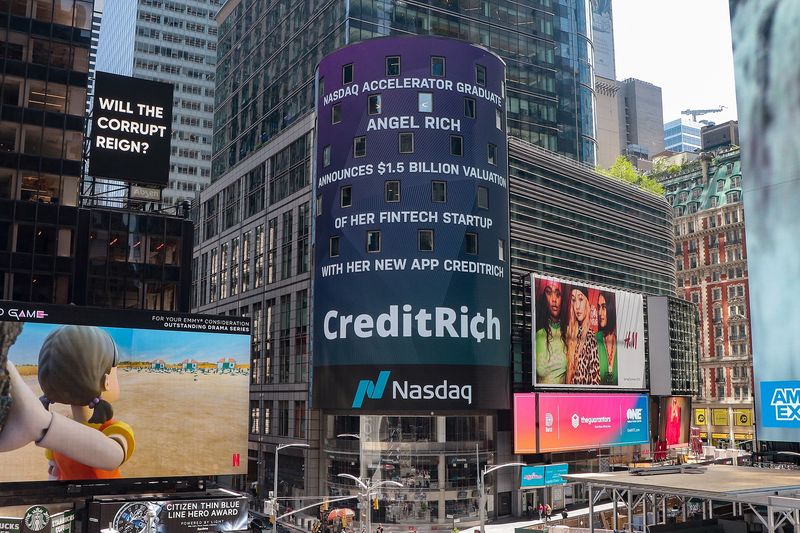
As Signal Post News reported ahead of the pricing in our coverage of Anthropic's IPO pricing and its Nasdaq debut, the company had marketed 825 million shares at $70 to $78 — a structure pointing to a raise of roughly $64 billion and a valuation of up to about $1.4 trillion, with demand reported at several times the shares available. The final terms beat every one of those markers: a price $5 above the top of the range, about 155 million more shares than planned — an upsizing of roughly 19 percent — and a valuation of about $1.5 trillion fully diluted. Bookrunners do not upsize a deal of this scale and price it above range on the same night unless the order book forces the question, and Reuters had reported through the roadshow that demand ran several times the shares on offer.
The deal, by the numbers
The structure rewards a careful read, because the headline figure bundles together money that goes to very different places. Of the 980 million Class A shares sold at $83, Anthropic itself issued about 956.35 million shares — roughly $79.4 billion of gross proceeds to the company before underwriting fees and expenses, according to filing-based reporting by FinanceFeeds. The remaining roughly 23.65 million shares were sold by Anthropic's seven co-founders, worth about $1.96 billion at the IPO price, and the company receives no proceeds from the founders' shares. That is the honest way to read the $81.31 billion: the gross value of the whole offering, company and founders combined.
Alongside the public offering sits a second, quieter transaction. Seven technology partners — reported participants include AMD, Broadcom, Google, Micron, Microsoft, Nvidia and TSMC — agreed to buy $26 billion of Anthropic shares in a separate private placement at the IPO price. The placement is not part of the $81.31 billion; adding it takes the total deal to $107.3 billion. The offering is scheduled to close on Friday, November 20, subject to customary conditions. Goldman Sachs and Morgan Stanley lead a 22-bank underwriting syndicate — the same two banks, Reuters noted in its comparison coverage, that led SpaceX's offering earlier this year. For anyone asking how to buy Anthropic stock, the answer changes on Thursday: allocations at $83 were an institutional exercise, but from the opening bell ANT is an ordinary listed share any brokerage account can buy — at whatever price the market, rather than the bookrunners, decides.
What $1.5 trillion actually means
The valuation needs the same care as the raise. The roughly $1.5 trillion figure attached to Wednesday night's pricing is a fully diluted valuation: it counts the shares outstanding plus the employee options, restricted stock and other instruments that will become shares over time. On a non-diluted basis — shares actually outstanding — the valuation is about $1.1 trillion. Both numbers are real; they answer different questions. Fully diluted is the right basis for comparing Anthropic with other companies' market values, because every large technology company's headline valuation is quoted the same way; non-diluted is the right basis for understanding how much of the company Wednesday night's buyers actually purchased.
Anthropic IPO vs SpaceX IPO: the multiple tells the story
The most useful context for the Anthropic valuation $1.5 trillion headline is not its size but its price per dollar of sales. At a valuation in the $1.4 trillion to $1.5 trillion range, Anthropic trades at roughly 40 times its trailing twelve-month sales, according to Reuters' comparison with SpaceX, using LSEG data. SpaceX went public in June at a valuation of roughly $1.8 trillion carrying a multiple of about 92 times trailing revenue. Alphabet, the most profitable of the large AI owners, trades at about 7.3 times trailing sales. Anthropic, in other words, priced at less than half SpaceX's revenue multiple and at more than five times Alphabet's. Bulls read that gap as headroom: the market charged SpaceX's investors far more per dollar of revenue. Bears read the same table from the other end: even the "cheaper" mega-listing costs five times what investors pay for Alphabet's sales — and Alphabet's come with enormous profits attached, while Anthropic's come with losses and a compute bill in the hundreds of billions.
There is a second, quieter signal in where the price landed. Earlier in 2026, talk around the listing floated valuations approaching $2 trillion; during the autumn selloff, some on Wall Street argued for something closer to $1.1 trillion. Wednesday's fully diluted outcome, about $1.5 trillion, sits between those poles. Pricing above range in a week when the S&P 500 had fallen for five straight sessions suggests the bookrunners chose a number they believed the aftermarket could hold, rather than the highest number a hot book might briefly have borne — a judgement the first hour of trading will test.
The growth — and the bill
No part of this story is harder to hold in the head at once than the distance between Anthropic's growth rate and its spending commitments. Start with the growth, because it is genuinely extraordinary. The company's annualized revenue run rate reached $81 billion as of October 31, up $10 billion from September 30 alone, according to its IPO filing. A run rate is an annualization of a recent period's pace, not audited full-year revenue, and the distinction matters: actual revenue for the nine months to September 30 was $33.24 billion, against $2.55 billion in the same period a year earlier — still a roughly thirteenfold increase. Third-quarter revenue alone was $16.96 billion. For scale, full-year 2025 revenue was $4.59 billion, which means Anthropic took in more than seven times its entire previous year's revenue in the first nine months of 2026. As Signal Post News reported when the draft prospectus first appeared — Anthropic's IPO filing and its $80.7 billion loss — the filing's headline loss figures were dominated by non-cash marks on convertible securities; the operating picture underneath has been improving even as spending accelerates.
The losses, on the operating line, are narrowing in a way that surprises many first-time readers of the filing. Anthropic's operating loss for the first nine months of 2026 was $1.26 billion, down from $5.22 billion in the same period a year earlier — an improvement of nearly $4 billion while revenue multiplied. That is the bull case in a sentence: revenue compounding at this speed can outgrow a $1.26 billion operating loss quickly. The bear case lives in the next paragraph of the same filing. Anthropic spent nearly $9 billion on computing capacity and infrastructure in the first half of 2026 alone, nearly four times the comparable spend a year earlier, and its aggregate compute-related purchase and lease commitments stand at roughly $900.9 billion. Nine hundred billion dollars of promised spending, against a nine-month revenue base of $33 billion, is the central fact of this investment. The IPO proceeds — $79 billion or so to the company — cover only a fraction of what Anthropic has already committed to spend. The model works only if the revenue curve keeps bending upward at something like its current angle for years.
Why this matters
Analysis. Anthropic's listing matters well beyond one company's balance sheet. It is the first time public investors can buy a stand-alone frontier AI lab — a company whose entire value rests on building and selling access to the most capable AI models — rather than renting exposure to the AI boom through a chipmaker, a cloud landlord or a diversified giant. Every previous way of owning the AI trade came with a shock absorber: Nvidia sells to everyone, Alphabet has search, Microsoft has enterprise software. ANT has Claude, a cost base dominated by compute, and nothing else. That purity is what makes Thursday's debut a referendum. If a pure model company can hold a $1.5 trillion fully diluted valuation in public trading, the market is saying model economics — not just the economics of the firms selling picks and shovels to the model builders — can support giant-company values. If it cannot, the verdict lands on the whole sector's private valuations at once.
The timing sharpened the test. The S&P 500 had fallen for five consecutive sessions before Wednesday night. Nvidia, the sector's bellwether, fell 2.9 percent on Wednesday amid the uncertainty surrounding Jensen Huang's departure, despite a strong revenue forecast. And the Federal Reserve's minutes, published the same day, read hawkishly enough that traders priced a near-certainty of a 25-basis-point December hike and roughly an 8 percent chance of 50 basis points — the debate tracked in our coverage of the Fed minutes and the December rate-hike question. Into that tape, Anthropic's bankers priced the largest initial raise in history above its range — and the early response suggested the gamble steadied nerves well beyond one stock: at 3:30 a.m. Eastern on Thursday, Nasdaq futures were up 523 points, or 1.92 percent, S&P 500 futures up 1.12 percent and Dow futures up 0.71 percent, according to Reuters, while European AI-linked shares including ASML, Infineon and Siemens Energy each rose about 3 percent. Futures are not a verdict, but the direction of the first reaction was unmistakable: for one morning, at least, the AI trade's centre of gravity shifted from worry to relief.
Two constituencies feel Wednesday night most directly. The first is Anthropic's own workforce. The filing shows that employee option holders were sitting on about $119 billion in aggregate paper gains as of September 30, at a weighted-average exercise price of $2.91 a share — against an $83 IPO price. Third-party estimates of how that wealth is distributed vary widely and should be handled with care: Hill, a marketplace for private-company shares, estimates that 598 non-founder employees will hold at least $100 million in equity, while research firm Sacra estimates roughly 2,800 current and former employees could hold at least $1 million. Both figures are model-based estimates built from public information; Reuters reported that it could not independently verify them, and the filing does not disclose what any individual holds. What is not an estimate is the structure: $119 billion of paper gains across a workforce of a few thousand people is one of the largest concentrated employee-wealth events in Silicon Valley history.
The second constituency is retail investors, whose enthusiasm has become a measurable force in mega-listings. Vanda Research had expected roughly $250 million of day-one retail buying in ANT — about double the $118 million retail record set on SpaceX's first day — and said on Wednesday that even that figure was beginning to look conservative. Retail flow of that size does not set a $1.5 trillion valuation, but it can dominate first-day price discovery in a stock whose float is a small fraction of its shares outstanding. Anyone asking should I buy Anthropic stock on day one should understand which market they are entering: not Wednesday night's orderly institutional pricing, but a Thursday auction where scarcity and several hundred million dollars of retail demand meet a limited supply of shares.
The caveats, and who could lose
Precision about the record itself comes first, because the record is the headline. Anthropic's $81.31 billion is the largest initial raise on record, ahead of SpaceX's $75 billion initial raise in June. It is not, on every measure, the largest amount of money ever associated with a debut: Bloomberg-compiled figures put SpaceX's total at $86.2 billion once its over-allotment option — the greenshoe that lets underwriters sell additional shares to stabilize the aftermarket — is included. Anthropic's deal may yet grow by the same mechanism, but as priced on Wednesday night, the honest sentence is the narrower one: the largest initial raise in history, with a definitional asterisk any careful reader deserves to see.
The supply side deserves equal honesty. Anthropic's lock-up arrangements are unusually permissive by the standards of large IPOs: Reuters' comparison reporting notes that the provisions allow some employees and insiders to sell portions of their holdings from the first trading day, with further staggered releases tied to earnings announcements. The co-founders, who hold about 10 percent of the company between them, can transfer up to 29 percent of their holdings after 180 days, with the remainder unlocking after a year. SpaceX's structure was, by comparison, more restrictive for its largest holder. A staggered lock-up is not a flaw — it avoids the cliff-edge expiry that has crushed other hot listings — but it means Thursday's float is the smallest this stock's supply will ever be, with a steady calendar of newly saleable shares built into ANT's first year. Scarcity cuts both ways: it inflates the debut, and then it expires.
The critics' deeper argument concerns the shape of the business rather than the deal's mechanics. The valuation assumes revenue growing thirteenfold continues to compound at rates no company this size has sustained for long, that frontier AI prices do not collapse under competition — including from OpenAI, expected to pursue its own listing and now to be priced against ANT's multiple — and that roughly $900.9 billion of compute commitments can be serviced by cash flows that do not yet exist. The circularity concern runs alongside: several of the private placement's reported participants — Google, Microsoft, Nvidia, TSMC, AMD, Broadcom, Micron — are also Anthropic's landlords, chip suppliers and cloud partners, so a portion of the money they invested on Wednesday night is contractually destined to flow back to them as compute revenue. Bulls answer that this is alignment, not circularity: the suppliers with the best information about Anthropic's demand chose to own equity in it. Both readings are available in the same facts — which is why the stock will be argued about for as long as the growth rate and the spending rate remain this far apart.
Who loses if the sceptics are right is not confined to ANT's own buyers. A weak aftermarket would reprice OpenAI's expected listing before it happens, pressure the data-centre and chip names whose order books assume Anthropic-scale spending continues, and hand the Fed-era sceptics of the AI trade their strongest exhibit yet. Who loses if the bulls are right is a quieter group: every institution allocated fewer shares than it wanted at $83, and every private AI board that must now explain why it is still private while its rival commands a public currency for acquisitions and talent.
What happens next
The immediate calendar is mechanical. Trading begins Thursday as ANT; the offering is scheduled to close on Friday, November 20. Reuters has reported that Wall Street is already building the derivatives apparatus around the stock — options on ANT could begin trading within days, and leveraged exchange-traded products tied to the shares are being prepared. Beyond the first sessions, three markers will matter more than the debut pop or fade: Anthropic's first earnings report as a public company, which will test whether the run-rate story survives quarterly disclosure; the lock-up calendar, whose staggered releases will show whether insiders treat the aftermarket price as a selling opportunity or a floor; and OpenAI, for which every point ANT holds above or below $83 becomes a comparable in the industry's largest private valuation negotiation.
By Thursday's close, the AI boom will have something it has never had before: a public, continuously updated price for a pure frontier model company, set not by bankers in a closed bookbuild but by anyone with a brokerage account. Wednesday night's $83 was the bankers' answer, and it made history on the initial-raise measure — $81.31 billion raised, a $107.3 billion total deal, a $1.5 trillion fully diluted valuation. Thursday's answer belongs to the market. Read next: Anthropic's IPO pricing and the road to the Nasdaq debut · Anthropic's IPO filing and its $80.7 billion loss · Fed minutes point to a December rate hike
Sources
Sources: Reuters, November 18, 2026 — "Anthropic clinches biggest-ever IPO with $81 billion offering" ($81.31 billion raised, eclipsing SpaceX on an initial-raise basis; priced at $83); Reuters, November 18, 2026 — "Anthropic prices blockbuster IPO at $83 a share, source says" (above the $70–$78 range; upsized from 825 million shares; first IPO by a major frontier AI lab; $81 billion run rate at October 31; nearly $9 billion of first-half compute spend; nearly $900 billion committed; Goldman Sachs and Morgan Stanley lead a 22-bank syndicate); Reuters, November 19, 2026 — "Nasdaq futures jump as Anthropic's record IPO pricing fuels hopes for strong debut" (Nasdaq futures up 1.92 percent at 3:30 a.m. ET; five straight S&P 500 declines; Nvidia down 2.9 percent Wednesday; December hike pricing per LSEG); Reuters, November 18, 2026 — "How the Anthropic IPO stacks up against SpaceX" (about 40 times trailing sales versus SpaceX's about 92 times and Alphabet's 7.3 times, per LSEG; staggered lock-up terms) and Reuters' companion reporting on employee wealth ($119 billion in paper gains at a $2.91 weighted-average exercise price; Hill and Sacra estimates are model-based and unverified; Vanda Research retail expectations); Business Day, November 19, 2026 — businessday.ng (upsized about 19 percent to 980 million shares; $26 billion private placement; $107.3 billion total deal; $1.5 trillion fully diluted and $1.1 trillion non-diluted valuations); FinanceFeeds, November 19, 2026 — "Anthropic Prices $81.3 Billion IPO at $83 Ahead of Nasdaq Debut" (956.35 million company shares and 23.65 million founders' shares; November 20 close; filing revenue, loss and commitment figures). SpaceX's $86.2 billion total including its over-allotment is per Bloomberg-compiled figures. All figures are as reported at publication on Thursday, November 19, 2026, before Anthropic shares had begun trading.