Markets · Business
The Alstom share price plunge on Monday was the market’s verdict on a familiar story: the world’s second-largest train maker has plenty of orders and not enough ability to turn them into delivered trains and cash. A second outlook cut in under seven months sent the stock to its lowest level since March 2024.
Track it live: Live markets tracker — European indexes, big movers and the session as it happens
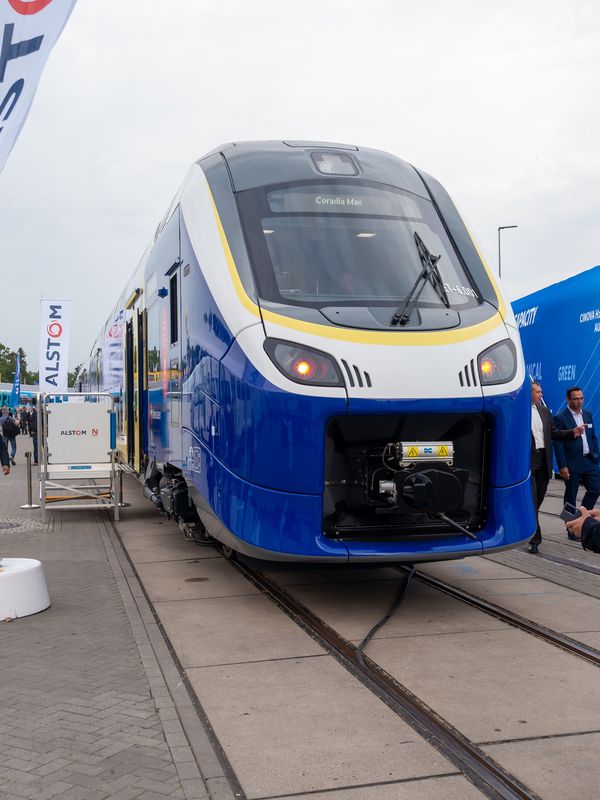
PARIS — The Alstom share price plunge began before most of Paris had finished its first coffee. Shares in the French train maker fell about 30 percent in early trading on Euronext Paris on Monday, November 2, after the company cut its full-year outlook for the second time this year and warned that free cash flow for fiscal 2026/27 would come in at around minus €1.5 billion. By the time Reuters compiled its European market wrap, the stock was down 27 percent, and by 1045 GMT it was changing hands at €11.8, down 26 percent and at its lowest level since March 2024.
The trigger was not demand. Alongside the downgrade, Alstom published preliminary first-half results showing order intake of €11.0 billion and a book-to-bill ratio of 1.2 — customers are still ordering more trains than the company ships. Group sales rose 3 percent to €9.3 billion, including 2 percent organic growth. The problem is execution: a flagship regional-train programme in Germany is running late, the delay is consuming cash and contractual penalties, and the margin Alstom expected to earn this year has largely evaporated. Adjusted EBIT margin for the first half came in at around minus 4 percent, against plus 6.4 percent a year earlier.
The downgrade in numbers
- Share price: down about 30% in early Paris trading; down 27% in Reuters’ market wrap; €11.8, down 26%, at 1045 GMT — a March 2024 low; -54% in 2026 including Monday
- Order intake (H1 2026/27): €11.0 billion, book-to-bill 1.2
- Group sales (H1): €9.3 billion, up 3%, including 2% organic growth
- Adjusted EBIT margin (H1): around -4%, versus +6.4% a year earlier
- Free cash flow (H1): €(1,248) million
- Net debt: €1.1 billion at September 30, 2026
- New full-year margin guidance: adjusted EBIT margin around 1%, versus around 6.5% previously — implying a second-half margin of around 6.5%
- New full-year cash guidance: free cash flow of €(1.5) billion, versus “positive” previously
- Production target: cut to around 4,000 rail cars, from 4,400–4,500
- Sales growth: organic growth now guided to low- to mid-single digits (2–4% in some analyst summaries), versus around 5% previously; book-to-bill above 1 unchanged
- Balance-sheet response: board review to cut debt by around €2 billion by September 2027; new €2 billion revolving credit facility set up November 1, 2026, maturing November 2028, no covenants
Alstom outlook cut 2026: the second downgrade in under seven months
What made Monday’s reaction so violent is that this was not supposed to happen again. Less than seven months ago, Alstom cut its outlook and scrapped a three-year free cash flow target. Martin Sion took over as chief executive in April 2026, launched a set of priority initiatives with chief financial officer Bernard Delpit, Monday was the second downgrade on Sion’s watch, and it was deeper than the first: a margin guide cut from around 6.5 percent to around 1 percent is not a trim, and a free cash flow guide cut from “positive” to minus €1.5 billion is not a rounding error. Citi, which had warned clients before the open to expect a significant negative share reaction, estimated the negative cash flow forecast at roughly 20 percent of Alstom’s market capitalisation — a hole large enough to explain why shareholders headed for the exit at the opening bell.
What went wrong: the Coradia Max programme in Germany
Alstom Coradia Max delays Germany: industrialisation, testing and a stretched certification timeline
Alstom traced the downgrade to one programme above all: the Coradia Max, its modular regional train platform, and specifically the contracts to supply it in Germany. The company cited industrialisation challenges together with technical issues and additional testing that have extended the certification and homologation timeline. In plain terms, the trains are taking longer than planned to be approved for passenger service, deliveries to German customers are slipping, and six German contracts are affected, according to analyst coverage of the release. Late delivery of trains is not a victimless delay: regional contracts carry contractual penalties, and every month of slippage pushes revenue recognition out while the costs of building the trains stay in the present.
The production figures show the strain. Alstom paused production in the first quarter, and car production for the first half came in at 1,860 — trending below plan. That is the arithmetic behind the new guidance of around 4,000 rail cars, down from a range of 4,400 to 4,500: at the half-way mark, the factories simply had not built enough trains for the old number to survive contact with the calendar. The margin collapse follows the same logic. A train plant that pauses, restarts and re-tests is a plant paying for labour, components and penalties without shipping finished product — which is how a company with €9.3 billion of half-year sales and a growing order book prints an adjusted EBIT margin of around minus 4 percent.
The response: a €2 billion debt review and a new credit line
Alstom debt reduction 2 billion: the board looks at every option, organic and inorganic
Management’s answer, announced alongside the downgrade, has two parts: liquidity now, and a smaller balance sheet by September 2027. On liquidity, Alstom set up a new €2 billion short-term revolving credit facility on November 1, 2026 — the day before the downgrade — maturing in November 2028 and carrying no covenants. On structure, the board has launched a review of all organic and inorganic options to reduce debt by around €2 billion by September 2027, while maintaining what the company called a solid investment-grade rating. “Inorganic” is the word investors circle: it is the standard vocabulary for disposals — alongside organic measures such as working-capital discipline and capex control.
The review sits inside a broader organisational and operational overhaul, with decisions promised by early 2027 and a Capital Markets Day scheduled for the second quarter of calendar 2027. Reuters Breakingviews, in its assessment of the downgrade, framed the moment as the end of a debt-fuelled ride — the crunch, in its phrase, derailing Alstom’s “funky debt gravy train”. It captures the shift in the question investors are asking: not whether Alstom can sell trains, but whether it can stop borrowing against tomorrow’s deliveries to pay for today’s delays.
Why this matters
Strip the story to its frame and it is a stress test of the model on which Europe’s rail industry runs. Governments across the continent are ordering trains at a pace not seen in decades. Alstom’s €11.0 billion of half-year order intake and 1.2 book-to-bill prove the demand is real. What Monday showed is that demand is the easy part. The hard part is industrialisation: certifying a platform in each national market, ramping a factory to build it identically hundreds of times, and converting contracts into cash on schedule. Alstom failed that test on one programme, and the failure was large enough to move its full-year margin by five and a half points.
Alstom margin forecast 1 percent: the second half has to deliver 6.5 percent
The most important number in the new guidance is the one Alstom did not headline. A full-year margin of around 1 percent, after a first half of around minus 4 percent, arithmetically requires a second-half margin of around 6.5 percent. Even the slashed target assumes the second half goes almost exactly to the old plan: production un-pauses, certification lands, deliveries bunch into the final months. Rail deliveries are famously back-loaded, so it is possible — but after two downgrades in seven months, it is a promise the market will price only when it sees the trains move. Management’s credibility test for the next two quarters is therefore unusually concrete: hit roughly 6.5 percent in the second half, or explain a third miss.
Alstom free cash flow minus 1.5 billion: the cash math behind the panic
The cash line explains the violence of the share reaction better than the margin line. Free cash flow was already negative €1,248 million in the first half; the new full-year guide of minus €1.5 billion means the second half is expected to burn roughly another quarter of a billion. Citi’s estimate that the negative forecast equals about 20 percent of market capitalisation converts that into shareholder terms: the company expects to consume, in one year, cash worth a fifth of what the entire company was worth before the downgrade. Against that, the €2 billion credit facility and the €2 billion debt-reduction target are the bridge between a bad year and a balance-sheet problem — which is why the rating agencies’ view will be watched as closely as the delivery figures.
The wider market: one collapsing stock, one flat index
European shares STOXX 600 Alstom: the session in context
For the rest of Europe, Monday was unremarkable — which is precisely what made Alstom’s fall stand out. The pan-European STOXX 600 slipped 0.3 percent to 645.04 by 0813 GMT, with healthcare and energy shares each falling about 1 percent, and Brent crude down about 3 percent as talks between Iran and Qatar progressed. Airlines even rose, with Lufthansa up 1.6 percent and Air France up 2 percent. The contrast with this autumn’s pressure on French assets is instructive: in our reporting on French bond yields jumping to 4.9 percent as the spread over Germany hit 146 basis points, the pressure on French assets came from politics and public finances. Monday’s damage was narrower and, for Alstom’s shareholders, deeper: a single company’s factory floors, not the Republic’s budget. It echoed a pattern across this earnings season, in which investors have repeatedly punished companies whose cash goes out faster than the story says it should return — as with Amazon’s stock falling after earnings despite record cloud growth and the big-tech earnings week dominated by spending bills.
Who gains, who loses
German states and passengers lose first, in time rather than money. The Länder and authorities that ordered Coradia Max trains face later deliveries, older trains kept in service longer, and service improvements deferred — penalty payments compensate budgets but do not put one additional seat on a platform.
Shareholders have already lost. A 54 percent decline in 2026, capped by Monday’s fall to a March 2024 low, is the market repricing Alstom from a growth-and-cash story into a restructuring story. Bondholders hold the other end of that trade: the investment-grade pledge and the new covenant-free facility protect them for now.
Rivals gain an argument, not yet the orders. Analysts noted the read-across for competing train builders: every Alstom delay strengthens the hand of rival manufacturers in future German and European tenders, where delivery credibility is scored alongside price. But contracts are sticky, certification is national, and a competitor cannot simply inherit a Coradia Max production slot — the realistic gain is reputational, banked for the next procurement round rather than this one. Suppliers, meanwhile, share Alstom’s pain in miniature: a cut from up to 4,500 cars to around 4,000 is hundreds of trains’ worth of components ordered later or not at all this year.
What happens next
Alstom stock news November 2026: the dates and numbers that decide the story
Three scenarios now branch from Monday. In the first — the one embedded in Alstom’s own guidance — the second half delivers: certification milestones land, production climbs back toward the reduced 4,000-car target, the second-half margin prints near 6.5 percent, and the early-2027 review produces a credible, mostly organic path to €2 billion of debt reduction by September 2027. In that world, Monday becomes the capitulation low and the Capital Markets Day in the second quarter of 2027 is a relaunch. In the second scenario, the fix is bought rather than built: the board’s review leans inorganic, with disposals of non-core businesses or stakes funding the debt cut — faster deleveraging, at the price of a smaller company. In the third, the German programme slips again, the second-half margin misses the implied 6.5 percent, and a third downgrade turns a credibility problem into a ratings problem, with the September 2027 debt target arriving before the cash does.
The checkpoints are concrete: certification progress in Germany, production run-rates against the 4,000-car target, the review decisions due by early 2027, and any rating-agency response. Until the first is passed, the burden of proof sits with Saint-Ouen: Alstom has the orders — what it has to prove, train by train, is that it can build what it has already sold. Is this a buying opportunity created by one bad programme, or the start of a longer restructuring? Tell us in the comments — and like and follow Signal Post News for the delivery and certification updates as they land.
Sources
Alstom — official press release, November 2026: preliminary first-half 2026/27 results (order intake €11.0 billion, book-to-bill 1.2, sales €9.3 billion, adjusted EBIT margin around -4%, free cash flow €(1,248) million, net debt €1.1 billion), the revised full-year outlook and the board’s debt-reduction review. Reuters — European market wrap, November 2, 2026: Alstom down 27%, the STOXX 600 at 645.04. Reuters Breakingviews — November 2, 2026: the cash crunch and the debt model. Euronext / Reuters — November 2, 2026: the plunge report, the €11.8 print, analyst coverage of the six affected German contracts and Citi’s estimate. This article is reporting and analysis, not investment advice.