giant pandas Atlanta Zoo
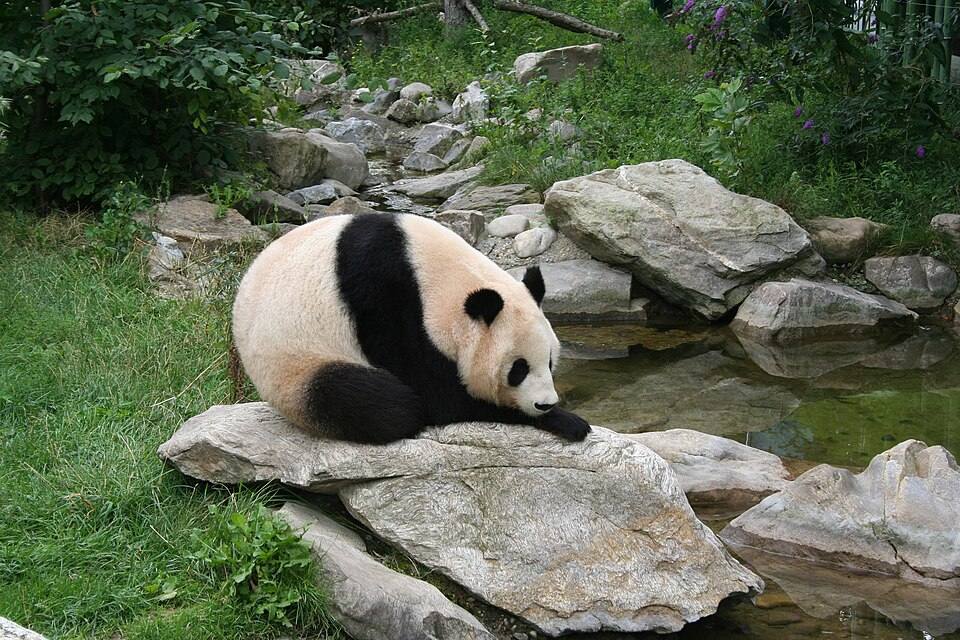
On the morning of September 24, in the Grand Foyer of the White House, Chinese President Xi Jinping interrupted the formal choreography of his first state visit to America in more than a decade with what he called “a piece of good news.” Speaking through a translator beside President Donald Trump, Xi announced that two giant pandas — Ping Ping and Fuhuan, transliterated Fu Shuang in some reports — would arrive at Zoo Atlanta “in a few days,” calling the bears “an envoy of friendship between the Chinese and Americans.” It was the single clearest deliverable of a summit weighed down by tariffs, artificial intelligence, Taiwan and the war over Iran — and it arrived in black and white.
The announcement
Xi arrived at Joint Base Andrews on September 23 for a visit designed to signal that the two largest economies could keep talking despite deep strategic rivalry. The next day, Trump used a social-media post to describe Xi as “strong, vibrant, and fit” and to celebrate what he called a “truly great friendship.” Those words established the tone; the giant pandas Atlanta Zoo announcement gave that tone a living symbol.
Xi said the pair would come from the Chengdu Research Base of Giant Panda Breeding and arrive “in the coming days.” The announcement did more than promise two popular animals to a major American zoo. It placed a familiar Chinese diplomatic instrument inside the most watched moment of the state visit, after the formal arrival and alongside negotiations that carried far greater economic and security consequences.
The pageantry continued at a state dinner attended by technology leaders including Elon Musk, Jeff Bezos, Tim Cook, Jensen Huang and Sam Altman. The menu included seabass. Trump presented Xi with a large bronze bald eagle, describing it as the “national symbol of the United States and an embodiment of the free and soaring spirit of America,” and said he hoped it would find “a wonderful place in Beijing.” The exchange was carefully balanced: America's emblem went east, while China's most recognizable diplomatic symbol headed west.
Why this matters
Pandas may be the most honest barometer of the U.S.-China relationship because they turn a vague diplomatic climate into a visible decision. When relations cool, loans expire and animals leave. When leaders want to advertise room for cooperation, pandas return. Atlanta makes the symbolism unusually sharp. Zoo Atlanta was the last U.S. zoo to lose its pandas when four animals returned to China in November 2024. Now it is the institution being restored to the map.
The symbolism is the message. A panda loan is not arranged in the hours between an airport welcome and a state dinner. It requires months of veterinary planning, habitat preparation, contractual negotiation, transport work and approval high inside China's political system. That means the decision behind the Zoo Atlanta new pandas was made well before Xi entered the White House. Beijing arrived at the summit intending to show that it wanted the thaw to hold.
That does not make the gesture empty. Soft power works precisely because it creates a public constituency for keeping a relationship open. Families who visit a panda exhibit are not negotiating semiconductor controls or Taiwan policy, but they are participating in a cultural bond that makes total estrangement harder to sell. China is offering warmth at a moment when both governments have reasons to prevent rivalry from becoming rupture.
A century of panda diplomacy
The modern American memory of panda diplomacy begins with President Richard Nixon's 1972 visit to China. Beijing sent Ling-Ling and Hsing-Hsing to Washington, and more than one million people visited them in their first year. The bears became one of the most durable public images of the opening between two countries that had spent decades apart.
China had already used pandas as diplomatic gifts. Between 1957 and 1982, it donated 23 bears to nine countries. In 1984, Beijing shifted from outright gifting to long-term loans, generally structured around 10-year agreements. The change let China retain ownership, direct conservation priorities and turn the symbol into a managed program rather than a permanent transfer.
The loan map has repeatedly tracked the temperature of international relations. American panda populations thinned as trade disputes and tensions over Taiwan intensified. The trend reversed in 2024, when San Diego and Washington, D.C., received new pairs. Chinese state media says 17 cubs have been bred under U.S. loan programs: six in San Diego, four in Washington and seven in Atlanta. Zoo Atlanta's record makes its return to the program more than ceremonial; it restores an experienced breeding and research partner.
Wu Xinbo, a professor at Fudan University, captured the strategy in one sentence: “Americans may not like China, but they will certainly like pandas.” The remark is blunt, but it explains why the program has survived so many changes in leadership and policy. Pandas allow Beijing to place affection beside arguments that otherwise produce fear, anger or distrust.
What the numbers actually say
A 2022 U.S. Congressional Research Service report said zoos typically pay about $1 million a year for a pair of pandas, with the money earmarked for conservation programs in China. Cubs born abroad remain China's property and generally return between ages two and four. The agreements can also include a payment of at least $200,000 for each cub — a fee sometimes described as a “baby tax.”
For a host zoo, the financial picture is larger than the annual loan fee. Panda habitats require specialized food supply, veterinary care, climate control, security and staff expertise. Animal-welfare critics argue that such spending can pull money and attention from less charismatic species whose conservation needs may be just as urgent.
Yet a panda can function as an anchor tenant. Atlanta's previous bears were central to the zoo's conservation identity and among its strongest visitor draws. Increased attendance, memberships, sponsorship and tourism can offset part of the cost while giving the institution a platform for broader education and research.
Against a U.S.-China trade relationship measured in hundreds of billions of dollars, the direct value of the loan is trivial. That is precisely the point. Pandas are a signal, not a transaction. Their utility is not in changing a tariff schedule by themselves but in telling officials, markets and the public that leaders have chosen a language of continued engagement.
Who wins, who loses, what the skeptics say
Zoo Atlanta and conservation researchers win first. The institution regains the species that defined much of its international conservation work, while scientists renew access to a breeding and behavioral research partnership with the Chengdu base. Atlanta also gains a powerful visitor draw after nearly two years without pandas.
Xi wins a goodwill headline. A loan that is modest beside the summit's economic stakes becomes the visit's most universally understandable image. It lets Beijing present strength and warmth at once: China controls an animal the world wants to see, and Xi can choose where it goes.
Trump gains a tangible deliverable. He can point to pandas, a proposed “board of trade” and what he called “tremendous strides” in the trade war as evidence that the summit produced movement. The bears are also photogenic proof of a relationship that both leaders publicly described in personal terms.
The skeptics' case is straightforward. Pandas do not move the needle on tariffs, advanced-chip restrictions, Taiwan or China's purchases of Iranian oil. The Times reported that Trump did not raise Iran at the opening. On that reading, panda diplomacy is soft-power theater while the hardest disputes remain untouched.
There is also a conservation critique. The costs of keeping pandas are immense, their diets and habitats are specialized, and the attention attached to them can distort funding toward a famous species. Supporters answer that the loans finance conservation, build scientific cooperation and draw visitors who support entire zoos. The honest conclusion is that both effects can be real: the program advances research and public engagement while benefiting from a charisma premium few other endangered species receive.
What happens next
Ping Ping and Fuhuan are expected to land in Georgia within days. The first operational questions will concern transport, quarantine and habitat preparation as Atlanta welcomes its first pandas in nearly two years. The speed suggested by Xi's announcement indicates much of that work is already advanced, but the zoo's public rollout and the animals' readiness for visitors will depend on veterinary assessments.
The diplomatic test is harder. Watch whether the goodwill converts into movement on the summit's substantive agenda: an artificial-intelligence dialogue, tariff de-escalation and the treatment of Chinese companies. Xi argued that the two countries have “more opportunity for cooperation than competition” on AI and said development should remain “always under human control.” He also pressed for fair treatment of Chinese businesses.
If the panda glow fades while those disputes remain frozen, the announcement will be remembered as the summit's cutest distraction. If negotiations continue and the relationship stabilizes, historians may cite the bears as the moment Beijing chose to make a genuine reset visible before either government was ready to declare one.
In an era of summitry that produces more communiqués than results, two pandas may be the most honest statement either leader made all week: that the relationship, for now, is worth keeping alive.
Sources
- USA Today: Trump praises Xi during the state visit
- USA Today: China to send giant pandas to Zoo Atlanta
- New York Post: five unexpected moments from the Trump-Xi state visit
- CNBC Daily Open via Netzender: the return of panda diplomacy
- The Times: Trump-Xi meeting and the U.S.-China relationship
Reporting cutoff: September 26, 2026. The summit statements, guest list, gifts and panda timetable are drawn from the cited reporting. Analysis is Signal Post News's.