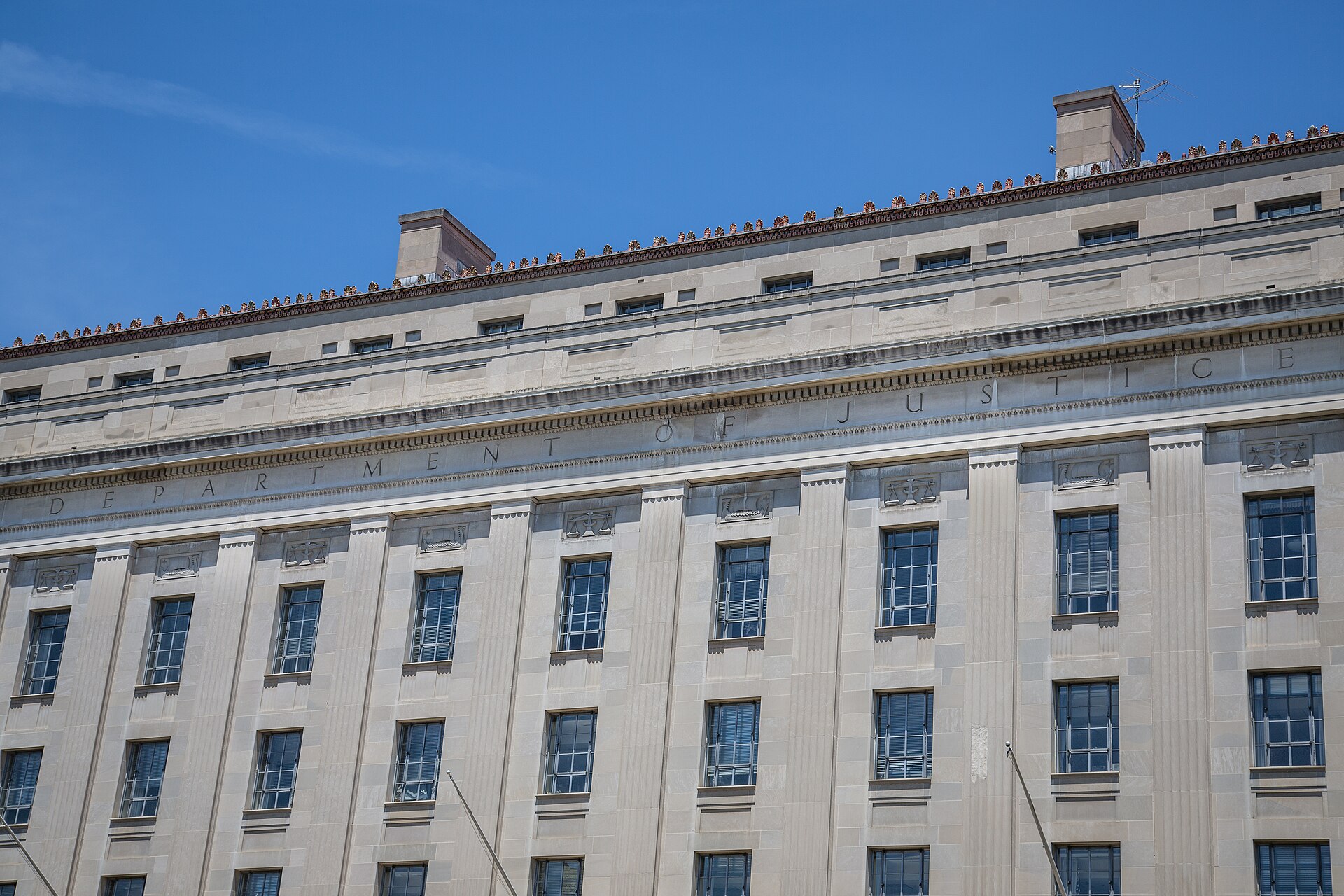
SNAP fraud $42 million: Vice President JD Vance stood with the Justice Department in Cincinnati on Wednesday, October 21 as federal officials unveiled the first nationwide SNAP enforcement surge — more than 40 defendants, nearly $45 million in intended losses, and nearly $42 million of it in food stamp fraud alone.
U.S. / Politics & Crime — a $29.7 million Chicago EBT case, a rapper indicted over 500 stolen cards, and the human cost officials kept coming back to: a mother whose card was declined

What was announced in Cincinnati on Wednesday
Vance, who chairs the White House Task Force to Eliminate Fraud created by President Donald Trump, presented the surge alongside Attorney General Todd Blanche and Agriculture Department officials at the Cincinnati FBI field office on Wednesday, October 21. The Cincinnati Enquirer’s live coverage put the local scene plainly: Vance walked out to loud rock music, recalled his first job as a cashier at Dillman Foods in Middletown, Ohio, and said SNAP exists to “help hungry children eat” — not to be stolen from. Blanche told the room the federal government had uncovered $42 million of fraud since officials began looking more intensely on September 1, and put the human arithmetic on it: 220,000 Americans, he said, could have eaten for the entire month of October on what was taken.
The Justice Department’s written release (Press Release 26-1238, October 21) is more precise than the podium version, and the distinction matters. The nearly $45 million figure is intended loss across all the surge’s cases, SNAP and otherwise; nearly $42 million of that intended loss involved SNAP benefits specifically. One case in the package is not a SNAP case at all but a Florida crop-insurance guilty plea. The actions span indictments, criminal complaints, guilty pleas and sentencings accumulated between September 1 and October 21 — a surge in the literal sense: cases built over months and years, announced together on one day, in the vice president’s home state, seven weeks into the enforcement window and less than two weeks before the November 3 midterm elections.
The biggest case: $29.7 million through Chicago stores, on Ohio cards
United States v. Jorag Yaseen and Rami Kanaan (Southern District of Ohio, Case No. 3:26-cr-00099-TMR) is the centre of gravity. A federal grand jury indicted the two men on conspiracy to commit wire fraud, wire fraud and conspiracy to commit money laundering. Prosecutors allege that between about February 2024 and April 2025, Yaseen and Kanaan operated approved retail food stores in Chicago and processed thousands of transactions using stolen Ohio and other state EBT account information — transactions that looked like ordinary food purchases but, the indictment says, involved no real sales at all. State administrators, fooled by the apparently legitimate purchases, transferred federal funds to accounts the defendants and others controlled: an estimated $29.7 million loss. Some of the proceeds, prosecutors allege, bought automobiles for use and shipment overseas. The indictment even itemises the mechanics at ground level: three alleged wire transactions on March 4, 2024, run on a stolen Ohio EBT card belonging to a Greene County resident, totalling $1,243.46. Newsmax’s account of the announcement describes the same Chicago case as the largest in the package, and the Center Square’s report adds that Assistant Attorney General Colin McDonald told the Cincinnati audience that prosecutors in Southern Ohio had returned the indictment and that the two men were arrested in Chicago on Wednesday morning. Yaseen and Kanaan are charged, not convicted; the figures above are the government’s allegations.

The case built for the cameras: Shawty Dred and 500 Georgia cards
If the Ohio case supplied the money, the Georgia case supplied the story the cameras wanted. Mercedes New, a rapper and social media influencer known as Shawty Dred, was indicted on October 7 in the Northern District of Georgia (26-CR-473) for food stamp fraud, mail fraud, access device fraud and aggravated identity theft. The Justice Department says the investigation began in 2025, when Georgia’s Department of Human Services inspector general detected an attack on the interactive voice-response phone system SNAP recipients use: phone numbers associated with New had called the EBT line more than 9,000 times and accessed more than 350 separate SNAP accounts. Investigators ultimately linked more than 500 Georgia EBT cards to New, with an estimated fraud loss of $4.4 million in stolen benefits; about $635,000 of the early transactions ran through Shawty Dred LLC, his own formerly SNAP-authorised store in Atlanta. In November 2025 he was arrested at a Walmart in East Point, Georgia, allegedly soliciting customers to buy EBT cards from him; police seized 14 Georgia EBT cards. He was arrested again, on the federal case, in Las Vegas on October 13. Vance played the room a social media video of New boasting about private-jet travel, and the New York Post’s account dwells on the influencer’s jewellery-and-Rolls-Royce persona. A separate Justice Department release from the U.S. Attorney in Atlanta puts the amount at more than $4 million and quotes USDA Inspector General John Walk saying New allegedly “flaunted his luxurious living off fraudulent proceeds on Instagram and TikTok.” New is indicted, not convicted, and the lifestyle details are the government’s characterisation, carried here as such.
The rest of the surge, case by case
Pleas and sentencings — the proven end of the package
Three of the ten notable cases the department listed are already resolved in the government’s favour. In the District of Oregon (Dumitru et al., No. 3:24-cr-00383-AN), Ana Patricia Escalante was sentenced on September 9 to 27 months in federal prison and ordered to pay $2.4 million in restitution: she led a transport crew that collected and shipped infant formula bought with stolen benefits — more than 124,000 pounds of it, per shipping records — gathered by a theft crew using skimming devices; 12 of 17 defendants in that conspiracy have now been sentenced, to a combined 157 months. In the Middle District of Florida, Mark Frisbie pleaded guilty on September 29 to years of false crop-insurance claims — he reported under $800,000 in sales while actually selling more than $6.8 million of bell peppers and tomatoes — causing $1,748,408 in improper indemnity payments, and agreed to a further $1,506,992.26 in restitution for defrauding two farmer-relief programmes. In the Eastern District of Michigan, Kirk Deshaun Woodley pleaded guilty on September 22 to conspiracy and aggravated identity theft in a scheme built on the personal information of more than 650 victims, and Chantel LaShawn Peavy was sentenced on October 20 to 18 months.
Charges pending — the alleged end
The remaining cases are allegations. In the Western District of Michigan, Lansing convenience-store owner Mohinder Singh is indicted for allegedly trading cash for benefits at fifty cents on the dollar and charging fees on credit extended to customers ($1,089,949 intended loss). In the Northern District of Ohio, six defendants were charged by complaint on October 6 with allegedly exchanging SNAP cards for cash, marijuana and other ineligible items at a Euclid gas-station store over about two years (more than $1 million). In Massachusetts, Rodolfo Armando Fernandez Guzman is charged by complaint with using a stolen identity to obtain $22,402 in SNAP benefits alongside MassHealth and Section 8 benefits. In the Eastern District of Pennsylvania, a 39-count indictment charges Michael Swanson and three others in a case the department describes as the exploitation of intellectually disabled women for their Social Security and SNAP benefits; the SNAP loss alleged is $13,392, and the non-fraud counts in that indictment are grave — all four defendants were arrested on October 14 and are presumed innocent. The smallest item, a Utah state information against Sahara Market co-owner Besmulla Yaqoobi ($5,994.89), rests on surveillance of large EBT transactions followed by customers leaving with little or nothing.
Why this matters
Start with scale, because the headline number invites two opposite misreadings. Nearly $42 million is real money and, on the evidence of the Oregon and Georgia cases, some of it was stolen at industrial scale by organised crews with skimmers and transport networks. It is also, set against SNAP itself, a rounding error: the programme serves tens of millions of people a month and spends well over $100 billion a year, so the entire seven-week surge amounts to a few hundredths of one percent of annual spending. Both things are true at once, and the politics of the announcement depend on which one a listener hears. The administration’s framing — Rollins: “food stamp fraud ends now”; Blanche’s 220,000-meals arithmetic — treats the cases as proof of a programme riddled with theft. The case list itself tells a narrower, more interesting story: the dominant method was not recipients lying about income but outsiders stealing recipients’ benefits — skimmed card data, phished phone-system credentials, phantom store transactions. In most of these cases the SNAP household was the victim, not the perpetrator, a point McDonald made himself in describing “the panic of a mother whose card is declined.” That distinction decides what reform would even mean: tougher eligibility policing does nothing against a skimming crew in another state, whereas chip-enabled EBT cards, transaction alerts and faster benefit replacement attack exactly the methods in these indictments.
The second significance is institutional. The Fraud Division running this surge was created on April 7; the task force Vance chairs is the same vehicle that produced the WHIP whistleblower bounty programme this month. Wednesday’s event was the model’s first mass product: dozens of pre-existing investigations, re-badged as one national surge and unveiled by the vice president in person. Supporters will call that coordination — 13 districts, the USDA inspector general, HSI, the FBI and state partners in one release is genuinely unusual. Critics of similar past rollouts note that bundling old cases into a new headline number can overstate what the new machinery itself produced: the Oregon conspiracy was indicted in 2024, the Georgia investigation began in 2025, and several pleas were entered before the September 1 window even opened. The honest reading keeps both: the cases are real, the coordination is real, and the $42 million is a curated total, not a seven-week crime wave suddenly discovered.
What the numbers actually imply
Concentration is the story inside the total. One case — Yaseen and Kanaan — is $29.7 million of the nearly $45 million intended loss: roughly two-thirds of the entire surge in a single indictment. Add the Georgia ($4.4 million) and Oregon ($4.4 million) matters and three cases carry about 85 percent of the headline. The median case in the package is closer to $1 million, and the tail runs down to $5,994.89. That shape — a few very large organised schemes and a long tail of small retailer and identity cases — matches what benefit-fraud researchers have long described, and it cuts against any simple picture of millions of individual recipients cheating a little. It also explains the enforcement economics: a single compromised-store investigation can protect more money than thousands of eligibility audits. Newsmax reported administration figures putting the task force’s cumulative identified SNAP fraud at roughly $641 million including Wednesday’s cases; that cumulative number is an administration claim reported from the event, not a figure in the Justice Department release, and it should be read as such.
The other side, and the open questions
No defence statements were included in the department’s release, and none of the newly indicted defendants had commented in the coverage available on Wednesday; their cases will be tested in court, and several of the dollar figures are “intended loss” — the amount prosecutors say a scheme was built to take — rather than money proven gone. Anti-hunger advocates, who were not part of Wednesday’s event, have argued in past fraud debates that enforcement spectacles can stigmatise a programme most recipients use lawfully and briefly, and that stolen-benefit victims historically struggled to get their balances restored; the department’s own victim account on Wednesday — loans taken out to feed four children — is the strongest version of that point, made from the government’s own podium. There are also questions the announcement did not answer: how much of the $42 million has been or will be recovered, whether states will move faster to chip cards and kill the skimming model that powers the biggest cases, and whether the surge is a one-day bundle or the start of a standing cadence from the new Fraud Division. Vance’s task force has now shown its two opening moves in eight days — pay whistleblowers, then unveil prosecutions — and the test that matters is the unglamorous one: convictions, recoveries, and whether the declined-card stories get rarer.
What happens next
The indicted cases move to arraignments and plea negotiations across at least ten federal districts; the Ohio case, given its size, is the one to watch, and its first court appearances should clarify how much of the $29.7 million the government can tie to the defendants directly. The administration, two weeks out from the midterms, has every incentive to keep fraud in the headlines — Vance spent the same Cincinnati trip at a midterm rally in Sharonville, where the fraud message and the campaign message ran in parallel. Related coverage on this site: our reporting on the administration’s wider fraud-enforcement drive, including the investigation of nine universities over J-1 visa fraud and the earlier case of roughly 760,000 ACA enrollees removed in a fraud review, shows the same pattern — a central task force, district-by-district cases, and one national number to carry the story.
Sources
U.S. Department of Justice, Office of Public Affairs (October 21, 2026), “DOJ’s Fraud Division, Department of Agriculture, and USDA OIG Uncover Nearly $42M in SNAP Benefit Fraud in Nationwide Enforcement Surge” (Press Release 26-1238) — surge totals, all ten notable cases, charges, quotes and partner lists, read in full. U.S. Attorney’s Office, Northern District of Georgia (October 2026), “Social Media Personality Shawty Dred Indicted for $4 Million SNAP Fraud Scheme.” Cincinnati Enquirer (October 21, 2026), live coverage of Vance’s Sycamore Township press conference — Blanche’s $42 million since September 1, Vance’s cashier remarks. Newsmax (October 21, 2026), “Vance Unveils Nearly $42 Million in SNAP Fraud Cases” — $29.7 million Chicago case detail, intended-loss total of nearly $45 million across programmes, administration cumulative figure of roughly $641 million (attributed as an administration figure). New York Post (October 21, 2026) — event colour, the Shawty Dred video shown at the press conference, charge counts as reported. The Center Square via Perk Valley Now (October 21, 2026) — 40 individuals charged, McDonald on the Southern Ohio indictment and Chicago arrests. All indicted or complained-against defendants are presumed innocent until proven guilty; figures described as “intended loss” are prosecutors’ estimates, and administration cumulative totals are attributed claims, not audited figures.