US suspends consular services Brazil
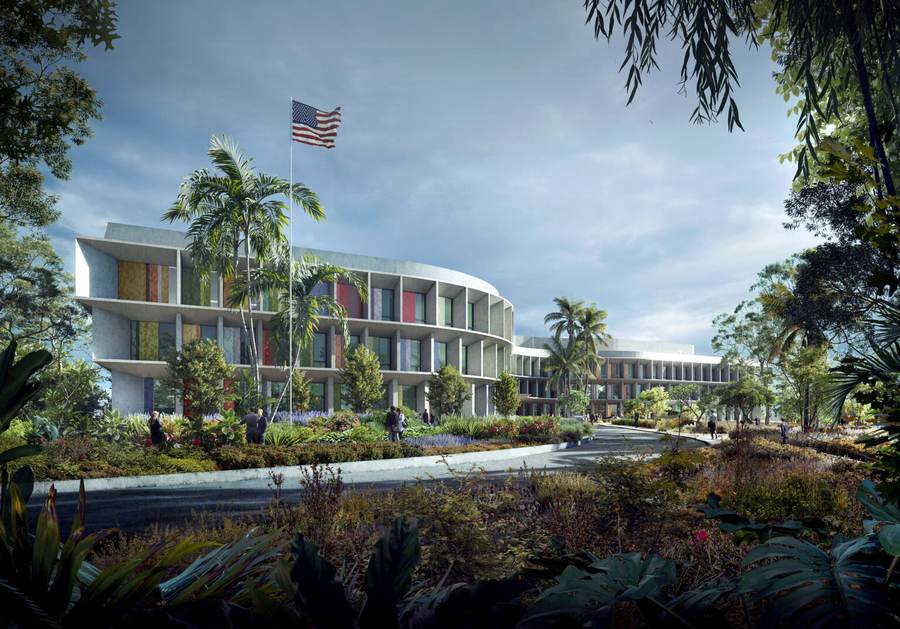
BRASÍLIA — US suspends consular services Brazil-wide on Friday, October 2, citing security concerns that Washington did not describe, just two days before the country's presidential election. The measure covers the U.S. Embassy and consulates across Brazil. It interrupts routine consular work, carries a direct warning for Americans seeking emergency help and lands at the most politically sensitive point in Brazil's election calendar.
In a statement issued Thursday, the U.S. State Department said consular services would be suspended beginning Friday because of security concerns. It instructed U.S. citizens who need emergency assistance not to go to the embassy, consulates or other American diplomatic facilities while the pause remains in force. The department did not explain what prompted the alert, did not connect it to Sunday's vote and did not say when services would resume.
Those omissions matter. A temporary closure can be prudent even when authorities cannot disclose operational intelligence. But without a stated threat, affected travelers and residents cannot tell whether the concern is localized, election-related or part of a wider protective posture. The responsible conclusion is narrow: the facilities' public-facing consular operations are suspended; the reason is unspecified; and the timing is close to the election, not officially attributed to it.
Why this matters: a security measure inside a political crisis
The immediate effect is practical. Visa interviews, document services and routine citizen assistance are disrupted. Americans with urgent problems are being told not to approach the facilities that ordinarily serve as their point of contact. Until Washington provides an alternative procedure or reopening date, the phrase US embassy Brazil closed captures the public impact, but not necessarily the status of every diplomatic function: the State Department announced a suspension of consular services, not a severing of relations or a full evacuation.
The larger effect is political interpretation. Security precautions around an election would be sensitive in any country. In Brazil, they arrive after months of direct confrontation with the Trump administration over ambassadors, visas, tariffs and organized-crime designations. A neutral operational step can therefore be read as a diplomatic signal even when officials insist on no such link. That ambiguity gives every campaign room to fit the suspension into its own story.
President Luiz Inácio Lula da Silva can point to the timing as another reminder of foreign pressure, reinforcing his repeated warnings about interference. Senator Flávio Bolsonaro can argue that the breakdown reflects deteriorating relations under Lula and that restoring access to Washington requires a change in leadership. Neither interpretation is established by the State Department's brief statement. Both are politically available.
Brazil presidential election 2026: Lula and Flávio Bolsonaro enter the final weekend
Brazil votes Sunday, October 4, in the first round of a contest led by the 80-year-old incumbent Lula, who is seeking a fourth presidential term, and Flávio Bolsonaro, the senator and son of former president Jair Bolsonaro. Recent polling cited in reports on the suspension placed Lula at roughly 39% and Flávio at about 34%.
That five-point spread is meaningful but not decisive. Polls estimate a moving electorate, and a first round also includes other candidates whose supporters can determine whether the race is resolved or advances. For a deeper look at the polling structure and runoff stakes, see Signal Post News's earlier analysis of the Brazil election 2026 contest between Lula and Bolsonaro.
Jair Bolsonaro is not on the ballot. He was imprisoned following his conviction over the attempted coup after his defeat in the 2022 election. His son's candidacy nevertheless keeps the family at the center of the race and turns Sunday's vote into a test not only of Lula's record, but of whether Bolsonaro's movement can transfer its loyalty to a successor carrying the name.
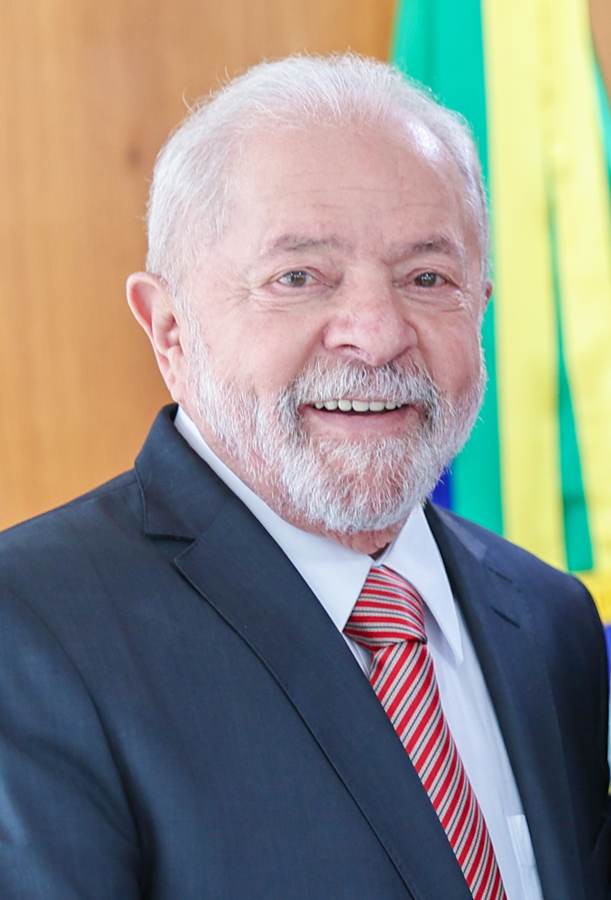
Brazil election security concerns: what Washington said — and did not say
The official language is notable for its economy. The State Department named security concerns, gave a start date and issued a safety instruction. It did not identify protests, intelligence, a specific city, a person or a group. It did not say American personnel were being withdrawn. It did not advise U.S. citizens to leave Brazil. And it did not state that the Brazil vote October 4 2026 was the cause.
That leaves three analytical possibilities. The first is a narrowly precautionary decision based on information that cannot yet be public. The second is an election-period measure intended to reduce exposure near diplomatic compounds while large crowds and political tension are possible. The third is a broader diplomatic-security response connected to the summer's escalation. Public evidence available Friday does not distinguish among them.
Critics of Washington will focus on the absence of detail and the timing. Defenders will answer that publishing threat intelligence can endanger sources or telegraph defensive plans. Both points can be true. Transparency has value, but consular security decisions are often made under uncertainty, when the cost of waiting can be higher than the cost of a temporary interruption.
How the US Brazil diplomatic crisis escalated over the summer
First came the ambassador dispute. In August, the Trump administration revoked the visa of Brazil's ambassador in Washington. The move was described as reciprocal after Brazil delayed granting agrément — formal approval — to Trump's chosen ambassador, Danny Perez, and denied visas to U.S. officials. The Wall Street Journal and an Associated Press report carried by SRN News documented that standoff.
Then trade became electoral terrain. Washington imposed tariff increases of as much as 37.5% on thousands of Brazilian exports. Lula's government characterized the measure as an attempt to influence the election. Tariffs of that scale are not a diplomatic symbol alone: they can change landed prices, reduce orders, squeeze exporters' margins and encourage buyers to seek alternative suppliers. The economic burden can fall on Brazilian producers, American importers and consumers in varying proportions depending on the product and the availability of substitutes.
Security policy widened the dispute. The United States designated Brazil's two largest drug-trafficking groups — First Command of the Capital, known as PCC, and Red Command — as foreign terrorist organizations. Washington can present that as a response to transnational organized crime. Brasília can view the designation through the lens of sovereignty and the legal consequences of applying a terrorism framework to domestic criminal networks.
Lula answered with warnings about outside influence. He repeatedly raised the prospect of foreign interference, including fresh tariff pressure from Washington. Those warnings are now part of the campaign backdrop. The consular shutdown does not prove them, but its unexplained timing ensures it will be absorbed into the same argument.
Who benefits, who loses and what each capital is signaling
Washington signals caution and control. By suspending public consular access, the State Department reduces exposure at its facilities while retaining the option to reopen when officials judge the risk has changed. The cost is credibility: the less it says, the more others supply motives on its behalf.
Brasília gains a sovereignty argument but inherits the security burden. Lula can present himself as the defender of Brazil's democratic autonomy against economic and diplomatic pressure. Yet his government must also maintain public order and protect foreign missions. Any unrest would validate the prudence of added precautions even if it had nothing to do with U.S.-Brazil policy.
Lula may benefit politically from confrontation. An external antagonist can consolidate voters who are uneasy about Bolsonaro's alignment with Trump. But confrontation also gives opponents a concrete case that Lula's foreign policy has damaged access, trade and influence. His domestic policy strategy, including the welfare and health measures discussed in our analysis of Lula's welfare and weight-loss drug plan, remains part of the broader choice voters face.
Flávio Bolsonaro gains a contrast but carries his family's liabilities. He can promise warmer ties with Washington and blame Lula for diplomatic deterioration. The counterweight is his father's imprisonment after the 2022 coup-attempt conviction, which keeps democratic accountability and the Bolsonaro legacy inseparable from his campaign.
Exporters and consular users lose first. Businesses face the larger tariff shock, while travelers, families and visa applicants face immediate uncertainty from the services suspension. Political actors can turn ambiguity into messaging; citizens waiting for documents or assistance cannot.

The numbers: five polling points and a 37.5% tariff ceiling
The juxtaposition of 39% to 34% and tariffs of up to 37.5% explains why the diplomatic row can matter without mechanically deciding the vote. A five-point polling lead gives Lula an advantage, but it is small enough for late turnout, smaller candidates and regional swings to matter. A tariff rate approaching two-fifths of a product's customs value is large enough to affect commercial decisions, yet its electoral effect depends on which industries, states and workers feel it most directly.
Neither number should be stretched beyond what it proves. The poll is a snapshot, not a result. The tariff ceiling applies to thousands of products but does not mean every Brazilian export faces the maximum. Still, together they show the asymmetry of the moment: a close election is unfolding under a bilateral economic measure with potentially broad distributional effects.
One related comparison is the U.S.-China tariff negotiations, where reductions were treated as leverage and relief. In Brazil's case, an increase becomes both an economic instrument and, because of the election calendar, a contested political message.
What to watch in the Brazil vote October 4 2026
Scenario one: Lula finishes clearly ahead. He would claim that voters rejected outside pressure and seek a mandate to resist Washington's trade approach. The bilateral relationship could remain tense, but a strong result might create room for pragmatic talks once the campaign incentive to escalate has passed.
Scenario two: Flávio Bolsonaro closes the gap or leads. That would strengthen his argument that voters want a diplomatic reset. Washington would then face scrutiny over whether its pressure helped an ideologically aligned candidate, regardless of whether that was the administration's stated intent.
Scenario three: neither resolves the contest. A runoff would extend the period in which every tariff action, visa decision and security notice can be read through campaign politics. The consular pause would become more consequential if it remains in place without explanation.
The fastest indicators will be operational: whether the State Department updates its guidance, whether emergency assistance is redirected to another channel, whether employees or dependants are ordered to leave, and whether Brazilian authorities announce any threat or protective action around U.S. facilities. The political indicators are equally clear: whether Lula explicitly links the closure to interference, whether Flávio frames it as proof of diplomatic failure, and whether either campaign urges supporters to stay away from diplomatic sites.
Conclusion: restraint is the only sound reading of an unexplained closure
The consular services suspended notice is important because it combines a real disruption, a direct safety instruction and an undefined threat at a volatile time. It should not be inflated into proof of election violence or a covert American intervention. The State Department itself made no such connection.
But timing is not meaningless. After the ambassador clash, visa retaliation, tariff increases and terrorism designations, a nationwide U.S. consular pause cannot land in a political vacuum. The next facts — a security explanation, a reopening date, credible Brazilian response and Sunday's result — will determine whether this episode remains a short operational precaution or becomes another marker in a deepening US Brazil diplomatic crisis.
Sources and reporting notes
- Reuters, October 2, 2026 — consular suspension, State Department statement, election timing and the summer diplomatic escalation.
- U.S. State Department statement, issued October 1, 2026 — official source for the suspension and emergency-assistance instruction, as reported by Reuters.
- The Wall Street Journal — ambassador and visa dispute background.
- SRN News / Associated Press — reciprocal visa action and diplomatic standoff.
- Demócrata — polling figures and election context.
Reporting note: The State Department did not disclose the underlying security concern, link the suspension to the election or publish a reopening date. Analysis distinguishes official statements from political interpretations. This is a fixed October 2, 2026 reporting snapshot.