US strike narco boat Caribbean
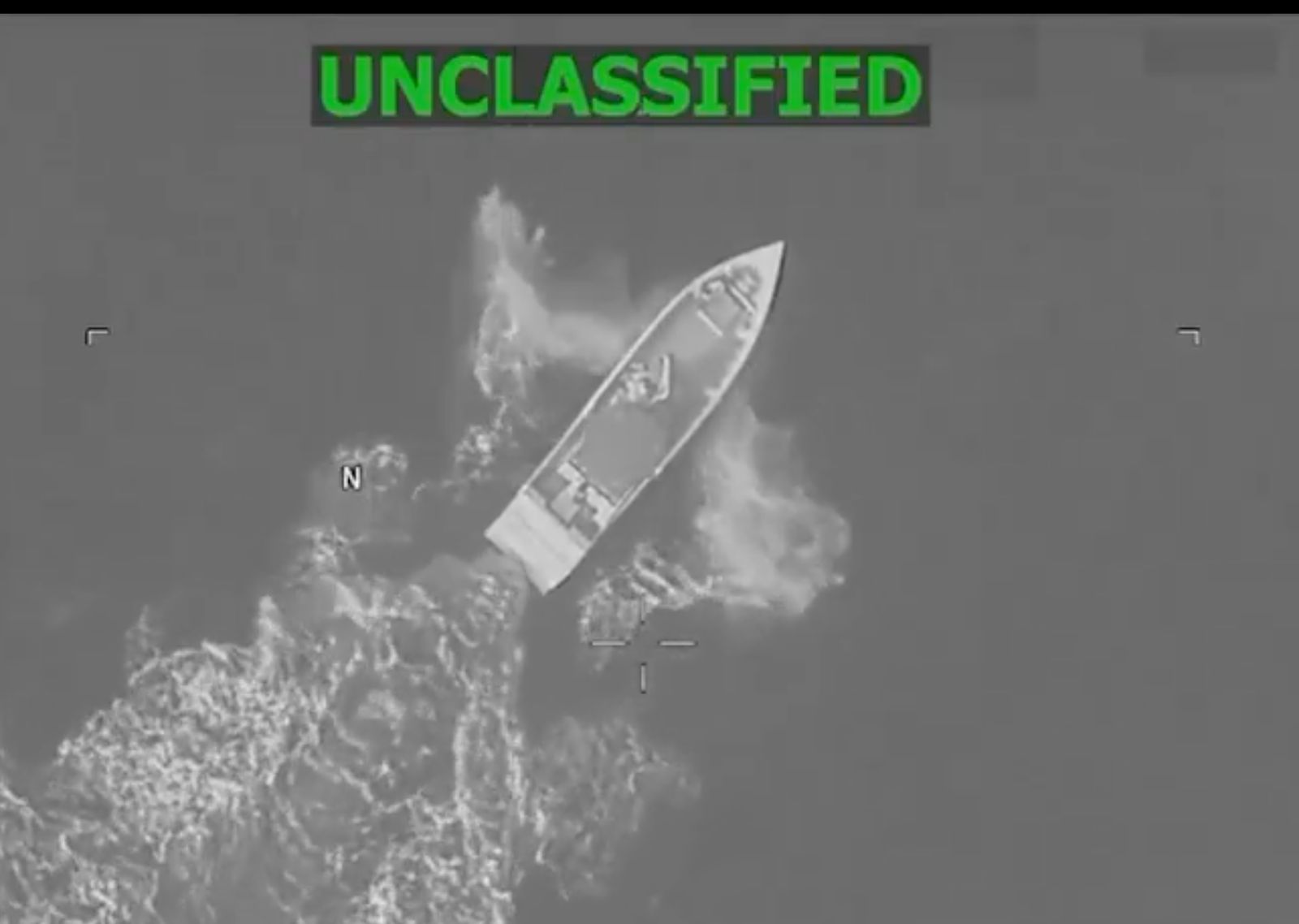
U.S. Southern Command announced Sunday, October 4, that American forces had carried out another lethal strike against a vessel in the Caribbean, killing four people. The command described them as “narco-terrorists” and posted a go-fast vessel strike video that appeared to show an explosion destroying the moving boat.
The official account and the public evidence are not the same thing. SOUTHCOM asserted that intelligence tied the vessel to narcotics trafficking, but it did not disclose that intelligence, identify the four people killed or produce evidence that drugs were aboard. Those gaps matter because this was not an arrest or interdiction. It was, by the military's own description, a lethal kinetic strike.
The cumulative scale is now stark. The Just Security timeline, updated October 4, counts 71 strikes and 238 people killed, including 23 missing and presumed dead, with three known survivors since the campaign began in September 2025. The Sunday attack therefore sharpens a question that has followed the operation for more than a year: what law permits the United States to kill people at sea based on evidence the public never sees?
What happened in the Southern Command Caribbean strike October 4
Joint Task Force Western Hemisphere carried out the attack
In the announcement quoted verbatim by Reuters, SOUTHCOM said that “under the direction of US Southern Command, Joint Task Force Western Hemisphere executed a lethal, kinetic strike on a go-fast vessel operating along established narco-trafficking routes in the Caribbean.” The statement located the vessel on a trafficking route but did not specify coordinates, its port of origin, its destination or the nationalities of those aboard.
SOUTHCOM said “confirmed intelligence revealed the vessel's active involvement in narco-trafficking” and that “the operation killed four narco-terrorists.” Reuters reported that no further evidence or detail accompanied the claim. The terminology is consequential: calling a person a terrorist signals an armed-conflict theory, while calling the conduct drug trafficking ordinarily points toward law enforcement, arrest and trial.
Caribbean drug boat strike footage shows the blast, not the case
The clip posted by SOUTHCOM appears to show a moving vessel followed by a large explosion. That is evidence that a strike occurred. It is not, on its own, evidence of what cargo the boat carried, who was aboard or why lethal force was necessary rather than interception. The distinction is easy to lose when the fireball becomes the story's defining image.
The New York Post reported that the Pentagon has refused to release the identities of those killed in these strikes and has not provided evidence of drugs aboard. No nationality has been verified for the four people killed Sunday. No verified reaction from another government to this specific strike was identified in the reporting reviewed for this article.
Why the 71st boat strike and 238 killed matter now
A sustained lethal campaign has become routine
Seventy-one strikes in roughly 13 months is not an occasional emergency measure. It is a continuing use-of-force program, averaging more than one attack per week. The 238-person toll — which includes those missing and presumed dead — is about 3.4 people per strike. In recent decades, few overt U.S. lethal campaigns in the Western Hemisphere have accumulated a comparable publicly tracked toll.
That comparison is analysis, not a legal conclusion. But it explains why the debate can no longer be contained within counternarcotics policy. A campaign of this frequency and lethality requires sustained answers about target selection, imminence, necessity, proportionality, detention alternatives and accountability when intelligence is wrong. The administration has offered its conclusion — that the targets are narco-terrorists — while keeping the supporting files secret.
The timing adds a political layer. The November 3 midterms are less than a month away. Images of boats exploding at sea can function as tough-on-drugs messaging even as courts and lawmakers ask whether the underlying legal theory is valid. That does not prove electoral motive. It does mean the campaign's public presentation and its legal scrutiny are unfolding on the same political clock.
The OLC memo boat strikes court order is the first judicial pressure point
On September 30, a federal judge in the Southern District of New York ordered the administration to provide the Office of Legal Counsel memorandum for in camera review and to submit a sworn declaration identifying everyone who had access to it, according to Just Security's timeline. In camera review means the judge sees the document privately; it does not automatically make the memo public.
Still, the order is the campaign's clearest judicial check so far because it moves the government's legal reasoning from executive-branch custody into a court. Our earlier report on Judge Paul Engelmayer's ruling on the secret boat-strike memo explains the privilege fight and the distinction between confidential advice and “secret law.” The immediate question is not whether the judge agrees with the administration. It is whether the memo is the kind of operative legal rule that can remain hidden while lethal force is repeatedly used.
How the Trump narco-terrorists Caribbean campaign expanded
From a September 2025 start to Caribbean and eastern Pacific strikes
The campaign began in September 2025 and expanded across both the Caribbean and eastern Pacific. Just Security's chronology records a succession of attacks rather than a single surge: the 67th strike occurred August 23 in the eastern Pacific and killed two; the 68th followed on August 25 and killed four; the 69th on September 9 killed three; the 70th on September 19 killed three; Sunday's Caribbean attack killed four.
That pattern shows a durable operating system — intelligence collection, target approval, military tracking and strike execution — working across maritime theaters. It also makes case-by-case secrecy cumulative. One undisclosed evidence package might be defended as operational necessity. Seventy-one episodes without publicly testable evidence create a structural accountability problem.
The administration says it is in armed conflict with cartels
President Donald Trump says the United States is in “armed conflict” with Latin American cartels. A Pentagon memorandum described a “non-international armed conflict” with cartels designated as foreign terrorist organizations, according to previous Associated Press reporting summarized in the campaign record. That legal framing is the administration's bridge from criminal trafficking to wartime targeting.
The administration's strongest policy case is familiar. Cartels move lethal drugs, destabilize governments, use military-grade violence and adapt faster than conventional law enforcement. Treating selected groups as terrorist organizations, officials argue, can disrupt routes, raise operating costs and deter crews before narcotics reach the United States. The human cost of the overdose crisis gives that case political force.
But designation does not answer every legal question. A foreign terrorist label does not by itself prove that every alleged smuggler is a combatant, that a particular boat presents an imminent threat or that lethal force is necessary when capture may be feasible. Those are precisely the factual questions concealed by the unreleased intelligence.
The critics' case: due process, proof and secret identities
Rand Paul raises the boat strikes due process problem
Sen. Rand Paul, a Kentucky Republican, has raised concerns about killing people without due process. His objection matters politically because it cannot be dismissed as partisan opposition to Trump. Libertarian conservatives have long resisted open-ended executive war powers, especially when the government defines the enemy, presents secret evidence and carries out the sentence in one chain of command.
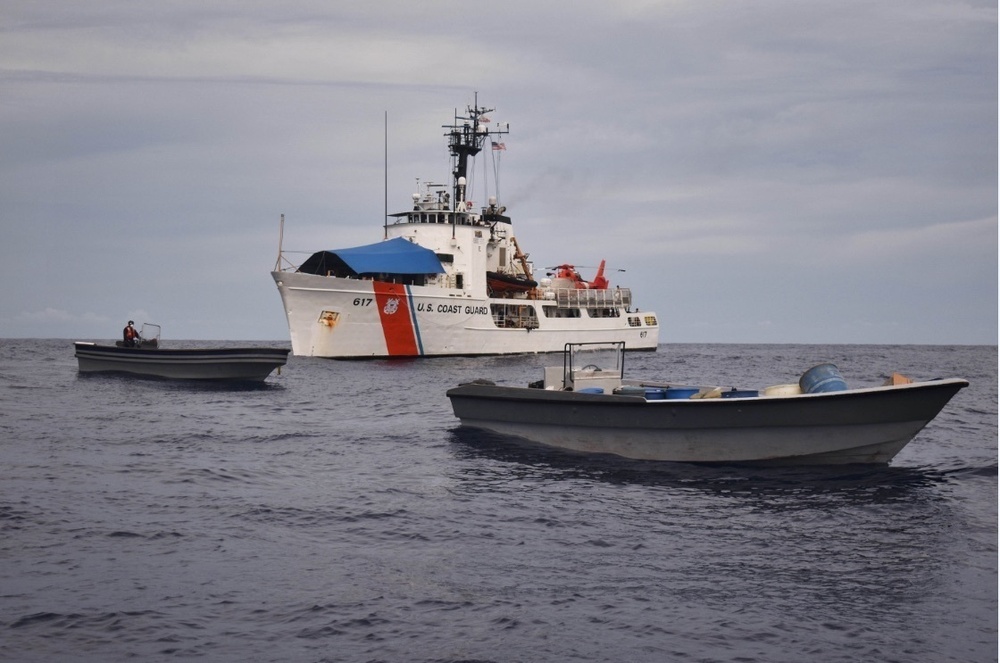
Critics are not arguing that maritime drug trafficking should go unanswered. They are arguing that interdiction, arrest, prosecution and international cooperation remain available tools — and that the government has not publicly shown why those tools were impossible in these cases. The Coast Guard's long record of boarding vessels and seizing contraband makes that alternative concrete rather than theoretical.
Lawyers call the boat strikes unlawful extrajudicial killings
Human Rights Watch, Amnesty International and independent United Nations experts have called the strikes unlawful extrajudicial killings, Reuters reported. Ben Saul, the UN special rapporteur on human rights and counterterrorism, said there are “reasonable grounds to believe” the attacks “constituted crimes against humanity of murder under customary international law.” That is an expert allegation, not a court judgment, but it is among the gravest legal assessments made publicly about the program.
The ACLU called the administration's assertions “unsubstantiated, fear-mongering claims.” Its critique focuses on the government's attempt to turn labels into proof: “cartel,” “terrorist” and “armed conflict” do not disclose the evidence against a particular person. The secrecy around identities compounds the problem because families, courts and journalists cannot independently test whether a person killed was who the government said.
Latin America's sovereignty stake
The maritime strikes sit beside an apparent push toward operations on land. Defense Secretary Pete Hegseth said Colombia, Guatemala and Honduras had agreed to joint U.S. military operations against criminal groups on their territory, according to prior AP reporting. Guatemala denied reaching such a deal. Ecuador, by contrast, has conducted joint missions with the United States since March.
Guatemala's denial is a warning against treating regional consent as a single, settled fact. Every government has its own constitution, domestic politics and tolerance for U.S. forces operating on its soil. No verified government reaction to Sunday's specific Caribbean strike has been published in the sources reviewed here, so broader sovereignty concerns should not be misrepresented as a direct diplomatic response.

The campaign by the numbers
What the 71-strike record shows — and what remains hidden
| Measure | Figure | Context |
|---|---|---|
| Recorded strikes | 71 | Just Security's running total from September 2025 through October 4, 2026. |
| Killed | 238 | Includes 23 people listed as missing and presumed dead. |
| Known survivors | 3 | A tiny disclosed survivor count across the 13-month campaign. |
| Average toll | About 3.4 per strike | 238 divided by 71; an average, not a description of any single attack. |
| Sunday's strike | 4 killed | SOUTHCOM's claim; identities and nationalities were not released. |
| Public evidence packages | 0 disclosed | The Pentagon has not released proof of drugs aboard in the cases described by the New York Post. |
| Publicly named dead | 0 disclosed | The Pentagon has withheld the identities, preventing independent case-by-case verification. |
The table's asymmetry is the central story. The government can publish a precise strike count and dramatic footage while withholding the material needed to judge each target. Numbers make the operation legible as a campaign; secrecy keeps its individual cases beyond public challenge.
What happens next
The judge's review could clarify whether the memo is operative law
The immediate legal event is the court's in camera review. Several scenarios are possible. The judge could accept the government's privilege claims, order limited disclosure, require a redacted version or conclude that parts of the memo function as governing law and cannot be withheld wholesale. Those are scenarios, not predictions; the September 30 order did not decide the merits.
Any disclosure could sharpen congressional scrutiny by showing what statutory or constitutional authority the administration relies on, how it defines the conflict and what limits it places on targeting. Continued secrecy could produce more litigation and pressure from lawmakers seeking briefings, casualty accounting and evidence standards.
Land operations and the midterm clock
The next operational question is whether maritime strikes remain the campaign's center or become a bridge to joint land missions. Hegseth's claims about Colombia, Honduras and Guatemala — and Guatemala's denial — show why consent will have to be demonstrated country by country. Adm. Holsey's departure from SOUTHCOM adds leadership change to an already expanding mission, though the sources reviewed here do not establish that his departure was caused by this campaign.
Politically, November 3 arrives before the legal dispute is likely to be settled. The administration can point to 71 attacks as evidence of action against cartels. Critics can point to the same number as evidence that an exceptional power has become normalized without public proof. Voters are therefore being asked to judge the campaign's message before a court has seen — much less disclosed — the reasoning beneath it.
What is known is narrow but serious: four people were killed Sunday; SOUTHCOM says the boat was involved in trafficking; the command published footage; the government published no names and no evidence of drugs; and a federal judge is now positioned to examine the secret legal memo behind the broader operation. Everything beyond those facts should be labeled as argument, allegation or scenario — not certainty.
For more on the administration's military and electoral posture, read our coverage of Hegseth's order giving troops a duty day to vote before the midterms.
Sources
- Reuters — SOUTHCOM's statement, four reported deaths and legal criticism.
- New York Post — strike footage and Pentagon secrecy over identities and evidence.
- Just Security — running strike, casualty and survivor totals; September 30 court order.
Reporting note: Official claims are attributed to U.S. Southern Command. Legal characterizations are attributed to the organizations or experts making them; analysis and scenario framing are Signal Post News's.