UnitedHealth Beats Big and Raises Its 2026 Outlook to at Least $20.50
Track it live: Live global markets tracker
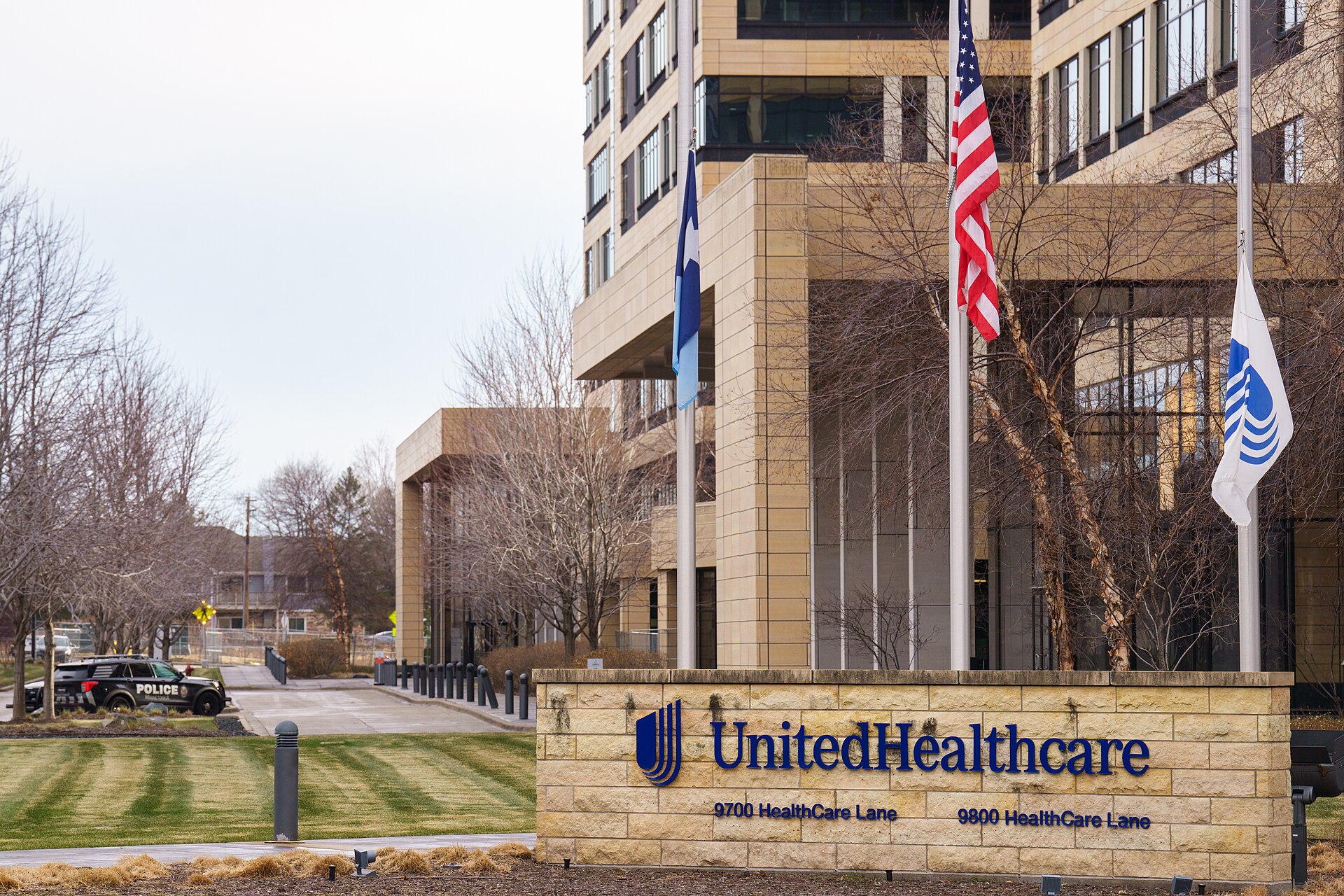
The UnitedHealth earnings 2026 outlook story begins with the size of the beat. Adjusted earnings came in at $4.69 a share for the third quarter, well above the roughly $4.12 to $4.14 analysts had expected and up sharply from $2.92 a share in the same quarter a year ago. On a GAAP basis, UnitedHealth earned $4.56 a share, with net income of $4.11 billion — against $2.35 billion a year earlier, a 75% jump that says as much about how depressed last year's quarter was as it does about this one's strength. Revenue was the one line that shrank: $112.69 billion, slightly down from $113.2 billion a year ago, though still comfortably above the roughly $111.0 to $111.4 billion Wall Street had pencilled in.
Management then did the thing that moves stocks on earnings day. The company raised its full-year adjusted earnings guidance to at least $20.50 a share — its third increase of the year, up from the $19.50 to $20.00 range it set in July and above the $19.86 LSEG consensus — and lifted its GAAP floor to at least $19.50. Shares rose between roughly 1.6% and 3.3% during the session. The stock is now up about 14.7% for the year, though it remains well below its July high of $461.62, a reminder of how much repair work investors still see ahead. UnitedHealth reported on the busiest morning of earnings season so far, alongside the big banks covered in our JPMorgan and Goldman Sachs earnings report.
Both engines fired: insurance and Optum
What made this quarter different from the cost-shock quarters that battered the company earlier in the decade is that both halves of the business improved at once. Earnings from operations reached $6.6 billion, up from $4.3 billion a year ago. UnitedHealthcare, the insurance arm, contributed $2.8 billion, up from $1.8 billion. Optum — the health-services division that runs everything from pharmacy benefits to clinics and data analytics — contributed $3.7 billion, up from $2.5 billion. When an insurer's underwriting and its services business rise together, the earnings quality is harder to argue with: this was not one division carrying a weak sibling.

The cash statement backed the income statement. Cash flow from operations was $5.1 billion, about 1.2 times net income — the ratio analysts watch to confirm that reported profit is arriving as actual cash rather than accounting estimates. The balance sheet stayed conservative, with debt at 41.7% of total capital at September 30. Chief executive Stephen Hemsley, who returned to the top job to steady the company, credited the result in the release to the discipline and execution of the team across the business — the language of a management that wants the quarter read as operational control, not luck.
The two caveats inside the beat
Read past the headline, though, and the quarter has a more complicated texture. The first caveat is membership. UnitedHealth has lost roughly 935,000 Medicare Advantage members since the end of last year. Some of that shrinkage is deliberate — insurers across the industry have been exiting unprofitable plans and counties as government payment rates tightened and medical costs rose — but nearly a million fewer senior members is nearly a million fewer premium dollars, and it frames the revenue line's slight year-on-year decline. The strategy is explicit: fewer members, better margins. Tuesday's numbers show the margin half of that bargain working. Whether the membership floor holds into the 2027 plan year is the open question.
The second caveat is the medical cost ratio, the share of premiums consumed by care. It improved in the quarter — but part of that improvement came from a $610 million reserve revision, a favourable adjustment to estimates of prior-period medical costs. Reserve releases are a normal feature of insurance accounting, and companies set reserves conservatively precisely so they can be revised. Still, $610 million is not a rounding error: it is roughly 15% of the quarter's net income, and it is by definition non-recurring. Strip it out, and the quarter is still a beat — just a smaller one, and one that leans more on Optum's growth than on suddenly cheaper medical care.
Why this matters
UnitedHealth is not just another earnings report. It insures tens of millions of Americans, its Optum arm touches a large share of the prescriptions, clinic visits and claims data in the US health system, and its guidance functions as an unofficial forecast for the cost of American healthcare. When UnitedHealth says medical costs are behaving, hospital chains, rival insurers and state Medicaid budgets all recalibrate. When it raises guidance three times in a year, it is also telling policymakers something: the industry's two-year panic over post-pandemic utilisation — seniors returning for deferred surgeries and procedures at rates that wrecked insurer forecasts — is fading into a new, more expensive normal that insurers have now priced for.
The context matters, too. This beat landed the same morning the International Monetary Fund warned about energy shocks, debt and an AI-driven market, themes we covered in our IMF global economy warning report, and in a week when investors are weighing bank results, inflation data and $100 oil — the setup laid out in our Wall Street week-ahead preview. Healthcare has been the market's defensive shelter through that uncertainty, and UnitedHealth's quarter gives the shelter a sturdier roof than it had a year ago.
What the numbers actually say
Put the beat in proportion. The adjusted EPS beat — $4.69 against roughly $4.13 expected — is about 14%, large for a company of this size. But compare the trajectory rather than the surprise: a year ago the company earned $2.92 a share in the quarter, in a period when medical costs were overrunning every forecast it made. Much of Tuesday's "strength" is a recovery to the earnings power UnitedHealth was always supposed to have, which is why the stock, even after a 14.7% year-to-date rise, still trades below its July high of $461.62. Investors are paying for proof over several quarters, not one.
The guidance raise deserves the same treatment. Moving the floor to $20.50 when consensus sat at $19.86 is a genuine signal — companies do not raise a floor in October unless the fourth quarter is largely visible — but it is the third raise of the year, which cuts both ways. Bulls see a management regaining control of its cost forecasts. Sceptics see a guidance cadence that started the year too low and has been walking back up ever since, and they will note that the reserve revision flattering this quarter cannot be repeated on demand. Both readings are available in the same numbers; the honest one is that UnitedHealth has stabilised, and stabilisation at this scale prints $6.6 billion of operating earnings a quarter.
What happens next
The next tests arrive quickly. The annual Medicare Advantage enrollment period will show whether the membership bleed stops at roughly 935,000 or continues into 2027, and rival insurers reporting over the next two weeks will confirm or contradict UnitedHealth's read on medical costs. If competitors report the same cost calm, the sector's two-year derating unwinds further. If they do not, Tuesday's quarter starts to look company-specific — execution, as Hemsley framed it, rather than weather.
There is also a policy layer. Medicare Advantage payment rates, prior-authorisation rules and Medicaid funding are all live fights in Washington, and a healthier UnitedHealth enters them with a stronger argument and a larger target on its back. For investors, the question for the fourth quarter is simple: can the company hold a sub-trend medical cost ratio without another $610 million of help from reserves? For everyone else, the takeaway is narrower and more useful — the biggest insurer in the country just said, with money behind it, that the cost of care has stopped surprising it. After two years of surprises, that is news.
Sources
UnitedHealth Group third-quarter 2026 earnings release and guidance update (company release, October 13, 2026); LSEG analyst consensus figures cited in market reporting of the release; contemporaneous market coverage of UnitedHealth, JPMorgan Chase, Goldman Sachs and Wells Fargo third-quarter results, October 13, 2026.