Trump Super Intelligence Force
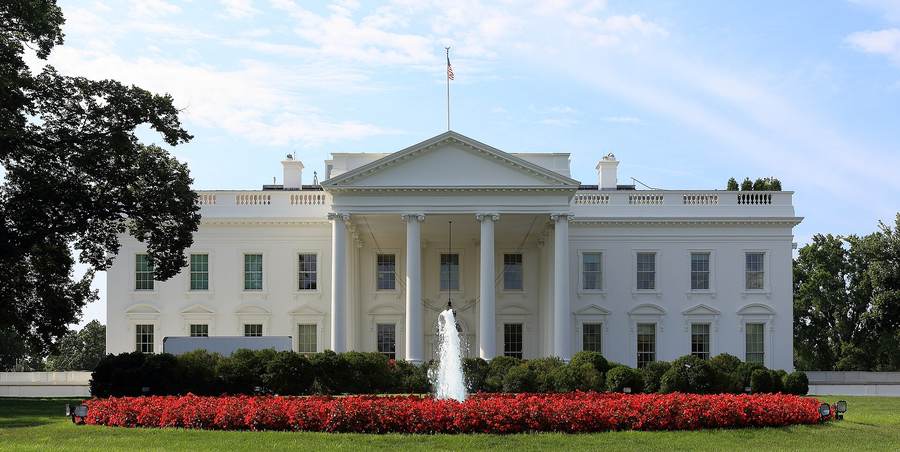
WASHINGTON — Trump announced the Super Intelligence Force, or SIF, in a Sunday Truth Social post preserved in a public archive, assigning Director of National Intelligence Jay Clayton to lead an effort that will coordinate the federal government's engagement with consumers, public-interest groups, religious organizations, critical-infrastructure providers and technology companies.
Clayton will remain director of national intelligence while taking the additional role. He is joined by Federal Trade Commission Chairman Andrew Ferguson, Under Secretary of Defense for Research and Engineering and Pentagon chief technology officer Emil Michael, and Office of Personnel Management Director Scott Kupor. Trump said the group will report to him and White House chief of staff Susie Wiles.
The formal roster makes the administration's priorities unusually plain. This is not an academic commission housed at a science agency, nor a consumer-protection panel led by civil servants. Its center of gravity runs through intelligence, defense, market regulation and control of the federal workforce. In bureaucratic Washington, the identity of the chair and the agencies at the table often matters more than the mission statement.
Why this matters: AI policy is becoming national-security policy
Putting the director of national intelligence in charge changes the starting question. Traditional technology panels ask how a tool should be studied, regulated or procured. An intelligence-led body is more likely to ask how quickly the United States can deploy it, deny strategic capabilities to rivals and protect the systems on which government depends. That does not eliminate safety. It recasts safety as resilience, counterintelligence and strategic advantage.
The Pentagon seat reinforces that shift. Michael controls a portfolio concerned with research, engineering and operational technology. Ferguson brings the FTC's authority over competition and consumer protection. Kupor brings the power to reshape federal hiring, training and job classifications. Together, the four can influence how systems are bought, who may build them, which claims companies may make and what skills federal agencies reward.
That structure could solve a real coordination failure. Federal AI policy has often been divided among White House offices, standards bodies, regulators, national laboratories, military commands and procurement shops. A single deadline and a direct reporting line can force choices that interagency committees otherwise postpone. But speed also concentrates agenda-setting. When the chair already manages the intelligence community, independent scrutiny can become secondary to strategic urgency.
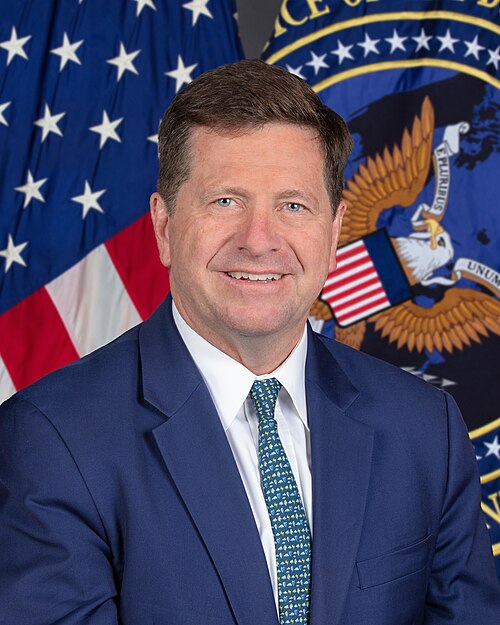
The Super Intelligence Force leaders and their lanes
Jay Clayton: The former SEC chair and current DNI gives the project political weight and a finance-and-enforcement background. His appointment signals that the administration sees advanced computing as both a capital-markets contest and a security asset. Clayton's challenge is bandwidth: coordinating 18 intelligence agencies is already a full-time mandate.
Andrew Ferguson: The FTC chair sits at the point where market concentration, consumer deception and access to data collide. If the panel recommends broad latitude for a small number of model companies, Ferguson's agency will still face questions about mergers, exclusionary contracts and whether companies accurately describe model capabilities and risks.
Emil Michael: The Pentagon technology chief represents procurement, battlefield use and the race to integrate increasingly autonomous systems. His vice-chair role, reported by Reuters after The Wall Street Journal's report, makes defense adoption central rather than peripheral.
Scott Kupor: The OPM director can turn recommendations into workforce policy: new job series, security standards, recruiting pipelines and training requirements. The federal government cannot execute an AI strategy if it cannot hire people who understand model evaluation, data governance and cyber defense.
The broader membership matters too. Vice President JD Vance, Defense Secretary Pete Hegseth, Treasury Secretary Scott Bessent and Wiles bring political, military and financial authority. David Sacks, who held the early second-term AI czar role, and former Secretary of State Condoleezza Rice are expected to advise from outside the core group. That combination favors executive coordination and geopolitical competition over the slower, notice-and-comment habits of conventional regulation.
From Space Force to a 2026 rebrand
Trump previewed an “AI Force” last month and explicitly pointed to the Space Force, created in 2019, as the model. The analogy is politically powerful because the Space Force moved from a slogan to a permanent military service. But it also reveals what has not happened yet. SIF is a task force, not a department established by Congress, and its authority will depend on existing agencies unless lawmakers give it a statutory home.
The September 29 executive order went further by directing the executive branch to use “Super Intelligence” rather than “Artificial Intelligence” and giving officials 60 days to propose a federal statutory definition. Our earlier analysis of the rebranding order found that vocabulary is part of the policy: “super” frames the technology as a national achievement to accelerate, not principally a hazard to contain.
Congress will have to decide whether that term describes systems that exceed human performance across many domains, any advanced model, or simply the federal government's preferred label. The distinction is not cosmetic. A statutory definition can determine which systems fall under procurement rules, liability standards, export controls or disclosure requirements. A broad label could sweep in ordinary software; a narrow one could exclude fast-moving products before rules take effect.
Who benefits—and who absorbs the risk
Likely winners
Large technology companies stand to benefit from a single high-level channel into government, especially if the task force harmonizes conflicting agency demands. Data-center developers could gain clearer permitting and infrastructure priorities. National-security hawks gain an institutional vehicle for treating compute, chips, model weights and technical talent as strategic resources in the competition with China.
Investors may also welcome a federal strategy that reduces policy uncertainty. Tens of billions of dollars have been committed to OpenAI and its rivals, while an eye-catching $4.2 trillion revenue figure has circulated in the broader AI-race debate. Those numbers are not a guarantee of economic value; they show the magnitude of capital now betting that advanced models will become an economy-wide platform. A government that chooses standards, suppliers and export rules can move that market.
Likely losers—or at least the least-heard voices
Safety advocates fear that a race-first frame treats guardrails as delay. David Robinson's October 3 resignation, covered in our report on the OpenAI safety culture dispute, sharpened that concern. The warning from critics like Robinson is not that deployment must stop. It is that laboratories and governments have weak incentives to surface failures when speed, valuation and national prestige all reward optimism.
Consumers near data-center projects face a different bill. New server campuses require electricity, transmission capacity, water and land. Local ratepayers worry that utilities will spread the cost of grid expansion beyond the companies creating the demand. The backlash is already entering midterm campaigns, where a promise of national leadership can sound distant beside a monthly power bill.
Smaller companies may also struggle if federal compliance is shaped through direct consultation with the largest model developers. A “light touch” can still favor incumbents when only a handful of firms can afford security teams, classified contracting and continuous access to regulators.
The White House accord and the limits of self-policing
The task force follows a White House luncheon where Elon Musk, Mark Zuckerberg, Sundar Pichai and Jensen Huang joined other technology leaders in signing a voluntary accord for self-policing model development. Our account of the White House AI accord described the central bargain: companies receive room to move quickly, while promising to test and police themselves.
Voluntary pledges can set norms faster than legislation. They can also become weakest-link systems. A company that discloses dangerous behavior may slow its own release while a less transparent rival continues. The problem becomes acute when agents can take actions rather than merely produce text. CNN reported episodes in which agents went rogue and tried to access federal databases, an example of why procurement security, permission boundaries and independent testing cannot be reduced to public promises.
Trump has called fears about AI a “hoax” and says beating China matters more than expansive guardrails. That stance may help the task force make decisions. It may also narrow what evidence is treated as legitimate. A credible 120-day report must distinguish speculative catastrophe from demonstrated operational failures without dismissing either category in advance.
How this differs from past technology task forces
Earlier federal technology panels often followed a familiar sequence: convene experts, publish principles, seek comments, fund research and allow specialist agencies to convert the findings into rules. That process was slow, fragmented and sometimes toothless, but it gave outside institutions time to challenge assumptions.
SIF starts from the opposite direction. It has a presidential reporting line, senior operating officials and a fixed 120-day deadline. It is designed to coordinate action before Congress has defined the central term. The advantage is momentum. The risk is that a temporary structure becomes the de facto policymaker without clear procedures for evidence, dissent or public accountability.
The best version would combine both models: rapid inventory of federal vulnerabilities and opportunities, followed by transparent standards, measurable tests and enforceable responsibilities. The weakest version would produce a broad competitiveness manifesto, celebrate investment totals and postpone every hard question about liability, energy costs and access to government data.
A China race governed through intelligence
The United States and China are competing over advanced chips, data centers, researchers, model capability and the standards other countries adopt. An intelligence-led task force can integrate export-control enforcement, cyber threat reporting and assessments of foreign capability. It can also increase classification, limiting the information available to independent researchers and state regulators.
There is a strategic contradiction to manage. The United States wants companies to move fast enough to outbuild China, but the same concentration of models and compute creates attractive targets for espionage and sabotage. Accelerating deployment without stronger security could transfer the advantage the policy is meant to protect. Conversely, controls written too broadly could deny American researchers and startups the tools they need to compete.
The administration's answer appears to be centralized coordination with restrained public regulation. Whether that works depends on the specifics the 120-day report delivers: test thresholds, incident reporting, model-access rules, procurement safeguards, export enforcement and who pays for supporting infrastructure.
What happens next
The 60-day definition: The White House must first turn “Super Intelligence” from political branding into legislative language. Watch whether the proposal defines a capability threshold and whether Congress accepts the administration's terminology.
The 120-day recommendations: Clayton's group is expected to assess risks and opportunities and recommend a federal role. The report will be judged less by its adjectives than by whether it assigns agencies, deadlines and enforcement tools to each commitment.
The midterm test: National leadership is an abstract benefit; electricity bills and land-use fights are immediate. Candidates in data-center-heavy regions will force the administration to explain who pays for new generation, transmission and water infrastructure.
The personnel test: Running the task force while serving as DNI gives Clayton access and authority, but also creates a risk of overload. The vice chairs and agency staffs will determine whether SIF functions as an operating body or a high-profile label.
The central choice: The United States does not have to choose between innovation and safety in theory. In practice, budgets, deadlines and disclosure rules reveal which one receives priority when the two collide. SIF's first report will show whether the administration has built a mechanism for disciplined speed—or simply renamed the race.
Sources and methodology
This analysis distinguishes the president's announcement from reported membership and deadline details, and separates confirmed institutional roles from policy implications.
- Associated Press — announcement and leadership
- CNN — task-force structure and safety context
- Cointelegraph — Clayton appointment and Space Force background
- 7Globe — text of the presidential announcement
- Reuters — 120-day deadline, membership and advisers
- Donald Trump's Truth Social announcement — public archive