“100 Percent Close”: Trump’s Iran Deal Claim, a Vatican Call — and Everything Still Missing From It
Track it live: the Iran war, the talks and the nuclear file — positions, statements and the state of play, updated as it moves.
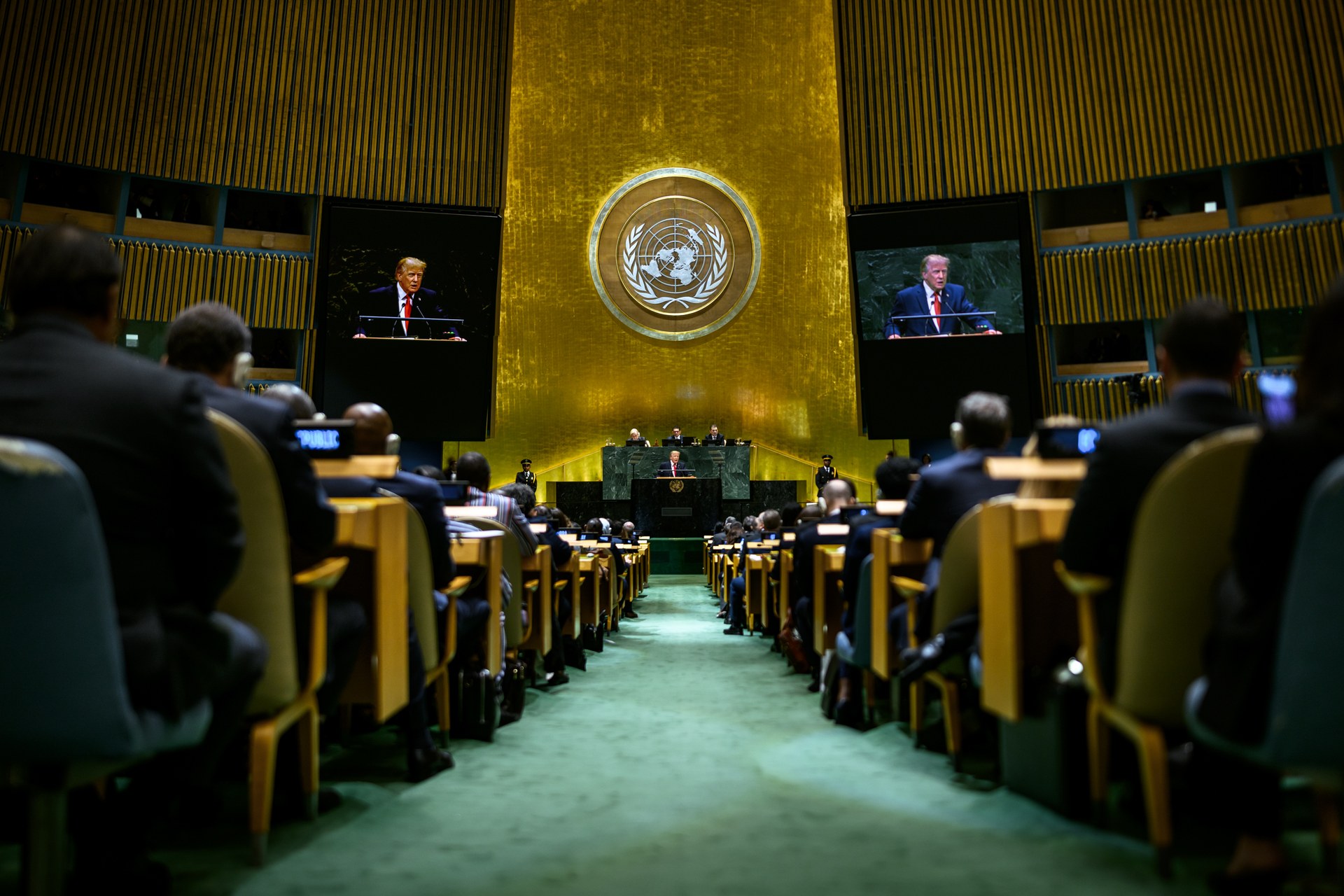
President Donald Trump said on Saturday that the United States is on the verge of an agreement with Iran. “We are close to making a deal with Iran. 100 percent close. Many points have already been agreed to,” he told attendees backstage at a Pressler event at the Intel Club Startup Caucus, in remarks that ricocheted around Washington within the hour.
The sentence deserves to be read with the care its subject demands, because of what it is and what it is not. It is a statement by the president of the United States about the state of the most consequential negotiation his administration is running. It is not a deal. No text has been published. No terms have been announced. No Iranian official has confirmed the characterisation, the “many points,” or the proximity. Tehran, as of publication, had not publicly responded to the claim at all. Every word of analysis that follows hangs on that distinction: the president has declared momentum. Whether the momentum exists is a question only evidence — a text, a framework, an Iranian statement — can answer.
The scene: sanctions, the Vatican, and a Truth Social post
The remarks came in the unscripted margins of a political event, not from a podium with a fact sheet, and they ranged the way Trump's backstage remarks do. He said business leaders had “begged” him to keep sanctions on Iran — a detail he offered, by his own telling, as evidence of leverage: the pressure is working, the other side wants relief, and American business would rather he held the line than traded it away. He said a call with the Vatican had gone “very well,” without specifying its subject. And he praised his own Truth Social post, commending its wording to the room.
Each element is a claim, and each should be labelled as such. The business-leaders detail comes from the president alone; no company or executive has corroborated it publicly, and its function in the story he is telling is obvious — it casts sanctions not as a cost of stalemate but as an asset suitors are pleading with him to keep, which is to say, to spend wisely rather than soon. The Vatican call, if it touched Iran, would slot into a pattern: Pope Leo XIV has made himself a conspicuous would-be intermediary in this year's wars, speaking to Vladimir Putin this week and pressing ceasefires on every side. A president listing the Vatican among his calls in the same breath as an Iran deal claim is either describing a channel or decorating one — and at this distance, no outsider can tell which. The Truth Social commendation is the smallest item and, in its way, the most Trumpian: the deal announcement and the review of the announcement, delivered as one performance.
What is not on the table — because nothing is on the table
Set the claim against the checklist a real agreement would have to answer, and the silence is total. Nothing has been published about uranium enrichment: the level Iran would be permitted, the fate of its stockpile of near-weapons-grade material, or whether the word “zero” — the administration's own stated standard at various points this year — survives in any draft. Nothing about verification: IAEA access, snap inspections, the monitoring regime whose collapse preceded this year's war. Nothing about sanctions relief: which measures, in what sequence, against which Iranian steps, and with what snapback. Nothing about the Strait of Hormuz, where the shipping crisis that began this autumn is still live — two tankers were attacked off Saudi Arabia's Jubail on Friday alone, in incidents UKMTO logged and no one has claimed. And nothing about Iran's missiles or its regional partners, the files that sank every previous framework.
“Many points have already been agreed to” is, in negotiation terms, an unauditable sentence until someone names the points. Agreements in principle are the cheapest currency in diplomacy; the history of this file is a museum of them. The 2015 nuclear deal took two years of technical annexes after its framework was announced to a similar fanfare of near-completion. The contacts of this year have produced their own rhythm of imminent breakthroughs and quiet collapses — in September, this site tracked reporting of a phased arrangement centred on Hormuz, which likewise arrived as momentum and left as a headline. None of that proves Saturday's claim hollow. It establishes the base rate against which it should be priced.
The other side of the table
Iran's public positions remain what they have been, and they are not obviously compatible with “100 percent.” Tehran has insisted throughout that it will not negotiate under threat, that its enrichment programme is a sovereign right it will not surrender wholesale, and that sanctions relief must be real, sequenced and guaranteed against another American withdrawal — a demand born of 2018, when Trump tore up the deal Iran was complying with. Senior Iranian figures have repeatedly poured cold water on American optimism at moments exactly like this one, and the Supreme Leader's public scepticism about Washington's word is a fixed feature of the landscape. None of that forecloses a deal: parties posture hardest at the edge of agreement, and silence from Tehran in the first hours after a Trump claim is as consistent with a negotiation being protected as with one being invented. But until an Iranian voice confirms that points have been agreed — any points, named or unnamed — the deal exists in one capital only.
The region, meanwhile, is behaving like a place that does not believe the file is closed. Saudi Arabia has said nothing about Friday's tanker attacks off its own coast. Egypt's president went to his parliament on Saturday seeking authority to defend Saudi Arabia if attacked — a step you do not take in a week you expect peace to break out. Our coverage of the Sisi request and of the Jubail tanker attacks runs alongside this story, and together they describe the Gulf as it is tonight: arming, hedging, and listening to Washington's deal talk with one ear while it watches the water with both eyes.
Why he says it now
There is a domestic clock on this claim, and it is not subtle. The midterms are seventeen days away; the president is in full campaign motion, rallying in Kentucky on Saturday in the same news cycle. A foreign-policy triumph is the one asset no opponent can match, and a deal with Iran — the antagonist of his entire political era — would be the largest available. That does not make the claim false. It makes it convenient, and convenience is a reason to demand the evidence faster, not to dismiss the claim slower. The pattern of Trump's deal diplomacy across both his terms is consistent enough to describe: maximum public confidence, announced at maximum volume, with the details arriving later, partially, or never. Sometimes the agreement materialised anyway. Sometimes the announcement was the agreement — a thing that existed for exactly as long as it was being talked about.
The honest ledger, then, at close of business Saturday. On one side: a president stating flatly, on the record, that a deal with Iran is 100 percent close with many points agreed; a Vatican call he calls very good; sanctions he says business is begging him to keep; and a negotiating history this year in which American and Iranian officials have, at minimum, kept talking through a war. On the other: no text, no terms, no timeline, no mechanism, no Iranian confirmation, and every structural obstacle that has killed this deal in every previous incarnation standing exactly where it stood. The next move belongs to whoever produces paper. If Tehran confirms even the shape of the claim, this becomes the biggest story in the world by Monday. If it denies it — or, more pointedly, ignores it — Saturday's sentence joins the long archive of deals that were 100 percent close until they were not. Watch for the Iranian statement. It, and not the percentage, is the news.
Sources: Remarks by President Donald Trump to attendees at the Pressler event, Intel Club Startup Caucus, October 17, 2026 (as reported from the event); UK Maritime Trade Operations (UKMTO) incident advisories, October 2026; Signal Post News reporting on the September phased-deal reports and the Jubail tanker attacks.