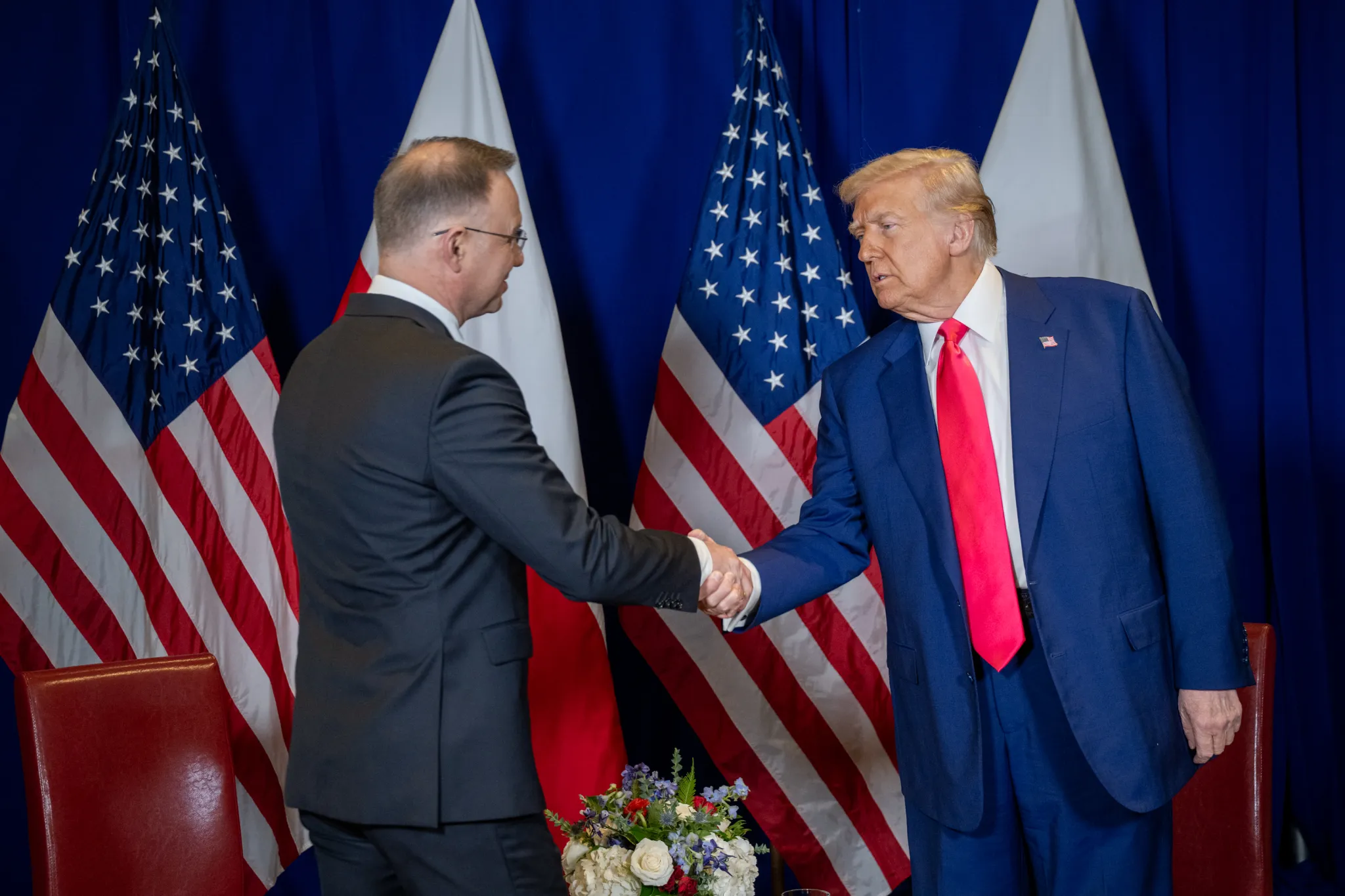
WASHINGTON — The Trump Poland military base question moved closer to a possible decision Thursday when President Donald Trump told reporters that a permanent U.S. Army installation “could happen,” then suggested—without confirming—that he may already have decided. Asked before leaving for Texas whether Washington could establish a base in Poland, Trump said, “Well, we're looking at that and we have great respect for the president of Poland. So we're looking at that and it could happen.”
Pressed on why no final decision had been announced, Trump replied: “Well, you don't know if I made it or not. I might have made it. I like Poland.” The wording is politically significant but not an operational order. The White House and Pentagon had not publicly supplied a location, force size, funding plan, legal agreement or timetable alongside the remark.
In the same exchange, Trump gave a compressed answer when asked about continued U.S. support for Kyiv: “I think it's going to get solved.” Asked about Iraq and allied partners after a U.S. departure, he said, “I will never abandon our allies.” He also called Brazil’s election “very important” and said Washington was examining “a lot of things” when questioned about a possible U.S. base or action in Venezuela or elsewhere in South America.
Trump then connected Venezuela to energy strategy, saying low-cost Venezuelan oil could help refill the Strategic Petroleum Reserve. No military basing agreement, oil-purchase program or new Ukraine settlement plan was announced in the remarks. That distinction matters: the president put several strategic ideas into public view, but the machinery required to execute any of them remains unconfirmed.
Why this matters: a US Army base Poland decision would change the signal
Poland already hosts American forces, command elements, logistics nodes and missile-defense infrastructure. The central issue is not whether U.S. troops are present; they are. It is whether a larger formation would be permanently assigned, backed by durable facilities and family support, rather than cycling through nine-month rotations. A permanent base would be harder politically and militarily to unwind. That gives Warsaw a stronger deterrent signal because an attack on Polish territory would more predictably put American personnel and assets at risk from the first moments of a crisis.
For Washington, the same permanence carries costs. Fixed infrastructure, schools, housing, hospitals, force protection and long-term sustainment can be more expensive and less flexible than rotations. A permanent commitment in Poland may also constrain future administrations that want to shift troops toward the Indo-Pacific or elsewhere. That is why a presidential hint is only one stage: Congress, the Pentagon, NATO planning and a detailed U.S.-Polish agreement would all shape what “permanent” means in practice.
From the Fort Trump proposal to Karol Nawrocki’s push
The debate predates Russia’s full-scale invasion of Ukraine. In 2018, then-Polish President Andrzej Duda offered more than $2 billion toward a permanent installation and floated the name “Fort Trump.” Trump said the request was under serious consideration. The original concept later foundered over location, cost and legal questions, while the alliance expanded command, training and rotational arrangements instead.
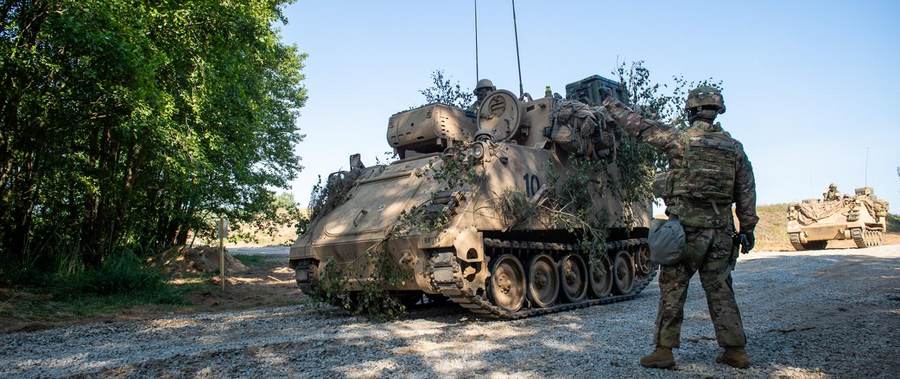
Those arrangements became more strategically important after Russia invaded Ukraine in 2022. Poland turned into the primary land bridge for much of the military and humanitarian support moving toward Kyiv, while its own territory became central to NATO’s eastern-flank reinforcement. Camp Kościuszko in Poznań hosts the forward headquarters of U.S. Army V Corps. The U.S. Army says its Poland garrison supports about 7,500 American soldiers across 11 sites, although totals reported at any moment vary with rotations and what categories are counted.
The newest push gathered pace under President Karol Nawrocki. On September 17, Trump wrote that “major progress” was being made, credited Nawrocki’s “bold leadership” and said that, if the project happened, its location would be announced “very soon.” He called it a “historic step for our Great U.S./Polish Alliance.” Thursday’s “I might have made it” line goes further rhetorically, but still stops short of confirming a signed decision.
The June review and the spring troop-rotation reversal
Defense Minister Władysław Kosiniak-Kamysz met Defense Secretary Pete Hegseth in Brussels in June as the Pentagon opened a review of U.S. deployments in Europe. Kosiniak-Kamysz said the department was open to Poland’s permanent-base offer but that no decision had been made. The timing increased uncertainty because Washington had paused a planned troop rotation in the spring before Polish officials said in July that rotations would resume.
That sequence produced two competing readings among allies. One is that Washington is rationalizing a flexible force posture while rewarding Poland for spending heavily and hosting the infrastructure needed for reinforcement. The other is that abrupt rotation changes make European security too dependent on presidential signals. A permanent base could reassure the NATO eastern flank, but it could also highlight a more selective U.S. approach in which some allies receive firmer commitments than others.
Poland NATO Russia deterrence: who benefits, who is uneasy
Warsaw benefits most directly. A permanent American footprint would strengthen its argument that geography and investment deserve an enduring guarantee. It could improve readiness by keeping command staff, logistics, air defense and pre-positioned equipment in a predictable network. Poland has budgeted roughly 4.8% of gross domestic product for defense in 2026, among NATO’s highest shares, after years of buying Abrams tanks, Patriot defenses, HIMARS launchers and F-35 aircraft.
Washington gains leverage and access. A well-designed base could move reinforcements faster, deepen interoperability and signal to Moscow that coercion against Poland would immediately involve the United States. It may also reward an ally that has answered repeated U.S. demands for higher European defense spending.
Moscow loses strategic room. Russia has long argued that NATO infrastructure moving east undermines its security. From Moscow’s perspective, a permanent base would reduce the ambiguity surrounding U.S. reinforcement and complicate any attempt to intimidate Poland or disrupt the supply corridor into Ukraine. NATO sees the same effect as deterrence: raising the expected cost of aggression so that it is less likely to occur.
Some European allies may be uneasy. Governments affected by pauses, withdrawals or shifting rotations will ask whether Poland’s gain comes from a broader European buildup or a redistribution of a roughly 80,000-strong U.S. presence on the continent. If the force is moved rather than added, the base could reassure the eastern flank while creating gaps elsewhere.
What critics say about US troops Poland permanent
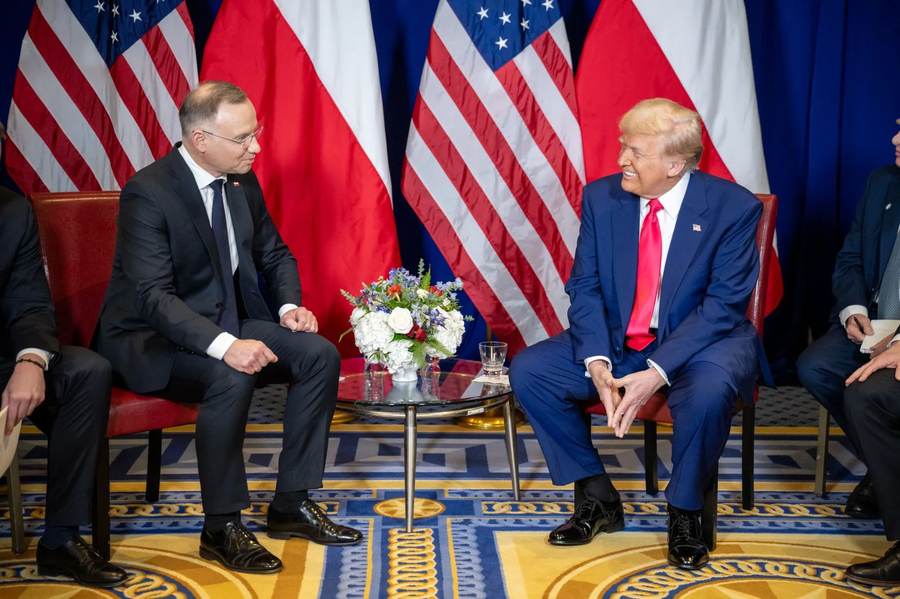
Critics argue that the deterrent benefit must be weighed against escalation risk, cost and strategic rigidity. Permanently stationed forces require a much broader support system than rotational units. They may also become a focal point for Russian missile planning, cyber operations and disinformation. A base does not eliminate the need for hardened air defenses, dispersal plans and resilient rail, road and fuel networks.
There is also a burden-sharing question. Poland’s high defense spending makes it a strong case for a deeper U.S. commitment, but critics warn against turning alliance guarantees into bilateral transactions. NATO deterrence depends on collective planning, not only the closeness between two presidents. Any final agreement will be judged on whether it strengthens alliance-wide defense plans rather than creating a prestige project with an ambiguous mission.
Trump Ukraine war solved: promise, leverage or timetable?
“I think it's going to get solved” expresses confidence, not a peace framework. The statement did not identify negotiators, sequencing, security guarantees, territory, sanctions, ceasefire monitoring or the conditions under which U.S. support for Kyiv would continue. The Poland decision nevertheless could influence negotiations. A durable American presence on Ukraine’s western border would tell Moscow that even if a settlement changes support inside Ukraine, NATO’s eastern frontier is becoming more difficult to pressure.
That can work as bargaining leverage, but it can also harden Russian positions. If Moscow views the base as proof that NATO infrastructure will keep moving closer, it may demand restrictions in any Ukraine settlement. Kyiv, by contrast, may see the base as a partial hedge against a weak agreement—but not a substitute for its own air defense, ammunition, intelligence and security guarantees.
Trump Venezuela military options and the SPR oil angle
The Venezuela comments should be separated into two tracks. On military options, Trump said the administration was looking at “a lot of things” and that relations were going well. He did not name a site, mission or force. On energy, he said Venezuelan oil could be obtained cheaply to replenish U.S. reserves. The Strategic Petroleum Reserve Venezuela oil idea would require commercial, sanctions, quality, transport and procurement details that were absent from the exchange.
Pairing the two subjects in one press availability can create an impression of a unified strategy, but they operate through different institutions and constraints. A base involves host-country consent, defense planning and congressional funding. SPR purchases involve the Energy Department, market prices, refinery compatibility and legal authorities. Neither should be treated as implemented policy without documents.
Trump Iraq allies commitment and Brazil’s election
“I will never abandon our allies” is broader than the immediate Iraq question. Allies will compare it with decisions on troop rotations, basing and burden sharing. The strongest test will be whether force-planning decisions match the promise across different theaters. Poland may be an example of reinforcement; other partners will look for the criteria that determine who receives it.
Trump’s description of Brazil’s election as “very important” signals attention to South America’s largest country, but he did not announce a policy intervention. Election legitimacy rests with Brazilian voters and institutions. Washington’s challenge is to protect its diplomatic and economic interests without turning public commentary into pressure on the process.
The 2026 timeline: from uncertainty to a possible announcement
- Spring: a planned U.S. troop rotation was paused during a wider review, unsettling Warsaw and other eastern-flank governments.
- June: Hegseth and Kosiniak-Kamysz met in Brussels; Poland said the Pentagon was open to the base proposal, with no decision yet.
- July: Polish officials said the U.S. rotation would resume, reversing the immediate operational uncertainty.
- September 17: Trump said “major progress” had been made and promised a location “very soon” if the base moved forward.
- October 2: Trump said a base “could happen” and added that he “might have” made the decision.
What happens next: four scenarios
1. A full permanent base is announced. The key evidence would be a named site, assigned units, troop count, cost-sharing formula, legal status and construction schedule. This is the clearest deterrence signal and the most expensive option.
2. A permanent headquarters anchors continued rotations. Washington could expand permanently assigned command and support staff while keeping combat brigades rotational. That would deepen continuity without locking in the entire force.
3. “Permanent” means infrastructure, not people. Pre-positioned equipment, air-defense nodes, ammunition storage and improved rail links could allow rapid reinforcement while limiting the resident population. This may be militarily useful but politically less dramatic.
4. The announcement slips into negotiations. Cost, location, force-protection or the wider Europe review could delay a deal. Trump’s ambiguity preserves leverage over Warsaw, NATO planning and Ukraine diplomacy, but extended uncertainty would weaken the reassurance value.
The next NATO summit will provide a natural deadline for allies to demand clarity. Until a joint announcement names the mission and resources, the most accurate description is that a permanent U.S. Army base in Poland is under active consideration and may have presidential approval—but has not been publicly confirmed.
Sources
- IANS: Trump weighs Poland base, says Ukraine conflict will be solved
- Reuters: Progress toward establishing a U.S. Army base in Poland
- Reuters: The original Fort Trump proposal
- U.S. Army: Garrison Poland supports 7,500 soldiers across 11 sites
- NATO: Poland’s defense spending and eastern-flank role
- Brussels Signal: U.S. troop rotation set to resume after spring pause