NYC schools sexual misconduct probe
The U.S. Department of Education on Tuesday opened a federal Title IX investigation into New York City's public schools over allegations that school employees sexually abused students on a massive scale, a move the Trump administration cast as a long-overdue defense of children — and one critics are already calling a political weapon aimed at the country's most prominent Democratic-run school system.
What the investigation will examine
The probe is being led by Kimberly Richey, the department's Assistant Secretary for Civil Rights, and was announced Tuesday in an interview with the “Cats and Cosby Show.” At its core is a single blunt question: did the New York City Department of Education violate federal Title IX rules in the way it handled sexual harassment and assault claims against teachers, administrators, and other school personnel?
Investigators will look at whether complaints were swept under the rug — whether district employees suspected of misconduct were allowed to quietly resign, evading punishment, or were even kept in classrooms while complaints sat unresolved.
Richey said reports indicate “almost 2,000 instances in New York City where school staff have engaged in sexual misconduct with students,” calling the allegations “systemic and disturbing” and suggesting the district may be “enabling child abuse in schools.” She said many of the complaints came from “scared parents” who believed something was happening to their children, alongside reports filed by school staff themselves.
The stakes are spelled out in federal law: if the district is found out of compliance with Title IX, it risks losing federal funds — billions of dollars in aid that flow to the nation's largest school district each year. Richey said the department will determine whether New York City's public schools complied with federal law, and that if they did not, the district faces specific compliance steps — or the loss of federal funds.
New York is not alone. The department has opened additional investigations into school districts in California, Georgia, North Carolina, Missouri, Texas, and Virginia over whether they properly responded to staff-on-student sexual misconduct allegations. But only two districts were identified by name in Tuesday's announcement: New York City's and Jeffco Public Schools in Colorado.
The city pushed back on the premise. “We take allegations of abuse very seriously,” NYC Public Schools spokeswoman Nicole Brownstein told Chalkbeat, adding that the district immediately moves to support the student, refers cases to the appropriate investigatory body, and pursues disciplinary action. “We are reviewing the Department's complaint.”
Why this matters
Start with scale. New York City's public schools educate roughly one million students — the largest district in the country by a wide margin. A federal civil-rights investigation into how that system handles abuse complaints doesn't just affect one city; it writes the template every other big-city district will be judged against.
Then there's the mechanism. Title IX of the Education Amendments of 1972 requires any school receiving federal money to respond to sex discrimination, including sexual harassment and assault. It is one of the federal government's most powerful levers over local schools, precisely because the money attached to it is so large. Turning that lever on the biggest district in America is a statement about how this administration intends to use civil-rights enforcement.
And then there's the practice at the heart of the probe — what educators grimly call “passing the trash”: letting an accused teacher or administrator resign quietly, with a clean file, only to resurface in another school. If the investigation substantiates that pattern at scale, it becomes a national story about a loophole that federal enforcement has never fully closed.
The numbers — and what they actually tell us
The figure driving this story is “nearly 2,000” — the number of alleged instances Richey cited. It deserves scrutiny, because its provenance is already contested.
According to Chalkbeat's reporting, the number traces back to reporting by The 74, which found nearly 2,000 complaints filed under New York's Child Victims Act accusing school staff members of sexual abuse. But that figure spans all 62 of New York's counties and includes private schools alongside public ones — it is not, as a first reading of the announcement suggests, 2,000 confirmed cases inside New York City's public schools.
That distinction matters. It is the difference between a number that describes a statewide legal phenomenon and a number that describes one district's failures. The investigation's job is to determine which of those the New York City figures actually support — and whether the district's own handling of complaints violated federal law regardless of the headline count.
What is not in dispute: a federal investigation has been opened; the questions it will ask are specific and serious; and the district has stated its position. Everything beyond that — the scale of confirmed misconduct, the adequacy of the district's response — is what the probe exists to establish.

How we got here
The paper trail begins in 2019, when New York's Child Victims Act opened a lookback window allowing survivors of child sexual abuse to file civil claims regardless of how long ago the abuse occurred. The resulting flood of filings — including the nearly 2,000 complaints involving school staff statewide — created the dataset now sitting at the center of a federal investigation.
Investigative reporting on educators who kept their credentials or their jobs after misconduct findings added fuel. And the Office for Civil Rights under Richey has shown a consistent appetite for high-profile “directed investigations.” In January, the department announced 18 Title IX investigations across ten states — New York City's Department of Education was on that list too, though for a different matter, involving student sports participation policies.
The pattern is unmistakable: this administration treats OCR investigations as a front-line tool, and it is not shy about aiming them at prominent Democratic-run institutions. Whether that pattern reflects overdue enforcement or political targeting is exactly what the critics and supporters below will argue about.
Two ways to read this
The administration's case is straightforward, and it has real moral force. If even a fraction of the reported complaints describe real abuse, then a system that let accused employees resign quietly or stay in classrooms failed at its most basic duty. “By opening these investigations, our message is clear: we will always protect our children,” Richey said in the department's announcement, “so parents should never have to wonder if their kids are safe at school.” Supporters will argue that no district — however large, however politically connected — should be above that standard, and that federal pressure is the only thing that moves entrenched bureaucracies.
The critics' case is also serious, and it does not require defending abuse to make. First, the headline number is, as Chalkbeat documented, a statewide figure being deployed as if it described one district — a sleight of hand that should make anyone careful with the administration's framing. Second, choosing the nation's most visible Democratic-run school district as the marquee target, while the department's civil-rights office is widely described as understaffed for its existing caseload, looks to critics like enforcement as theater. Third, threatening the federal funding of a district serving a million children — many of them poor — punishes students for the failures of administrators. And the district, for its part, says it already investigates allegations, supports students, and pursues discipline.
Here is the honest version: both of these readings can be true at once. A probe can be politically convenient and still uncover real failures. A district can take allegations seriously in policy and still have fallen short in practice. The facts — how many complaints, how they were handled, who knew what — are what the investigation is for. Everything else is positioning.
What happens next
Federal civil-rights investigations move slowly. Expect many months of document demands and interviews before any findings — these probes routinely take a year or more. The most likely endpoint, if violations are found, is a resolution agreement: mandated overhauls of complaint intake and tracking, Title IX staffing requirements, explicit bans on quiet resignations for accused employees, and federal monitoring. The nuclear option — actually stripping federal funds — is vanishingly rare and would almost certainly trigger a court fight.
Watch three things. First, whether the parallel probes in California, Georgia, North Carolina, Missouri, Texas, and Virginia produce findings that suggest a national pattern or fizzle quietly. Second, how New York's city leadership responds — cooperation, defiance, or a legal challenge to the department's authority will shape everything downstream. Third, the politics: with the midterms a month away, child safety and schools are potent campaign terrain, and both parties will try to own this story. The facts, when they finally arrive, may matter less to the campaigns than the fight itself.
Sources
- New York Post, October 6, 2026 — “Trump admin launches federal probe into alleged widespread ‘staff-on-student’ sexual misconduct at NYC public schools”
- Chalkbeat, October 6, 2026 — “Education Department launches investigations into school districts over sexual misconduct”
- U.S. Department of Education, Office for Civil Rights — press release on Title IX investigations
Reporting note: The investigation is open and has not reached findings. The nearly 2,000 figure refers to allegations and is disputed in scope; it does not represent confirmed cases in New York City public schools.
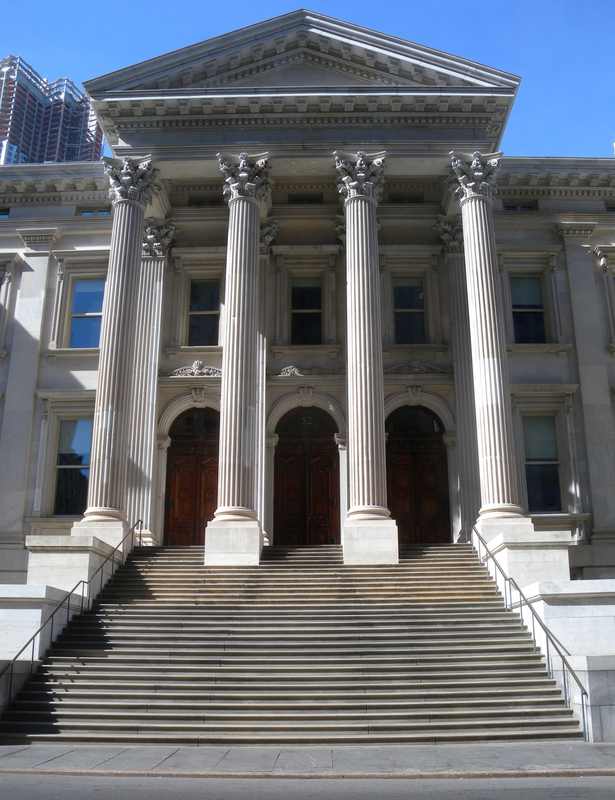
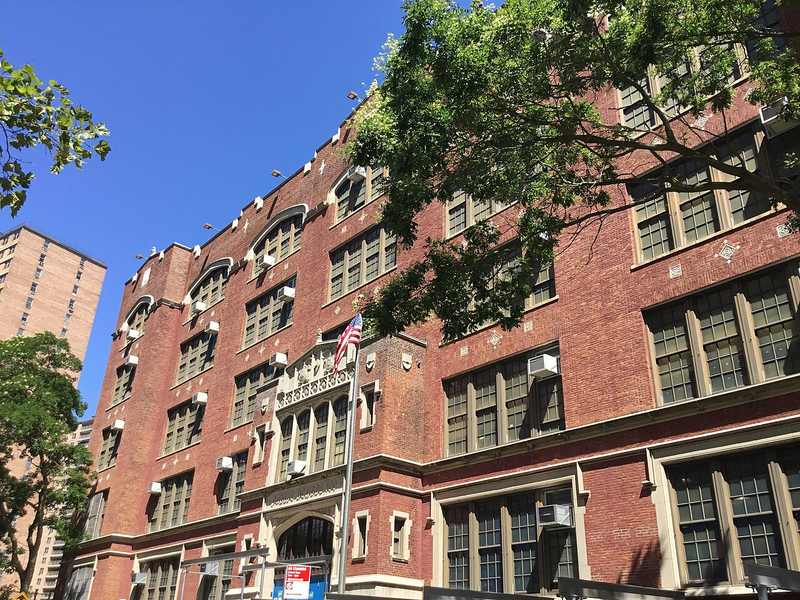
Image sources: Tweed Courthouse photograph by Jim Henderson and PS 100 photograph by Kidfly182 via Wikimedia Commons; classroom photograph by Mazko Vadim via Pexels.