Maricopa County ballots
Politics / US Elections
President Donald Trump on Monday branded Arizona's Maricopa County "a very, very dishonest county" after the county's election vendor mistakenly mailed 3,126 early ballots six days ahead of schedule — and in the same breath urged Republicans to vote by mail in the November 3 midterms, a striking pivot from a president who spent years calling mail-in voting corrupt.
Speaking to reporters on the White House South Lawn on October 5, 2026, Trump responded to a question about the Maricopa miscue by attacking the county's Republican-run elections office. "They have to be ashamed of this," he said. "They got caught and now they're saying it was an error. Maricopa is a very, very dishonest county." The Associated Press and the Arizona Republic confirmed the remarks.
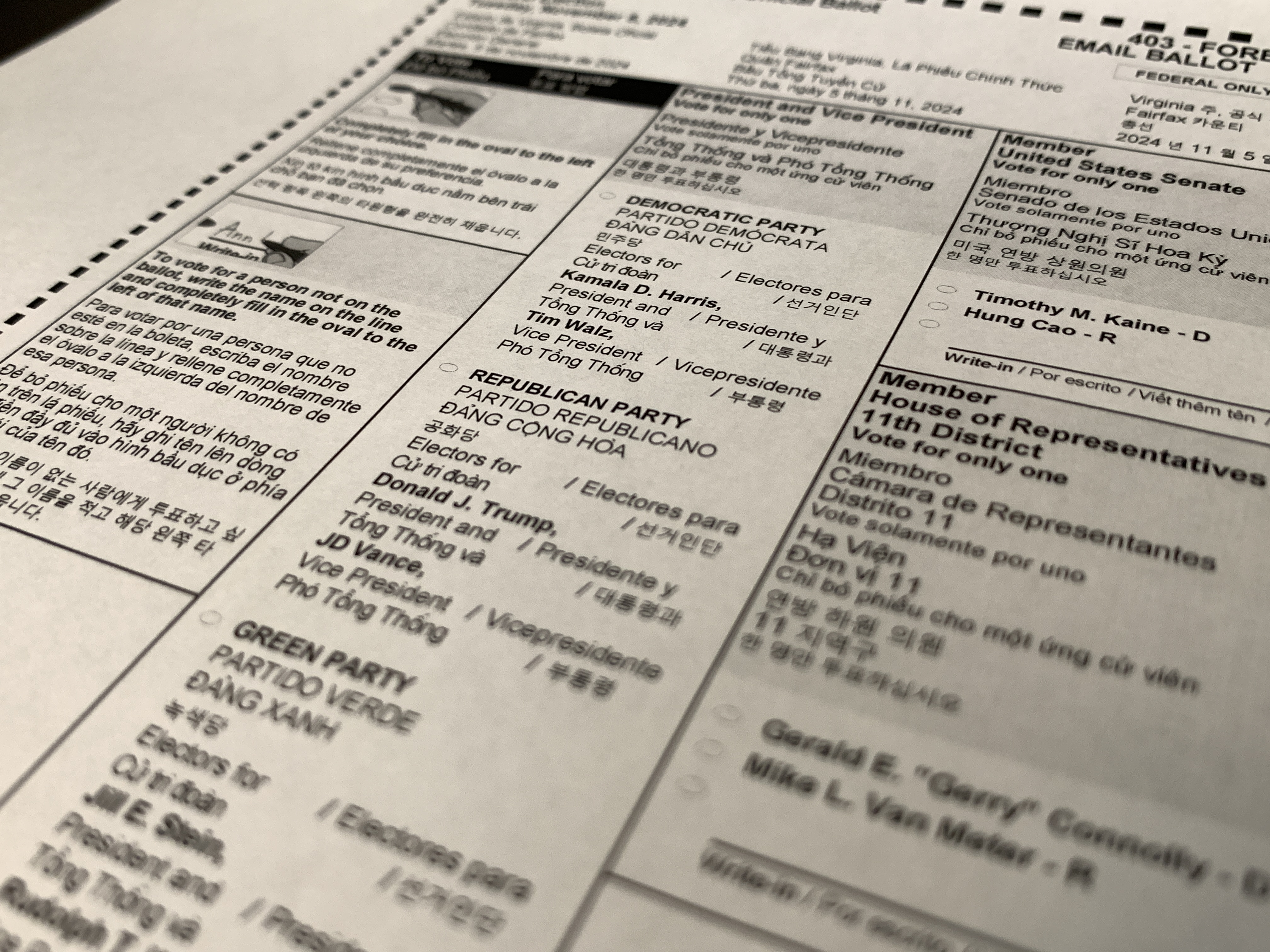
The ballots went out October 1, six days before Arizona's scheduled October 7 early-mailing date, after vendor Runbeck Election Services delivered a container of vote-by-mail packets to a U.S. Postal Service facility early. Recorder Justin Heap — a Republican with ties to a top Trump adviser — disclosed the error publicly on October 4, stressing that the ballots were printed correctly, sent to the correct voters, remain valid, and do not need to be voided or reissued. "No voters were adversely affected," Heap's office said, adding that the premature mailing was not authorized by the Recorder's Office and was reported by the vendor itself.
Why this matters
Twenty-nine days before midterm elections that will decide control of Congress, the most scrutinized county in American election administration is back in the national spotlight — and the president is once again pre-loading the fraud narrative. That matters less because of what happened (a vendor's scheduling mistake, caught and disclosed by the county itself) than because of what it signals: Trump is building the rhetorical infrastructure to contest results he doesn't like, while simultaneously doing the math that his party cannot afford to lose the mail-in vote.
The contradiction is the story. For six years, Trump's attacks on mail-in voting helped convince millions of his own supporters that voting by mail was rigged — a belief that measurably depressed Republican mail-ballot returns in 2020 and 2022. On Monday he effectively conceded that position was a strategic error. "I'd rather have them vote in person, but they can vote by mail if they want because we seem to have no choice," he said, adding that "there is a lot of cheating in vote by mail, a lot of cheating all over." Two days earlier, on Truth Social, he posted a video urging supporters to "swamp" Democrats with turnout "whether you vote early, absentee, by mail, or in-person."
You cannot call the method corrupt on Monday and make it your turnout plan on Tuesday without someone noticing. But strategically, the pivot is cold arithmetic: in Arizona, where the vast majority of votes are cast early or by mail, a party that cedes the mailbox cedes the state.
How we got here: Maricopa's long war over its own elections
To understand why 3,126 early-mailed ballots detonated nationally, you have to understand Maricopa County. With roughly 2.5 million registered voters, it is the fourth-largest voting jurisdiction in America and the decisive battleground of a swing state. After the 2020 election, it became the epicenter of Trump's stolen-election claims — the target of the state Senate's "Cyber Ninjas" audit, years of lawsuits, and a permanent protest camp outside the tabulation center.
The county's election machinery has been at war with itself in 2026. Earlier this year, surveillance footage showed Recorder's Office CIO Bryan Colby and another employee removing a pre-tabulation ballot scanner and provisional-ballot envelopes from the county elections facility and transporting the scanner to the Recorder's Office in a private vehicle. The Board of Supervisors raised chain-of-custody alarms; the episode ended in a criminal investigation of Recorder's Office employees. Heap, who took office promising to overhaul election administration, has been fighting the board ever since — and the board, in turn, has questioned his office's competence at every turn.
That history is why a routine vendor error became a presidential talking point within 24 hours. Maricopa no longer gets the benefit of routine.
What actually happened: the numbers
Strip away the rhetoric and the facts are narrow. Runbeck Election Services, which has handled ballot printing and processing for Maricopa County for roughly two decades, told the Recorder's Office it "mistakenly mailed 3,126 early ballots" on October 1. The packets didn't qualify for USPS automated processing, were handled separately, and a container holding them was released with the evening's mail six days early.
Heap's office says: the correct ballots reached the correct voters; the ballots are valid and will not be reissued; ballots returned before early voting begins will be held unopened until processing starts. The county attorney's office concurred that nothing needs to be voided.
Put 3,126 in context: Maricopa County has about 2.5 million registered voters. The affected ballots represent roughly one-eighth of one percent of the electorate — a rounding error in any race decided by more than a few thousand votes, and Arizona's statewide races are typically decided by tens of thousands. There is no allegation, from the county or anyone else, that a single ineligible vote was cast or that any voter's ballot was compromised. This was a timing error, disclosed voluntarily, with zero demonstrated effect on any outcome.
Representative Abe Hamadeh of Arizona's 8th District was unconvinced: "Maricopa says Runbeck 'mistakenly' mailed 3,126 ballots six days early. This isn't their first 'mistake.' One error is incompetence. A pattern is a system." It is a fair political point — trust, once burned, is not restored by press releases — but it is not evidence of fraud, and Hamadeh offered none.
The pivot: Trump embraces the mailbox he spent years attacking
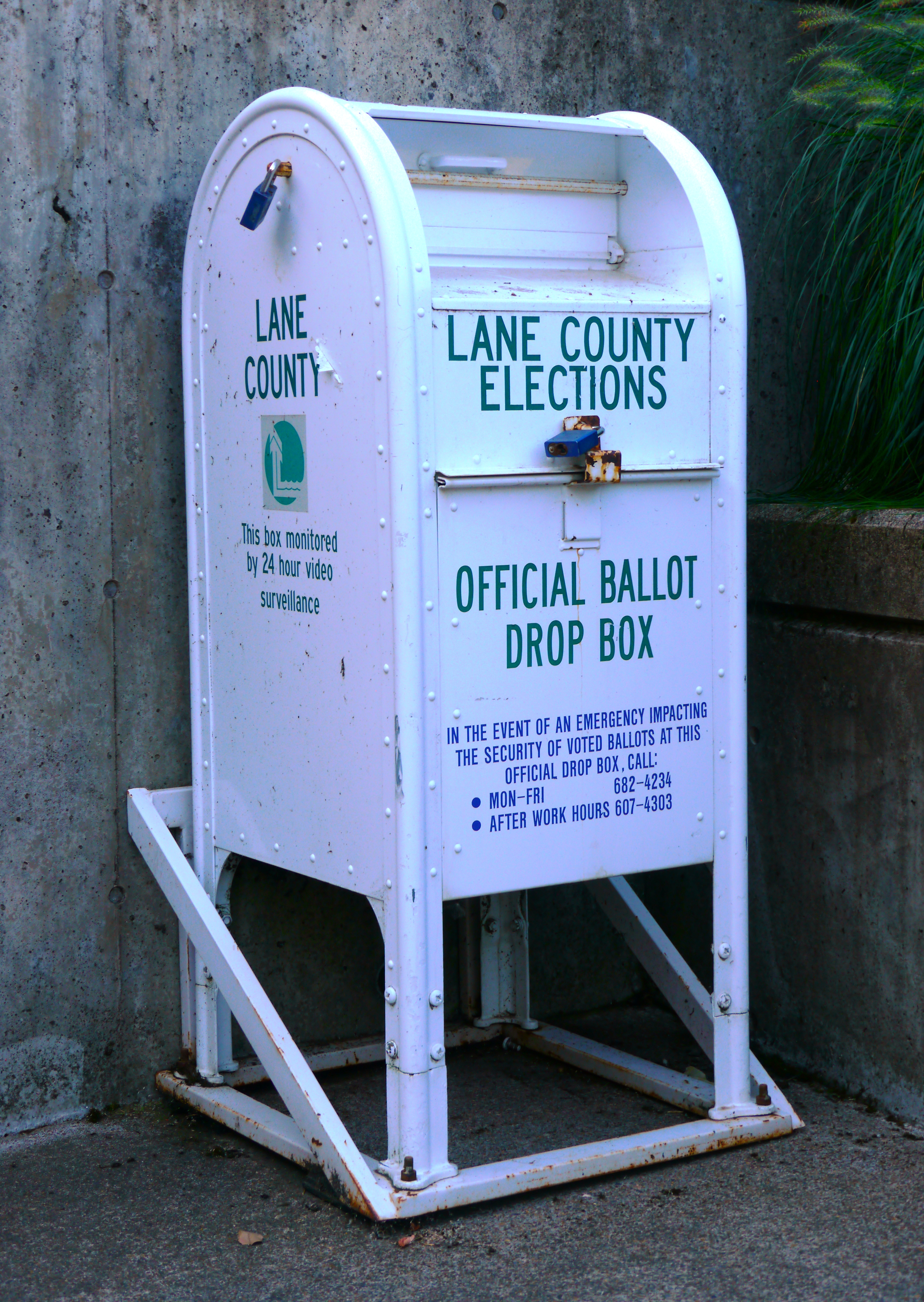
The most consequential sentence Trump uttered on Monday may not have been the insult. It was the concession. By explicitly telling Republicans to vote by mail, Trump closed the book — at least tactically — on the most self-destructive element of his 2020 playbook: the demonization of the very voting method his supporters in Arizona rely on.
The data behind the pivot is brutal. In 2020, Republicans who believed Trump's claims about mail-in fraud disproportionately chose to vote in person, while Democrats banked votes weeks early — giving Democrats a structural turnout cushion before Election Day even arrived. Republican strategists have begged for this reversal for two full cycles. Trump's Truth Social video on Saturday, recorded and distributed with campaign polish, suggests the operation has finally internalized the lesson: you cannot win modern American elections while boycotting the mailbox.
But the pivot comes wrapped in the old poison. "There is a lot of cheating in vote by mail," Trump said in the same appearance where he endorsed it. That sentence is doing enormous work: it gives supporters permission to use the method while preserving the grievance if they lose. It is the rhetorical version of having it both ways — bank the mail votes now, keep the fraud claim in reserve for November 4.
Who benefits, who loses, what the critics say
Trump benefits twice: he gets a fresh "dishonest county" data point for the base, and he gets to normalize mail voting for his own voters without admitting the last six years of attacks were wrong. Heap loses: the Recorder, a Trump ally, is now the man the president publicly shamed — "They got caught," Trump said, of an office that disclosed its own vendor's error. Runbeck loses most tangibly; a two-decade vendor relationship is now politically radioactive.
Democrats, for their part, see narrative laundering — a real but trivial error inflated into evidence for a fraud thesis that courts, audits, and recounts have rejected for six years. Their counter is the county's own record of disclosure: an office trying to steal an election does not announce its vendor's mistake on a Sunday.
The honest criticism, from election-administration experts rather than partisans, is narrower and worth hearing: Maricopa's repeated unforced errors — the March scanner episode, now the Runbeck mailing — keep handing ammunition to people who want to believe the system is rigged. Competence is the best disinfectant, and Maricopa keeps failing the competence test in public.
What happens next
Early voting in Arizona is underway and the ballots — including the 3,126 early-mailed ones — are valid. Watch three things. First, whether Trump's mail-in embrace moves Republican return rates; party committees will be watching the daily ballot-return data like hawks. Second, whether the fraud rhetoric escalates into action: more observers, more litigation threats, more pressure on Heap's office as November 3 approaches. Third, whether Heap survives politically — shamed by the president, distrusted by the board, he is the most exposed Republican election official in America right now.
The deeper question is whether Trump's two-track message — vote by mail, but the system is crooked — can hold through Election Day. It worked as a Monday soundbite. Whether it works as a turnout strategy, and what it does to trust in the count afterward, is the experiment the next 29 days will run.
Sources
- Associated Press — Trump criticizes election officials in Arizona's Maricopa County over error affecting ballots
- Arizona Republic — Maricopa County mail-in ballots sent too early remain valid
- Washington Examiner — Trump urges Republicans to vote by mail while repeating fraud claims
- Maricopa County Recorder's Office — Runbeck early-ballot mailing statement