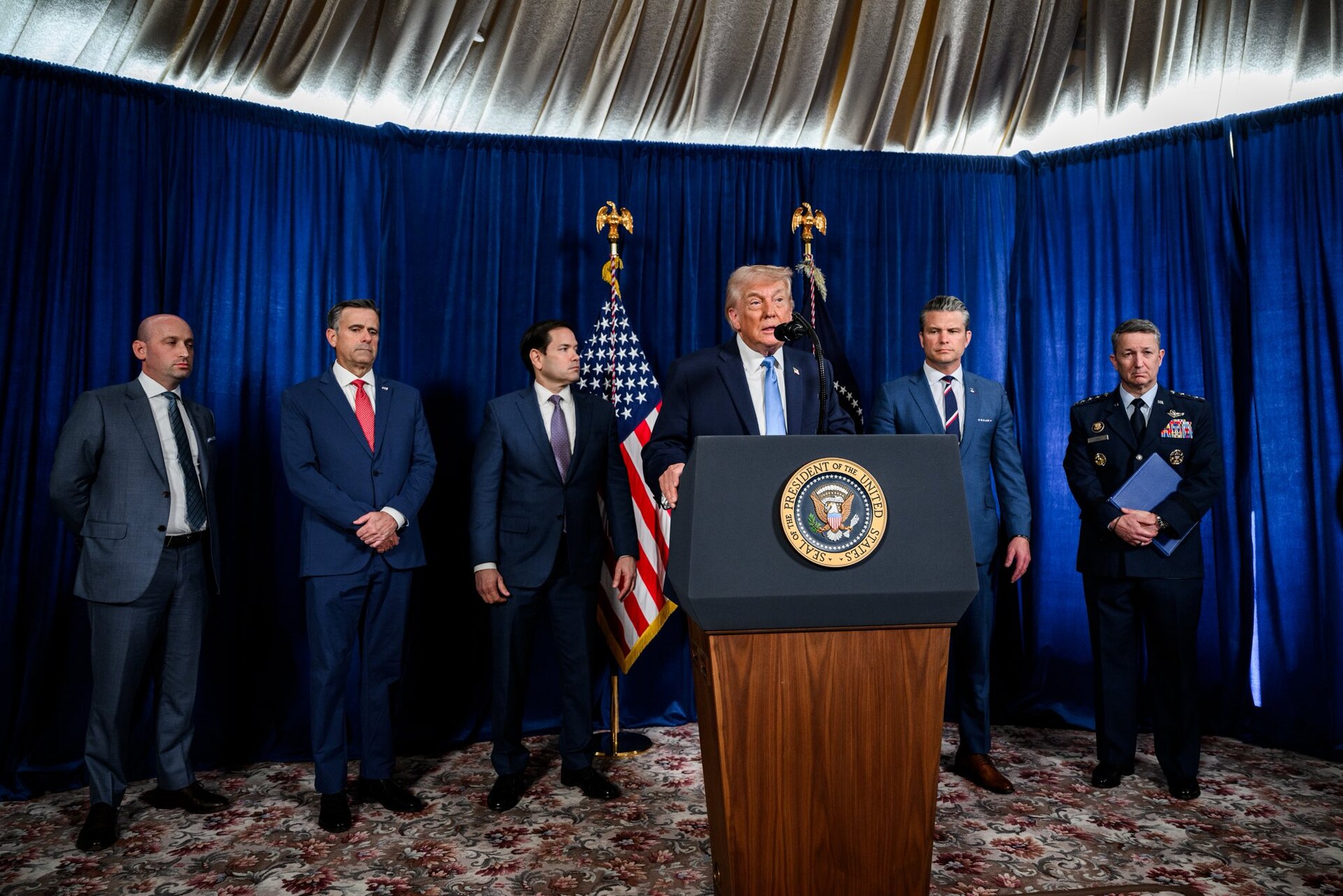
Trump LeBron James national anthem — the Trump LeBron James national anthem dispute erupted on Thursday, October 22, 2026, when the president shared a short warm-up clip from Madison Square Garden, called the NBA's all-time leading scorer a "TOTAL DISGRACE" and demanded he apologize to America's fallen heroes, twelve days before the midterm elections.
Sports / Basketball — A standing player, a stretching routine and a 30-second clip have put anthem etiquette back at the center of American sports politics.
What the video actually shows
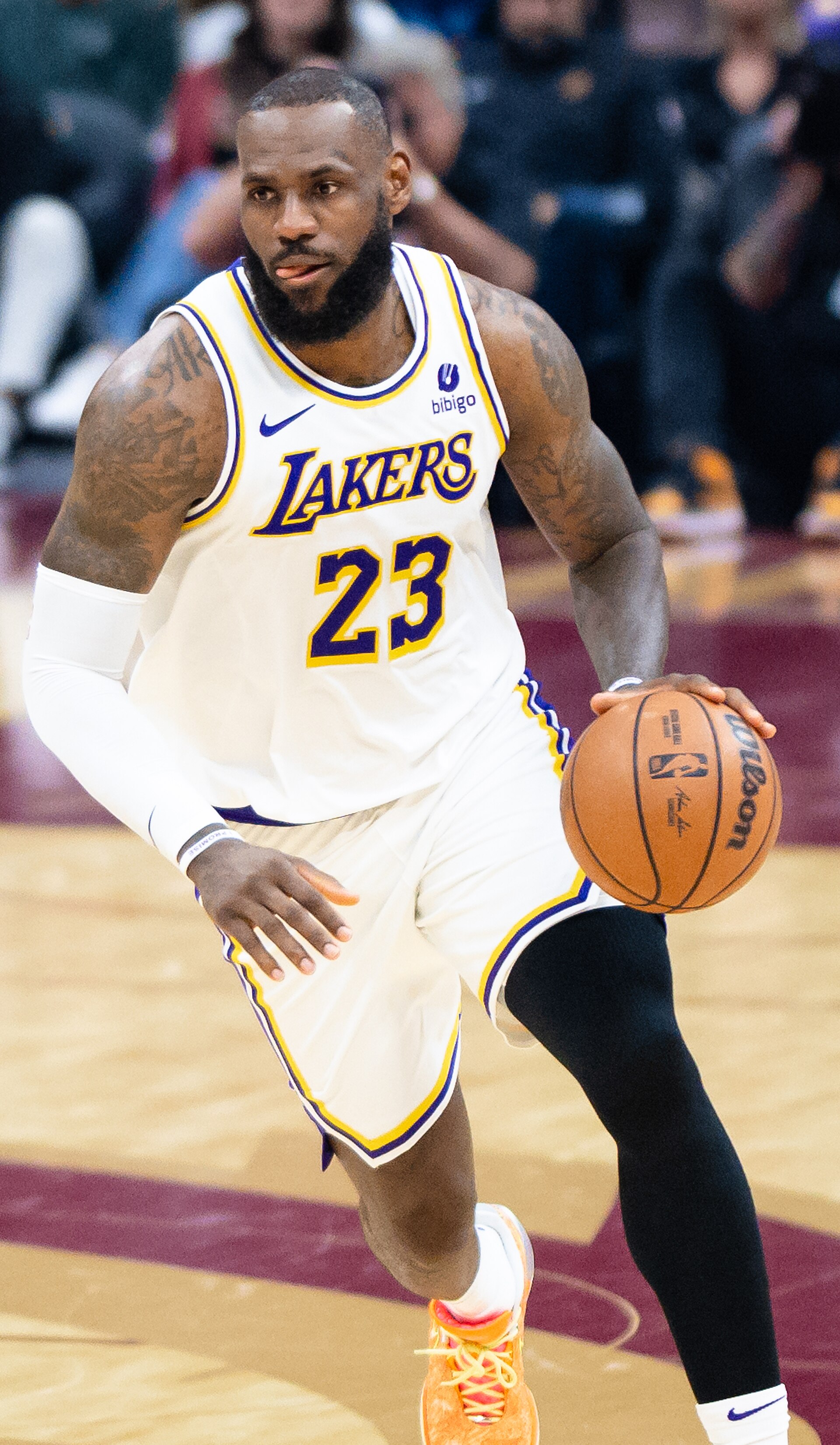
Start with the footage itself, because everything else in this story is an argument about what it means. The clip Trump shared (Video: Donald Trump via Truth Social) shows the pregame lineup at Madison Square Garden before Tuesday's opener, with singer Avery Wilson performing the anthem. James is standing in line with his teammates, most of whom are standing still. James is not still. He stretches, moves his arms through a golf-swing motion and mimes his shooting and free-throw routine — the same movements he makes on court before games, performed in place while the anthem plays.
Two facts about the clip are not in dispute. The first is that James remained standing throughout; at no point does he sit, kneel or leave the floor. The second is that the footage, on its own, does not establish his intent. Stretching and moving through a shooting motion during the anthem is a warm-up routine some players perform, and James has been seen doing versions of it before — radio host Craig Carton criticized him for similar stretching during the anthem in December 2025, nearly a year before Thursday's post. Supporters of the president read the clip as a deliberate show of indifference toward the flag and the fallen. James's defenders read the same seconds as an athlete's unthinking pregame ritual, done standing, in a league whose only written anthem requirement is that players stand. Both readings are interpretations layered on top of footage that cannot settle the question by itself.
As of the first reports on Thursday, neither James nor the 76ers had publicly responded, according to the New York Post, and a 76ers representative did not immediately respond to a request for comment. That silence is itself a variable in what happens next: every previous round of this feud has escalated only when both men chose to engage.
The night itself: a debut that upstaged a banner
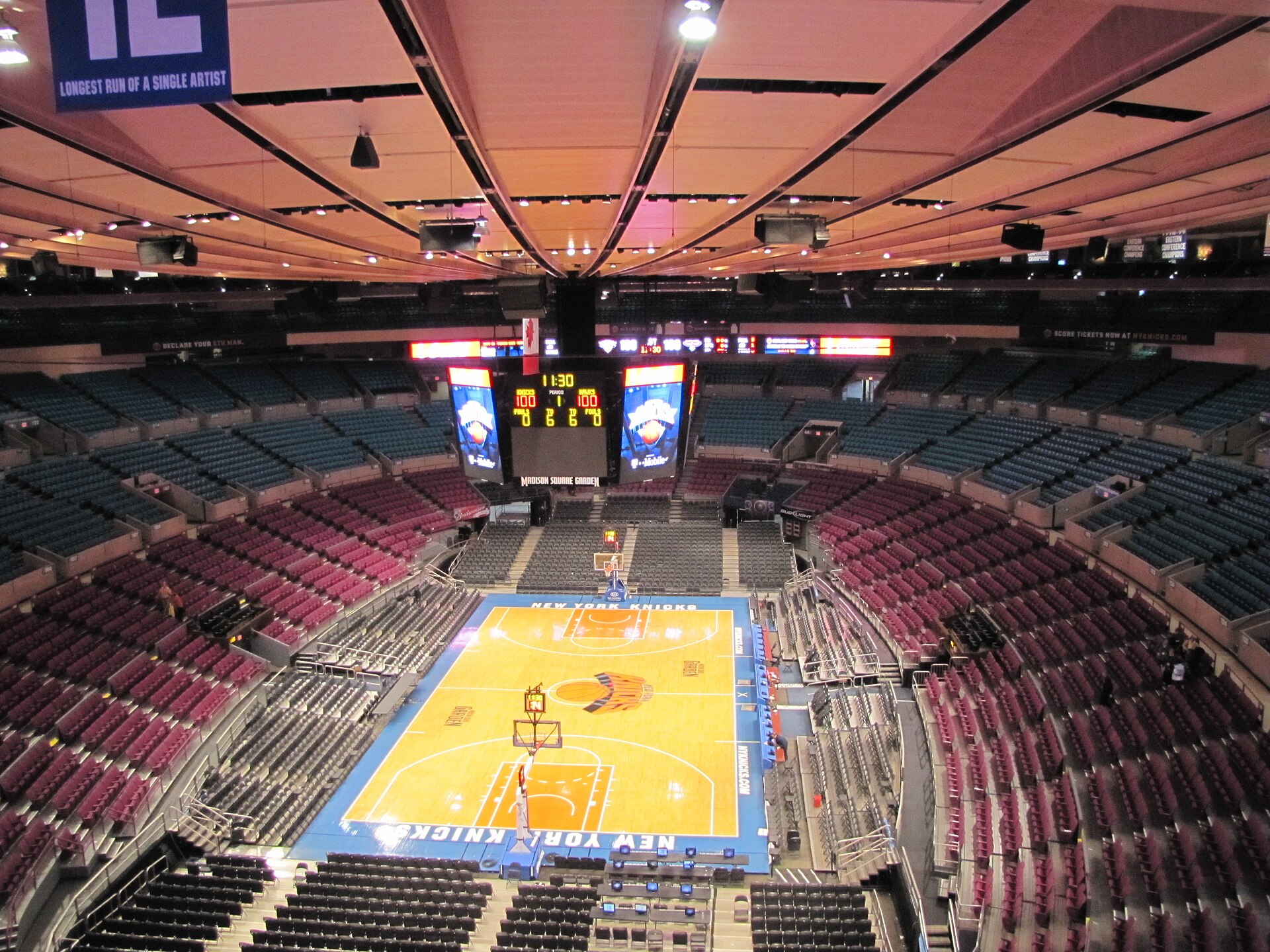
The game the anthem preceded was not a footnote. Tuesday was ring night at the Garden — the Knicks raising their first championship banner since 1973 — and it doubled as James's debut for Philadelphia, the opening game of his 24th NBA season and his first with his fourth team after eight seasons in Los Angeles. Philadelphia won 106-100, spoiling the ceremony, and James's line was a connective one rather than a dominant one: 14 points, nine rebounds and seven assists, closing the game at the free-throw line in the final seconds. At 41, James is the NBA's all-time leading scorer beginning a season no player has ever begun before — a 24th — which is part of why a clip of him standing in a pregame line can command a presidential post two days later. Our full report on the game is here: the 76ers spoiling the Knicks' ring night on James's debut.
The rules, and where James stood — literally
The regulatory picture is narrower than the political one. The NBA's rulebook requires players to stand for the national anthem, a rule the league has maintained since long before the protest era, and James stood. There is no league rule governing stretching, arm movement or warm-up motions during the anthem, and no report on Thursday suggested the league or the team considered the clip a rules matter at all. The comparison case the New York Post raised is the NFL, whose policy requires players on the sideline to stand for the anthem while preserving a locker-room option — again, a rule about posture and presence, not about stillness.
That distinction is the factual core of the counter-argument to Trump's post: a player can be criticized for anthem etiquette — for failing to observe the stillness and solemnity many Americans treat as the anthem's due — without having violated any rule that governs him. Etiquette and rules are different instruments. Trump's post speaks the language of disgrace and apology, which is the language of etiquette and honor, not of league discipline; nothing in it asks the NBA to act, and nothing in the league's framework gives it an obvious action to take against a standing player who stretched.
A feud with a ten-year paper trail
None of this is new, and the history explains why a warm-up clip could not stay a warm-up clip. James has endorsed Trump's opponent in three consecutive presidential elections — Hillary Clinton in 2016, Joe Biden in 2020 and Kamala Harris in 2024 — making him the most prominent athlete-critic of Trump's political career. The defining early episode came in 2017, when Trump withdrew the Golden State Warriors' White House invitation after Stephen Curry hesitated about attending, and James answered on social media by calling the president "U bum" and noting that visiting the White House was an honor until Trump occupied it. In 2018, after James told CNN's Don Lemon that Trump was using sports to divide the country, Trump replied with a late-night post questioning James's intelligence and declaring a preference for Michael Jordan.
The comparison to Jordan returned as recently as July 2026, when Trump, speaking in the Oval Office, described Jordan as a friend and the superior player and suggested of James that "maybe he's a racist." Layered underneath the personal feud is the structural one: Trump's first term was defined in sports by his war over anthem protests — Colin Kaepernick's kneeling, which began in 2016 as a protest against police brutality and racial injustice, and Trump's demand that owners fire protesting players, culminating in his cancellation of the Philadelphia Eagles' 2018 Super Bowl White House visit. The anthem, in other words, is the original battlefield of Trump's relationship with American sports, and James — who supported the protesters' right to kneel while himself always standing — has been its most famous standing participant for a decade.
Why this matters
The timing is the first reason. The post landed on October 22, twelve days before the November 3 midterm elections, in a cycle where control of Congress is genuinely contested and where the president's party is fighting the historical gravity that costs incumbent parties seats. The anthem is, for Trump's coalition, a proven mobilizing issue — few subjects fuse patriotism, race, sports and disrespect-for-the-fallen into a single image as efficiently, and few targets embody the other side of that fusion as completely as James: a billionaire athlete, a three-cycle endorser of Trump's opponents, and a man whose cultural reach among younger and Black voters is precisely the reach Republican midterm turnout operations cannot match organically. A Truth Social post costs nothing, dominates a news cycle, and reminds every wavering base voter exactly which cultural team they are on. That is the logic of the post, and it does not depend on the clip's contents being unambiguous — arguably it works better because they are contested, since a contested clip generates argument, and argument is distribution.
The counter-argument deserves its full weight, because it is factual rather than merely sympathetic. James stood, as the rule requires. The movements in the clip are a documented pregame routine he has performed before, including under criticism last December. The footage does not show him speaking, gesturing at the flag or leaving the line. To demand an apology "to all of those Great American Warriors and Heroes who died for the American Flag" is to assign, to ambiguous seconds of stretching, a specific intent to dishonor the war dead — an assignment the video alone cannot carry. And there is a second-order point critics of the post pressed on Thursday: an anthem norm enforced by presidential denunciation against a standing citizen is a norm about compulsory displays of reverence, which sits in visible tension with the free-expression principles the flag is usually said to represent. Supporters of the president answer, with equal sincerity, that the anthem's two minutes ask little, that stillness is the least of respects owed to the fallen, and that a man of James's influence knows exactly how his movements will be read. Both of those arguments are about values, not facts, and the facts available do not referee between them.
The third reason this matters is that it is not an isolated flare-up. In the same week, the WNBA Finals were running through their own anthem-etiquette controversy, after the Golden State Valkyries and Atlanta Dream jogged off before the anthem — a routine both organizations describe as long-standing pregame procedure rather than protest. When two leagues, in championship and opening-week spotlights, simultaneously produce fights about what athletes do during the anthem, the anthem is no longer an occasional flashpoint in US sports politics; it is once again its center of gravity, a full decade after Kaepernick first knelt. Our coverage of the Valkyries' run is here: the Golden State Valkyries sweeping the Aces to reach the WNBA Finals.
Who gains, who is exposed — and what critics say
The gains and exposures sort predictably but not trivially. The president gains a base-mobilizing culture fight on friendly terrain at negligible cost, twelve days out from an election where turnout differentials will decide close House and Senate races — the same electoral map that has the White House fighting on multiple fronts this month, from Trump's mail-voting reversal to the fight over federal election monitors. James, paradoxically, may also gain: presidential attacks have historically raised rather than diminished his standing with his own audience, his sponsors have weathered a decade of this feud without flinching, and a dignified silence — or a single measured response — lets him occupy the adult-in-the-room position that the 2017 and 2018 rounds ultimately awarded him. The exposed parties are the institutions in the middle. The 76ers must decide whether a statement protects their player or prolongs the story; the NBA, which markets James as a global ambassador while governing a league whose anthem rule he complied with, has no clean move available; and the Knicks and the Garden, hosts of the clip, inherit a controversy from a game they lost twice — once on the scoreboard and once in the news cycle.
Critics of James, beyond the president, make a narrower etiquette case: that whatever the rules say, the anthem at a public event is a collective ritual, twenty thousand people in the Garden managed stillness, and the most famous man in the building owed the moment the same discipline — a standard of conduct, they note, that James himself would expect of a teammate during a moment of silence. Critics of the president make the proportionality case: that the commander-in-chief's demand for an apology to the war dead, over a standing man's stretches, deploys the fallen as a rhetorical instrument in a decade-old personal feud, and that the July "maybe he's a racist" remark reveals the feud's personal rather than patriotic engine. Signal Post News takes no side between those readings; the verifiable record — a standing player, a stretching routine, a rule complied with, a presidential post demanding apology — is set out above, and readers are intelligent enough to judge it for themselves.
What happens next
Three scenarios now branch from James's silence. In the first, he does not respond at all. The feud's history suggests this is the outcome the White House least prefers: the post needs an antagonist's reply to sustain a second and third day of coverage, and a non-response strands it as a one-day story competing with a dozen other pre-midterm fights. In the second, James responds with the formula he has used before — a short, dismissive post that reframes the attack as beneath response, the "U bum" template updated for 2026. That guarantees the feud a full second round, fresh fundraising and turnout content for both political camps, and a question waiting at every 76ers media availability for weeks. In the third, the response comes institutionally rather than personally — a 76ers or NBA statement affirming that James complied with league rules and that the matter is closed — which would convert a culture-war skirmish into a league-versus-president standoff and materially raise the stakes for everyone.
Watch, too, for the calendar to argue back. Philadelphia's season now proceeds through a league whose arenas will each replay this story on every visit, and the 76ers' next meeting with the Knicks — in Philadelphia, on October 30 — arrives four days before the election with the Garden game, and now the anthem clip, folded into its promotion whether the league wants it there or not. And watch the midterm itself: if Republicans defy the historical pattern on November 3, Thursday's post will be filed by the president's allies as one more proof that the anthem fight moves votes; if they do not, it will be filed by his critics as a distraction that changed nothing. Either way, the oldest argument in American sports — what an athlete owes the flag in the two minutes before the game — has been reopened by the two men who have defined it for a decade, and neither of them has ever once backed down from it.
Sources
Reuters, "Trump says LeBron James disrespected US during national anthem" (October 22, 2026) — reuters.com (the Truth Social post and its full text, the anthem performance by Avery Wilson, and the 76ers' non-response to a request for comment). USA Today, "Trump demands LeBron James apologize over national anthem" (October 22, 2026) — usatoday.com (the post, the clip's contents and the game's context). New York Post, "Trump calls for LeBron James to apologize for his national anthem antics" (October 22, 2026) — nypost.com (the golf-swing and shooting-motion description of the clip, the absence of a response from James or the 76ers as of first reports, the December 2025 Craig Carton criticism of similar stretching, the NBA and NFL anthem-rule comparison, and James's line of 14 points, nine rebounds and seven assists in the 76ers' 106-100 win). Feud history — the 2017 "U bum" episode, the 2018 Don Lemon interview exchange, James's endorsements in 2016, 2020 and 2024, and the July 2026 Oval Office remarks — is a matter of the public record as reported contemporaneously by the Associated Press, CNN and other outlets. The anthem video itself was not embedded in this article for rights reasons; it is described from the reporting above and credited in the text (Video: Donald Trump via Truth Social).