LeBron James 76ers debut — it arrived on the loudest possible stage on Tuesday, October 20, 2026: Madison Square Garden on ring night, with the New York Knicks raising their first championship banner since 1973, and the Philadelphia 76ers walking out of the building with a 106-100 season-opening win.
Sports / Basketball — New York celebrated a title 53 years in the making, then watched Philadelphia's rebuilt roster take the opener anyway.
What happened at the Garden
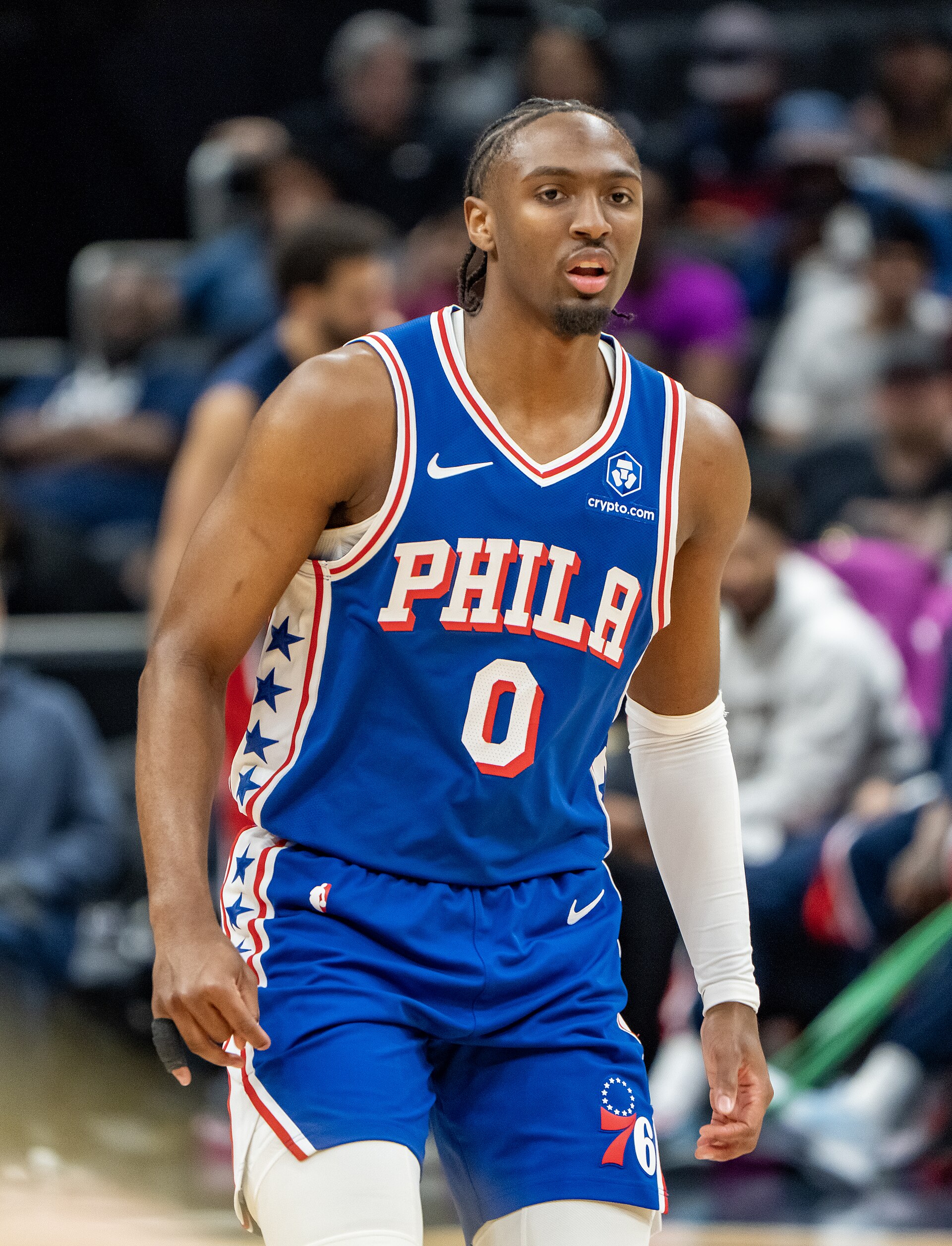
Ring nights are set up to be coronations, and for a half, this one behaved. The Knicks, fresher in the building's memory as champions than as hosts, led 58-54 at halftime despite an uneven start: Karl-Anthony Towns, who finished with 19 points and 12 rebounds, was limited to 24 minutes by first-half foul trouble, and New York's offence never found the rhythm that carried it through the spring. Philadelphia stayed close the way veteran teams do — Maxey probing, Embiid drawing attention in the middle, Brown attacking in transition — close enough that the banner hanging above the court felt less like a statement than a target.
The third quarter flipped the evening, and it flipped it decisively. Philadelphia won the period 29-18, and closed it on an 11-0 run capped by the night's signature sequence: James inbounding the ball to Brown, who hit a buzzer-beating 3-pointer for an 83-76 lead. It was the two newcomers, the two answers Philadelphia's front office gave to last spring's sweep, combining on the play that silenced the Garden. From there the 76ers managed the game like a team that had rehearsed the ending. New York pushed back within reach late — and the building found its voice again — but Maxey's steal and coast-to-coast layup made it 104-98 with 1:52 left, and James hit two clinching free throws with seven seconds remaining to finish it, 106-100.
Brown, to his credit, said the quiet part out loud afterwards. "It's good, what we wanted to do, be a little spoiler," he told reporters, per the New York Post. "The Knicks' accomplishment is great, but it's a new season, new year." Then he immediately downshifted: "I don't think we sent a message. We're just trying to win as many games as possible, stack days." James, speaking to NBC Sports, sounded like a man measuring a new situation in real time. "Personally, I feel a lot better, still getting my rhythm... just a little bit over two weeks with the new squad. But I like the way we played... we played exceptionally well, especially defensively," he said, adding: "It's about winning, just trying to make plays to win... This building is so special."
How we got here: a sweep, a summer, and an answer
To understand why Philadelphia rebuilt itself around this game, rewind to May. In the second round of last spring's playoffs, the Knicks did not just beat the 76ers — they swept them, winning the four games by an average of 22.2 points, as the Associated Press recounted in its preview of this opener. That series was one stop on a run of 13 straight playoff victories and a 16-3 finish with the highest point differential in NBA postseason history, ending with the Finals win over San Antonio and the franchise's first championship since 1973. Sweeps like that usually end eras. In Philadelphia, it ended patience.
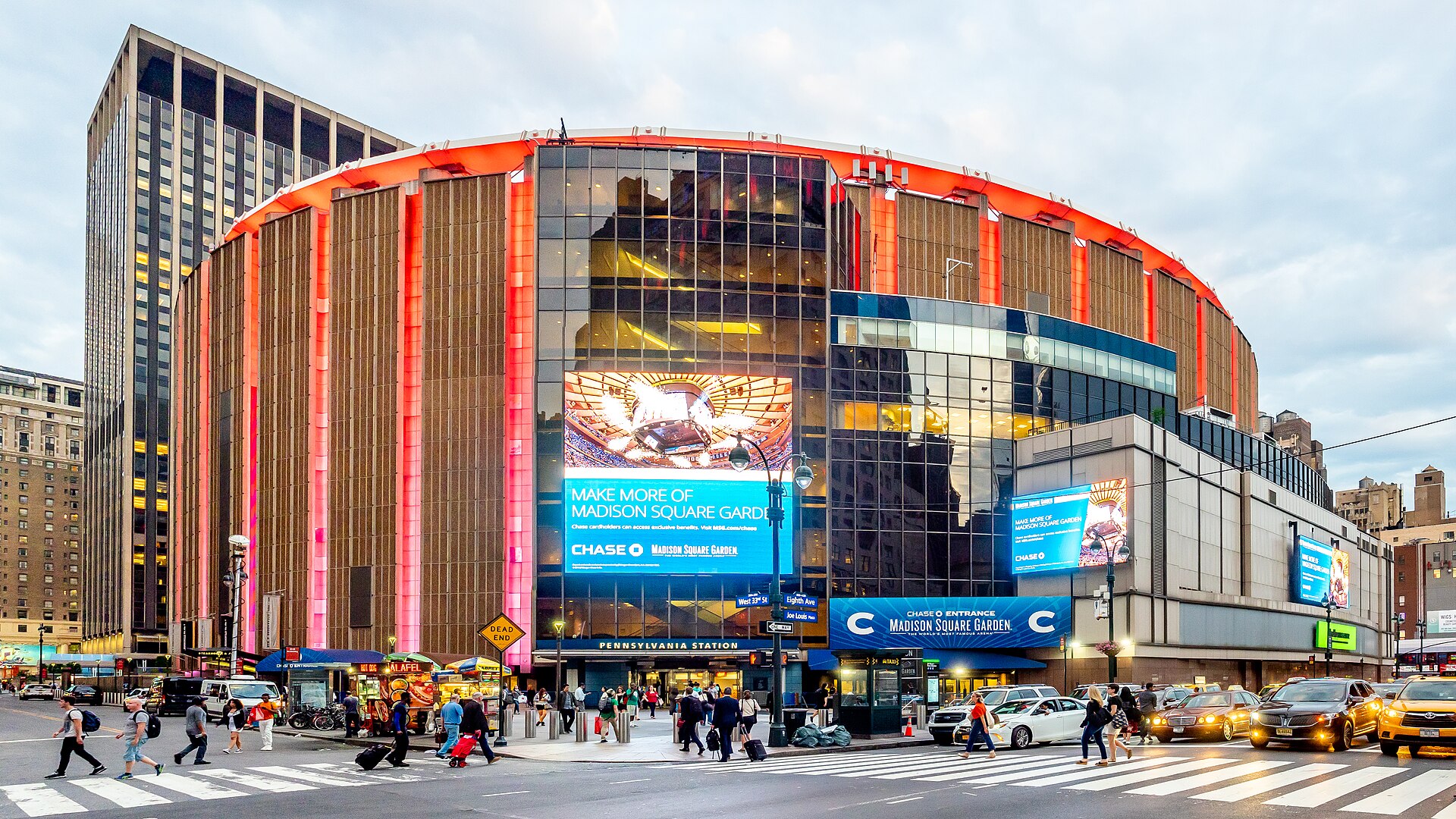
The response was the boldest summer in the league. Philadelphia traded for Brown, prising a Finals MVP out of Boston, and signed James after his departure from the Lakers — giving Maxey and Embiid two proven playoff closers and giving the franchise something it has chronically lacked in the Embiid era: redundancy. If one star has an ordinary night, two others can carry the offence; if defences load up on Embiid, the floor tilts toward a 41-year-old who has spent two decades punishing exactly that choice. Tuesday was the first evidence that the theory works in practice. No single 76er dominated. Five players scored in double figures, the bench produced 13 points and three 3-pointers from Anfernee Simons and 10 points with two 3-pointers from Kentavious Caldwell-Pope, and the team's best quarter was the one championship teams are supposed to own — the third.
James brought a small piece of personal history into the building as well. As ClutchPoints noted, he had lost all four of his previous season-opening debuts with a new team — his 2003 rookie debut with Cleveland, the 2010 Heat opener, his 2014 return to the Cavaliers and the 2018 Lakers opener. Tuesday was the first time he has ever opened a season with a new franchise and won. The broadcast had its lighter moments too: on NBC's ring-night coverage, Tracy Morgan jabbed that Bronny James "look like he got JUCO ball written all over him," per ClutchPoints.
Why this matters
The first reason this game matters is that it was a stress test of the NBA's newest superteam construction, and the construction held. Philadelphia did not win because James turned back the clock; he was, by his own description, still finding his rhythm two weeks into life with a new squad, and his 14-9-7 line is modest by the standards of his career. The 76ers won because their talent is layered. Maxey was the best player on the floor. Brown was the best two-way wing. Embiid's 13 points came with 11 rebounds and six assists against a frontcourt missing its anchor's full minutes. That is the actual promise of this roster — not a farewell tour with famous help, but four players who can each be the second-best option on a given night.
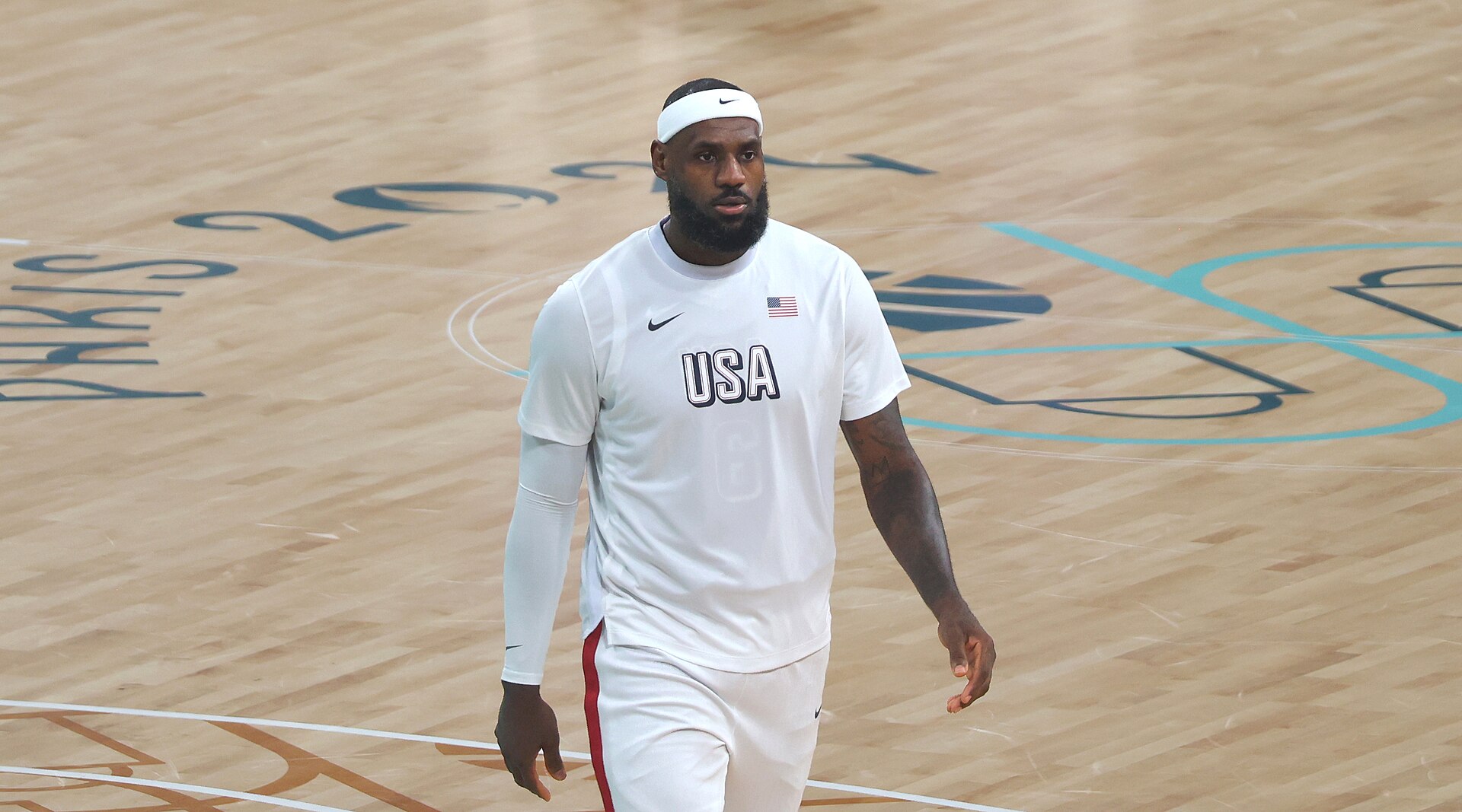
The second reason is what it does to the Eastern Conference's psychology on night one. The Knicks did not lose a random opener; they lost the opener attached to their banner, at home, to the team they humiliated in May, in a game where their own shooting collapsed to 37 percent. Champions are entitled to a ring-night hangover — the ceremony is long, the emotions are retrospective, and the opponent is always the most motivated team in the league that week. But the manner matters. New York's halfcourt offence produced 21 points from Brunson on 19 shots, Towns was a part-time participant because of fouls, and the Knicks' most productive big on the night was a reserve, Andre Drummond, whose 12 points and 14 rebounds off the bench kept the game respectable. A title defence is a season-long argument that last spring was not a peak. On the first night of that argument, the other side spoke first.
The third reason is James himself, and the record book quietly rearranging around him. A 24th season is a category of one — no player has ever done it — and a fourth team at 41 reframes what the end of a career can look like. The historical pattern for stars this deep into their careers is ceremonial: reduced minutes, a farewell narrative, a team marketing the past. Philadelphia is asking something different of him — to be a connective player on a contender, inbounding the ball on the night's biggest play, closing at the free-throw line, defending well enough that his own postgame emphasis was defence. If that version of James holds up over 82 games, the 76ers have not signed a monument. They have signed the most experienced closer alive at a discount on his prime, which is a genuinely new thing in league history.
Multiple angles: the spoiler, the champions, and the fair questions
Philadelphia's angle is straightforward satisfaction, publicly muted. Brown called the team "a little spoiler" and then insisted no message was sent, which is what players say when the message has already been delivered. The 76ers' real test was never whether they could get up for ring night — every contender in the league circled this fixture — but whether the pieces fit at speed, and the third quarter answered that: an 11-0 closing run built on defence, transition and the two new arrivals combining at the buzzer is exactly the identity this roster was assembled to have.
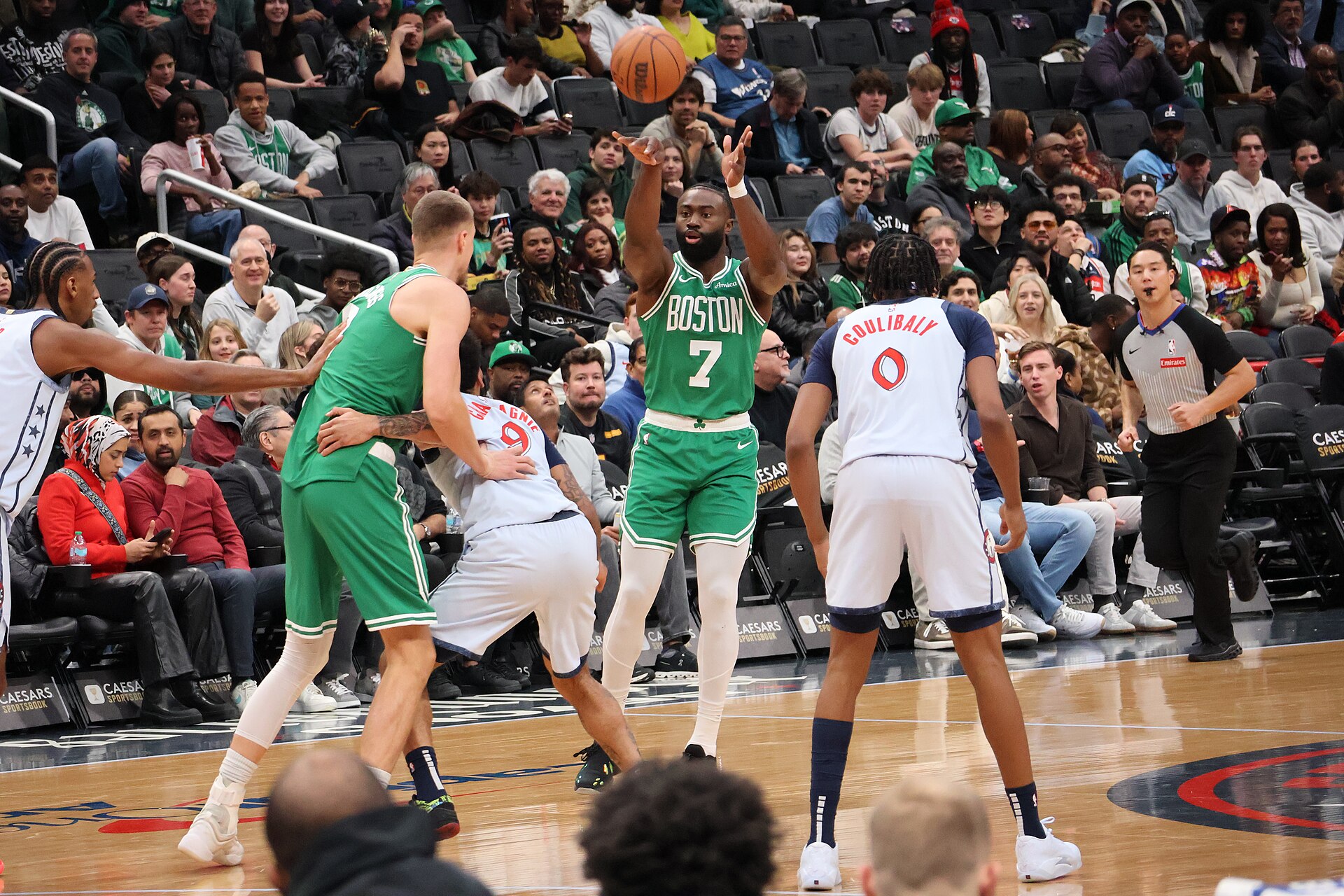
New York's angle deserves its due. The Knicks raised a banner for the first time in 53 years, and nothing about a six-point loss in October unraises it. Brunson's pregame promise — to replicate the city's summer joy — was not broken by one night of 6-for-19 shooting; it was deferred. There is also a fair structural excuse: ring night is the single most distorted fixture of the season, and Towns' foul trouble removed the Knicks' second scorer for half the game. The sceptical angle is equally fair to state. A champion that shoots 37 percent at home, gets outshot from the field and from three (33.3 percent to Philadelphia's 27.5 percent was the one line New York won), and needs its backup centre to be its most efficient big has questions that a ceremony cannot answer — about halfcourt creation when Brunson is contained, and about whether the league's five months of film study on the champions has already begun to bite.
The league's angle is the calendar. Opening night is theatre, and the NBA could not have scripted a better first act: a banner, a spoiler, a 41-year-old beginning a 24th season in the league's most famous building, and a rematch already circled for October 30 in Philadelphia. Whatever the standings say in April, this game will be the reference point every subsequent meeting between them is measured against.
The game in numbers
The box score tells a story of accumulation rather than explosion. Maxey's 28 came on 9-for-19 shooting and 8-for-9 free throws, with five assists and three steals — the steals may have mattered most, because Philadelphia's decisive moments were defensive: the third-quarter run and the late takeaway he converted himself for 104-98. Brown's 19-8-6 and James's 14-9-7 gave the 76ers three players at six assists or more in effect sharing creation duties, with Embiid adding six of his own; that distribution is why New York's defence, designed to load toward a primary option, kept arriving a pass late.
Compare the teams' efficiency lines and the upset stops looking like one. Philadelphia shot 41.9 percent overall to New York's 37 percent — a gap of nearly five points on a night when neither team shot the three well, the 76ers at 27.5 percent and the Knicks at 33.3 percent. In a low-scoring, defence-first game, the team that wins the ordinary shots wins, and Philadelphia's ordinary shots were Maxey's free throws (8-for-9), Simons' three 3-pointers off the bench and Caldwell-Pope's two. New York's counterweights were real but narrower: Brunson's 21 hard-earned points, Towns' 19 and 12 in just 24 minutes — a per-minute line that underlines what his foul trouble cost — and Drummond's 12 and 14 off the bench. The Knicks did not lack effort or even production. They lacked a third quarter: 29-18 is an 11-point swing in a game decided by six, and the 11-0 closing run inside it accounts, almost exactly, for the final margin.
What happens next
The schedule gives both teams an immediate second draft of the story. Philadelphia hosts Cleveland in its home opener on Thursday, when the Garden performance gets re-read in front of its own crowd and the question becomes whether the third-quarter version of this team travels home with it. New York visits Boston on Friday — the champions' road test arriving three days into the season, against the team that just traded away its Finals MVP to the team that just beat them. And on October 30, the Knicks and 76ers meet again in Philadelphia, with the banner game still fresh enough to function as a grievance on both sides.
Three scenarios frame the season now opening. In the first, Tuesday was a genuine changing of the guard: Philadelphia's depth is real, James settles into the connective role he described, and the East runs through a team that was swept in May and answered with the league's boldest summer. In the second, it was ring-night gravity — the most predictable trap game on the calendar — and the Knicks' shooting, Towns' minutes and Brunson's efficiency normalise within a fortnight, restoring the champions as the conference's reference team. In the third, both things are true at once: New York remains the team to beat over 82 games, and Philadelphia has announced itself as the specific opponent built to beat them, in a matchup now guaranteed to matter in April. One game cannot choose between those futures. But openers are not supposed to choose; they are supposed to pose the question as sharply as possible. A banner, a spoiler, and a 24th season beginning with a win posed it about as sharply as it can be posed.
For readers following other basketball stories on Signal Post News, see our coverage of Steph Curry's $116M Warriors extension, the Golden State Valkyries sweeping the Aces to reach the WNBA Finals, and the Dream beating the Liberty in overtime in the WNBA semifinals.
Sources
Associated Press game reporting, October 20, 2026, as published via ESPN (final score, quarter flow and the 11-0 third-quarter closing run, Maxey's late steal and layup, James's clinching free throws, and the May playoff history: New York's second-round sweep of Philadelphia by an average of 22.2 points, the 13 straight playoff wins and the 16-3 finish with the highest point differential in NBA postseason history). NBC Sports, October 20, 2026 (James's postgame quotes, and his official line of 14 points, nine rebounds and seven assists). New York Post, October 20, 2026 (Brown's "be a little spoiler" and "stack days" quotes, and Brunson's pregame remarks to the crowd). FOX 29 Philadelphia, October 20, 2026 (game coverage and player lines: Maxey 28 points on 9-for-19 shooting and 8-for-9 free throws with five assists and three steals; Brown 19-8-6; Embiid 13-11-6; Simons 13 and Caldwell-Pope 10 off the bench; Brunson 21 on 6-for-19; Towns 19 points and 12 rebounds in 24 minutes; Drummond 12 points and 14 rebounds; team shooting of 41.9 percent and 27.5 percent from three for Philadelphia, 37 percent and 33.3 percent for New York; halftime score 58-54). ClutchPoints, October 20, 2026 (James's four previous season-opening losses with new teams — 2003 Cleveland, 2010 Miami, 2014 Cleveland, 2018 Lakers — and Tracy Morgan's ring-night broadcast remark, attributed there).