Trump golf course presidential retreat
A proposal to build an official retreat at Trump International Golf Club promises a privately funded residence and free federal access. It also forces a public debate over security, precedent and the line between presidential infrastructure and a family business.
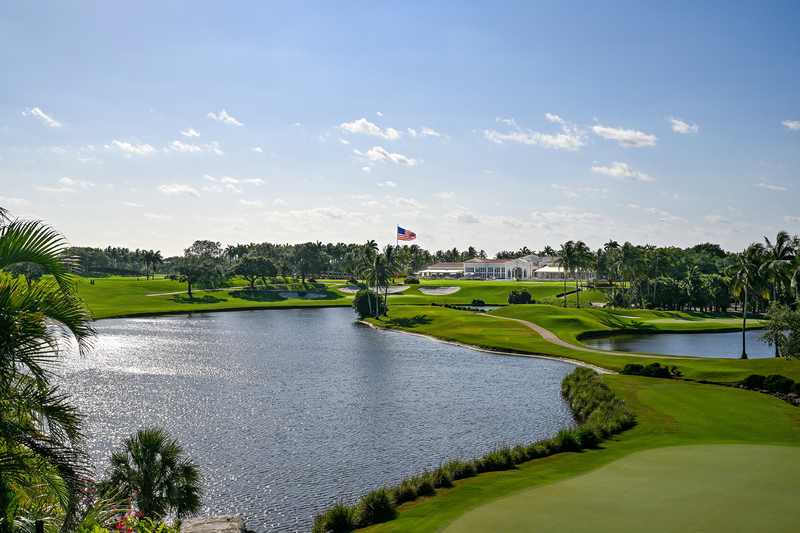
WASHINGTON — The Trump golf course presidential retreat moved from a private proposal to a presidential endorsement on Wednesday, October 7, when President Donald Trump said in the Oval Office that he wants part of Trump International Golf Club in West Palm Beach turned into a secure weekend compound for future presidents and visiting heads of state. He described the concept as a Florida counterpart to Camp David and said it would have many of the protections an official retreat requires.
Trump said the idea came from the Secret Service and the military, called it a “great idea” and insisted it was intended for his successors rather than himself. The property is a short drive from Mar-a-Lago and one of three Florida golf courses he owns. Reporting says the project is not expected to be completed before he leaves office, a timetable that strengthens his argument that the proposal is about legacy — while leaving unanswered who would govern, secure and maintain it.
What Trump proposed
The public trail begins with a September 3 letter from Harvey Oyer, an attorney for the club, to Palm Beach County commissioners. First reported by the Palm Beach Post in September, the letter proposed designating a portion of the property as a permanent “U.S. Presidential Golf Course,” with a residence and facilities for presidents and foreign leaders.
Under the terms described in news reports, Trump would personally finance construction as a gift; the club would provide the federal government free access to its facilities; and future presidents would receive free memberships. Development would be coordinated with the General Services Administration and the Secret Service. Palm Beach County owns the land and leases it to the club, so the county — not Trump alone — would select any parcel. County Administrator Joseph Abruzzo called the idea a historic opportunity and said officials were seriously considering it.
That framework remains a proposal, not an approved project. Reuters said it could not immediately confirm the letter’s contents independently, and neither the Secret Service nor the Defense Department immediately answered its requests for comment. Those gaps matter because the agencies named as originators have not yet publicly validated that account.
Why this matters
The proposal tests whether the presidency can accept a lasting public benefit from a sitting president’s private business without also conferring a lasting private benefit on that business. A secure federal compound could be useful. Yet an official designation could also attach presidential prestige to a Trump-branded club, raise the surrounding property’s profile and create decades of government activity on land tied to the president’s commercial empire.
Trump’s statement that the retreat would be for future presidents is both the strongest defense and the clearest legacy claim. If no successor uses it, the project risks looking like a costly symbol. If successors do use it, Trump will have reshaped the physical geography of the presidency long after leaving office. Either outcome makes the rules established now more important than the motives claimed today.
The precedent extends beyond Trump. Future presidents could point to this arrangement when offering facilities linked to their own businesses, foundations or families. The governing question is therefore not simply whether this president’s plan is useful, but what safeguards would make the same kind of deal acceptable if proposed by a political rival.
Background: from Camp David to Mar-a-Lago
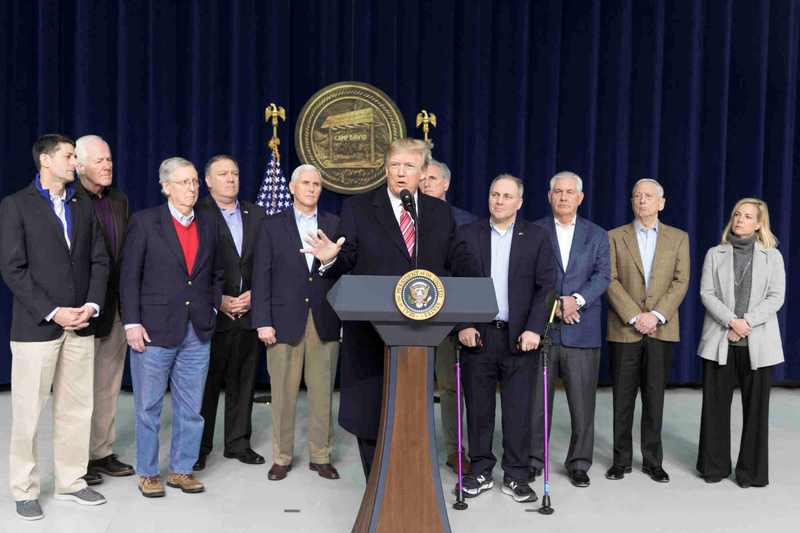
Camp David has served every president since Franklin D. Roosevelt established the Maryland mountain compound in 1942. Its cabins, controlled perimeter and distance from Washington have supported private weekends as well as consequential diplomacy, including the 1978 talks that produced the Camp David Accords. It is government-owned, purpose-built and institutionally separate from any president’s personal finances.
Trump has made only a handful of visits to Camp David across two terms, preferring his own properties in Florida, New Jersey and Virginia. During his first term he promoted Mar-a-Lago as the “Winter White House,” normalizing a pattern in which official travel, political identity and private ownership occupied the same address. The West Palm Beach plan would make that overlap more permanent and more formal.
The Oyer letter adds a complicated land layer. Because Palm Beach County owns the property beneath the club’s long-term lease, county commissioners would have to decide whether an official presidential site fits the public interest. If they advance it, the GSA and security agencies would need to turn a broad concept into boundaries, access rights, design specifications and long-term operating agreements.
The supporters’ case
Supporters begin with the construction bill: if Trump finances the residence and supporting facilities, taxpayers would receive a new presidential asset without paying the initial building cost. Free federal access and complimentary memberships would also remove ordinary club charges. Palm Beach County could gain infrastructure investment, national visibility and jobs associated with construction, maintenance and security.
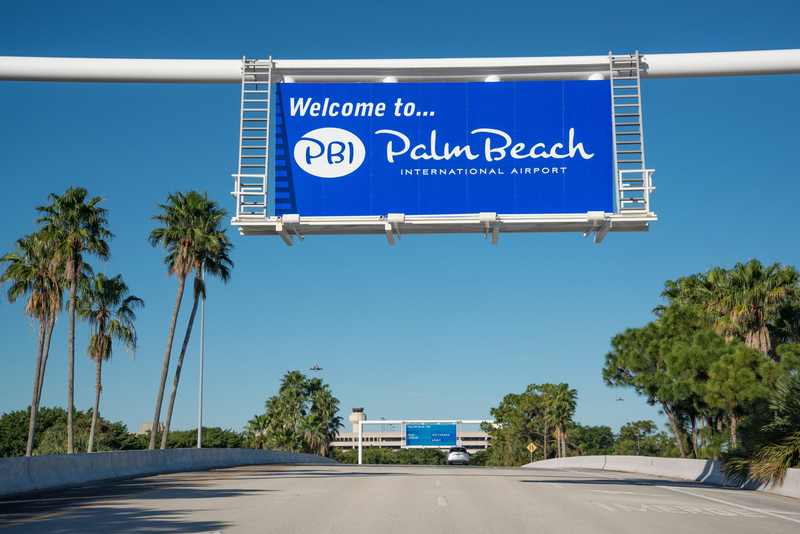
The White House’s security argument is geographic. An official told AFP that the club is about two minutes from the recently renamed Donald J. Trump International Airport, has no tall buildings overlooking it, no houses bordering the course and quick access to law enforcement. The official described those characteristics as necessary for a presidential retreat. Trump added a practical cultural point: presidents often play golf, so an official site built around a course could see regular use.
The critics’ case
Critics focus on the gap between a donated building and the full public cost of a presidential site. Secret Service staffing, communications, motorcades, airspace restrictions, screening equipment, road closures and repeated advance teams remain government obligations even if construction is privately funded. Before accepting a “free” facility, officials would need a credible estimate of those recurring costs and a transparent explanation of who owns improvements if the lease changes.
The ethics concern is equally concrete. An official retreat could enhance the value and reputation of an operating private club associated with the president. Complimentary memberships avoid direct fees, but federal presence can still create indirect commercial advantages. Independent valuation, conflict-of-interest review and enforceable limits on branding or promotional use would help separate a public gift from private gain.
The timing adds political heat. Trump announced the plan four weeks before the November 3 midterms, then traveled to San Antonio that evening to headline a rally for Senate candidate Ken Paxton. Supporters can fairly call that coincidence around a long-running county proposal; critics can fairly ask whether the announcement turns presidential infrastructure into campaign-era branding. Evidence of the plan’s merits must be evaluated independently of both interpretations.
What the numbers say
Three dates frame the decision. Camp David has operated since 1942, giving the federal government more than eight decades of experience with a publicly controlled retreat. The Florida proposal surfaced in a September 3 letter and reached presidential endorsement on October 7 — just 34 days later. The midterms arrive November 3, 27 days after the announcement. That is a very short public-review window for a facility intended to last across administrations.
Distance is the project’s measurable advantage. The White House says the airport is about two minutes away, reducing a motorcade’s exposed travel time compared with longer routes. But short travel does not erase the need to secure an entire course, surrounding airspace and access roads. A full comparison should put estimated construction, annual operations and security deployments beside the costs of Camp David and existing presidential travel to Palm Beach.
The plan also carries a striking security contradiction. The same course was the site of the September 2024 assassination attempt in which Ryan Routh hid in bushes with a rifle. He was convicted and sentenced to life in prison in February. Trump did not mention that episode while praising the property’s security advantages. The incident does not by itself prove the site cannot be secured; it does show why agency threat assessments, not promotional descriptions, must drive the decision.
What happens next
The first decision belongs to Palm Beach County. Commissioners can reject the concept, request studies or authorize negotiations over a parcel. If it advances, the GSA would need to evaluate property rights and the federal interest, while the Secret Service would assess perimeter, sightlines, evacuation routes, air access and staffing. Those reviews could substantially change the plan Trump described.
Congress may also seek cost estimates and ethics safeguards, particularly if federal appropriations are needed for security or operations. Watch for an appraisal of the gift, a written ownership structure, rules governing the Trump name and commercial marketing, and disclosure of any lease changes. Without those documents, claims about taxpayer savings or private benefit remain arguments rather than settled facts.
There are three plausible scenarios. The county could decline, ending the plan locally. It could approve a limited parcel subject to strict public controls, allowing federal agencies to proceed. Or negotiations could outlast Trump’s term and leave the next administration to accept, redesign or abandon the idea. Reporting indicates completion before he leaves office is unlikely, making successor consent a practical test of whether this is a presidential institution or a Trump-era project.
The proposal’s strongest promise and its greatest vulnerability are the same: permanence. A Florida retreat may offer convenience and a new venue for diplomacy. But to deserve a place beside Camp David, it will have to survive not only security review and political scrutiny, but also the simpler question future presidents will ask — whether using it serves the office without serving the brand.
Sources
- Associated Press report — Trump’s Oval Office remarks, the proposed terms and Palm Beach County response.
- Reuters — the proposal, agency response status, Camp David context and the 2024 security incident.
- USA Today — the September 3 letter, county lease and construction proposal.
- AFP — the White House security case and airport proximity.