Nolan Wells FBI investigation
Nolan Wells FBI investigationNolan Wells death FBITrump FBI Nolan WellsNolan Wells case updateNolan Wells grand jury no indictmentBen Crump Nolan WellsHorn Island death investigationNolan Wells parents federal probeNolan Wells autopsy undeterminedwhat happened to Nolan Wells

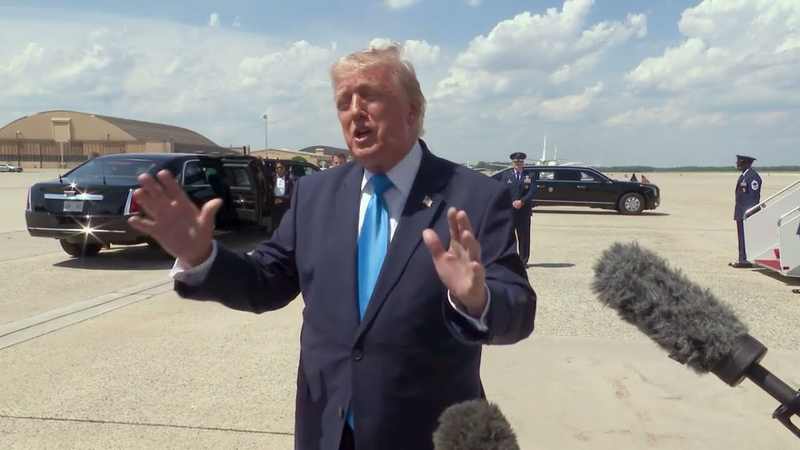
WASHINGTON — The Nolan Wells FBI investigation moved closer to becoming a federal question Wednesday when President Donald Trump said he was considering asking the bureau to examine the death of the 18-year-old Black man whose body was found on a Mississippi barrier island after a Fourth of July boat trip with friends. Asked by reporters at the White House whether he planned to push the FBI to launch an independent investigation, Trump replied: “Well, we're looking at that. Yes, we are.” The statement, reported by Reuters, came two days after Wells' family publicly demanded a federal probe, escalating a case that local authorities closed without charges but that neither of two autopsies could conclusively explain.
Why this matters
A president weighing in on a single local death is unusual, and it instantly changes the politics of a case that had settled into an uneasy stalemate. For three months, the Wells case has lived in two sharply different narratives: the official one, in which a Jackson County grand jury unanimously found no evidence to support charges and the district attorney found no evidence the death was racially motivated; and the family's, in which deleted messages, bruising and the circumstances of where the body was found leave important questions unanswered.
A federal review would not simply re-run the local investigation. It could bring the FBI's forensic resources, the possibility of a civil-rights inquiry and, above all, a different kind of legitimacy. For a family that has said it does not trust the local process, Washington's involvement is itself part of the remedy it seeks. For Trump, the move carries political consequences too: a Republican president ordering federal scrutiny of a Black teenager's death would cut across familiar partisan expectations just weeks before the Nov. 3 midterms. It would also place this case within a wider debate about how his administration uses federal law-enforcement power, already visible in the Justice Department's expanded denaturalization push.
The timeline: how the Nolan Wells case reached Washington
Horn Island death investigation begins after July 4 boat trip
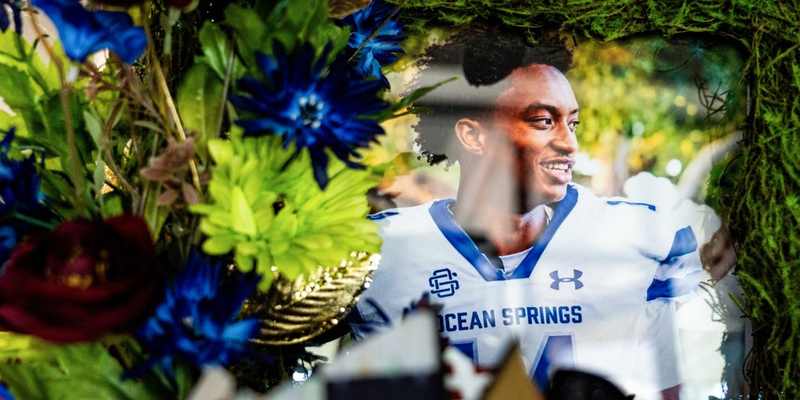
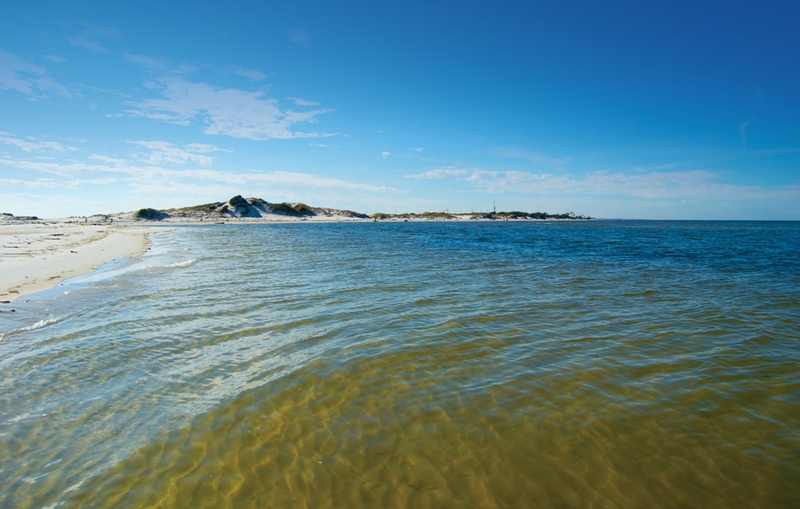
Wells, an 18-year-old football player from Ocean Springs, Mississippi, went missing during a July 4 boat trip to Horn Island with friends. His body was found Monday, July 6, on the island's northwest end, not far from where he was last seen. In the weeks that followed, the case drew national scrutiny as family members, civil-rights leaders and others raised questions about transparency and about disparities in how cases involving Black victims are handled.
Wells' parents, Christine and Elmore Wonsley, hired civil-rights attorney Ben Crump to lead a private investigation that included a review of their son's phone and a second autopsy. The phone review found that other Snapchat users had deleted or unsent some of their own messages. Investigators, however, found no one had unlocked or physically accessed Wells' phone after the last time he was confirmed to have used it. The deleted-message issue therefore remains a question in the family's account, not proof of foul play.
Nolan Wells grand jury: no indictment, but no definitive cause of death
Both the state autopsy and the private second autopsy listed the cause and manner of death as undetermined. Neither could definitively say what happened, and neither ruled out drowning. The state autopsy found no water in Wells' lungs or stomach. Both noted bruising on the skull and back, but neither medical examiner called the injuries fatal. Those findings leave uncertainty; they do not, on their own, establish either an accident or a crime.
In September, a Jackson County grand jury unanimously declined to indict anyone. District Attorney Angel Myers McIlrath said there was no evidence to support allegations that the disappearance and death were racially motivated. That decision is the official legal result unless new evidence emerges, and it is the backdrop to the grand jury decision this development follows.
In August, the Congressional Black Caucus wrote to Attorney General Todd Blanche and FBI Director Kash Patel urging a deeper look; the NAACP and the Rev. Al Sharpton backed the demand. On Monday, Oct. 5, the family made its most direct appeal yet. “Our son was found on federal land and we are asking the FBI to step in and do a full investigation,” Elmore Wonsley said. Horn Island is overseen by the National Park Service — the jurisdictional point the family has emphasized in asking Washington to act. On Wednesday, the president answered.
What an FBI review could — and could not — do
Federal land and civil-rights law create possible routes
An FBI investigation would not automatically reopen the question of homicide charges. Federal jurisdiction over an ordinary death is narrow, but it is not nonexistent. Because the body was found on federal land, federal investigators have a plausible basis to examine the scene and evidence independently. The bureau can also investigate whether Wells' civil rights were violated — a federal inquiry that could run parallel to, and would not be bound by, a state grand jury's decision.
The bureau's forensic resources could test the claims both sides have made: the family's questions about phone records and bruising, and the official account that the evidence supports no criminal conduct. A federal review could provide a second institutional assessment. It could not substitute certainty for evidence.
The Nolan Wells autopsy finding may remain undetermined
What an FBI review cannot do is guarantee the family the answer it wants. “Undetermined” is a conclusion, not merely a placeholder, and two independent autopsies reached it. Federal investigators could reach the same result. Mississippi law supplies one clear opening: the state has no statute of limitations on homicide, so credible new evidence could still send the case back to a grand jury regardless of what Washington does.
Who benefits, who loses
The immediate beneficiaries are the Wonsley family and the civil-rights coalition behind them — Ben Crump, the NAACP and the Congressional Black Caucus — who have spent three months arguing the local process did not answer their concerns. A presidential “we're looking at that” is the closest thing to institutional validation short of an actual investigation. Trump could also gain with voters who do not usually credit him on racial justice, at a moment when the midterms are four weeks away.
Local officials, meanwhile, face the prospect that their work will be examined again after the Jackson County grand jury returned a unanimous no-bill. That does not invalidate the local findings, but it does expose them to renewed scrutiny. There is a risk for the family as well: a federal review that confirms the local conclusions could close the last institutional door they have been pressing, leaving the same unanswered questions and fewer places to take them.
What happens next: three scenarios
1. A full federal probe
The White House asks the FBI to open a civil-rights and federal-lands investigation, agents re-examine phone records and autopsy findings, and the case enters a federal process whose outcome may not be known for months.
2. A quiet preliminary review
The administration orders an assessment, the FBI examines the existing file and declines to open a full investigation. In that scenario, the president's words become the high-water mark — politically significant but substantively limited.
3. The stalemate continues
Washington delays or takes no formal step, the family and its allies keep pressing through the midterms, and the case remains what it has been since July: a death no investigation has conclusively explained and no grand jury has charged, sustained in public view by people who refuse to let it go.
The bottom line
Three months after Nolan Wells disappeared on a holiday boat trip, the president has said he might ask the FBI to find out what happened. That sentence alone measures how far this case has traveled from a Mississippi barrier island — and how much depends on whether “we're looking at that” becomes an investigation or remains a quote. The family asked for the federal government to step in. On Wednesday, the president said he might. What comes next will decide whether that was a turning point or a sound bite.
Sources
- Reuters, Oct. 7, 2026 — “Trump says he may ask FBI to look into Nolan Wells death”
- Clarion Ledger (USA Today network), Oct. 7, 2026 — “Trump says FBI may look into Nolan Wells' death”
- Reuters via Q1019FM, Oct. 5, 2026 — “Nolan Wells' family seeks federal probe after grand jury declined to indict anyone for his death”