Nolan Wells grand jury decision
PASCAGOULA, Mississippi — The Nolan Wells grand jury decision delivered two conclusions that must not be collapsed into one. A 23-member Jackson County grand jury unanimously returned a “no true bill,” finding insufficient evidence to charge anyone in the 18-year-old’s death after a July 4 boat trip to Horn Island. At the same time, the official medical conclusion remains that both the cause and manner of his death are undetermined.
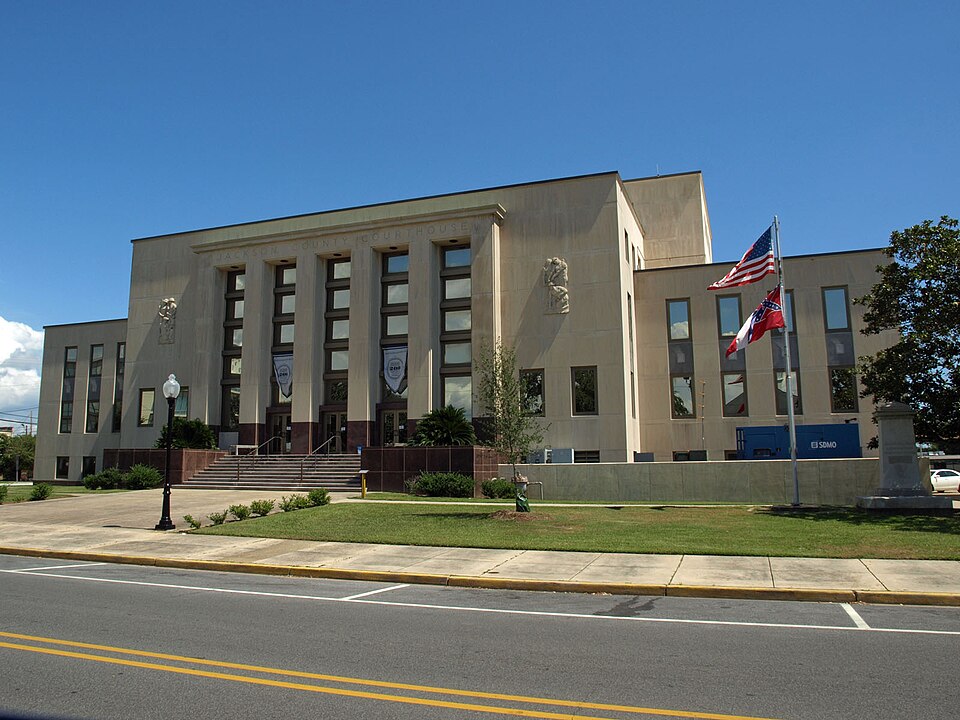
District Attorney Angel Myers McIlrath announced the decision Monday, September 21, after jurors met for four days, heard 43 witnesses and reviewed physical and digital material including GPS data, cellphone extractions, police reports, photographs, video and more than 130 subpoenaed records. The panel included 13 men and 10 women and was described by the district attorney as racially diverse.
Its central legal finding was direct: jurors found no credible evidence that anyone who traveled to or from Horn Island aboard the Triton, Palm Beach or Tideline engaged in criminal conduct connected to Wells’ death. McIlrath also said there was “absolutely no evidence” that the disappearance or death was racially motivated. That is a finding about the evidence presented to the grand jury. It is not a finding that investigators can explain precisely how Wells died.
That distinction is the story. The people on the boats leave the criminal process without charges after months of public suspicion. Wells’ parents, Elmore Wonsley and Christine Wells-Wonsley, are left without a medically established cause of death. Their attorney, Ben Crump, says the result leaves “more questions than answers.” The legal system has answered whether current evidence supports an indictment; it has not answered the family’s most basic question.
Why the Nolan Wells grand jury decision matters
A grand jury does not decide guilt. It decides whether prosecutors have shown enough evidence of a crime to justify a formal charge and a trial. A “no true bill” means that threshold was not met. It carries real weight, especially after an extensive presentation, but it is not a trial verdict and it does not transform an unexplained death into an accidental one.
That is why the phrase grand jury no true bill meaning matters here. In ordinary language, “no charges” can sound like “nothing happened.” In law, the narrower conclusion is that the available evidence did not establish probable cause to accuse a particular person of a criminal offense. The Jackson County report went further in exonerating the people on the three boats from allegations of criminal conduct, but it still stopped short of determining the mechanism of Wells’ death.
The breadth of the presentation makes the unanimous result significant. Forty-three witnesses and more than 130 subpoenaed records suggest that jurors were not asked to make a quick decision from a thin file. Digital evidence could test routes, timing and communications; photographs and video could test accounts; witness testimony could expose or reconcile contradictions. Yet volume is not the same as certainty. A large record can eliminate theories without proving one final explanation.
For the boaters and their families, the decision provides a formal answer to months of accusation. McIlrath said the panel’s duty included exonerating people who had been falsely accused. That point is essential to fair reporting: no person who traveled with Wells has been charged, and the grand jury found no credible evidence of criminal wrongdoing by any of them.
For Wells’ family, the same decision can feel like an institutional endpoint without a factual ending. Criminal law asks whether evidence supports charges against a person. A grieving family asks how a healthy 18-year-old vanished from a holiday outing and was found dead two days later. Those questions overlap, but they are not identical.
Nolan Wells, Horn Island and the July 4 boat trip
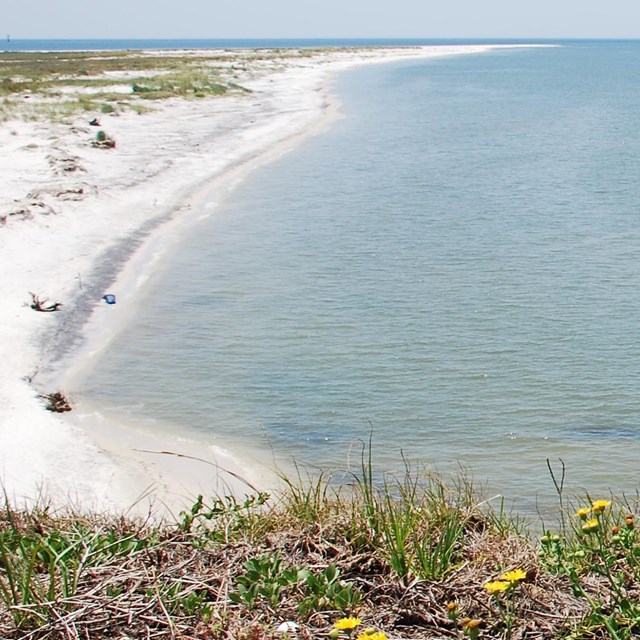
The Nolan Wells July 4 boat trip began as a holiday outing to Horn Island, an undeveloped barrier island off Mississippi’s Gulf Coast. The island is remote and accessible only by private boat, according to the National Park Service. Wells was last seen there on July 4. Searchers found his body near the island two days later.
In the weeks that followed, photographs from the trip circulated widely online. Images of Wells, who was Black, among White friends became a visual shorthand for suspicions that outpaced publicly established facts. His parents traveled to New York and held a July 10 news conference at National Action Network headquarters, bringing national attention to the case and calling for answers.
The racial context could not responsibly be ignored, but neither could it be treated as proof. Viral images can reveal social context while saying little about chronology, intent or causation. The Nolan Wells racial motivation findings therefore matter because the grand jury examined evidence gathered through the investigation and concluded there was no support for allegations that race motivated his death or disappearance.
That conclusion will be reassuring to those who feared that public suspicion had become collective punishment for the young people on the boats. It will not satisfy those who see the lack of a cause as evidence that the investigation remains incomplete. Both reactions can coexist without changing the evidentiary record.
What the Jackson County grand jury found
The Jackson County grand jury no true bill followed a four-day presentation from September 14 through September 18. The panel reviewed evidence tied to three boats—the Triton, the Palm Beach and the Tideline—and found no credible evidence that anyone traveling on them engaged in criminal conduct related to Wells’ death.
The distinction between physical and digital evidence is important. GPS records can establish where a vessel or device was at a particular time, while cellphone extractions can help reconstruct calls, messages, photographs and movement. Police reports and witness interviews add narrative accounts. None of those categories is infallible by itself. Their value comes from whether independent strands corroborate one another.
The publicly described process was unusually detailed for a case that ultimately produced no indictment: 23 jurors, four days, 43 witnesses, more than 130 subpoenaed records and multiple kinds of forensic evidence. Because grand jury proceedings are generally confidential, the public still sees only the conclusions and the categories of evidence—not a full adversarial testing of every item in open court.
That opacity is built into the grand jury system. It protects witnesses and uncharged people, but it also limits the family’s and public’s ability to evaluate how competing interpretations were weighed. The decision is legally consequential; it is not the same thing as a public trial record.
Nolan Wells cause of death remains undetermined
The hardest part of the record is medical. The grand jury found that the position, condition, discovery time and location of Wells’ body were “consistent with drowning.” But consistency is not confirmation. Mississippi Chief Medical Examiner Dr. Staci Turner and the family’s independent forensic pathologist, Dr. Roger A. Mitchell Jr., both classified the cause and manner of death as undetermined.
The Nolan Wells drowning findings rest on exclusion rather than a classical sign. The report said drowning is a diagnosis of exclusion and that there was no classical evidence of drowning. It also found no evidence of a fatal injury or organic disease. Bruising on the back of Wells’ head was judged not to be fatal, while its precise cause remained uncertain.
Those findings narrow the field. They do not identify a final cause. “Consistent with drowning” means the condition and location of the body fit that possibility; “undetermined” means the available medical and investigative evidence did not allow the pathologists to classify death with the required confidence. The two statements are not contradictory, but the space between them is exactly where the family’s unanswered questions remain.
Crump focused on that gap after the decision. He called the result an attempt “to close the chapter on Nolan Wells’ death without getting to the truth” and said the grand jury outcome left the family with more questions than answers, including questions about bruises on Wells’ head and body. Those are the family’s contentions. The medical finding in the report is that the head injury was not fatal and its cause was uncertain.
The Nolan Wells cause of death should therefore be described precisely: officially undetermined. Reporting that he drowned as a settled fact would go beyond both examinations. Reporting that the bruising proves an assault would also go beyond the evidence described by the grand jury.
Who is relieved, and who is still waiting
The clearest beneficiaries of the decision are the people who were on the three boats. They have lived under an extraordinary level of online scrutiny, including allegations the grand jury found unsupported. McIlrath’s insistence that jurors must exonerate the falsely accused recognizes that a justice system has obligations not only to victims and families but also to people who should not be charged without evidence.
The family’s position is the mirror image. Ben Crump, the Nolan Wells family attorney, is not arguing that the no-bill itself establishes guilt; he is arguing that the absence of a charge does not supply an explanation. The family can accept that prosecutors did not meet the criminal threshold and still press for additional disclosure, independent review or civil remedies.
The public has a responsibility, too. The racially charged speculation surrounding the case made it more urgent to ask whether investigators treated Wells’ disappearance seriously. It did not make an accusation true. A careful response holds both principles at once: authorities must explain their work as fully as the law permits, and uncharged young people should not be condemned on the basis of viral photographs or rumor.
That balance is also why this case belongs alongside other investigations where uncertainty is the central fact. In Oxford, the deaths of two University of Mississippi students likewise require officials and journalists to separate what has been recovered or observed from what toxicology and investigation have not yet established. An unanswered question is not evidence for the most alarming theory.
What a no-bill does—and does not—close
The criminal case is closed for now, not sealed forever. The grand jury’s report explicitly says the matter should be presented to a future Jackson County grand jury if credible evidence emerges suggesting Wells’ death was non-accidental. That language gives prosecutors a route back into court without implying that such evidence currently exists.
New evidence could take several forms: a previously unavailable digital record, a witness with firsthand information, a forensic reassessment supported by new methodology, or information that materially changes the timeline. Speculation, repetition and social-media certainty would not meet that standard. The test is credibility and relevance.
A civil case is a separate possibility, though the family had not announced one in the reporting reviewed for this article. Civil litigation generally uses a lower burden of proof than a criminal prosecution and can compel discovery, but it still requires a viable legal claim and admissible evidence. It should not be assumed that a civil filing will occur or succeed.
The contrast with an active court case is useful. In the prosecution of former South African police official Shadrack Sibiya, charges begin a process in which evidence can be tested by defense and prosecution. A no-bill means that adversarial trial stage is not reached. That protects against unsupported prosecution, but it also leaves fewer public proceedings through which disputed details can be examined.
Why the numbers matter
The numbers surrounding the presentation—23 jurors, four days, 43 witnesses and more than 130 subpoenaed records—do not prove the outcome was correct. They do show the scale of the evidentiary review behind the unanimous decision. Forty-three witnesses over four days means the panel heard, on average, more than ten witnesses per day, before accounting for the time required to review digital and physical evidence.
Unanimity also matters. Every juror agreed that the available evidence did not support criminal charges. That does not eliminate the possibility of honest public disagreement, but it makes the result more than a marginal vote or a decision resting on one holdout.
What the numbers cannot reveal is just as important. They do not show how long each witness testified, which evidence jurors found decisive, whether accounts conflicted, or how prosecutors framed possible offenses. Without an open trial, the public should resist converting impressive volume into a claim of total transparency.
What happens next
First, the family may continue to seek investigative transparency. That could include requests for reports, timelines or other releasable records. Authorities will have to balance public accountability with grand jury secrecy, privacy and the protection of uncharged people.
Second, lawyers may evaluate civil options. The lower civil standard can matter, but a different burden is not a substitute for evidence. Any claim would need defendants, a legal theory and facts supporting responsibility. Until a complaint is filed, civil litigation remains a scenario rather than a development.
Third, credible new evidence could revive the criminal inquiry. The grand jury report itself preserves that route. The key word is “credible.” A new lead would have to add something material to a record that already included dozens of witnesses and extensive digital evidence.
Fourth, public debate will continue. The case sits at the intersection of race, trust in law enforcement, online rumor and the limits of forensic certainty. Responsible scrutiny should focus on disclosed evidence, unresolved medical findings and the rules governing future review—not on accusations the grand jury rejected.
The bottom line
The Nolan Wells grand jury decision is definitive on one point and unresolved on another. Based on the evidence presented, a unanimous Jackson County panel found no basis to charge anyone and no support for allegations that Wells’ death was racially motivated. The people on the boats are not criminal defendants and should not be treated as if they are.
But the state medical examiner and the family’s pathologist still agree on a stark classification: undetermined. Wells’ body was found in circumstances consistent with drowning, yet the record did not establish drowning as the official cause, identify a fatal injury or explain every bruise. That leaves his parents with a lawful decision but not the answer they sought.
The criminal chapter can reopen if credible evidence appears. Until then, the most honest account is also the least emotionally satisfying: no crime was established, no one was charged, and the precise cause of an 18-year-old’s death remains unknown.
Sources
- CNN: Grand jury finds insufficient evidence of criminal wrongdoing in Nolan Wells’ death
- The National News Desk via Fox 49: Grand jury returns no true bill in the death of Nolan Wells
- The Christian Post: Insufficient evidence of crime found in death of Nolan Wells
- National Park Service: Horn Island visitor and wilderness information
Reporting basis: Fixed September 23, 2026 snapshot. Criminal and medical findings are attributed to the district attorney and grand jury report as described by CNN, TNND and The Christian Post. Signal Post News did not independently review the sealed grand jury record. Analysis is our own.